Dry Champagne: panel tasting results
It’s an increasingly fashionable category, but still very much a niche area of the Champagne world. See these five highly recommended wines from Decanter's Brut Nature and Extra Brut Champagne panel tasting...


Dry Champagne: Extra Brut and Brut Nature
‘Sugar is the new evil,’ pronounced Simon Field MW. ‘It gives you diabetes, and makes you fat. Hence the current fashion for low-dosage Champagne. The dosage has come down in the Champagne category as a whole over the past 10 or 15 years from an average 12 grams/litre of sugar to around 9g/l. But is it correct to go right down to zero, or close to zero?’
‘It’s totally driven by fashion,’ agreed Michael Edwards. ‘People love the idea of something completely dry. Whether they like it in the glass is another matter.’
Edwards was relatively impressed by the category: ‘I think the wines showed themselves honourably, without any dramatic successes. I don’t think we found any gold-standard examples.’
‘You’ll always be disappointed with this style,’ said Field, ‘because there is nowhere to hide; you really are exposing everything.’ It’s risky too, he added. ‘When the dosage is zero or almost zero, you have oxidative vulnerability, and need more sulphur at disgorgement.’
This helps to explain why the volumes are so small still. ‘You need a very good site and old vines, and it’s generally done on a small scale,’ said Edwards. ‘It’s a very difficult category to produce, and you can count the people who do it well on one hand. But when it’s good, it’s very good.’
Xavier Rousset MS expressed a preference for wines with a touch of sugar as opposed to none. ‘I prefer 1g or 2g of sugar to none, as a generalisation, and found the Extra Bruts more interesting,’ agreed Edwards. ‘Sugar is an activator of aromas, and even in the very good Brut Natures, the aromas are fairly subdued.’
All the tasters questioned the long-term ageability of the category, concluding that it’s an unknown quantity since the style is so new. ‘It’s a touchy subject,’ said Edwards. ‘Some people say the lack of sugar means they won’t age as well, and there may be some truth in that.’
The five highly recommended Brut Nature & Extra Brut Champagnes from the panel tasting:
André Jacquart, Mesnil Experience Blanc de Blancs Grand Cru, Champagne, France
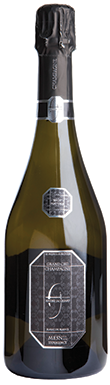

Slightly evolved nose with hints of praline and hazelnut, but also displaying fresh citrus, chalk and mineral nuances. Mouthfilling palate with a creamy texture, elegant...
André Jacquart

De Venoge, Extra Brut, Louis XV Rosé, Champagne, France, 2002
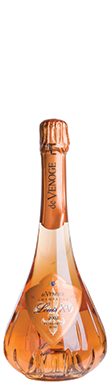
17.25
Shimmering salmon colour with a vinous nose of rosehip syrup, mushroom, black pepper and strawberries. The palate wears its age well and has a savoury flourish and great structure. Quite profound.
2002
De Venoge
Gosset, Extra Brut, Celebris, Champagne, France, 2002
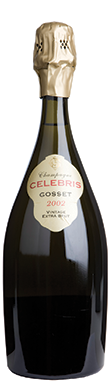
17.25
<p>An impressive evolved nose with hints of mushroom and bonfire. Elegant with plenty of life but showing tertiary characters, such as truffle, yet balanced by a crisp acidity; it lingers delicately.</p>
2002
Gosset
Louis Barthelemy, Zéro Dosage Topaze, Champagne, France
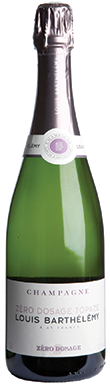
17.25
<p>Fruit dominated by nectarine, mango and praline with some biscuit and spice and showing a bit of age. Full and rounded with real complexity, poise, and harmony. With food this will fully express itself.</p>
Louis Barthelemy
Veuve Fourny & Fils, Cuvée R Extra Brut, Premier Cru, Champagne, France
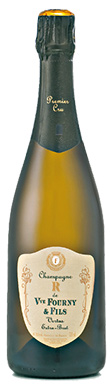
Expressive, citrusy, fresh and clean with Mirabelle, greengage and bergamot. En Bouche there is plenty of flesh, with a silky chocolate character. Maturing gracefully with...
Veuve Fourny & FilsPremier Cru
