Champagne and Crémant: What’s the difference?
Where did all these other French sparkling wines come from? Here are some basics on how they compare to Champagne.


Crémant sparkling wines can be a delicious, affordable alternative to Champagne, and the wines are produced in a similar way, although the reputation of Champagne houses and growers for making some of the world’s most complex and long-lived styles is unrivalled.
We take an in-depth look into the similarities and differences between these two sparkling wine types in terms of geography, winemaking, flavour profile and age-worthiness. We also recommend 10 wines to try.
Geography
Champagne can only come from designated vineyards within the Champagne region in northern France; its intricate web of vineyards and miles of underground cellars sit on the UNESCO World Heritage list.
Crémant sparkling wines can only come from specific regions too, although many are more famous for producing still wines. They include:
- Crémant de Bourgogne
- Crémant de Loire
- Crémant de Limoux
- Crémant de Jura
- Crémant d’Alsace
- Crémant de Bordeaux
- Crémant de Die – in the Rhône Valley
- Crémant de Savoie.
Beyond French borders, you can also find Crémant de Luxembourg.
The method
Champagne and Crémant wines get their sparkle from the ‘traditional method’, which involves creating the conditions for a secondary fermentation inside the bottle. You might have seen this referred to as the ‘Champagne method’.
Prosecco, for example, is better known for using the ‘tank method’, also known as the Charmat method.
Bottles of Crémant and Champagne must also be aged ‘on lees’ for minimum periods, which can bring extra body and complexity to the wines.
Lees, which are essentially dead yeast cells left over from fermentation, can also bring those brioche and bread-like aromas to a sparkling wine.
Rules stipulate at least nine months of lees ageing for Crémant in many cases, although there are variations and some wineries choose to extend the process, too. The ‘Eminent’ and ‘Grand Eminent’ tiers for Crémant de Bourgogne wines involve extended lees ageing.
In Champagne, non-vintage styles must be aged for at least 12 months on lees. The minimum ageing period for vintage wines is three years, according to the Comité Champagne. In reality, many of the best Champagnes are aged for much longer.
Taste
You’ll find lots of variation in house styles, not to mention climates, but the use of different grape varieties can affect flavour.
Champagne is mainly all about Pinot Noir, Chardonnay and Pinot Meunier.
Many Crémant wines tend to reflect grape varieties grown in their home regions, as Amy Wislocki explains in more detail in this article about Crémant de Bourgogne.
Decanter’s Tina Gellie recently praised the ‘crunchy herbal freshness alongside ripe red berry flavours’ of this Crémant de Bordeaux rosé, made from Merlot and Cabernet Franc, for example.
While a number of regional Crémants use Chardonnay and/or Pinot Noir to a greater or lesser extent, you can expect see Chenin Blanc or Cabernet Franc exerting their influence in the Loire Valley, Clairette in the Rhône, or Trousseau with some Savagnin in Jura, too.
In Limoux, Crémant is predominantly Chardonnay and Chenin, with Mauzac in support. However, Blanquette de Limoux, another traditional method sparkling wine, is where the local Mauzac grape dominates.
Crémant de Bourgogne has a natural bias towards Pinot Noir and Chardonnay, its principal grape varieties for Burgundy’s world-famous still wines, although others are cleared for use. There can be up to 20% Gamay in rosé, for example.
Do Crémant wines keep in the cellar like Champagne?
Not all Champagnes improve with age, and some vintage Crémants can age for years. Robin Kick gave this 2020-vintage Crémant de Bourgogne from Bruno Dangin a drinking window of up to 2030.
However, vintage Champagne is renowned as one of the world’s most complex and long-lived wines. Crémant does not currently rival Champagne in terms of the sheer number of ageworthy wines that are widely available from different houses and growers.
‘Like Blanquette de Limoux, Crémant de Limoux should be enjoyed preferably within two years of purchase and chilled to 6 or 7°C,’ says the Limoux producers’ union.
Rob MacCulloch MW previously told Decanter that Crémant wines did not generally age as well as Champagne.
‘Crémants generally have a higher pH and phenolic content than Champagne, with low levels of both being crucial for longevity in sparkling wine,’ he said.
Champagne and Crémant: 10 wines to try
Related articles
- Champagne and Prosecco: What’s the difference?
- Crémant de Bourgogne: Burgundy’s hidden sparkling gems
- Champagne report 2024: Latest releases from the Côte des Blancs
Charles Heidsieck, Blanc des Millénaires Blanc de Blancs Brut, Champagne, France 2014
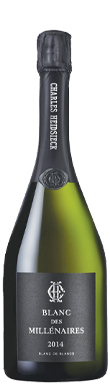

A delicate, bright and serene edition of one of Champagne’s top, if lesser-known, prestige blanc de blancs, emphasising purity over creamy richness. Plenty of ripe...
2014
Charles Heidsieck

Bruno Dangin, Prestige de Narcès Extra Brut, Crémant de Bourgogne, Burgundy, France 2020
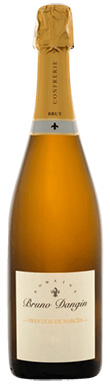
The Prestige de Narcès, alongside Matthieu’s Grand Éminent Brut Nature, are his two top cuvées. Both only use the first press called the 'cuvée', which...
2020
Bruno DanginCrémant de Bourgogne
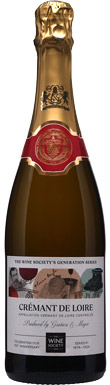
Gratien & Meyer, The Wine Society's Generation Series Crémant de Loire, France 2020
93
A nod to the rich, Chenin Blanc-based ‘Sparkling Saumurs’ listed by The Wine Society in its first decades, this Crémant de Loire is based on the region’s flagship white variety (54% of the blend) and produced with fruit from Gratien & Meyer’s own vineyards in Saumur. Expressive nose, with intense zestiness, fresh minerality and red fruit nuances. A subtle butteriness hints at the 30 months spent on the lees. On the palate, fleshy quince, pear and pink grapefruit are supported by a firm acid line. Sharp focus offset by mid-palate weight and textural depth. A balanced wine, of approachable complexity, with some potential to age in bottle.
2020
Gratien & MeyerCrémant de Loire
Moët & Chandon, Grand Vintage, Champagne, France 2004
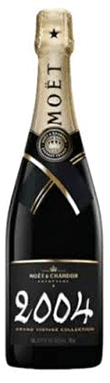
Often a sleeper, Moët’s Grand Vintage shows remarkably consistent quality over the last 20 years, with 2004 no exception; trademark struck-match reductive overtones melt into...
2004
Moët & Chandon
Domaine de Ginglinger, Extra-Brut Prestige, Crémant d'Alsace, France 2021
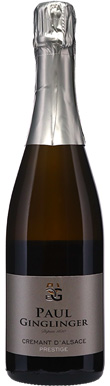
92
Such an elegant nose with top notes of white flowers, blanched almonds and hay sitting on lemon curd, pear and brioche. Very balanced on the palate, the cooked quince and ripe peach a rich counterpoint to lemon zest and crunchy pear. Moreish and complex without loss of freshness and drinkability, this is a sparkling that really makes the case for looking beyond Champagne if seeking out a French fizz.
2021
Domaine de GinglingerCrémant d’Alsace
Bruno Paillard, Grand Cru Blanc de Blancs, Champagne, France NV
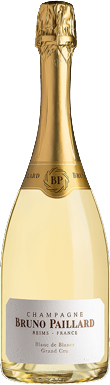
Made entirely from grand cru fruit and backed up by a reserve system going back to 1985, this wine plays with the tradition of reducing...
Bruno Paillard
Lallier, Blanc de Blancs Brut, Champagne, France NV
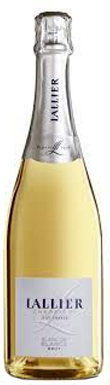
Some 30% Chardonnay from Lallier's home village of Aÿ, famous for its Pinot Noir, lends intensity and grip to what is otherwise a classical blanc...
Lallier
Montaudon, Brut, Champagne, Champagne, France NV
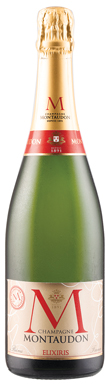
91
It may be non-vintage, but this Champagne from Lidl’s core range is incredible value at £15. A blend of 40% Pinot Noir, 35% Chardonnay and 25% Meunier, it has real depth and complexity for the price, with a purity of red berry fruit and creamy, toasty undertones. Perfect for a party where you particularly want Champagne rather than an alternative.
MontaudonChampagne
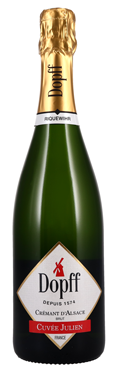
Dopff au Moulin, Cuvée Julien, Crémant d’Alsace, France NV
89
The perfect size for a picnic, this half-bottle of Crémant d'Alsace is a 50/50 blend of Pinot Blanc and Auxerrois, made by an historic Alsace estate – Julien Dopff pioneered the first Crémant d'Alsace in the first years of the 20th century. It's rounded in character, ripe with notes of apples and other orchard fruits, accented by a slight chalkiness and white flower perfume. Fresh and fun, lovely summer sipping.
Dopff au MoulinCrémant d’Alsace
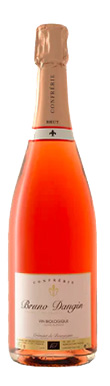
Bruno Dangin, Cuvée Rosé Extra Brut, Crémant de Bourgogne, Burgundy, France 2020
90
Domaine Dangin hails from just over the border in the Aube. They formally moved over to the Châtillonnais in 2011 and began making Crémants using the same winemaking methods from Champagne. This pretty rosé is produced from 100% Pinot Noir from vines that are over 30 years old. Revealing a vibrant pink colour, it opens up with notes of sweet bramble berries, morello cherries and a whiff of brioche. A delicious rosé that has character but remains fresh and chiselled.
2020
Bruno DanginCrémant de Bourgogne
