Get to know Alsace: Good, better, best
Have you ever wanted to know more about a great wine region but didn’t know where to start? Here’s some help. We asked six of our expert contributors to sum up what makes a particular wine region great, and to choose three bottles – good (affordable), better (medium-priced) and best (money no object) – to take you there. Here are Andrew Jefford's Alsace picks...


If any wine region could be said to contain multitudes, it’s Alsace. I’ve concentrated on Riesling, the most soulful and pure-spirited of Alsace’s varieties – but never forget that Alsace is deeply sensual, too. Its other great varieties are Pinot Gris, which acquires a depth of personality, a succulent orchard style and a fleshy, textured grandeur here which comprehensively eludes it elsewhere; and the ever-heady Gewurztraminer which, in the right hands, is not only entrancingly perfumed but dense, rich, creamy, stony and spicy – almost a foodstuff in itself.
Maybe you prefer something a little less demonstrative with dinner? In that case, look out for Pinot Blanc (which will contain a big dollop of Alsace’s most secretive variety, Auxerrois) or Sylvaner. Even better, hunt down one of the new generation of ‘Gentil’ blends (cunning compounds of at least 50% of Riesling, Pinot Gris, Gewurztraminer and/or Muscat, with the balance from Syvlaner, Chasselas and/or Pinot Blanc/Auxerrois, each vinified separately) or ambitious informal field blends. There are increasingly impressive Pinot-based red wines, sparkling crémant and dessert wines galore, too. The dry Muscat wines are a huge contrast to their southern cousins – thanks to their freshening Muscat Ottonel component.
Good: Hugel, Classic Riesling 2019 – 91 points
Better: Domaine Weinbach, Cuvée Théo Riesling 2018 – 93 points
Best: Albert Boxler, Riesling Grand Cru Sommerberg 2017 – 95 points
Andrew Jefford’s Alsace Riesling picks:
Spend a weekend in Alsace: Travel guide
Time to try Alsace Pinot Noir
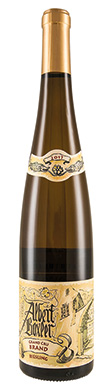
Albert Boxler, Riesling, Grand Cru Sommerberg, Alsace, France, 2017
95
The granite-soiled Sommerberg is one of the steepest of all Alsace grand cru vineyards, and Jean Boxler is its quietly spoken magus. This magnificent example is still in its infancy, so dense and tight-sinewed is it – best on day two after opening, or cellar for a few years. The aromas are very pure and refined at first, and the palate sculpted, crisp and stony. It will drink up the air, though, and after a while you realise there is ghostly honey and will-o-the-wisp ginger haunting the cool apple fruits and almost seaweed-like sappiness. The acidity is gothic and vertical – but, since this is Alsace, it’s never merely that; the drama of the wine’s inner architecture and crushed-stone substrate gives it length and resonance.
2017
Albert BoxlerGrand Cru Sommerberg
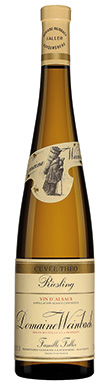
Domaine Weinbach, Cuvée Théo Riesling, Alsace, France, 2018
93
Grown entirely in the walled Clos des Capucins in front of the Faller family’s manor house, this proves (as do Olivier Humbrecht’s Herrenweg wines) that it isn’t just the hillside sites that make great wines in Alsace. There is fresh doughiness and an alluring suggestion of spice on the nose, while the palate is multi-layered and textured, vivid with honeysuckle and lemon verbena scents. You might find a little wild strawberry among the orchard fruits, too. Yes, Riesling is soulful and pure-spirited by its nature, but this wine shows how in the magical soils and sites of Alsace it can express a garden-like charm, too.
2018
Domaine Weinbach
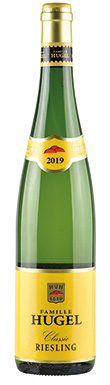
Hugel, Classic Riesling, Alsace, France, 2019
91
Alsace entrances not just because of fruit purity and aromatic finesse, but because it does these things with an inner wealth, a structure and a sinew which eludes both its German peers and the dry Riesling champions of Australia and New Zealand. The fruits in this justly badged ‘classic’ are round-contoured and poised. There’s a whisper of peach and apricot behind the apple and grape, and clove spice – but all of subtle vineyard origin. It’s mouthfilling and tender yet vivid, packed with freshness and drive: a spotless Riesling for all seasons.
2019
Hugel
