Time to try Alsace Pinot Noir
If you favour fragrance and elegance over concentration, it's time to delve into the geologically complex world of Alsace Pinot Noir...
Get our daily fine wine reviews, latest wine ratings, news and travel guides delivered straight to your inbox.
You are now subscribed
Your newsletter sign-up was successful
Much has been written about its Rieslings, but less is said about Alsace’s Pinot Noir. This is largely because Pinot only accounts for 10% of the region’s total production.
The Alsace region
Alsace is a unique place, torn between French and German ownership down the centuries. With the Vosges mountain range on its western border and the Rhine on its eastern flank, it seems like a somewhat isolated outpost of France and – certainly when it comes to its wines – it has more in common with its German neighbours across the Rhine. Here lies the Black Forest and the German wine region of Baden, which produces similarly feather-touch Pinots of fragrance and earthiness.
Perhaps Alsace’s key feature is its geography and geology. The region spans a narrow corridor about 75 miles long, running approximately north to south, and all along its length the Vosges mountains create a rain shadow, making Alsace one of France’s driest regions.
Additionally, the geology here is incredibly diverse, with 13 identified soil types. These range from volcanic soils, granite and schist in the mountainous areas to the west, to limestone and marl-clay in the foothills and loess and alluvial deposits on the plain.
The benefit to growers is that they can use this extraordinary diversity of terroirs much like ingredients and seasoning in food. While some have chosen to focus on the character a particular soil type brings to a wine – austerity from grapes grown on schist, or bright acidity from limestone, for example – others blend different terroirs for a more rounded approach.
Alsace Pinot Noir
The main sticking point for Pinot Noir is that Alsace Grand Cru wines can only be made from specific white varieties – there are no red grands crus. Although there are some delicious examples out there, including those sourced from grand cru vineyards, the inability to designate a Pinot Noir wine as a Grand Cru surely affects the variety’s ability to be marketed as effectively as the whites.
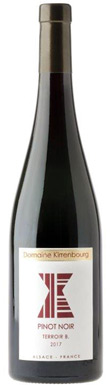
Some producers at least hint at a Pinot’s grand cru roots by including the first initial of the vineyard in the name of the wine – for instance, Muré’s V Pinot Noir is from the Vorbourg grand cru, and Kirrenbourg’s Terroir B Pinot Noir is from the Brand grand cru.
Get our daily fine wine reviews, latest wine ratings, news and travel guides delivered straight to your inbox.
It may be a pain for producers looking to sell their wines at the best prices, but for consumers it represents an opportunity to pick up a relative bargain compared to the arguably better-known Pinot Noirs, or Spätburgunders, from across the river. And let’s not forget that Alsace Pinot Noir offers an alternative, lighter, even more fragrant style to that bastion of French Pinot, Burgundy.
Alsace Pinot Noir to try:
You may also like:
Alsace: Top Riesling terroirs
Markus Molitor Rieslings and Pinot Noirs
German Grosses Gewächs new releases: Top wines
Domaine Kirrenbourg, Terroir B Pinot Noir, Alsace, France, 2017

From the granite soils of the Brand grand cru, this Pinot is quite broad and dense but with an airy quality. Hedgerow fruits are joined...
2017
AlsaceFrance
Domaine Kirrenbourg
Bott-Geyl, Galets Oligocène Pinot Noir, Alsace, France, 2015
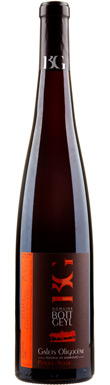
<p>Domaine Bott-Geyl has a family winemaking tradition reaching back to 1795 and now owns 15ha of vines across 80 parcels, which were converted to organics...
2015
AlsaceFrance
Bott-Geyl
Schoenheitz, St-Grégoire Pinot Noir, Alsace, France, 2017
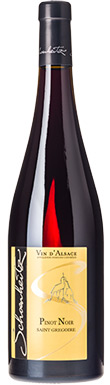
From a 0.63ha south- southwest-facing vineyard on decomposed granite soils in the Munster Valley (known as the Val Saint Grégoire before the Protestant reformation). It...
2017
AlsaceFrance
Schoenheitz
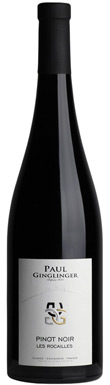
Paul Ginglinger, Les Rocailles Pinot Noir, Alsace, France, 2016

<p>Michel is the 12th-generation owner of this domaine, which has 12ha of organic vineyards. Les Rocailles comes from a plot of marl-limestone in the Eichberg...
2016
AlsaceFrance
Paul Ginglinger
Domaine Muré, V Pinot Noir, Alsace, France, 2017
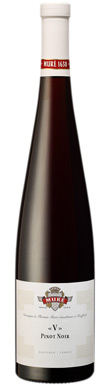
The grapes for 'V' - named after its Vorbourg source - come from predominantly clay-limestone over calcareous sandstone within the estate's south- to southeast-facing clos...
2017
AlsaceFrance
Domaine Muré
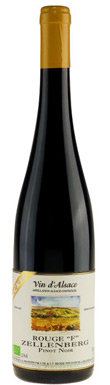
Jean Becker, F de Zellenberg Pinot Noir, Alsace, France, 2016

This Pinot comes from the grand cru of Froehn (hence the 'F'), which fans out around the town of Zellenberg. The fruit is hand-harvested and...
2016
AlsaceFrance
Jean Becker
Domaine Rémy Gresser, Brandhof Pinot Noir, Alsace, France, 2016
Rémy Gresser's family have been making wines here since 1520. The estate now has 10ha to its name and the vineyards are managed using organic...
2016
AlsaceFrance
Domaine Rémy Gresser
Domaine Jean Sipp, Osmose Pinot Noir, Alsace, France, 2016
Domaine Jean Sipp owns 2ha of Pinot Noir and this Osmose bottling is from vines grown on marl. It has tangy black cherry and red...
2016
AlsaceFrance
Domaine Jean Sipp
Cave De Ribeauville, Bio Pinot Noir, Alsace, France, 2015
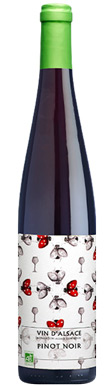
<p>This cooperative was founded in the late 19th century - a time when ownership of the Alsace region changed hands between France and Germany. It...
2015
AlsaceFrance
Cave De Ribeauville
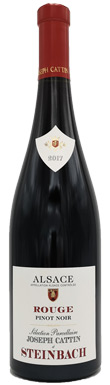
Maison Cattin, Selection Parcellaire Pinot Noir, Alsace, France, 2017

<p>The fragrant cherry and strawberry character of this wine, accompanied by some wild herb notes and a splash of black pepper, is hallmark Alsace Pinot....
2017
AlsaceFrance
Maison Cattin

James Button is Decanter’s regional editor for Italy, responsible for all of Decanter's Italian content in print and online.
Like many others, he started his wine career at Majestic Wine, giving him a strong grounding in the subject before successfully completing the WSET Level 4 Diploma in 2010. From 2014 to 2016 he managed the fine wine department of a startup wine company in London, before joining Decanter as digital sub-editor.
Outside of wine, James enjoys cooking, skiing, playing guitar and cycling.