Three Sardinian wine grapes to know
Award-winning winemaker Antonella Corda introduces three grape varieties behind Sardinia's wines, including one that you may not have heard of....


Beyond the azure-blue seas and white sandy beaches loved by tourists, the Italian island of Sardinia is home to 120 native grape varieties, yet Sardinian wine is dominated by Vermentino for whites and Cannonau for reds.
We asked Antonella Corda, founder and winemaker of her eponymous winery in the south of the island, to help us understand these two flagship varieties as they express themselves in Sardinia – plus another, little-known white grape.
Corda is the granddaughter of pioneering vititculturist Antonio Argiolas. She completed her masters in viticulture and winemaking before inheriting two of her grandfather’s vineyards, located 15km from Cagliari in the island’s south, and establishing her winery in 2010.
She farms organically, and produces just four wines: two Vermentinos, one fermented and aged in amphorae; a white wine made from the Nuragus grape; and a Cannonau red. In 2019, Italian wine guide Gambero Rosso named Antonella Corda ’emerging winery of the year’.
Vermentino
Found primarily in Languedoc-Roussillon and Italy, sun-worshipping Vermentino is in its element in Sardinia’s hot, dry climes, as Michaela Morris wrote in her comprehensive buyer’s guide to Sardinian wine.
It produces a white wine that echoes the island’s heady scent of broom and has a distinctive salty edge.
The DOC of Vermentino di Sardegna encompasses all of Sardinia’s far-flung pockets, but some areas are more suited to the variety than others – including the southerly area around Cagliari, where Antonella Corda is located.
Conversely, Sardinia’s only DOCG, Vermentino di Gallura, refers strictly to the island’s northeastern corner. Gallura experiences significant day- and night-time temperature differences and is characterised by weathered granite soil. The resulting wines are intense and minerally rather than overtly fruity.
While site plays an important role in Vermentino styles, winemaking also plays its part. Most Vermentino wines are fermented in stainless steel for a crisp style. Some producers are experimenting with later picked grapes, lees stirring, partial oak ageing and/or skin maceration (as with Antonella Corda’s Ziru) to lend texture, complexity and ageability.
Antonella Corda on Vermentino:
‘The real strength of Sardinia’s most important white lies in its versatility. It likes both sandy and limestone soils, and these soil types give great expression to its aromatic nature. It’s a grape with naturally medium acidity, and notes of peach, white flowers, apples, sage, and lemon citrus.
‘We make our basic Vermentino entirely using stainless steel – no oak. Some of the grapes have a few hours’ skin contact, some have longer, and some have no skin contact; this gives a really nice balance, freshness and varietal expression.
‘Most Vermentinos are made to be drunk young, but you can age some of the higher-quality wines for a few years – it develops in a similar way to Riesling, showing minerality and petrolly characters. Our Ziru (first vintage 2017) will age for many years. We haven’t labelled Ziru as Vermentino to avoid regulatory issues that might arise as a result of the unconventional winemaking approach we use with this wine. It’s macerated on skins, fermented and aged in amphorae. We’re one of only three producers on the island working with amphorae, and are the only one of those doing it with Vermentino.’
Cannonau
The principal red grape of Sardinia, Cannonau is believed by many to be the same grape as Garnacha, also known as Grenache. Nevertheless, evidence to the contrary keeps the debate raging. Irrefutably, Cannonau has a uniquely Sardinian personality. While not the deepest in colour, it captures the island’s generous warmth, producing plush, spicy and earthy reds.
The Cannonau di Sardegna DOC covers the whole island, as does Vermentino di Sardegna.
While there is no DOCG, there are areas of the island that are known to produce particularly distinctive wines, including Oliena (also known as Nepente di Oliena), Jerzu and Capo Ferrato.
Both Oliena and Jerzu are located in Sardinia’s rugged central interior in the foothills of the Gennargentu mountains, while Capo Ferrato is situated in the southeastern zone.
Corda on Cannonau:
‘This brother grape to Grenache expresses the soils in which it’s grown. We favour stony soils like those in the southern Rhône. It can have a tendency to overcrop, and it helps to use soils that are not fertile and help to regulate yield.
‘How would I describe the character of Cannonau, versus Grenache? For me, it has more freshness, and more red berry flavours, because Cannonau is harvested earlier than many Grenache wines.
‘It’s more elegant and delicate. We have to handle it carefully in the winery as a result – indeed, some winemakers in Sardinia compare our Cannonau to Pinot, nicknaming it Pinnonau! We ferment in steel with no pump-over, and age just a small portion of the wine – about 10 to 15% – in barriques (two-year-old and new French oak, no and low-toast).’
Nuragus
This grape has a long history on the island, with evidence linking it to plantings by the Phoenicians, but it remains little-known. Plantings have been in steep decline, and are mainly found in the south of the island, under the Nuragus di Cagliari DOC.
Typically, it’s a light-bodied, fairly neutral wine, and this perhaps helps to account for the decline in plantings and low profile.
Corda on Nuragas:
‘This used to be the most important white grape in Sardinia, particularly in the south. That changed because the variety has a tendency to overproduce – and if yields are too high, it becomes neutral.
‘Nuragas has thicker skins than Vermentino, higher acidity and more tannins. You wouldn’t typically age this wine – you want to preserve the freshness – and it’s usually enjoyed here in Sardinia as a light table wine.
‘If you macerate too much when you’re making this, you extract too many tannins, so we don’t give it any skin contact.
‘We don’t use any oak either. When planted in limestone soils, this gives freshness. You also get a marked salinity, which is more evident in youth than with Vermentino.’
See Amy Wislocki’s tasting notes on Antonella Corda’s wines
You might also like:
Piedmont’s 1996 vintage: How it tastes now
Barolo vs Brunello vs Barbaresco: What’s the difference?
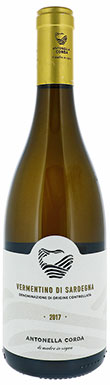
Antonella Corda, Vermentino, Sardinia, Italy, 2019
90
Buying Vermentino can be a leap of faith, as many are insipid and neutral. Not this one, however – steel aged for six months on its own yeasts, there’s a good weight here, with citrus notes and attractive salinity. The Mistral wind helps preserve acidity and freshness.
2019
Antonella Corda
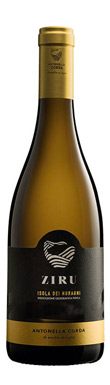
Cantina Antonella Corda, Ziru, Sardinia, Italy, 2018
91
Nowhere does it say on the label, but this is 100% Vermentino, macerated on the skins, fermented and aged in amphorae for 10 months. This is all about maximum expression of variety and place. It's unfiltered, so slightly hazy in the glass, lemon gold in colour. Powerful and elegant in equal measure, this is reminiscent of sun-baked rocks, with notes of orange, lemon peel and honey, a marked salinity and concentration. A seam of zesty acidity runs through it. The second vintage of this wine, 3,000 bottles made.
2018
Cantina Antonella Corda
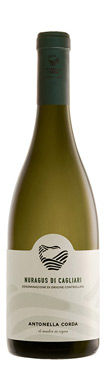
Cantina Antonella Corda, Nuragus di Cagliari, Sardinia, Italy, 2019
89
Nuragus is a grape that produces fresh whites for drinking in their youth. Grown on limestone soils, this undergoes no skin contact and is vinified entirely in stainless steel. Pear fruit is the dominant character here, with some apple and white floral notes. Uncomplicated, and perfect for matching with raw seafood.
2019
Cantina Antonella Corda
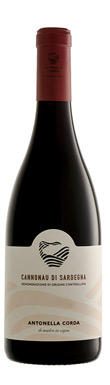
Cantina Antonella Corda, Cannonau di Sardegna, Sardinia, Italy, 2018
90
Translucent in the glass, this wine radiates the warmth of the Sardinian sunshine. Unmistakable Grenache-like character (the grapes are related), but with a lightness of touch. Cherry drops and red berries, this has generosity of fruit, and a twist of white pepper. Fermented in steel, and then a small proportion of the wine is aged in low-toast French oak.
2018
Cantina Antonella Corda
