The Decanter interview: Sacha Lichine


Always a man on a mission, this son of Bordeaux broke free of familial ties and went on to establish a new benchmark for quality in rosé wines in the southeast of France. Jane Anson reports after her latest visit to Château d’Esclans in Provence.
The Decanter interview: Sacha Lichine
Sacha Lichine at a glance
Born 1960 in Margaux as Alexis André Serge Lichine to parents Alexis Lichine and Gisèle Edenbourgh – their second child, after his sister Alexandra
Education Lycée Française, New York;Boston University (though he didn’t graduate: ‘I went to one university with one teacher, Alexis Lichine, and one pupil…me’)
Career Ran Château Prieuré-Lichine from the late 1980s to 1999, working on his own after his father Alexis’ death in 1989. Bought Château d’Esclans in 2006 for €13 million
Family Married to Mathilde Lichine, five children
Hobbies Sailing his boat Snapper, which is moored in St-Tropez; collecting wine-related art
The South of France is littered with people who have made it, cashed in and checked out. Which makes Sacha Lichine something of an anomaly.He didn’t buy the ochre-coloured Château d’Esclans having made a fortune in real estate, or supermarkets, or fashion, or casinos.Instead he was fresh from a few distinctly underwhelming business ventures, and needed the help of investors and banks to buy his idyllic Provençal estate, just outside the village of La Motte, back in 2006. And he did so very much with something to prove.
Scroll down for Jane Anson’s tasting notes of Château d’Esclans wines
They’ll be writing business books about this one day. They are probably already teaching classes at Harvard. Here was a man who was better known for his last name, as the son of the ‘Pope of wine’ Alexis Lichine, and who had something of a chip on his shoulder about exactly what that meant.
He had sold the family property of Château Prieuré-Lichine in Bordeaux’s Margaux appellation in 1999, having to settle more than a few debts, and spent the next few years moving between London, Brussels and Switzerland, depending on favourable tax regimes and business opportunities. Freshly arrived in Provence, he set about – with plenty of fanfare, something that usually precedes total failure – creating the world’s most expensive rosé.
The first two years were tough. Although the production was just 130,000 bottles at the time, they didn’t exactly fly off the shelves. Most of the trade, from sommeliers to wine buyers, continued to look down on rosé as a forgettable, dispensable category, for hen parties and summer holidays and not much else.
At the time, the only expensive rosé in town was Domaines Ott, and even that was selling for around a third of the €100 per bottle that Lichine was charging for his top cuvée, Garrus. Ironically, Ott was sourcing fruit from d’Esclans for its Les Domaniers wine when Lichine bought the estate. ‘I figured that if they were buying grapes from here when it was all mechanically harvested, then we could probably do a little better ourselves by applying quality at every stage.’
When the 2008 crash came along, the banks got nervous and considered calling in their loans. But while he was battling with the banks, and with French trading standards (who questioned whether he was being clear with the consumer as to what was and was not château-bottled), word of mouth was slowly building. Garrus might have grabbed the press attention, but it was the entry-level rosé (still at a relatively high US$19.99 then) with the seductive name of Whispering Angel that started to catch fire with consumers. Today, the d’Esclans range of five rosés represents 5% of the Côtes de Provence appellation, and even those grapes that don’t end up in one of the Lichine wines benefit from his success, most notably in the price of bulk juice that has risen from €90 per hectolitre in 2006 to €300 in 2017.
Dogged determination ‘So much of success is about persistence,’ Lichine says. ‘So many people throw in the towel just before success arrives. I was getting frustrated with working so hard and never making any money, but I never considered giving up’. Undoubtedly true, but the hugely charismatic Lichine had a few other tricks up his sleeve, and they tell you a whole lot about who he is. For a start, there’s his work ethic. ‘A brand owner who is willing to wear out his own shoe leather,’ is how Mel Dick at Southern Glazer’s Wine & Spirits in the US puts it.
‘Certainly we never sat around behind a desk, and we are still not doing so,’ says Lichine. Ten years on, with a projected production for 2018 of six million bottles, there are still only three people acting as primary sellers for the range, and Lichine is one of them. They spend around $2 million a year (£1.5m) on entry fees to food and wine shows around the US.
‘You never see classified Bordeaux there,’ he says, ‘because no one wants to get their hands dirty. But it’s been key to listen to feedback from people drinking our wine at every stage – and to ensure we are making money for our distributors as well as ourselves.’

Lichine has been working at this pace since he was 16 years old. He spent his teenage years shuttling between school in New York with his mother and summer holidays in France with his father. There was the inevitable summer job in Bordeaux at Prieuré-Lichine, but from the age of 17 he began taking groups of American tourists around Muscadet, Cognac, Bordeaux, the Rhône, Burgundy, Monte Carlo, Bandol and back up to Paris, stopping at legendary restaurants and iconic châteaux along the way.
The doors had been opened by Alexis, but it was Sacha doing the work. By the age of 25, he had worked as a sommelier at Anthony’s Pier 4 in Boston and started a business selling wine (including all Louis Roederer brands for a while) to exclusive hotels in the Caribbean.
Smart thinking
All of this experience, including the years with Southern, helped to convince Lichine that he really had spotted a gap in the market for rosé, and to keep believing it in the face of buyers repeatedly telling him he was crazy.
‘I remember going to the south of France with my father as a child, and seeing the growth of rosé Champagne. Thirty years ago you couldn’t sell it – then Billecart-Salmon Rosé, Laurent-Perrier Rosé and Ruinart Rosé came on the scene and changed the market.’ He also knew what not to do. For a start, he knew not to launch a brand in Bordeaux. ‘It was too difficult to compete with Mouton Cadet,’ he says. ‘And besides, establishing a consistent brand when you have inconsistent vintages is never going to work.’
He also has distinctly mixed feelings about his time in Bordeaux: ‘When things got tough financially, I found out who my friends were, and that I didn’t really have any there. They smile at cocktail parties, and then talk behind your back. I just wasn’t interested in that.’
Instead his inspirations came from the success of Cloudy Bay’s New Zealand Sauvignon Blanc, and from Champagne – and from the south of France itself. ‘I knew instinctively that the brand had to be about lifestyle.’
And then there’s the inescapable influence of his father. It clearly wasn’t easy growing up with Alexis Lichine. Sacha has said before that he didn’t like being alone with him and calls him a ‘just figure it out’ kind of dad. But he also admits that: ‘If you had the patience to observe him and the people he spent time with, there was a huge amount to learn. He taught me a lot about quality – to check, recheck, don’t believe it and check again.’
He also learned to surround himself with smart people who bring their own magic. Employing Patrick Léon, the dapper former winemaker of Château Mouton Rothschild, was undoubtedly one of his cleverest moves. Léon immediately applied first growth standards to the winemaking at d’Esclans – hand-picking, free-run juice, individual temperature-controlled barrels – and in doing so gave authenticity to the brand.

Different level
‘For the first vintage, we were planning to produce two rosés with the same spirit as Bordeaux’s grand vin and second wines,’ says Léon. ‘But at d’Esclans we had around 30 different types of soil, exposure, varieties. ‘At the same time we did not have any records from the previous owner detailing the characteristics of these different parcels, and the type of wine they produced, so we decided to make microvinifications of every plot and every variety, fermenting in barrels and oak casks. When we saw the differences, we decided not to blend but to produce four different styles.
‘And from the beginning we decided to produce wines we would love to drink, from supple aperitif styles to more sophisticated wines with structure that would be a great complement to food.’
I’ve been visiting Château d’Esclans on a regular basis since 2006, and have watched the winery expand from one room to the sprawling facilities it occupies today – both on-site and now in the local village, where a new building will open later this year to allow for the latest expansion from 3.7m to 5m bottles. On the most recent visit, I was picked up from Nice airport by Jean-Louis Taxi (yup), a driver who had worked with Lichine since the early days. I asked him why he thought the business had worked out so well.
‘Sacha has been smart to always employ local cratfsmen on all his projects,’ he told me. ‘He attends the local festivals, and employs local families. Twelve years on, they appreciate him being here. This is maybe less true of local château owners, who are a little more jealous of his success, and of his hoovering up of grapes.’ But, he added, Lichine arrived with a ‘different mindset’ from them.
‘He could see there was a real opportunity to do something, and he has done it.
Anson’s taste of Château d’Esclans:
You may also enjoy:
Great French rosé wines from beyond Provence: A Decanter 2018 panel tasting
Published online exclusively for Premium members
Château d'Esclans, Garrus, Côtes de Provence, Provence, France, 2016
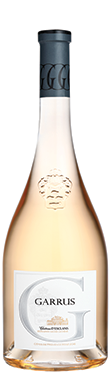

At Château d’Esclans, they have absolutely perfected the art of delivering depth and intensity with the gentlest of encouragements. Where Les Clans majors on restrained elegance, Garrus delivers wonderfully succulent fresh summer fruits, with touches of citrus rind and rose petal, all balanced with perfectly judged acidity to add finesse. With an amazingly long finish, this dances along the palate and is mouthwateringly engaging. From old-vine Grenache and Rolle, 90% free-run juice, optical sorting, with 10 months in new and one-year-old 600-litre oak barrels, with lees stirring.
2016
Château d'EsclansCôtes de Provence

Château d'Esclans, Les Clans, Côtes de Provence, Provence, France, 2016
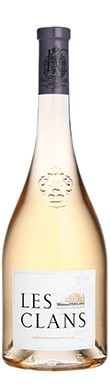
One of my favourite ever vintages of Les Clans, mouthwatering and refreshing, showing soft crushed raspberries with touches of almond macaroon and huge energy through the palate. From a blend of largely old-vine Grenache and Rolle, 90% free-run juice, aged in Burgundy barrels and 600-litre oak casks with weekly lees stirring for 10 months. For me the most enjoyable in the range, in terms of delivering a serious wine that still has the fresh lightness of touch of a perfect summer rosé, it’s understated but always utterly moreish. Hard not to want this in your fridge.
2016
Château d'EsclansCôtes de Provence
Château d'Esclans, Rock Angel, Côtes de Provence, Provence, France, 2017
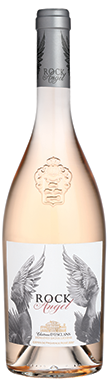
A touch more structure and personality-filled red fruit and rose petal than Whispering Angel – a little more punch, but still with that saline mineral lick. A mix of free-run and gently pressed juice, all optical sorting, aged in 600-litre oak casks. Has a bright finish with lovely persistence.
2017
Château d'EsclansCôtes de Provence
Château d'Esclans, Whispering Angel, Côtes de Provence, Provence, France, 2017
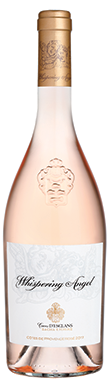
Has always delivered a fresh and sculpted rosé, on the mineral side of fruity, with a kick of mouthwatering salinity on the finish. Feels a little more grown-up than most other rosés in this price bracket. A blend of Grenache, Cinsault, Rolle, Syrah and Tibouren that’s supremely drinkable.
2017
Château d'EsclansCôtes de Provence
Château d'Esclans, The Beach by Whispering Angel, Coteaux d'Aix en Provence, Provence, France, 2017
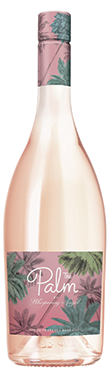
Fruitier and a little deeper pink than Whispering Angel, majoring on raspberry and redcurrant. A supremely easy-to-drink rosé that still manages to deliver the signature sense of restraint that you find across the range.
2017
Château d'EsclansCoteaux d'Aix en Provence
