60 vintages ago the Prunotto winery did something revolutionary in Barolo
Michaela Morris explores the story behind the first Barolo to feature the name of the vineyard on the label.


Few names in Barolo make aficionados’ hearts flutter faster than that of Bussia. Among the earliest of the region’s subdistricts to be identified on wine labels, this year’s 2021 vintage release marks the 60th anniversary of the very first Bussia bottling – from the esteemed Prunotto estate.
Alfredo Prunotto established the estate in 1922 upon buying the ‘Ai Vini delle Langhe’ cooperative, which was on the brink of collapse. He and his wife ran the company until retiring in 1956.
As their children showed no interest in taking over, they sold it to their young winemaker friend – the legendary Beppe Colla.
Having previously worked for the largest grape purchasers in the Langhe, Colla knew exactly where to source the best fruit for his wines.
He was also inspired by his travels to Burgundy: while Barolo was traditionally a blend from vineyards in different locations, Colla introduced a Burgundian model, making single-site wines and labelling them as such.
His approach was revolutionary (and criticised) at the time but eventually became widely adopted, paving the way for the huge diversity of site-specific Barolo we see today. Among the sites Colla chose, Bussia was identified for the quality of its tannins.
Notoriously, the Barolo of Colla’s era required years to soften. ‘With a tendency to sweetness, they [Bussia’s tannins] are very silky almost from the beginning of the wine’s life in bottle,’ notes Gianluca Torrengo, Prunotto’s oenologist since 1999.
‘Beppe considered that accessibility of tannins an added value because it meant not having to wait as long.’
Bussia back then was much smaller than the official MGA of today. It corresponded to the area of Bussia Soprana – an amphitheatre that encompasses the vineyards of Gabutti, Colonnello, Cicala and Romirasco (the latter three made famous by Aldo Conterno) – as well as the neighbouring hill which includes Dardi and Mondoca.
However, when Barolo’s MGAs were legally defined in 2010, Bussia was demarcated as a vast area – approximately 4km as the crow flies.
It now extends all the way from the village of Monforte d’Alba to Castiglione Falletto’s southernmost MGAs of Pugnane and Mariondino; an enlargement that Torrengo explains as bureaucratic, ‘because the name Bussia is also used for a river, a road, a central hamlet and an upper hamlet.’
The next chapter

After managing its distribution since 1989, Antinori acquired Prunotto in 1994. Colla remained at the estate until the transition to Antinori was complete.
Under the guidance of Antinori’s head of winemaking, Renzo Cotarella, the company immediately began buying vineyards, so as not to rely on purchasing fruit.
The first sites purchased were located in Bussia, and today the estate boasts a total of eight hectares of south- to southwest-facing plots in the original nucleus of the MGA.
Piero Antinori’s eldest daughter, Albiera – now president of Antinori – was in her mid-20s when she was tasked with managing the estate. Coming from Tuscany, she recalls that ‘those first few years, we were simply trying to understand’.
Her aim was to walk the tightrope between respecting local tradition and moving forward. ‘We looked for wines that didn’t need 40 years before being drinkable, with a colour that was red rather than rosé.’
This period corresponded with a time when many in the region, including Antinori, were experimenting with everything from more extractive macerations to the use of new French oak barriques.
‘Whether this went too far, I don’t know’, Albiera muses.
A taste of time

Earlier this year, Albiera hosted a tasting of Prunotto’s Bussia at the estate. Spanning six decades, it charted the broader evolution of Barolo – stylistic trends were palpable in the glass.
Although the inaugural 1961 was absent, the lineup did include the exceptional 1978 and almost as outstanding 1985 vintages from Colla’s tenure. Both were thrilling relics of a bygone era.
I couldn’t help being in awe of the 1978. Still vibrant and steely at almost 50 years old, it was impossible to fathom it in its youth. ‘It must have been like drinking lemonade,’ Albiera remarked to me.
The 1978 was also the only Riserva in the roster: until 1983, the Colla family declared almost all their single-site wines as such.
The wines from 1996, 2004 and 2008 represented a transitional phase. Deeper in hue with more volume and bulk, they are ageing less gracefully than the older examples.
While not lacking in flashy charm, the dense, extracted, oak-tinged 2004 was the most illustrative of these extremes, whereas the 2008 suggested an easing up.
Looking ahead
The final three vintages poured – 2016, 2019 and 2021 – demonstrated the direction that Antinori has taken Prunotto after much internal reflection.
In terms of winemaking, extractions are now much gentler, and macerations relatively short (approximately 10 days). French oak is still preferred but the casks are medium to large in size (25 to 75 hectolitres).
‘The last 10 years signify a turning point,’ asserted Cotarella, who was candid about his learning curve with Nebbiolo. ‘Now we are looking to bring depth of flavour without weighing the wine down.’
Indeed, the trio was united by a toned, balletic frame rather than body-builder muscles.
The 2016 struck me as somewhat naïve, though its purity and finesse of tannins were undeniable. Both 2019 and 2021 amplified these attributes, showing greater sophistication and intricacy, particularly in the former.
It remains to be seen if these recent releases will endure as long as their predecessors from the 1970s and 1980s. However, they are clearly poised to offer immense drinking pleasure throughout the arc of their evolution – something that couldn’t necessarily be said about the Barolo of yesteryear.
Prunotto’s Bussia: Tasting back in time
Below, Michaela picks out her six top wines from a tasting which spanned six decades of Prunotto’s Bussia label
Italy newsletter: Sign up today
Get the best recommendations, vintage analysis, regional and cultural insights and more delivered to your inbox once a month, helping you to stay up-to-date with the latest in Italian wine.

Related articles
- Three Barolo producers having a breakout moment
- Cool Barolo: The sites and techniques driving fresher styles in Piedmont
- Barolo 2021: Vintage report & top wines from ‘a modern benchmark’
Prunotto, Riserva, Barolo Bussia, Monforte d’Alba, Piedmont, Italy, 1978
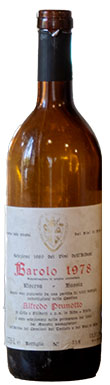

This 1978 lives up to the reputation of the vintage – and the legend of Beppe Colla. While notoriously impenetrable for decades, it now soars from the glass with an emotionally charged bouquet of sweet forest floor, damp earth, exotic spice and rust. Substantial though not rich, the palate demonstrates such immovable freshness and vibrancy. Searing acidity pierces the core and the tannins are seamlessly embedded, giving a proper and thrilling bite. Truffle and iodine flood the finish. While this isn’t going to get any better, it shows absolutely no sign of wavering. A rare and precious time capsule, it would have seen long, long ageing in old large 100hl Slavonian oak casks.
1978
PrunottoBarolo Bussia

Prunotto, Barolo Bussia, Monforte d’Alba, Piedmont, Italy, 1985
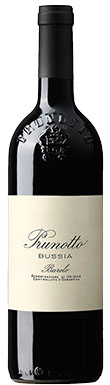
The palest and most tawny in hue of the lineup, the 1985 reveals its aromas furtively: true to the classic restraint of Bussia. With coaxing, potpourri nuances intensify against an earthy backdrop of iron and tar. The palate is ethereally weighted but with a depth of mature fruit leather. Though the tannins are fully resolved, this is neither soft nor tired. Acidity provides a lively tang, and a salty savouriness lingers. By now, the estate had switched from fermenting in cement to stainless steel to give cleaner, more precise aromas. Its refinement shows through even at 40 years old, and those lucky enough to have a bottle shouldn’t hesitate to open it.
1985
PrunottoBarolo Bussia
Prunotto, Barolo Bussia, Monforte d’Alba, Piedmont, Italy, 1996
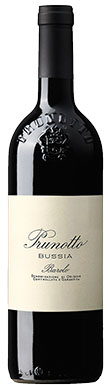
During the first few years following Antinori's acquisition of Prunotto, Beppe Colla’s acolyte Danilo Drocco was at the winemaking helm. He was a fan of this cool, late-harvest vintage. Surprisingly ruby in colour, it is still rather sullen on the nose. Subtle hints of hazelnut, chestnut and smoke emerge, and that brooding character continues with austere flavours suggestive of black tea. The commanding tannins are rigid and a bit hard-edged but it yields somewhat on the finish, trailing off with ash and camphor. I am not sure this will ever be completely harmonious. Drink over the coming years with a hearty braise.
1996
PrunottoBarolo Bussia
Prunotto, Barolo Bussia, Monforte d’Alba, Piedmont, Italy, 2008
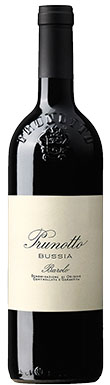
Demure yet attractive, the 2008 doles out developing scents of forest flora, cedar bark, walnut skin and cocoa. It sports the midweight substance and crisp acidity of the cool vintage. There is a succulent, mouthwatering undertow of tangy red currant compote. Initially smooth, the tannins dry out somewhat on the finish – but it's currently in its optimal drinking window. In 2008, Antinori reintroduced a Bussia Riserva from the revered Colonnello vineyard. Previously, all the grapes from Prunotto’s 1ha plot went into this Bussia bottling.
2008
PrunottoBarolo Bussia
Prunotto, Barolo Bussia, Monforte d’Alba, Piedmont, Italy, 2019
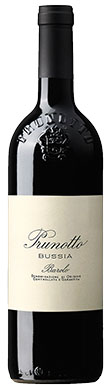
Absolutely lovely and emblematic of Antinori’s contemporary direction at Prunotto. Nothing is forced, allowing the Nebbiolo to shine in a seamless, steady flow. Properly pale ruby and decidedly youthful, it opens slowly though willingly with mineral-tinged mint and tarragon, then preserved red berries, until a profusion of wildflowers joins in. Elegantly weighted and effortlessly balanced, a deep core of rhubarb purity is enfolded in a graceful grip. Liquorice root lends further complexity. Super-classy and fine, this is just about to enter its ample drinking curve.
2019
PrunottoBarolo Bussia
Prunotto, Barolo Bussia, Monforte d’Alba, Piedmont, Italy, 2021
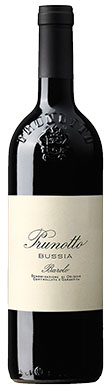
This latest release is progressing beautifully, divulging a little more of its intricacies since I tried it almost a year ago. It offers a heady mélange of alpine blossoms, dusty sage, sweet earth and vanillin. The palate is well endowed with classic Nebbiolo architecture but graciously leaves space for the fruit to expand. Raspberry liqueur is countered by a distinct salinity on the attack. The tannins are taut yet sweet, stretching out to the baking spice finish. Tempting now but should benefit from another year in the bottle.
2021
PrunottoBarolo Bussia
