
A lunch with Louis Mitjavile of L’Aurage
The Mitjavile family in Bordeaux, owners of Roc de Cambes and L'Aurage, are renowned for their singular approach and style. Arthur Coggill sat down to lunch with Louis Mitjavile to find out more.


I, and a host of London’s top sommeliers and journalists, were incredibly privileged to join owner Louis Mitjavile for a masterclass and lunch at Goodman back in May for what was an incredibly illuminating afternoon.
For those unaware of who Louis is and what his father François Mitjavile’s impact have been on Bordeaux, the name that might be more familiar is Tertre Roteboeuf.
Originally founded in 1975 it is an offshoot of Château Bellefont-Belcier, on a prime position at the southern edge of St-Emilion’s famed limestone plateau, next-door to Château Pavie and in front of Château Troplong Mondot.
Scroll down for notes and scores of L’Aurage and Roc de Cambes
François took the 6 hectares that was owned by his wife and her cousins and created a Bordeaux that is truly singular.
A philosophy that is atypically Bordeaux, with a monolithic focus on just one wine per estate and cru, and achieving in their mind the optimum ripeness of their grapes – what Louis’s father calls ‘degraded ripeness’.
With a line-up of five wines over the meal, Louis was disarmingly charming, a great host and at times very contrary to what one would normally expect of a Bordelais château owner.
When asked what his vision was for L’Aurage, which he bought with his wife Caroline in 2007, he replied he was not clever enough to have ambitions but wanted to build on his family’s legacy of success.
Much like Tertre Roteboeuf and Roc de Cambes (which his father bought in the 1980s), L’Aurage has just one wine per year, a true expression of the property from one vineyard in one vintage.
He admits that this does add some pressure, as no mistakes are allowed given there is no plot selection, or multiple wines to blend from.
Ultra ripeness
Picked later courtesy of the warm clay and limestone soil from 100% Merlot vines, the goal is to make a rich and opulent wine, but not one that is simply deep and concentrated, a wine that has very mature tannins, with a ‘degraded’ character, that is almost on cusp of losing the brightness of the fruit at point of harvest.
Louis compares his grapes at picking to the tomatoes you’d get at the market – you don’t choose the underripe and sour fruit for use in your soup or salad, you buy the tomatoes that are bursting with flavour.
He’s certainly not afraid to lose acidity in pursuit of fully mature tannins but knows that balance of acidity and higher alcohols is paramount when you pick at such extreme ripeness.
Judged well, and the higher level of alcohol for Louis adds roundness and richness to the wines.
While the focus on ripeness may from the outside be the sole concern, Louis and his father are adamant that the upbringing or elevage of their wines, and more specifically the oak treatment is equally important to their success.
All three properties use 100% new French oak, but only from one cooper, Radoux, and it is the level of toast, as well as the time spent in-barrel that truly completes their wines.
For those vintages that may be on the fuller side, they might aim for a light toast to bring out mint, coffee and vanilla notes, as well as several rounds of racking, moving wine from one barrel to another, to increase oxygenation.
Louis followed this with the example of the 2023 where they chose a medium toast, but a shorter elevage time in barrel and with fewer rackings.
The Mitjavile philosophy may reach completion in the cellar, but it starts in the vineyard.

A particular character
We were all surprised to learn that what are considered the fashionable and modern Bordeaux viticultural practices, such as sustainable agriculture and cover-crops, Louis and his family have been practising them for decades, as far back as the early 1990s.
Although not adherents to organic or biodynamic practices that Louis considers too restrictive, he believes that the current move towards healthier farming can only be good for St-Emilion, and wider Bordeaux.
Touching on the appellation, Francois’s approach was always to champion the region on the global stage, and support it where he could, but for both father and son the appellation classification was not for them.
And how are the wines themselves? It has to be stated for the record that the Mitjavile style is not for everyone.
The emphasis on optimum ripeness, and near degradation can lean towards a style that is atypically Bordeaux and not in keeping with what you would expect from a Castillon – Côtes de Bordeaux, but the complexity and quality that they achieve in bottle as well as the affordability is certainly something that is worth a second look.
L’Aurage and Roc de Cambes:
Wines are grouped by estate and youngest to oldest vintage
Related articles
- Five Bordeaux vintages to drink now
- The problem with Bordeaux – and how to fix it
- Left and Right Bank Bordeaux – what’s the difference?
Domaine De L'Aurage, Castillon Côtes de Bordeaux, Bordeaux, France, 2020
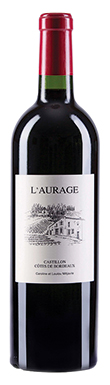

Glossy and weightier in the glass. The nose is dense and rich, not heady but complete, carrying plushly ripe, dark blackberry and plum, this clearly...
2020
Domaine De L'AurageCastillon Côtes de Bordeaux

Domaine De L'Aurage, Castillon Côtes de Bordeaux, Bordeaux, France, 2018
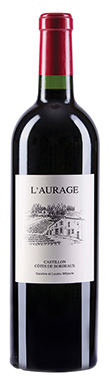
Denser in colour than the 2015, notes of sweetly ripe, but wilder fruit jump from the glass, with more currants, and dried fig touches. Again...
2018
Domaine De L'AurageCastillon Côtes de Bordeaux
Domaine De L'Aurage, Castillon Côtes de Bordeaux, Bordeaux, France, 2015
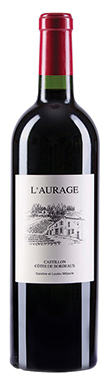
An inky purple in the glass, the nose is rich and full, lavish and heady with ripe pungent cherry and plum, mingling with mocha, milk...
2015
Domaine De L'AurageCastillon Côtes de Bordeaux
Château Roc de Cambes, Côtes de Bourg, Bordeaux, France, 2017
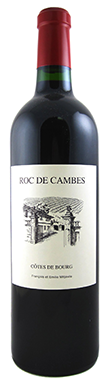
Similar to the 2014 but with less intensity. On the nose there’s that immediate sensation of the vintage – cooler fruit with a certain stalkiness,...
2017
Château Roc de CambesCôtes de Bourg
Château Roc de Cambes, Côtes de Bourg, Bordeaux, France, 2014
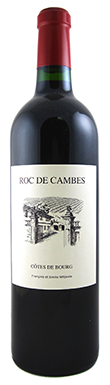
Burnished ruby in colour, notes of woody, underbrush, and sweetly spiced cinnamon lift from the glass. Hints of that Mitjavile inky slate, with ripe degrading...
2014
Château Roc de CambesCôtes de Bourg
