
Aglianico in Campania


Susan Hulme MW profiles the best areas and producers of one Italy's oldest grapes. Plus see her top 12 Campania Aglianico wines, available exclusively to Decanter Premium members...
Aglianico in Campania
Scroll down to see the ratings and tasting notes, available exclusively for Premium members
Aglianico is one of the world’s great grape varieties. It is certainly one of Italy’s three top-quality red grapes, along with Nebbiolo and Sangiovese. If Barolo and Barbaresco, Brunello and Chianti are northern and central Italy’s vinous odes to greatness, then the Aglianico of Taurasi is certainly Italy’s southern counterpart. A great grape must have several features.
These include an historical pedigree; the intrinsic qualities of the variety itself; the ability to produce wines that can age; and the ability to express differences of location or to transmit terroir. Mastroberardino is historically the most important Taurasi producer, with a family history going back to the mid-1800s – for many years it was the lone defender and champion of Aglianico.
‘Its origins are very ancient,’ explains Piero Mastroberardino, who believes that the introduction of Aglianico to Campania can be traced back to ancient Greek settlements in the south of Italy, in around the 6th or 7th century BC. Even the name is said to have Greek origins, being a corruption of Vitis Hellenica (Greek vine). Whatever its origins, Aglianico is undoubtedly one of Italy’s oldest grape varieties.
Continue reading below
Susan’s top Aglianicos:
Place and personality
Mastroberardino gives a description of the variety’s special qualities. ‘The particular values of this ancient variety are the great polyphenolic and aromatic qualities, as well as the acidity level, which is generally higher than in other red grape varieties,’ he says, adding that this gives ‘increased longevity’.
I recently tasted a selection of several 20-year-old Taurasi wines from the mid-1990s which, unbelievably, still seemed a little too youthful. Indeed, Mastroberardino still shows wines going back as far as the 1950s and 1960s which have the freshness and tenacity of much younger wines. These are truly some of the longest-lived wines in Italy.

Aglianico can be found in Molise, Puglia, Calabria, Sicily and Basilicata (home of Aglianico del Vulture Superiore DOCG), but it is in Campania where it finds many of its best expressions. There are two DOCGs here: Taurasi DOCG (established 1993) and Aglianico del Taburno DOCG (since 2011), and there are also a multitude of smaller DOCs in which it features, usually as a single variety but also blended with other local varieties such as Piedirosso.The grape has three different biotypes – Aglianico del Vulture in Basilicata, Aglianico del Taburno in Benevento and Aglianico di Taurasi. To add to this complexity, there are a multitude of clones. Antonio Capaldo of Feudi di San Gregorio remarks that all three DOCG areas have many historic vineyards, whereas in the 1980s and 1990s in many other parts of Italy, vines were replanted with a limited number of clones leading to a much-reduced genetic biodiversity in the planting material.A University of Milan analysis of Feudi di San Gregorio’s old Dal Re vineyard, from which its Serpico wine is sourced, was found to contain more than 40 Aglianico clones among vines aged between 120 and 180 years old. Few grape varieties in Italy have the viticultural richness and heritage to be found in these old Aglianico vineyards.

Sub-regional expressions
Even within Campania, Aglianico expresses itself very differently, with strong variations between Salerno and Paestum on the coast and the inland areas of Avellino (roughly equivalent to the ancient region of Irpinia) and Benevento.
Taurasi is perhaps the most well-known Aglianico denomination and was the first DOCG to be awarded in the whole of southern Italy. It encompasses the area surrounding the Avellino hills, about an hour’s drive inland from Naples – Italy’s deep south. Here, Aglianico produces deeply coloured wines with bracing acidity, firm tannins and high alcohol which have the ability to age for 50 years or more in the right location and the right hands. When tasting, the wines are characterised by black and red berried fruit aromas, with black olive and green herb notes and flavours in youth, developing spicier, tobacco notes with age.
Many of the more traditional-style Taurasi need time to mature. However, as with Barolo there are producers who adopt a more modernist approach, using barrique and micro-oxygenation techniques to make wines that are more drinkable when young. Riccardo Cotarella, one of Italy’s leading consultant oenologists, comments: ‘Aglianico is an outstanding marker of the territory. It is able to express where it comes from like few other vines.’
Taurasi, in the province of Avellino, is much cooler than the coast, and within the 17 villages that make up the Taurasi DOCG there are significant differences between soil (largely volcanic but with significant quantities of clay, limestone and sand) and altitude (ranging from 200m to over 900m above sea level). Aglianico is the last grape variety in Italy to ripen, but to achieve full phenolic ripeness it needs a long, slow maturation, so colder clay or clay-limestone soils are ideal. It also, as Pierpaolo Sirch, CEO of Feudi di San Gregorio comments, ‘needs a dry, well-ventilated site especially in the final phase of ripening’ to avoid problems of rot.
North of Avellino and further inland at Benevento, historically associated with legends of witchcraft and home of the liqueur Strega (the Italian word for ‘witch’), soils are fertile and deep, but because of the higher sand content they retain the heat more efficiently. This in general produces wines with less power and acidity and with alcohol levels usually ranging between 12.5% and 14.5%. The wines are often medium-bodied, with medium acidity and with red berry aromas and flavours; there is a contrasting and attractively bitter note to the tannins.

North of Naples in Caserta, where the Falerno del Massico DOC wines can be made with Primitivo or Aglianico, the volcanic soils are very high in potassium so have a high pH that generally produces wines with a little less acidity, better suited to early drinking rather than long ageing. The Aglianico produced here is slim but elegant with spicy tobacco notes.
In the Cilento region, some exciting earlier-drinking Aglianico is being produced just inland from Paestum. The climate is moderated by its proximity to the coast, although there are some higher elevation points which result in a different mesoclimate, such as the site for San Salvatore’s vineyards.
Their winemaker Alessandro Leoni describes Aglianico from Cilento as showing ‘the same behaviour as Merlot in Bolgheri’, becoming ‘smooth and round and ready within one year of the harvest’. These wines have an appealing luminosity, and intensity of aromas (bright blackberry, liquorice and spice) and a clarity of flavours which make them very easy to love, almost as if Aglianico grown near the coast takes on a sunnier personality.
Built to last
So why isn’t Aglianico more popular? Well, it is naturally a very tannic grape and traditionalstyle wines tend to need at least 10 to 15 years to come around – not something which suits the modern drinker – and this may have coloured its reputation somewhat. But now there is a much better general understanding of how to get the best out of Aglianico in both the vineyard and the winery, particularly by having a gentler pressing, extracting the tannins from just the skins and avoiding the stalks and seeds.

Campania also offers a variety of styles, some of which allow early drinking without losing the essential character of the grape. It is a grape variety which rewards patience, as aromas and flavours evolve in the glass over time, revealing the hidden depths and complexity that only the great grape varieties can consistently deliver. Claudio Panetta of Il Cancelliere sums it up perfectly, describing Aglianico as ‘a gastronomic wine, but also a meditation wine that can be drunk young for its exuberance and can be preserved and enjoyed in its maturity’.
Perhaps another ingredient for greatness should be mentioned: the producers. There is a real feeling of excitement about Aglianico’s future among the growing community of producers, some of whom have converted from being simple grape-growers into producers themselves, but who all have a passion for the grape.
Historic names such as Mastroberardino, Antonio Caggiano and Salvatore Molettieri have been joined by Feudi di San Gregorio, Il Cancelliere, Luigi Moio, Roberto di Meo, Luigi Tecce, Perillo, Colli di Lapio, Pietracupa, Ciro Picariello and many more. These producers believe in Aglianico’s potential and are researching, experimenting and exchanging ideas about how to coax the most out of this venerable variety. This makes one feel that although Aglianico has had an incredibly long history, the best is yet to come.
Susan Hulme MW is a wine consultant, educator and judge who specialises in Italy.
Related content:
Feudi di San Gregorio, Serpico, Irpina, Campania, Italy, 2009
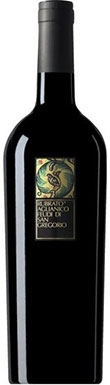

Grapes come from the ancient Dal Re vineyard with vines aged between 120 and 180 years. Vividly impressive – the powerful Aglianico is tamed by...
2009
Feudi di San GregorioIrpina

Mastroberardino, Naturalis Historia, Taurasi, Campania, Italy, 2007
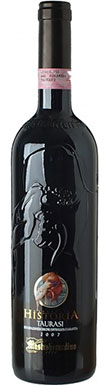
Mastroberardino’s flagship, singlevineyard wine from 40-year-old-plus vines and Aglianico at its sophisticated best. Roast coffee beans, smoky bonfire and nuanced, floral, violet aromas announce its...
2007
MastroberardinoTaurasi
Quintodecimo, Vigna Quintodecimo, Taurasi Riserva, Campania, Italy, 2012
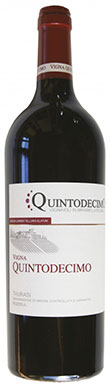
There is a brightness and clarity to the aromas and flavours of this wine that put it in a different class. Rhubarb and flint notes,...
2012
QuintodecimoTaurasi Riserva
Di Meo, Taurasi Riserva, Campania, Italy, 2008
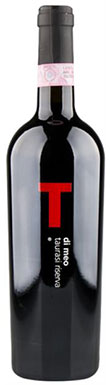
From the Vigna Olmo vineyard grown at 850m comes a wine with red fruits, pepper, spice and black olive aromas reminiscent of the Rhône. Very...
2008
Di MeoTaurasi Riserva
Perillo, Taurasi Riserva, Campania, Italy, 2008
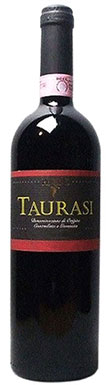
Michele Perillo has produced a wine with beautifully silky, refined and textured tannins, plus layers of red and black berried fruit, spice and smoke notes....
2008
PerilloTaurasi Riserva
Cantine Antonio Caggiano, Vigna Macchia dei Goti, Taurasi, Campania, Italy, 2013
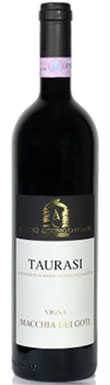
From the Macchia dei Goti single vineyard, 350m above sea level, on clay/limestone soils. Savoury aromas give way to cassis and raspberry; medium-bodied, with smoothly...
2013
Cantine Antonio CaggianoTaurasi
Il Cancelliere, Nero Né, Taurasi, Campania, Italy, 2011
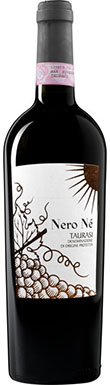
Nero Né is truly an authentic expression of Aglianico grown on the slopes of Montemarano. Full of dark flavours and aromas of roasted coffee beans,...
2011
Il CancelliereTaurasi
San Salvatore 1988, Omaggio a Gillo Dorfles, Paestum, Campania, Italy, 2013
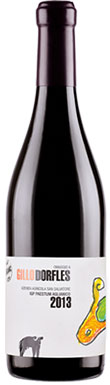
Super-clean and precise aromas of blackberry, black pepper and spice, with light tar and smoke notes too. Concentrated and compact; juicy and modern. Full of...
2013
San Salvatore 1988Paestum
Marisa Cuomo, Rosso Riserva, Costa d'Amalfi, Campania, Italy, 2012
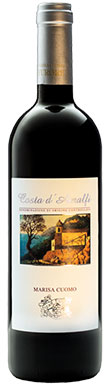
Blend of 50% Aglianico, 50% Piedirosso. Luigi Moio is the oenologist. Terraced vineyards above the Amalfi coast sit at 300m above sea level. Lively mint,...
2012
Marisa CuomoCosta d'Amalfi
Mustilli, Cesco di Nece, Sant'Agata dei Goti, Sannio, Campania, Italy, 2014
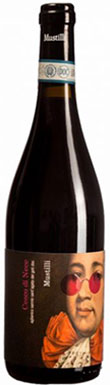
With sweet spice and blackberry aromas and flavours, this is creamy and long on the palate. Gentle, refined tannins. There’s a charming subtlety and ease...
2014
MustilliSannio
Fontana Reale, Morgia Noce, Sannio Riserva, Campania, Italy, 2011
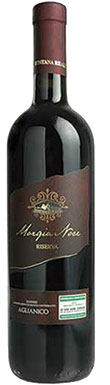
Organically grown grapes reveal a warm, earthy red berry and spice nose, medium weight and smooth texture with very attractive, raspberry spice flavours, followed by...
2011
Fontana RealeSannio Riserva
La Guardiense, I Mille Per l'Aglianico, Sannio, Campania, Italy, 2012
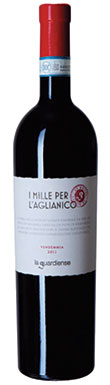
This wine is named for the 1,000 members of the La Guardiense cooperative in Santa Lucia. Notes of red berries and cream are backed by...
2012
La GuardienseSannio
