
Antinori’s 2017s: Tignanello & Solaia tasted
Aldo Fiordelli tastes the latest releases of Tignanello and Solaia from the Antinori stable, a ‘challenging but not difficult vintage,’ according to Renzo Cotarella...


This time next year, the 2021 harvest will mark 50 years of Tignanello, one of the most celebrated Italian wines. In 1971 this cult classic was one of the first reds from Tuscany to be vinified without the use of white grapes. It was also the first Sangiovese blended with international varieties like Cabernet Sauvignon and aged in small oak barrels instead of the traditional botti (large oak casks).
Vigneto Tignanello, as it was called at the beginning, was also one of the first crus within the Chianti Classico region. Just like the David was able to alter the aesthetic taste of the greater population in the world of art, this wine forever changed modern winemaking in Tuscany. Tignanello is to modern wines what Michelangelo’s sculpture was for the Renaissance: power without compromising grace.
This is what the Antinori family has always pursued. Even today, with the release of the 2017 vintage. It was a ‘challenging but not difficult vintage,’ explains Renzo Cotarella, CEO of Antinori estates. ‘It was hot, of course, and dry. The grapes weighed on average 0.8 grams, almost one-third less than the usual 2 grams we are used to with Cabernet Sauvignon. Nevertheless, we registered temperatures at night around 20-22°C, which allowed the vines to recover.
‘We are between 300 and 450 metres above sea level with both Tignanello and Solaia, so we harvested anyway in October. If we compare it with 2003, where the temperatures were 40°C during the day and 28°C at night, it’s easy to understand the differences presented in this vintage.’ The production of Tignanello was cut back 30% in 2017, from 340,000 to 270,000 bottles, although Solaia production remains steady.
Both wines come from Antinori’s Tenuta Tignanello in the gently rolling hillsides between the Greve and Pesa river valleys. The estate extends over an area of 319 hectares, of which about 130ha are dedicated to vines. Two of the estate’s most prized vineyards, Tignanello and Solaia, lie on the same hillside planted over marine marl soils rich in Albarese and Galestro (chalk and schist soils, respectively) that originate from the Pliocene era. Tignanello is a blend of 80% Sangiovese with 15% Cabernet Sauvignon and 5% Cabernet Franc, while Solaia is Cabernet Sauvignon-based (73% in 2017) with 20% Sangiovese and 7% Cabernet Franc.
‘Over the years we have used increasingly more Sangiovese in the Tignanello blend, and in the future it will be even more,’ claims Cotarella, not excluding the possibility of arriving at almost 100% of the indigenous Tuscan variety. The same can be said of Cabernet Sauvignon in Solaia, though the CEO is quick to note that ‘here Sangiovese represents the DNA of the wine’.
A surprising detail in the vinification process is that Antinori selects most of its new oak barrels after the harvest, once the character of the wine and the tannins are better understood. ‘The quality of a red wine,’ concludes Renzo Cotarella, ‘is measured by the handling of its tannins. We could choose to manage this with the timing of harvest, or with the fermentation, or the maceration or even the blend. By postponing the choice of oak, we can best express the vintage, the grape varietals and the terroir’.
Tasted at the end of August in Bolgheri, Tignanello reveals its bright cherry fruit alongside steady structure, with a balsamic character right away. Solaia, in comparison, is super-restrained with a creamy palate and great concentration: as usual never cutesy, always elegant.
Tasting Tignanello 2017 & Solaia 2017
You may also like:
The September releases from Italy and France
Bolgheri 2017 vintage report: Experience counts
Super Tuscan evolution: Comparing Tignanello and Solaia
Antinori, Solaia, Toscana, Tuscany, Italy, 2017
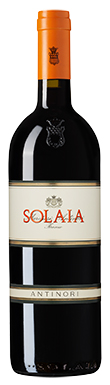

Super-restrained cassis fruit with an almost blueberry maturity in front of violet, clove and blond tobacco spiciness. Retasting the wine the next day, it shines...
2017
AntinoriToscana

Antinori, Tignanello, Toscana, Tuscany, Italy, 2017
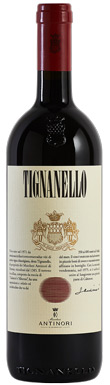
Forward plum and cherry aromas are accompanied by black pepper, clove and the typical floral notes of the Chianti Classico area like orris and violet....
2017
AntinoriToscana
