
Austrian indigenous grape: Zierfandler
Late-ripening, high acidity plus the potential to display great complexity when aged - get to know the local speciality white wine from South of Vienna.


The Thermenregion stretches southwest from Vienna and includes the spa towns of Bad Vöslau and Baden.
Its most famous wine village is Gumpoldskirchen, which used to produce rich and long-lived wines, often with considerable sweetness, but the style has fallen out of fashion, though such wines can still be found.
Scroll down to see tasting notes and scores for five Zierfandler wines worth seeking out
Nonetheless, they are both of considerable interest and deserve to be better known – a separate article on Rotgipfler will follow.
Although indigenous to the region, the varieties could hardly be more different. Zierfandler is late-ripening and has high acidity, giving it a Riesling-like structure and considerable longevity.
Rotgipfler, in contrast, ripens earlier, and its flavour profile is packed with hints of tropical fruit, while its plump texture is totally unlike the rapier-like Zierfandler.
Both varieties have their partisans, and I’m an enthusiast for the racy Zierfandler over the fatter, more opulent Rotgipfler.
However, there is no need to choose, as the Gumpoldskirchen tradition was to blend the two, the acidity of the former cutting the plumpness of the latter. Naturally, to confuse consumers even more, Zierfandler, when blended, is usually known as Spätrot, giving a wine called Spätrot-Rotgipfler.
It’s still produced – there are good examples from Reinisch and Stift Klosterneuburg – but the trend for some time has been to make monovarietal wines. Despite the frequent sweetness of much Rotgifler, Zierfandler is no slouch in the sweetness stakes, and in certain years can produce TBAs of searing purity and freshness.
Zierfandler is not that easy to grow. Picked too early, and the acidity can be aggressive; overcropped, and it can be neutral. It also benefits from bottle age. Reticent in its youth, Zierfandler can be tense and rigid before opening up after a few years to show great complexity.
It’s not just the nomenclature that prevents these wines from being better known. The surface planted with both is small, so production and distribution are limited. Also, the Thermenregion is well stocked with Heurigen (wine taverns) so much of the wines are consumed by thirsty locals or Viennese on a day trip. Fortunately, the wines that find their way into bottle tend to be of superior quality.
Zierfandler is likely to remain a niche wine, and Spätrot-Rotgipfler even more so. Distribution outside Austria, even outside the region, remains limited, although the wines do have an ardent, if limited, following. That does not mean they are not worth seeking out. Zierfandler will appeal to those with relatively classic tastes when it comes to flavour and structure in white wines (although Heinrich Hartl does produce an intriguing ‘orange’ wine from the grape); Rotgipfler and the blends offer an exoticism reminiscent of a very ripe Pinot Gris from Alsace. It’s tempting to cling to the tried and tested – and in Austria that usually means Grüner Veltliner – but it can be more rewarding to stray in the direction of local specialities.
See tasting notes and scores for five Zierfandler wines worth seeking out
Related content
Schloss Gobelsburg: Tasting five decades of Heiligenstein RieslingDomäne Wachau: producer profileAustria’s Wagram region granted DAC status
Heinrich Hartl III, Zierfandler, Thermenregion, Niederösterreich, Austria, 2021
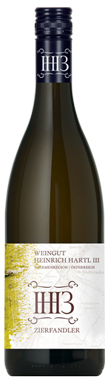

This confident producer has sometimes made a Zierfandler fermented on the skins and aged in barriques, an orange wine of considerable complexity. But I still...
2021
Heinrich Hartl IIIThermenregion

Johanneshof Reinisch, Spiegel Zierfandler, Thermenregion, Niederösterreich, Austria, 2020
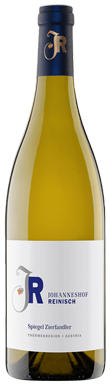
The organic Reinisch estate is best known for its fine red wines, but this single-vineyard Zierfandler, which is aged in 700-litre barrels and amphorae, is...
2020
Johanneshof ReinischThermenregion
Stadlmann, Igeln Zierfandler, Thermenregion, Niederösterreich, Austria, 2019
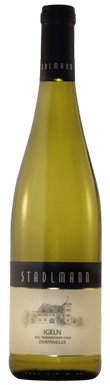
Stadlmann is arguably the region's top Zierfandler producer. Of his single-vineyard wines, Mandel-Hoh is generally the most structured and intense, but in 2019 Igeln, from...
2019
StadlmannThermenregion
Aumann, Zierfandler, Thermenregion, Gumpoldskirchen, Niederösterreich, Austria, 2021
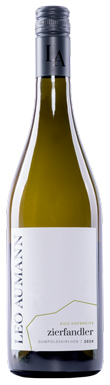
The nose is still subdued, with lurking lime and green apple aromas, but the palate is far more expressive. Produced from old vines, this is...
2021
AumannThermenregion
Freigut Thallern, Zierfandler, Thermenregion, Niederösterreich, Austria, 2020
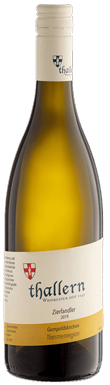
This ancient monastic estate was leased in 2009 by a group of Austrian wine producers, who completely renovated the property. This is a classic Zierfandler,...
2020
Freigut ThallernThermenregion
