
How terroir makes a difference in Barbaresco
A tasting of Produttori del Barbaresco's 2015 Riservas, courtesy of Astrum Cellars, was a great opportunity to explore how terroir can make a difference. See tasting notes for all of the producer's nine single-vineyard Riservas, plus a Barbaresco and Langhe Nebbiolo...


A recent tasting of single-vineyard Riservas from acclaimed co-operative, Produttori del Barbaresco, was a fascinating opportunity to delve into the differences between each vineyard site and see how Barbaresco terroir can make a difference.
Barbaresco has been overshadowed in the past by Barolo, but in fact these two areas, separated by just over 10 miles, aren’t dissimilar in quality these days. In fact, some of Barbaresco’s vineyards – Asili, Monstefano and Rabajà, for example – stand side by side with the best from Barolo.
The Barbaresco region sits adjacent to the Tanaro river. The four Barbaresco communes – Barbaresco, Neive, Treiso and San Rocco – cover about 700ha in total. The hills vary in height from around 200-400 metres above sea level.
About Produttori del Barbaresco
Founded in 1958 by Don Fiorino Marengo with 19 growers, the Produttori del Barbaresco co-operative now has 50 members with around 110ha between them. In a successful vintage, nine crus are bottled as Riservas, exclusively from the commune of Barbaresco. This is in addition to a blended Barbaresco and a Langhe Nebbiolo DOC. In total, a vintage at the co-operative can produce 500,000 bottles.
Produttori del Barbaresco’s terroirs – from north to south:
Ovello
This vineyard is at the northern tip of the appellation in the commune of Barbaresco, situated on a large hill. It’s the largest MGA (designated vineyard) in Barbaresco at just over 20ha – twice the size of the second largest, Pora. In this sense, it’s reminiscent of the diverse and sprawling Bussia MGA in Barolo.
The soils have more clay than in the other vineyards, and the hill exposes vines to cooling northern winds, giving these wines a fuller body and the prominent tannins they are known for.
Montefico
Abutting Ovello’s southern end but more often compared with Montestefano to the south, Montefico is a fairly small 3.86ha vineyard in the Barbaresco commune known for the high quality of its wines. It is south-facing on calcareous clay soils with a high calcium content, and the vines occasionally receive a cool northern wind that is funnelled through the valley between the towns of Barbaresco and Neive.
These wines are well structured and age very well.
Montestefano
The wines from this 4.49ha vineyard in the commune of Barbaresco tend to be broad, structured and ageworthy. Like its close neighbour Montefico, the vineyard is south-facing and the calcareous clay soil is high in calcium, but here the slope is steeper and it doesn’t feel as much cooling influence from the northerly winds.
Pajè
This small 1.82ha vineyard is a south- southwest-facing basin exposed to the cool northern winds that run through the valley, in the commune of Barbaresco. The calcareous clay soils are high in calcium, helping to give structure to the wines.
Muncagota
Originally known as Moccagatta, this southeast-facing vineyard is 3.82ha in size, lying to the southeast of Pajè in the commune of Barbaresco. On its southern end, the vineyards of Muncagota, Asili and Rabajà conjoin.
This is another vineyard featuring plenty of calcium, giving structure to the elegant florality that comes from absorbing the morning rather than afternoon sun.
Asili
A complex vineyard of just 2.28ha in the commune of Barbaresco, the main part of Asili forms a south- southwest-facing basin on sandy soils, abutting Pora. The vines are well protected from the winds here, giving a warmer micro-climate, while it rises to the east to a slightly more exposed location bordering Rabajà.
The soils here encourage intense yet elegant and aromatic wines famed for their ageability.
Pora
At 10.73ha, Pora is one of the larger vineyards, situated in the commune of Barbaresco. The southwest-facing vineyard lies very close to the Tanaro river and features more fertile soils and higher humidity than elsewhere in the region as a result. In addition, the micro-climate is more temperate due to its lower altitude and proximity to the river.
The wines here are consequently softer and more succulent, ideal for early to mid-term drinking.
Rabajà
This southwest-facing 3.72ha vineyard lies at the junction of the two ridges that form the outline of the Barbaresco commune. The soils are complex, a mix of looser, more fertile soils running to the west and more compact soils with higher calcium content running to the north. At the northern end, this vineyard joins both Muncagota and Asili.
The wines here are dark and rich thanks to the exposure to the afternoon sun, combining power with elegant tannins.
Rio Sordo
The 4.5ha Rio Sordo vineyard lies on a southwest-facing ridge at the southern end of the Barbaresco commune. The calcareous clay soils have less calcium in them than elsewhere, which ensures the wines are often soft and silky but with underlying power and structure.
Tasting the wines:
Produttori del Barbaresco, Nebbiolo, Langhe, Piedmont, Italy, 2018
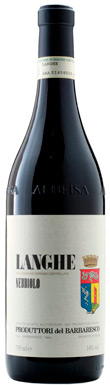

<p>This Langhe Nebbiolo is sourced from across the region and on a combination of soil types. It's fermented in concrete to preserve freshness, before ageing...
2018
Produttori del BarbarescoLanghe

Produttori del Barbaresco, Barbaresco, Piedmont, Italy, 2016
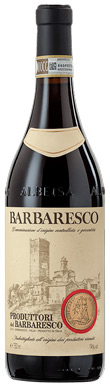
While the riserva wines usually occupy centre stage, it is easy to forget just how good this co-op’s generic Barbaresco can be. In great years...
2016
Produttori del BarbarescoBarbaresco
Produttori del Barbaresco, Montestefano Riserva, Barbaresco, Barbaresco, Piedmont, Italy, 2015
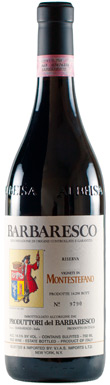
This small cooperative goes from strength to strength under the dynamic management of Aldo Vacca. Montestefano is one of the top sites in the commune...
2015
Produttori del BarbarescoBarbaresco
Produttori del Barbaresco, Asili Riserva, Barbaresco, Barbaresco, Piedmont, Italy, 2015
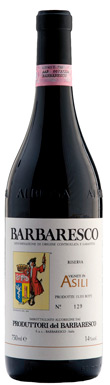
<p>Asili has a warmer microclimate than most of the other vineyards here. It was first produced by Produttori as a single-vineyard wine in 1967. The...
2015
Produttori del BarbarescoBarbaresco
Produttori del Barbaresco, Rabajà Riserva, Barbaresco, Barbaresco, Piedmont, Italy, 2015
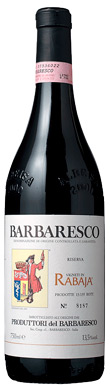
<p>Rabajà has a complex mix of soils and at its northern edges joins the vineyards of Asili and Muncagota. This was first bottled by Produttori...
2015
Produttori del BarbarescoBarbaresco
Produttori del Barbaresco, Montefico Riserva, Barbaresco, Barbaresco, Piedmont, Italy, 2015
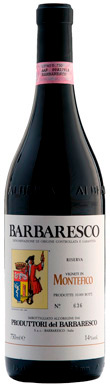
<p>Montefico lies immediately to the south of Ovello and just north of Montestefano. Produttori's first single-vineyard release from this site was in 1970. In 2015,...
2015
Produttori del BarbarescoBarbaresco
Produttori del Barbaresco, Pajè Riserva, Barbaresco, Barbaresco, Piedmont, Italy, 2015
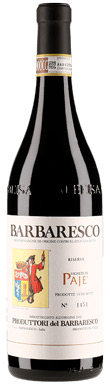
This is a small vineyard close to the village of Barbaresco, and its limestone-dominant soils usually give wines that are bright and floral - this...
2015
Produttori del BarbarescoBarbaresco
Produttori del Barbaresco, Ovello Riserva, Barbaresco, Barbaresco, Piedmont, Italy, 2015
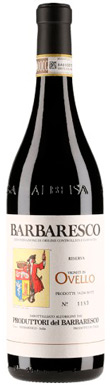
<p>Ovello is the northernmost vineyard in the Barbaresco commune - and the largest. It was one of the original five vineyards individually bottled in 1967...
2015
Produttori del BarbarescoBarbaresco
Produttori del Barbaresco, Muncagota Riserva, Barbaresco, Barbaresco, Piedmont, Italy, 2015
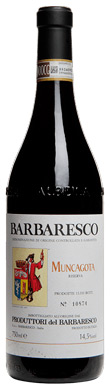
<p>The southeast-facing Muncagota vineyard catches the morning sun, giving this wine a slightly lighter character. This 2015 has delicious red berry and cherry flavours and...
2015
Produttori del BarbarescoBarbaresco
Produttori del Barbaresco, Pora Riserva, Barbaresco, Barbaresco, Piedmont, Italy, 2015
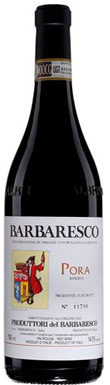
Pora is one of Barbaresco's largest vineyards, situated on a southwest-facing slope close to the river where the soils are relatively fertile and loose. Produttori...
2015
Produttori del BarbarescoBarbaresco
Produttori del Barbaresco, Rio Sordo Riserva, Barbaresco, Barbaresco, Piedmont, Italy, 2015
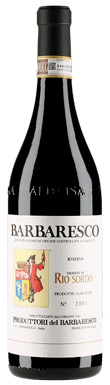
<p>At the southern end of the commune of Barbaresco lies Rio Sordo, known for producing powerful wines. First produced by Produttori in 1978, this is...
2015
Produttori del BarbarescoBarbaresco
