
Baudains: How biodynamics let Lageder’s Löwengang Chardonnay find its voice
Richard Baudains meets Alois Lageder IV, ex-president of the biodynamic certification body, Demeter, in Alto Adige for a tasting of the estate's Löwengang Chardonnay.


I met Alois Lageder and head winemaker, Jo Pfisterer, in April this year at Summa, the annual wine event which Lageder host at their property in Magré, in the Alto Adige in northern Italy.
Alois is in his early 70s; tall, with slightly receding, wiry hair, a polyglot with a consummate command of English, charming, quiet mannered, a vegetarian, and the ruddy complexion and tweedy jackets of a country gentleman. He has been running the Lageder estate and winery for exactly 50 years this year.
After a degree in economics and studies in enology, Alois IV assumed the management of what was then a traditional, solidly established, family business (the kellermeister was his brother-in-law) – he was only 24.
Scroll down to see notes and scores for the Löwengang Chardonnay
Holistic
Alois grew up in a family with a culture of respect for nature (his mother kept a biodynamic vegetable garden) and he says it was natural to want to extend that to the estate when he took over. He read Steiner in the 1970s, but confesses: ‘I didn’t understand too much of it at that time,’ and he put biodynamics to one side until he felt ready to undertake the complex task of converting the 50 hectare estate to Steiner’s principals; a process which lasted through the 1990s.
Demeter certification came in 2004, and Lageder was later to become president of this biodynamic association, from 2016 to 2022. Alongside the conversion in the vineyards, Alois also saw an urgent need to put the vinification facilities on an ecological footing.
The revolutionary, holistic, eco-compatible cellars came into operation in 1996, and they remain today one of the most advanced of their kind in Italy with – among other features – zero-carbon emission, no pumps, all natural building materials, and temperature regulation using geothermal energy.
The estate has 55ha of its own vineyards, located in various areas of the Adige valley, and sources grapes from around 90 long-term suppliers, some of whom are certified organic or biodynamic, and the rest conventional.
Wines from non-certified growers are bottled separately, but the range – which comprises over 30 different lines – currently has only six wines which are without certification.
Shifting style
It has been said that Lageder’s Löwengang Chardonnay was to the Alto Adige what the Super Tuscans were to Tuscany in the early 1990s – a demonstration that the region was able to compete on the world stage with a classic international variety.
There was an element of chance in the way it came about: Lageder recounts that Robert Mondavi was on a visit to the estate in 1981 and, upon tasting the wines from the property, enquired how they were aged.
‘In large barrels, as we always have done,’ was Lageder’s reply. ‘Have you thought about barriques?’ asked Mondavi. ‘Try it and I’ll come back next year to taste the wine.’
That was exactly what happened, and after a period of experimentation, the first official vintage of the new style Löwengang Chardonnay came out in 1984. It is the wine which more than any other traces the evolution of winemaking at the estate, from the international style of the vintages of the 1990s, which drew comparisons with France and California at the time, to the more terroir-oriented, mineral, low intervention wines, post-Demeter.
Pergolas and new oak
Löwengang Chardonnay is typically sourced from 8ha of the 15ha available between estate properties and long-term contract growers. The majority of the plots are on the calcareous soils on the west side of the Adige, although there are also grapes from the high slopes above Salorno on the opposite side of the valley. All the vineyards are certified biodynamic, and 60% are pergola-trained in the traditional way.
Over the years, there has been a drastic reduction in the amount of new oak used in the winery. Lageder states that ‘In the early years we were buying 130 new barriques a year, now it is down to 30.’ Currently, only around 10% of the wood used for Löwengang is new.
Accompanying this, there has been a reduction in the amount of battonage, and the tendency to move the wine as little as possible during ageing. ‘In the past, we used to rack the wines at the first signs of reduction; now we tend to leave them alone to come around by themselves,’ says Lageder.
Spontaneous fermentation was introduced in 2004. Alcohol levels are constant at around 12.5%, and even in hot vintages rarely exceed 13.0%.
Impressive longevity
The longevity of Löwengang Chardonnay is amazing. The older vintages have lost some intensity, but never freshness. There is not a shadow of oxidation in any of the wines tasted, and the level of quality is incredibly consistent across vintages.
The wines appear more subtle in cool and wet years such as 1992, and expansive in hot and dry years such as 2015, but they always seem capable of giving the kind of pleasure that is hard to reduce to a points score.
Tasting Löwengang Chardonnay
Including a cuvée of old vintages – the Inedito II. Wines are listed youngest to oldest
Related articles
- Expert’s Choice: Northern Italy’s Schiava
- Premium white blends of Friuli and Alto Adige
- Alto Adige for winelovers
Alois Lageder, Inedito II, Vigneti delle Dolomiti, Trentino-Alto Adige, Italy
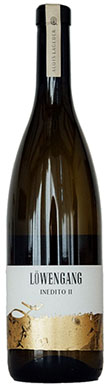

There's an extraordinary, multi-layered array of aromas on the nose, from mature and delicately oxidised to fresh, pure fruit. Intense, with a vibrant entry, the...
Alois LagederVigneti delle Dolomiti

Alois Lageder, Löwengang Chardonnay, Vigneti delle Dolomiti, Trentino-Alto Adige, Italy, 2021
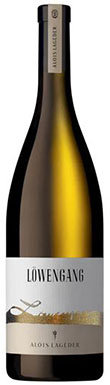
Intense and complex, it displays slightly lifted scents of meadow blossom, bruised apple and lime, with suggestions of creamy pastries in the background. Great energy...
2021
Alois LagederVigneti delle Dolomiti
Alois Lageder, Löwengang Chardonnay, Vigneti delle Dolomiti, Trentino-Alto Adige, Italy, 2015
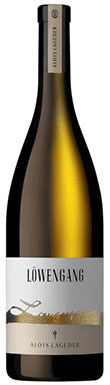
Herbs and crème fraîche aromas are accompanied by a distinctly minerally character which carries through onto the palate. This is a broader and fleshier wine...
2015
Alois LagederVigneti delle Dolomiti
Alois Lageder, Löwengang Chardonnay, Vigneti delle Dolomiti, Trentino-Alto Adige, Italy, 2014
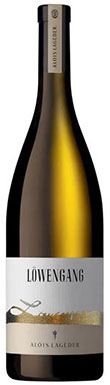
A much paler shade is immediately noticeable. The nose is fresh and zippy, with lemon rind, subtle white blossom and much less evident oak. Slim...
2014
Alois LagederVigneti delle Dolomiti
Alois Lageder, Löwengang Chardonnay, Vigneti delle Dolomiti, Trentino-Alto Adige, Italy, 2006
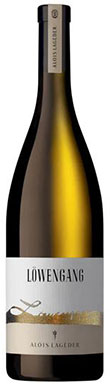
Scents of camomile, pressed flowers and a certain leafy quality are joined by ripe apple notes. Powerful, warm and tangy on the palate with a...
2006
Alois LagederVigneti delle Dolomiti
Alois Lageder, Löwengang Chardonnay, Vigneti delle Dolomiti, Trentino-Alto Adige, Italy, 1992
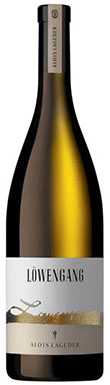
From a notoriously difficult, wet vintage, the 1992 is showing some signs of maturity on the nose, with the buttery quality more to the front,...
1992
Alois LagederVigneti delle Dolomiti
Alois Lageder, Löwengang Chardonnay, Vigneti delle Dolomiti, Trentino-Alto Adige, Italy, 1990
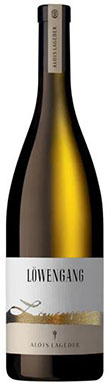
The 1990 is very attractive: bright yellow straw in colour with aromas of ripe yellow fruit on a delicate background of buttery toast. There is...
1990
Alois LagederVigneti delle Dolomiti
