
Baudains: ‘Natural wines don’t stink’
In the first of a monthly column exclusively on Decanter Premium, Richard Baudains considers the evolving winemaking approaches to natural wines.


It is legitimate to hesitate before writing natural wine without inverted commas, given the difficulty in defining what might actually constitute natural wine. Despite the grey areas, and leaving aside the semantics of ‘natural’, there’s a general understanding that a natural wine will be made from organic grapes, with few or no additives or manipulation, probably with spontaneous fermentation and without fining or filtering.
This approach to vinification can take wines outside many peoples’ comfort zones, with the risk of excess volatile acidity, brettanomyces, and oxidation – but also a whole raft of other unfamiliar and frankly unpleasant aromas which incur the wrath and indignation of journalists who, in no uncertain terms, have largely branded natural wine as undrinkable in the past.
Scroll down to see notes and scores for 10 (non-stinky) Italian natural wines
Badge of honour
Producers tend to take two positions towards this criticism. The hard line is to trenchantly defend what would generally be considered winemaking faults as a testimony to a wine’s ‘naturalness’, and wear them as a badge of honour. The response I have often heard is that sommeliers, oenologists, journalists and the world at large don’t understand natural wine (and you may wonder what is there to understand… surely a wine is either enjoyable or not). I can’t help thinking there is a touch of victimism in this stance.
The softer line, adopted by many supporters of natural wine goes something like, ‘look beyond the unfamiliar at what lies behind, and learn to appreciate the vitality and spontaneity.’
This assumes that one needs to be inducted into natural wine, and probably change one’s tasting parameters, which actually works for many people who, after initial perplexity, become hooked on natural wines.
With some reservations, as a taster with an Italian wine guide that receives a lot of samples from natural winemakers, I would include myself in this category, although I also have to taste a lot of wines which I really wouldn’t want to drink.
A third way
A third position is also starting to emerge. I first heard it stated explicitly three years ago, during a cellar visit to a biodynamic producer in Puglia who declared, (verbatim), ‘Natural wines don’t stink!’
And in fact, his didn’t – they had pure, vibrant fruit, with depth and complexity. They were altogether very satisfying wines. This idea that natural wine shouldn’t be difficult to appreciate is being echoed increasingly at shows and tastings. Are we seeing the rehabilitation of natural wine? Are producers overcoming the problems that beset them in the past?
To try to find out, I went to the annual show of the VinNatur group at Gambellara in the Veneto to taste the wines and talk to the president of the association, wine producer Angiolino Maule. The VinNatur group was founded in 2006 with an initial 50 members from Italy and France, and has grown to its current 300 members in 12 countries.
Many of the wineries are young, small-scale and would probably not be familiar to anyone outside natural wine circles, but there are also a number of larger, well known and widely regarded members.
Associates have to adhere to a code of conduct which goes a long way beyond the much less stringent EU regulations for organic wine. It allows for a little flexibility in some areas, but is rigorous on the fundamentals of organic viticulture and the exclusion of additives in the cellar.
Every year, 40% of the member wineries are inspected by an external agency, and all the producers’ wines are sent to an independent laboratory to check for pesticide residue and the presence of sulphites above the limits specified in the code of conduct (50mg/l for whites; 30mg/l for reds).
The vast majority get the thumbs up. Any producer who does not conform can request a second chance, but after that the association is unforgiving.
A proactive approach
This approach, however, is not punitive but aims to be supportive and proactive. The association recognises that, in the words of Angiolino Maule, ‘it is 10 times more difficult to make a natural wine,’ and that ‘there is much to learn.’
This is one of the areas in which VinNatur is most active, funding research, for example, into procedures to avoid oxidation in wines without recourse to SO2, and into ways to reduce and hopefully eliminate the use of copper-based products in the vineyard.
There is a common perception that natural wine somehow makes itself, but in fact it involves an awful lot of science.
During tasting, I found some wines with slightly precarious balance, but on the whole I came away from the event with the impression that producers are increasingly showing us the positives of low intervention winemaking and fewer of the problematic aspects.
It confirmed my conviction that natural wine should not, and need not, be approached as a separate category which dictates criteria of judgement different to those of any other wine.
10 Italian natural wines that don’t stink:
Related articles
- Aldo Fiordelli: ‘Deep historical reasons connect Italians to the bitter taste in wine’
- Andrew Jefford: ‘Without the younger generation we’ll lose farming as it exists here’
- Qvevri wines from Georgia: A winemaking story and 12 wines to try
Daniele Piccinin Muni, Epoché Durello Metodo Classico, Veneto, Italy, 2020
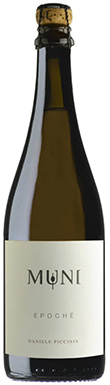

Made from 100% Durello, grown on the hills at the foot of the Monte Lessini. Whole-bunch vinification of the base wine, and tirage made with...
2020
Daniele Piccinin Muni

San Lurins, Frizzante Ribolla Gialla, Venezia Giulia, Friuli-Venezia Giulia, Italy, 2022
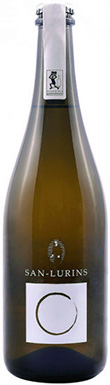
In 2014, the young Marco Pecorari began to produce a frizzante, re-fermented in bottle from a family vineyard of Malvasia Istriana in the Isonzo DOC....
2022
San LurinsVenezia Giulia
Angiolino Maule, La Biancara Pico, Veneto, Veneto, Italy, 2021
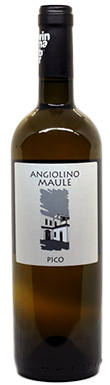
Pico is made from Garganega grapes from the highest sites and the oldest wines of the estate in the commune of Gambellara. Brief skin contact,...
2021
Angiolino MauleVeneto
Fillipi, Vigne della Brà, Soave, Colli Scaligeri, Veneto, Italy, 2022
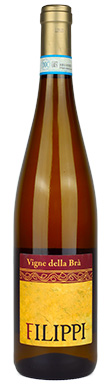
Filippo Filippi nurtures pergola-trained vines planted on character-defining volcanic soils in the 1950s, at one of the highest sites of the DOC zone. One of...
2022
FillipiSoave
Cantina Antonioli, Antimes, Umbria, Umbria, Italy, 2022
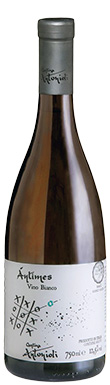
A young estate (first vintage, 2018) with very old vines, including a small plot of Grenache planted in 1901 and still in good health. The...
2022
Cantina AntonioliUmbria
Camillo Donati, Trebbiano, Emilia, Emilia Romagna, Italy, 2022
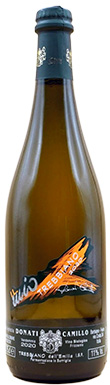
Trebbiano stands out in Camillo Donati's extensive range, in part for the rarity of the variety in the hills of Parma, and in part for...
2022
Camillo DonatiEmilia
Barale, Barbaresco Serraboella, Neive, Piedmont, Italy, 2021
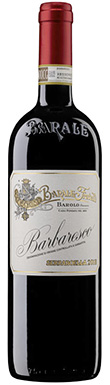
The Barale family have one hectare of 40-year-old vines on the white calcareous soils of this top cru in the commune of Neive. Very traditional...
2021
BaraleBarbaresco Serraboella
Vignai da Duline, Ronco di Pitotti, Friuli Colli Orientali, Friuli-Venezia Giulia, Italy, 2021
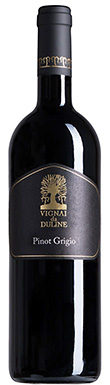
Lorenzo Mocchiutti is a non-interventionalist grower with four hectares of vines on one of the most renowned sites of the Colli Orientali. Spontaneous fermentation is...
2021
Vignai da DulineFriuli Colli Orientali
Adalia, Ruvaln, Amarone della Valpolicella, Veneto, Italy, 2019
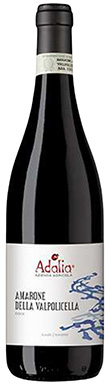
Adalia is the five-hectare younger sister estate of the well-known Corte Sant'Alda, and is based in the same eastern part of the Valpolicella DOC. The...
2019
AdaliaAmarone della Valpolicella
Cà Lustra-Zanovello, Collio Euganei Fior d'Arancio, Veneto, Italy, 2020
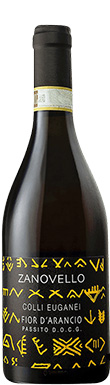
The Colli Euganei is a range of conical hills with volcanic soils south of Vicenza, with one of the warmest climates in the region. Fior...
2020
Cà Lustra-ZanovelloCollio Euganei Fior d'Arancio
