
Bell Hill Vineyard: A Canterbury tale of love, Chardonnay and Pinot Noir
Inspired by a trip to Burgundy, winemakers Sherwyn Veldhuizen and Marcel Giesen planted a vineyard in a former lime quarry in New Zealand’s Canterbury. Anne Krebiehl MW meets them and tastes a selection of their terroir-driven Pinot Noir and Chardonnay.


The rocks are snow white. You can crumble them in your hands. The only other place I have come across these is Champagne.
But I am on the other side of the world, in Waikari, North Canterbury, on the former lime quarry that is Bell Hill Vineyard.
The wines reflect not only this poor, almost hostile site but the determination, resilience and beauty of the two people who make them.
Scroll down to see notes and scores for Bell Hill Chardonnay and Pinot Noir
Campsites and dreams
Let’s sketch the beginning. A young, first-generation Dutch-Kiwi girl – Sherwyn Veldhuizen – works an internship at a German-owned winery in Canterbury, New Zealand.
She meets the youngest of three winemaking brothers – Marcel Giesen – they fall in love and together they pitch up at the campsite in Meursault, Burgundy, in summer 1995 to visit, learn and taste as much as they can.
The couple’s memories of this trip are still vivid. ‘It was life-changing,’ says Veldhuizen. ‘Getting that sense of place in the glass, that limestone, longevity, minerality, tension, how acid becomes part of the structure of the wine, the energy.’
Giesen continues: ‘It just didn’t compare. There was nothing like it, there was just this special quality to the white Burgundies. The normal thing would have been to hop from village to village, but the campground in Meursault is right at the edge of the Santenots vineyard.’
He adds: ‘We went through the producers in the village, and they were just super kind. Once you hear them speak and see their eyes light up, you know why they started what they did, why they chose the hard path to create their vision of wine.’

‘A frugal way’
‘We wanted to see for ourselves,’ says Veldhuizen. ‘At the time, we were in North Canterbury, based at Marcel’s family business. We knew there was lime soil here, but we didn’t know it was going to be as hard as it has been.’
Giesen adds: ‘You’re young and naïve, and you think, what have you got to lose? We always did things here in a frugal way. If we did not have the money for it, we didn’t do it.’
Frugal is an apt term. The couple lived in a caravan for two years as they set up their vineyard in 1997, before they built a little cottage.
‘We had no electricity for 10 years because it was too expensive. We did everything ourselves,’ Giesen says.
‘A lot of people start off with great plans, but eventually, no matter how deep their pockets, they run out of money. Then the bank is telling them how to run their business or when to release their wine. We did not want to be in that situation,’ he adds.
Down to earth
This is also why they only farm just over 3ha of vines. Working this land is hard. Their site sits between 270m and 300m, and is marginal. Wind can disturb flowering; frost can decimate their crop. The soil is white, poor limestone with a high active lime content.
In an article about the lime quarry, entitled A Lime Deposit, published in Christchurch newspaper The Sun in 1918, the soil was described as ‘bone-building’ for the livestock that grazed on it, ‘of remarkable purity’ and ‘crisp like cornflour’.
This soil allows Veldhuizen and Giesen to dry-farm, a key tenet for them. But it is not exactly fertile, so the vines struggle.
Naturally, production is tiny and highly variable. In 2016, Bell Hill produced just over 12,000 bottles; in 2018, not even 9,000; in 2021 a mere 6,434.
It is an understatement when Veldhuizen says: ‘We are rowing upstream.’

Doing it differently
‘We said to ourselves, we want to explore the soil aspect. How do we do it?’ explains Veldhuizen. High planting density was the answer. ‘It gives you low yield per vine and a better opportunity to successfully ripen that fruit. It will also give your vine longevity because you are not overcropping,’ he adds.
‘I guess the fruit that we did get was encouraging enough for us to continue. What we’ve been getting from here has been different enough and has been so encouraging. It keeps on surprising you, which is pretty special.’
This is why, despite repeated setbacks from rain and frost, the couple carry on – almost against all odds, because the wines really are different.
When we spoke in October 2024, they were fighting frost again. Right now, they have just under 3.2ha of vineyard, with 1.2ha yet to come on stream.
‘That’s 36,150 vines,’ says Veldhuizen, who planted them herself. These are split into 55% Pinot Noir and 45% Chardonnay, which make up the two main Bell Hill wines.
In years where there is more yield, some single parcels are bottled, too, such as Limeworks Chardonnay and Shelf Pinot Noir. To make all this work, until 2015 Giesen was still actively involved in his family wine business, Giesen Wines, to support the Bell Hill Vineyard.
On the hook
Another idea, now universally accepted, was central to the founding of Bell Hill in 1997. ‘Things were separated,’ Veldhuizen says. ‘Grape growing and winemaking. One of the things we understood from Burgundy was that you are not separating the parts.
‘Your winemaking starts from the pruning season. We wanted to really dial into the detail, into the quality and keep it small so that we could do the best that we possibly could,’ she adds.
‘Well, that sense of place that does come from the involvement of someone farming the land,’ continues Giesen. He adds – surprisingly for someone who is so strait-laced – ‘Because there’s so much love involved for the land and the wine.’
The pair distance themselves from the undoubtedly industrial-style farming seen in thousands of hectares of New Zealand Sauvignon Blanc. ‘It is not about extraction,’ Veldhuizen explains about their culture of farming.
‘It’s about adding value, promoting longevity and the gift of life,’ she says. ‘But before the soil will give to you, you have to meet it, you have to earn its respect. We have been tested by it.’
Veldhuizen and Giesen have worked the land with their hands, following an uncompromising path. In the process they have created truly fine wine, encapsulating singularity, tension, longevity and saltiness. But both are convinced there is still more inside the soils of their magical site.
‘Sometimes it comes out and surprises you and has that X factor. And you just say: “Well, bloody hell. Where’s it coming from? How little do we actually know about this place?”’ marvels Giesen.
‘You’re on the hook,’ Veldhuizen says. ‘We are on the edge here, and some years you pay for that. There’s more and you just have to find the energy. That’s very hard to let go of. It’s a driving force.’
Bell Hill Vineyard: the facts
Founded: 1997
Owners: Sherwyn Veldhuizen and Marcel Giesen
Vineyard area: 3.18ha
Varieties: Chardonnay, Pinot Noir
Key vineyards:
Quarry Block – 0.33 ha of Pinot Noir planted 1997 at 9,259 vines/ha.
Shelf Block – 0.454 ha of Pinot Noir and Chardonnay planted 1998 at 11,111 vines/ha and from 2005-2008 at 11,363 vines/ha.
Limeworks Block – 0.109ha of Chardonnay planted in 1999 at the density of 9,090 vines/ha and 0.207ha of Chardonnay planted in 2009 at a density of 11,363 vines/ha.
Road Block – 0.39 ha of Pinot Noir and Chardonnay, planted 2008-2009 at 11,363 vines/ha.
The Slope – 0.266 ha of Pinot Noir planted in 2009 at 11,363 vines/ha.
Shelf West – 0.201 ha of Pinot Noir planted 2009 at 11,363 vines/ha.
Anchor Stone – 0.282 ha of Chardonnay planted in 2020 at 10,633 vines/ha.
Big Glory – 0.243 ha of Pinot Noir and Chardonnay planted in 2020 and 2021 at 10,633 vines/ha.
Clos – 0.398 ha of Pinot Noir and Chardonnay planted in 2021 and 2022 at 12,987 and 18,181 vines/ha.
Dynamite Point – 0.307 ha of Pinot Noir planted in 2021 at 11,363 vines/ha.
Key Wines: Bell Hill Chardonnay, Bell Hill Pinot Noir, Bell Hill Single Parcel Shelf Pinot Noir, Bell Hill Single Parcel Limeworks Chardonnay. (The Single Parcel wines are only made when the seasons permit and yields allow for wine to go into the Bell Hill blend as well as the Single Parcel wines.)
Bell Hill Vineyard: tasting notes
Related articles
- Down to earth: Talking Pinot Noir with Sam Neill
- Bilancia: The cult winery in search of perfect balance
- Mount Langi Ghiran: A masterclass in signature Shiraz
Bell Hill, Chardonnay, North Canterbury, Canterbury, New Zealand, 2021
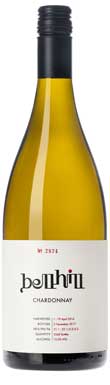

Lemon balm and ripe Mirabelle plum cast a fruity, aromatic charm on the nose, presenting an absolutely streamlined, citric, bright palate of immense freshness. Total...
2021
Bell HillNorth Canterbury

Bell Hill, Chardonnay, North Canterbury, Canterbury, New Zealand, 2012
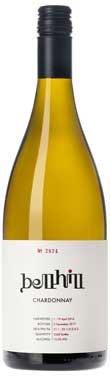
The golden wine opens with an overtone of dried corn husk, with more air, wet chalk and an edge of blossom honey appear. The palate...
2012
Bell HillNorth Canterbury
Bell Hill, Chardonnay, North Canterbury, Canterbury, New Zealand, 2019
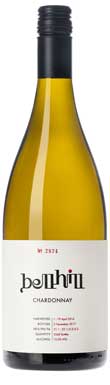
Hard to find but well worth the hunt. A subtle wine, with dried lemon, tangerine, lime flowers and delicate bran biscuit notes, plus a distinctive...
2019
Bell HillNorth Canterbury
Bell Hill, Chardonnay, North Canterbury, Canterbury, New Zealand, 2020
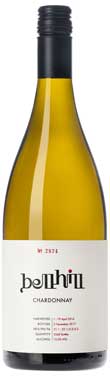
Corn husk and sun-warmed straw on the nose have a sense of chalk. The palate is concentrated and totally strait-laced with cut and linearity as...
2020
Bell HillNorth Canterbury
Bell Hill, Limeworks Chardonnay, North Canterbury, Canterbury, New Zealand, 2016
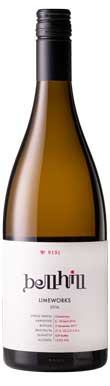
A mellow sense of toasted wheat bran and creamy porridge makes for an inviting nose. The palate is sinuous, with more toasted bran and a...
2016
Bell HillNorth Canterbury
Bell Hill, Pinot Noir, North Canterbury, Canterbury, New Zealand, 2021
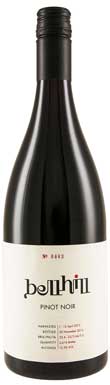
Juicy cherry on the nose comes with an overtone of liquorice, wild rose, pepper and lichen. Red-fruited aromatics become ever more intense, heady with their...
2021
Bell HillNorth Canterbury
Bell Hill, Pinot Noir, North Canterbury, Canterbury, New Zealand, 2019
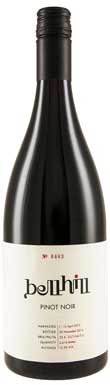
A sense of distant smoke and woodland resin on the nose opens into alluring, tart mulberry and red cherry followed by a touch of Chinese...
2019
Bell HillNorth Canterbury
Bell Hill, Shelf Pinot Noir, North Canterbury, Canterbury, New Zealand, 2018
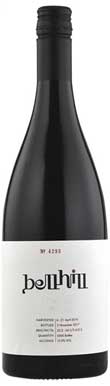
Spine-tingling, flinty reduction takes up the entire nose on the first sniff. Underneath it, bright tart redcurrant teems with brightness and aromatic allure. This juiciness...
2018
Bell HillNorth Canterbury
Bell Hill, Pinot Noir, North Canterbury, Canterbury, New Zealand, 2012
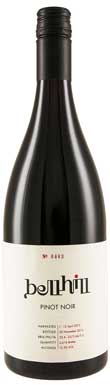
Garnet shimmers around the edges of the translucent wine. A beautiful lift of smoke, earth, miso paste and coniferous forest floor shine on the nose....
2012
Bell HillNorth Canterbury
