
Top Ventoux wines: Unsung hero of the Rhône


With its mountain vineyards and long winemaking history, this large appellation is now home to experimental producers who are leading a Rhône revolution. Matt Walls takes us on a tour...
At the end of a meal with wine-loving friends, do you ever play that game? You know: ‘If you could make wine anywhere in the world, where would it be?’ Of course you do. We all do. My answer (well my current answer) is Ventoux.
I would choose this mountainous area 30km to the east of Châteauneuf-du-Pape for a multitude of reasons. For a start, land is some of the cheapest in the region. The wines of Ventoux are identifiably Rhône in style, but with a distinctive lifted freshness. You can successfully make red, white or rosé.
You can experiment here – it’s not so well known that you’d feel yourself forced into making a ‘classic’ style for fear of being unable to sell it. And there are pockets of outstanding terroir ripe for discovery.
A handful of prospectors recognised this 20 years ago and had the courage to take the plunge. Today, they’re responsible for making Ventoux the most exciting appellation in the Rhône Valley. In the words of Sébastien Vincenti of Domaine de Fondrèche: ‘The revolution is coming!’
Ventoux at a glance
Area under vine 5,810ha
Production 192,532hl (2017)
Amount exported 24%
AP created 1973
Main red grapes Grenache, Syrah, Mourvèdre, Cinsault, Carignan
Main white grapes Grenache Blanc, Clairette, Roussanne, Marsanne, Viognier
Wine styles dry reds 63%, dry rosés 32%, dry whites 5%
Climate Mediterranean, very sunny with northerly winds
Recent vintages Top: 2010, 2014, 2016; Good: 2012, 2017
Independent wineries 139
Cooperatives 16
From co-ops to domaines
Ventoux hasn’t always been quite so thrilling. Much of it still isn’t. In fact, only 20 years ago, ‘Ventoux’ was synonymous with ‘insipid’.
But winemaking in Ventoux goes back much further than that – more than 2,000 years further, with winemaking in the region traced back to 100 BC. It remained an important industry through the Middle Ages.
The first mention of Château Unang was in 867 AD when the local landowner presented the ‘Unango’ estate – its woods, fields, vines and slaves – to the bishop of the nearby town of Venasque.
During the last century, as in much of the Rhône, mixed farming was widespread. Alongside cherries and olives, farmers grew grapes and delivered them to the local cooperatives. But the climate in this corner of the Rhône was relatively cool, making it difficult to ripen red grapes reliably, particularly at high yields. So Ventoux gained a reputation for thin, light wines that kept prices low and progress slow.
It was only in the 1990s that a handful of winemakers began to see the potential, and in response, certain co-ops and their growers began to raise their game.

The Giant of Provence
The hulking Mont Ventoux, the ‘Giant of Provence’, rises to a height of 1,912m. It’s best known for destroying cyclists during the annual Tour de France, but it can be kind too – particularly to vines. The Ventoux appellation is one of the biggest in France, nearly 6,000ha of vines spreading far into the plains. But the best wines come from the slopes, a patchwork of limestone, sand, clay, marl and gravelly scree.
There are two main parts to the appellation. The northern part is a vast bowl surrounded by mountains on three sides: the Dentelles de Montmirail to the north, Mont Ventoux to the east and the mountains of the Vaucluse to the south. The warmer, flatter, southern section lies to the south of Mont Ventoux in the Luberon Valley.
The foothills of Mont Ventoux help to lift vineyards out of the heat of the valley floor, the highest rising to an altitude of 700m. Vincenti at Fondrèche explains that although heat builds during the day, cold air flows down the mountain at night, which cools the vines, and this temperature differential contributes to the telltale aromatic freshness and high acidity in Ventoux wines.
The cooler climate isn’t always beneficial. In 2017, nearby Château Pesquié lost 60% of its grapes due to frost. ‘It’s the first time that’s happened,’ says co-owner Fred Chaudière. ‘It’s a new way to show that we’re cooler than the rest – but not our favourite way!’
Grape varieties in Ventoux are classic Rhône, and although Grenache makes up the bulk of red plantings, Syrah is notably successful here. It produces sleek wines with clean lines, somewhere between northern and southern Rhône in style. Rosé accounts for one third of production and can be very good, particularly when made with Cinsault.
Thanks to the innate freshness and acidity in the wines, I can’t help but think Ventoux should make more exceptional whites. There are several stand-out examples, but currently the results are qualitatively and stylistically inconsistent. The best exponents, such as St Jean du Barroux, Clos de Trias, Domaine Vintur and Château Pesquié, however, demonstrate the huge potential.

Stars align
‘Ventoux is going through quite a revolution,’ says Even Bakke at Clos de Trias, and he’s not just talking about his uncompromising wines. But what has changed? There are several aspects, but according to James King of Château Unang the most important factor is the gradually warming climate. ‘Now nature is on our side,’ he says. And as wine lovers around the world begin to favour freshness and drinkability over power and scale, Ventoux wines naturally fit the brief.
The region’s close links to co-ops has proved to be a double-edged sword. On the one hand, it hasn’t encouraged meticulous wine-growing, meaning Ventoux has been late to discover its true potential. But this has kept land prices low, leading to an influx of ambitious outsider winemakers with vision but little capital. James and Joanna King at Unang are Scottish, Bakke at Clos de Trias is Norwegian-American, Graham Shore at Domaine Vintur is English. Philippe Gimel at St Jean du Barroux was a pharmacist in Lorraine before he devoted himself to wine. ‘Sometimes it’s only when you come from outside that you realise how great somewhere can be,’ he says. ‘And when you change your life, you want to produce something great.’
The Ventoux revolution
In an appellation as extensive and varied as this, not all the output is equally exciting. The name Ventoux in itself is not a guarantee of quality. A further classification of the terroir into smaller plots would make sense, but don’t expect it any time soon. In the meantime, small domaines are uncovering pockets of exceptional potential and joining the band of dynamic, headstrong and creative new estates that have made Ventoux the Swartland of the Rhône. So, I have to disagree with Vincenti. The revolution isn’t coming – it’s here.
Ventoux: six names to know
Château Pesquié
Affable brothers Fred and Alex Chaudière are the third generation to run Château Pesquié, a sizeable traditional Provençale bastide property at the foot of Mont Ventoux. Their parents were pioneers of the Ventoux revolution, leaving the local co-op in 1989 to make their own wines. Back then there were fewer than 10 independent wineries; now there are nearly 140. At more than 100ha, Pesquié is the largest, and has just been certified organic. It has a highly differentiated range of bold, intense, attention-grabbing wines that express the various aspects of their high-altitude terroir. Its opulent whites and ageworthy reds are among the most impressive in Ventoux.
Château Unang
Nestled at the end of the Nesque Valley near the pretty village of Malemort-du-Comtat lies the ancient Provençale residence of Château Unang, an imposing stone property with landscaped gardens surrounded by 100ha of land. Most is woodland, but 15ha on the slopes are planted to vines. It wasn’t always so impressive. In search of Grenache vineyards at altitude, James and Joanna King bought the estate in 2001, when, says James, ‘it looked nicer the further away you got from it’. Now it doubles as a film set. The whites and rosé are balanced and unforced, the reds concentrated, with a windswept elegance.
Clos de Trias
High in the hills near the fortified village of Le Barroux, the vibe at Even Bakke’s Clos de Trias is two parts Provence to one part Mad Max. Born in Colorado and raised by Norwegian parents in the US and Norway, he worked in various Californian wineries before buying the estate in 2007. His parcellated organic vineyards are grown on ancient Triassic soils and scale the mountainside to heights of 500m. Once vinified, he ages them for up to six years in old barrels before release. He describes himself as a ‘post-industrial winemaker’, working as simply as possible to create idiosyncratic wines that are as vital as they are challenging, exploring umami, salt and acidity to electrifying effect.
Domaine de Fondrèche
In the early 1990s, Sébastien Vincenti worked at Domaine Les Cailloux in Châteauneuf-du-Pape. He dreamed of establishing his own domaine, but vineyards in Châteauneuf were prohibitively expensive so he was forced to look further afield. When he was offered Domaine de Fondrèche in 1995 at the foot of Mont Ventoux, he didn’t hesitate. Today he makes some of the best pale rosés in the Rhône, but it’s his reds that really impress – sleek, polished, precise expressions of Ventoux terroir. The red, white and rosé in his Persia range all offer remarkable bang for buck.
Marrenon
A union of eight cooperative wineries, Marrenon is based in the Luberon Valley, in the heart of the regional natural park, and represents the work of 650 winemaking families. The quality of the wines is consistent despite its size. Managing director Philippe Tolleret explains: ‘Whether you are a small estate or a big co-op, you have to know your vineyards.’ The union works closely with its suppliers to help them get the most from their land. ‘In the past, they were farmers,’ says Tolleret, ‘and now they have learned to be wine-growers.’
St Jean du Barroux
‘If you study geology, you can find great terroirs that are still unknown,’ says Philippe Gimel. In 2003, after working at Domaine de la Janasse and Château de Beaucastel in Châteauneuf-du-Pape, his search led him to Le Barroux. He’s divided his vineyards into 99 plots, and can take a month to handpick at perfect ripeness – they’ve never yet been affected by rot. The largest bunches go into his early- drinking cuvée; the smaller, more concentrated ones are for his bottlings designed to age.
These have more stems in the ferments, but even they are sorted for quality. Gimel fizzes with excitement when he talks about his terroir. When you taste the wines, you see why. He creates thrillingly fluent and precise depictions of this fresh, wild, windswept terroir.
Top Ventoux wines to try
Domaine Vintur, Cuvée Séléné, Edition Luna, Ventoux, Rhône, France, 2014
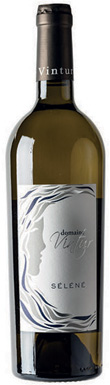

Grown on clay-limestone soils at 130m, and aged for two years in second-use barrels. The oak is fully integrated into the quince fruit, lending vanilla...
2014
Domaine VinturVentoux

Chêne Bleu, Rosé, Ventoux, Rhône, France, 2017
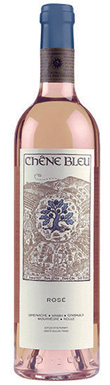
From vines grown at 550m. With its pale salmon pink colour, this has attractive aromatics between fruit and flowers, with an extra savoury dimension. The...
2017
Chêne BleuVentoux
St Jean du Barroux, La Pierre Noire, Ventoux, Rhône, France, 2014
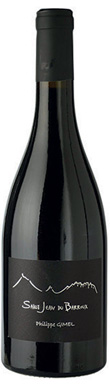
Lifted loganberry, leaf tea and tarragon. Beautifully mouthcoating, elegant and harmonious, long and svelte, with a tapered finish. Gently perfumed, beautifully balanced. It’s concentrated without...
2014
St Jean du BarrouxVentoux
Clos de Trias, Vieilles Vignes, Ventoux, Rhône, France, 2012
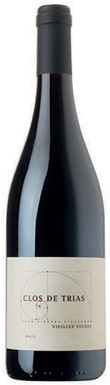
Vines from 65 to 100+ years old, 40% destemmed, only bottled in 2018. Meat stock, blood, iron, provocative volatile acidity giving lift to the raspberry...
2012
Clos de TriasVentoux
Château Pesquié, Artemia, Ventoux, Rhône, France, 2016
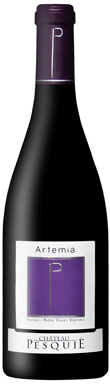
Two high-altitude single vineyards: one of Grenache, one Syrah. The wine spends 18 months in barrel, with 50% new oak. Tightly wound aromatics, well-integrated oak....
2016
Château PesquiéVentoux
Domaine de Piéblanc, Bouquier, Ventoux, Rhône, France, 2016
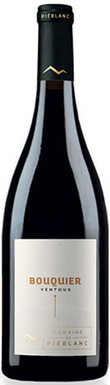
50-year-old vines at 300m. No oak used. Immediately impressive aromatics of flowers, berries and a mineral dimension. Remarkable energy and freshness in a direct, snappy,...
2016
Domaine de PiéblancVentoux
Domaine de Fondrèche, Persia, Ventoux, Rhône, France, 2016
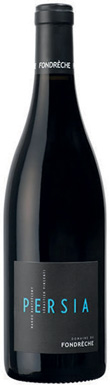
Clay limestone soils, 80-yearold vines, hand-harvested, yielding 20hl/ha. Searching black fruit ingrained with oak spice. Generous in extract with piercing acidity; sleek, fresh, intense; fine,...
2016
Domaine de FondrècheVentoux
Château Unang, La Source, Ventoux, Rhône, France, 2016
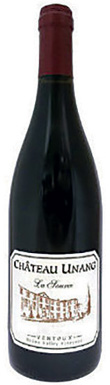
Hilltop vines planted at 350m and grown organically. Lovely nose of lifted violet and currant aromas, slightly mulled. Fresh on the palate, mouth-coating fruit, and...
2016
Château UnangVentoux
Domaine des Anges, Archange, Ventoux, Rhône, France, 2015
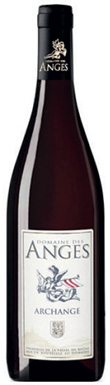
From 50-year-old vines on clay limestone soils, grown at 350m. Spends a year in wooden tank and large amphora before release. Fig, plum and prune...
2015
Domaine des AngesVentoux
Domaine du Bon Remède, Les Vignes Rousses, Ventoux, Rhône, France, 2016
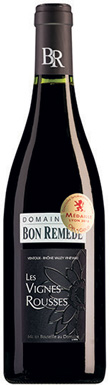
Carignan rarely takes a leading role in Ventoux, but this cuvée pushes it forward. Soft, gentle figgy aromas, violets and old-vine vinosity. Soft, yielding style,...
2016
Domaine du Bon RemèdeVentoux
Domaine du Tix, Cuvée Garrigue, Ventoux, Rhône, France, 2016
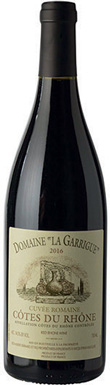
Cuvée from young vines, currently 15 years old. The pretty strawberry and raspberry fruits are juicily ripe to begin with, then the wine finishes dry...
2016
Domaine du TixVentoux
Marrenon, Orca, Ventoux, Rhône, France, 2016
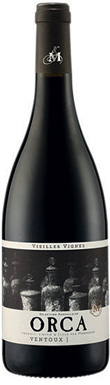
From 60- to 100-year-old vines, aged in third-use oak barrels for 12 months. Very fresh raspberry and hints of lavender. Its breadth of mouthfeel and...
2016
MarrenonVentoux
