Bordeaux 2000s: the complete guide
This was a decade of much success and high standards for Bordeaux’s wines, as our in-depth guide to the first decade of the new millennium reveals.


Where the 1990s gave Bordeaux winemakers a number of difficult challenges, the first 10 years of the new millennium were far kinder.
Looking back at the decade today, not a single vintage was a complete disaster. There were challenges, unquestionably – 2002, 2004 and 2007 all had tough moments, and 2003 was in a league of its own for sustained drought that lasted through the entire season (although it was greeted with great acclaim at the time by many).
Not a bad 10 years in all.
Scroll down for tasting notes & scores for a decade of Bordeaux wines
These were also years of significant change in Bordeaux.
New wineries sprang up, notably at Château Pichon Baron in 2007 with its vast underground cellar. Cranes were a regular sight, although it was the revenue from the successful 2009 vintage that would cause building fever to pick up pace from 2010 onwards.
Technology was moving fast, and both new and existing cellars were invariably moving towards smaller vats that allowed plots in the vineyard to be isolated and followed more carefully from beginning to end, even if the green revolution in classified properties of the following decade had not yet fully blossomed, with just Châteaux Pontet Canet in Pauillac and Guiraud in Sauternes flying the flag for organics, and most estates still following traditional practices in the vineyards.
Many of the current generation of Bordeaux owners arrived during this decade. Ronan Laborde arrived at Château Clinet, Pomerol, in 2003; Jean-Charles Cazes took over from his father Jean-Michel at Château Lynch Bages, Pauillac, in 2006; and Prince Robert of Luxembourg became president of Domaines Clarence Dillon (Châteaux Haut-Brion and La Mission Haut-Brion, PessacLéognan) in 2008.
Today’s leading directors were also getting settled; Thomas Duroux arrived at Château Palmer, Margaux, in 2004 and Olivier Berrouet took over from his father Jean-Claude Berrouet at Petrus, Pomerol, in 2008.
Other high-profile arrivals were Silvio Denz at Château Faugères, St-Emilion, in 2005, and the first Chinese owner in 2008, with trading company Longhai International buying Château Latour Laguens in Entre-deux-Mers.
Within a few years there would be hundreds of articles written about the arrival of dozens more investors from China.
Michel Rolland still reigned as consultant on the Right Bank, with Nicolas Thienpont arriving at Château Larcis Ducasse, St-Emilion, in 2002 – a key moment in the widening of his influence.
On the Left Bank, Jacques Boissenot was still the leading name, consulting to four out of five first growths along with almost the entire range of 1855 estates, although he was already working alongside son Eric who took over entirely on Jacques’ death in 2014.
Prices & investment
This was also a decade when interest in fine wine trading was growing. Burgundy was becoming a serious investment vehicle, threatening to eclipse Bordeaux at times, and new investors were on the scene, most notably – buying châteaux as well as wines – from Hong Kong and mainland China.
The impact that this had on wine prices became more apparent after the economic crisis hit in 2008. This led to a collapse in demand from traditional markets, with power shifting towards a number of Asian buyers who were happy to pick up the slack – and pay for it. The fallout was only seen in the following decade.
It’s also notable that, following the dot.com boom and bust of the late 1990s, fine wine began more seriously turning towards online sales. Wine-searcher.com was founded in 1999 and had an increasing impact on transparency around Bordeaux pricing. Liv-ex, the fine wine trading platform, was launched in 2000, and similarly grew to have a significant impact on opening up transparency in the fine wine market.
Its figures for the decade under consideration here show that, for the Bordeaux Left Bank first growths during the 2000-2009 vintages, 2009 is the most traded Bordeaux vintage (by both value and volume). Between September 2017 and September 2021 it accounted for 11.5% of trade by value, followed by the 2005 (9.7%), then the 2008 (7.7%).
Broad pricing trends
That doesn’t mean that 2009 has performed the best for investors. Based on the wines included in Liv-ex’s Bordeaux 500 index, looking at the average increases of all wines from release to now, those from the 2000 vintage have seen the biggest price rises on average, up 653%, followed by 2001 (393%), 2002 (366%) and 2004 (310%).
The success of the 2000 vintage is led by one particular wine, Château Mouton Rothschild 2000, which has risen 1,142% since its release (ex-London) at £1,580 per 12x75cl, and it currently commands a market price of £19,634 on the Liv-ex exchange – not least because of its striking black and gold ram label design.
See all of Decanter’s Bordeaux 2000 tasting notes and scores
Bordeaux 2000s rated
2000 (4/5)
The pressure was on for this to be a stellar vintage, and for the most part it delivered, although not without a few stress points along the way.
Harvest began on 18 September, lasting right through until mid-October, and you can find wines from both Right and Left Bank that are still delivering. The sweet wines were affected by rain on 10-15 October. But for the most part 2000 performed the much sought-after trick of delivering quality and quantity, with yields high in most places, and wines that were rich, tannic and deeply coloured.
This was certainly the most consistent vintage since 1990, but it needed patience. Only in the last few years have I really started to find large numbers of 2000s that have opened up.
Today they are starting to come into their own, and if you pick a big name from a good appellation, it’s hard to go wrong.
2001 (4/5)
A vintage that was undervalued for a long time and has now become something of a cult year, offering elegant, classically styled wines with great aromatics. Particularly impressive for Sauternes and Barsac, with Château d’Yquem legendary.
The best reds also offer an unusual combination of elegance, freshness and delicate fruits, and the majority are in a sweet spot right now. It’s less consistent overall than 2000, although the gap between the two is only just starting to become apparent as they click into their third decade. Most will not be as long-lasting as the 2000s, but offer tons of pleasure and there are real spots of brilliance.
Château Figeac, St-Emilion, has long been one of my favourite wines of this vintage, as has Château Haut-Bailly, PessacLéognan.
In terms of price rises over the 20 years since launch, Carruades de Lafite, Pauillac 2001 is in the top spot, up 1,733% according to Liv-ex data.
2002 (2/5)
Mixed quality overall, with a difficult spring and a summer that refused to get going. A beautiful September proved to be the saviour of wines that were able to take advantage of the late harvest that lasted through to mid-October, and today you can find plenty of classically balanced bottles, particularly on the Left Bank.
Overall, Cabernet Sauvignon did better than Merlot, and you’ll find lots of classically styled wines that are ready to begin drinking. On recent tastings, look out for St-Julien and Pauillac wines, with Mouton Rothschild a particular success.
2003 (3/5)
Undoubtedly the 2000s vintage with the most column inches written about it, for both good and bad reasons, 2003 saw a heatwave across Europe that lasted throughout the growing season, with temperatures regularly climbing up to 40°C. Bordeaux joined many other regions by recording some of the earliest picking dates on record for both white and red grapes – the veraison colour-change was 20 days in advance of average over the previous 50 years and many estates recalled their staff from their August holidays to begin bringing in the scorched grapes. The result was high alcohols and low yields, and a year when terroir counted if estates were to avoid cooked or dried fruit flavours.
Overall, Cabernet Sauvignon withstood the extreme summer heat better than Merlot, but rather than grape variety, I would suggest looking instead for fresh terroirs, such as limestone on the Right Bank and the clays of St-Estèphe, or those along the Gironde in the Médoc – I have recently tasted a good number of Pauillacs that are still delivering, from Lynch Bages to Latour.
Excessively dry or hot soils had more issues with water stress and blockages, and sugar concentration was exacerbated by evaporation due to high temperatures.
Overall I would say 2003 has survived better than I expected, but start drinking up now.
2004 (3/5)
A vintage that you often hear described as ‘classic’, and it’s a favourite with a number of old-school Bordeaux lovers for its understated charm, and generally for its good-value wines. Yields were high as the vines made up for their low yields the year before.
Good weather at flowering, and at harvest, but more challenging in between – meaning once again that it’s the top estates of Bordeaux, who could afford the time and effort in the vineyard, that really shone.
Among the star risers of the vintage, up 640% from release between 2004 and 2022, is Château Beychevelle, St-Julien, according to Liv-ex figures.
2005 (5/5)
One of the greatest vintages of the past 50 years, with near-perfect weather conditions across the region and Bordeaux University’s Faculty of Oenology remarking how it would ‘remain long in the memory for its quality’.
The wines have proved more stubborn to get going than many initially thought, because although they were not exuberant when young, they had a high tannin count and needed time to soften.
Many are starting to really blossom: balanced and nuanced, yet full of fruit. Easily my favourite vintage of the past few decades, and although it was hot and dry, it was less intense than 2003, as cumulative temperatures over July and August show – a total of 760°C in 2003, with six days hitting 40°C, compared with 632°C in 2005, and only two days over 35°C.
2006 (3/5)
Another classic vintage, plenty of good-quality wines starting to come into their sweet spot at just over 15 years old. The weather was variable, with hot spells in July and September, a cool August and storms in mid-September that threatened rot. The weather was fine through the last two weeks of September, although rain in October put pressure on many Médoc estates that did not have early-ripening terroirs.
The Faculty of Oenology commented that ‘Merlot planted on clay and Cabernet on the finest gravel soils withstood the weather conditions of this vintage better than those planted on sandy or silty soils’ – this means you should look at both Pomerol and Pauillac for wines that are tasting good today.
2007 (2/5)
A classic example of why you shouldn’t dismiss the less-media-friendly vintages in Bordeaux. It was a difficult vintage weather-wise, with a damp summer that meant lighter-styled wines in the main, and an early-drinking year. But the best spots delivered delicious, sculpted wines.
Some of my favourite bottles in recent years, perfect for unfussy sharing with friends, have been from this vintage – I can particularly point to a brilliant Château d’Armailhac, Pauillac 2007.
Some excellent white wines also, still going strong in most cases, particularly from Pessac-Léognan, and one of the best years for Sauternes and Barsac in the new millennium, comparable to 2001.
2008 (3/5)
Plenty of classic wines, particularly those from estates that waited to take full benefit of the Indian summer which allowed for long, slow ripening after a more difficult early season. Even the white wines did not really get under way until 15 September. This was also one of the rare years when en primeur prices came out at extremely reasonable levels due to the financial crisis that had erupted during the second half of 2008.
Châteaux Lafite, Latour and Margaux released an opening tranche at €110 per bottle, with Mouton at €100, and Haut-Brion at €130, which still gave early movers a huge opportunity.
Not everyone displayed the same restraint, but on the whole this was the last of the really affordable en primeurs.
2009 (5/5)
The decade signed off with an excellent year, rivalling both the 2000 and the 2005, but altogether different in style: more exuberant and easy to love from its first moments. Much of the growing season was hot and dry combined with fresh nights that encouraged good aromatics, and the wines themselves were richly structured.
It has also proven to age well, and is now beginning to show the terroir characteristics that were sometimes missing in the early years.
The more I taste it as it hits its second decade, the more I think 2009 just might be the modern-day 1982.
Sauternes and Barsac also saw some excellent successes in this vintage. The biggest drawback? The prices, which saw huge rises on 2008 as the Chinese buyers came in strongly. This set up all kinds of problems for the following decade, but for now, back in 2009, it was smiles all round.
Bordeaux: A selection of tasting notes and scores from the 2000s vintages
Wines are listed in vintage order: oldest to youngest
Related content
Médoc grand cru classé 2017: panel tasting results
Expert’s Choice: Bordeaux dry whites under £25
Bordeaux 2021 wines: Our en primeur verdict
Château Montrose, St-Estèphe, 2ème Cru Classé, Bordeaux, France, 2000
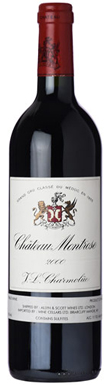

This is dense and inky in colour with a nose that has layers of soft tobacco combined with rich cassis fruits and liquorice. On the palate, it just powers on through, with completely melted tannins that are holding up the fruit gently but firmly and a mouthwatering finish of slate and salty caramel. It’s a gorgeous wine with so much to enjoy - full and just starting to stride forward into the next stage of its life as all of the 2000s in the line-up are. 2% Petit Verdot completes the blend. Harvest 22 September to 7 October.
2000
Château MontroseSt-Estèphe

Château Canon, St-Émilion, 1er Grand Cru Classé B, Bordeaux, France, 2000
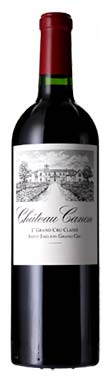
A beautiful moment to be drinking this wine as it edges towards tertiary flavours. Beginning to soften around the edges now, with waves of brushed leather, walnut, dried roses and earth, together with the fresh acidities of its limestone soils. Supple tannins, finessed and fine, with juicy raspberry puree and blackberry fruits. 55% new oak, harvest September 23 to 30
2000
Château CanonSt-Émilion
Château La Conseillante, Pomerol, Bordeaux, France, 2001
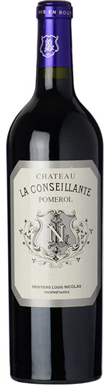
A vintage that is just getting better and better, particularly in Pomerol, and it's around half the price of the 2000. There's a sweetness to the palate, with layers of gentle black fruits, damson, truffle, liquorice and spice. It's succulent , with a mouthwatering acidity - a lovely wine with good persistency. Do yourself a favour and find a bottle.
2001
Château La ConseillantePomerol
Château Léoville Poyferré, St-Julien, 2ème Cru Classé, Bordeaux, France, 2001
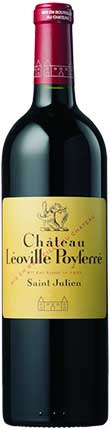
The finesse of St-Julien comes through clearly in the glass, heightened by both bottle age and the character of the 2001 vintage itself. Expect cured leather, baked earth and cigar box spice, with softened blackberry and bilberry fruits. Totally moreish. 80% new oak.
2001
Château Léoville PoyferréSt-Julien
Château Lafleur, Pomerol, Bordeaux, France, 2002
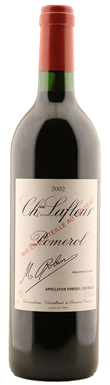
Always one of the most aromatic of Bordeaux wines, the 2002 is on its way to becoming a classic Lafleur, effortlessly overperforming the vintage. 2002 is seen as a Cabernet vintage, and certainly even at 17 years old the Cabernet Franc is taking the lead in this wine, with the austerity of the young wine now softened but still showing plenty of structure, tannic hold, fresh acidity, and tons of bracken, grilled rosemary and violet-edged florality. This feels younger and not as silky as the 2001 - also tasted here - but is beginning to open up to reveal waves of delicate power. You can drink now but it will very happily, and beneficially, wait another few years. This was the first year where Jacques and Sylvie Guinaudeau were sole owners, making things official after renting from Jacques' aunt for 15 years.
2002
Château LafleurPomerol
Château Beauregard, Pomerol, Bordeaux, France, 2003
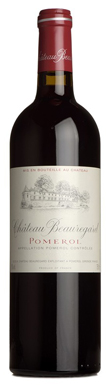
A hot vintage that is showing well now, with a highly attractive spice character and still has plenty of tannins giving the fruit something to lean on. Easy to approach, traces of black chocolate and again this lovely tobacco character that is so Pomerol. The fresh edge of Cabernet Franc help to add lift and structure. Not as much persistency as some vintages but full of pleasure and one to recommend drinking today.
2003
Château BeauregardPomerol
Château Pichon Baron, Pauillac, 2ème Cru Classé, Bordeaux, France, 2004
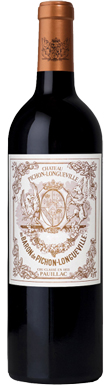
Pichon Baron 2004 impresses by its youthful energy and a floral bouquet brimming with black fruit including cherry. Aeration reveals a delightful minty freshness. A succulent, juicy attack leads the way to a full-bodied and velvety structure of elegant tannins. Here is a wine suffused with that now signature Pichon combination of energy, tension, and mineral sensations. Superb wine.
2004
Château Pichon BaronPauillac
Château Trotanoy, Pomerol, Bordeaux, France, 2005
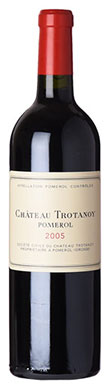
This is from the first great vintage of the new era. By this point in time there were smaller tanks that allowed more accuracy between the vineyard and cellar, and more precision in harvesting with small baskets and fine-tuning of sorting (separating out parts of plots that they weren't happy with, hence the arrival of L'Espérance a few years later). The 2005 is just right on the cusp between tight young fruit and a more complex array of ageing characteristics and it's gorgeous. It has rich, sweet fruit, wonderful balance, clear liquorice alongside olive paste, chocolate and cassis puree, all still embraced by firm but flexible tannins. You're going to want to get hold of this wine if you're a fan of classic Pomerol seduction.
2005
Château TrotanoyPomerol
Château Grand-Puy-Lacoste, Pauillac, 5ème Cru Classé, Bordeaux, France, 2005
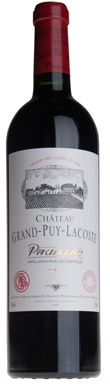
As you would expect from this archetypal Pauillac, this is an inky wine of blackcurrants, forest fruits and plenty of concentration. A touch of creamy oak frames a delicious palate, leading to a nice finish that balances out this understated, classy Claret. As it so often is, this is a delicious wine.
2005
Château Grand-Puy-LacostePauillac
Château Cantenac Brown, Margaux, 3ème Cru Classé, Bordeaux, France, 2006
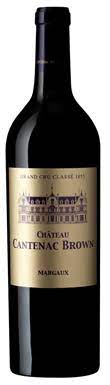
Subdued on opening, but with 30 minutes in a carafe it spills out rich pencil lead and liquorice notes, with blackberry fruits and smoky vanilla spice. Classic Margaux 2006, with fairly high acidity that emphasises a floral character, alongside refined tannins. Just beginning to evolve towards an older wine. An unusual vintage at Cantenac Brown, where they produced only 30% of the first wine, reflecting a new regime of greater precision in harvesting and sorting. 60% new oak.
2006
Château Cantenac BrownMargaux
Château Nénin, Pomerol, Bordeaux, France, 2006
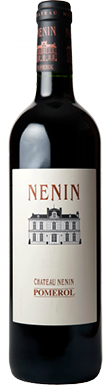
The fruit is fairly open on the first nose, get a touch of rusticity, we are less buttoned up than in some of the more polished wines, letting a little more natural feeling in. Overall this is a pretty expression of black fruits, and the tannins are a little down and dirty. Enjoyable, well balanced, there is alcohol but the fruit has been well extracted to counter it. Ready to go, have it with food, don’t expect the most sophisticated glass you'll ever see, but thoroughly enjoyable. 70% Merlot, 20% Cabernet Franc, 10% Cabernet Sauvignon.
2006
Château NéninPomerol
Château d'Yquem, Sauternes, 1er Cru Classé Superieur, Bordeaux, France, 2007
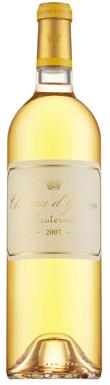
Soft gold in colour, packed full of generous stone fruit, nectarine and white peach, honeysuckle, white truffle, saffron-laced lemon curd, bitter orange peel, all wrapped up in the satiny texture that makes drinking Yquem feel like the most indulgent of moments. The 2007 vintage was a fairly generous 18hl/ha yield, with 130g/l residual sugar. Winemaker Sandrine Garbay.
2007
Château d'YquemSauternes
Château Malartic-Lagravière, Pessac-Léognan, Bordeaux, France, 2008
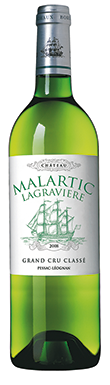
A delicious 2008, singing with the salinity that takes pole position in older whites without sacrificing minerality or juiciness. It has flavours of white pear and finely drawn citrus, with the saffron-edged sweetness of age. Perfect for drinking now.
2008
Château Malartic-LagravièrePessac-Léognan
Château La Serre, St-Émilion, Grand Cru Classé, Bordeaux, France, 2009
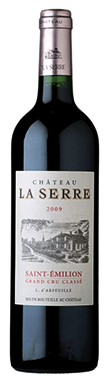
Soft ruby red in colour, this delivers plenty of signature limestone character. The fruit majors on blackberry, wild strawberry and softened raspberry puree with clear salinity, giving a mouthwatering finish that gently grips on. Close to the perfect moment to open, and a softer expression of this brilliant vintage. Consultant Stéphane Toutoundji. 50% new oak.
2009
Château La SerreSt-Émilion
Château Poujeaux, Moulis-en-Médoc, Bordeaux, France, 2009
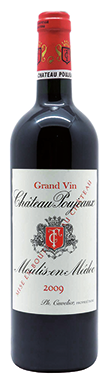
One of the best value 2009s that you can find in terms of its ability to deliver signature Moulis-Médoc character without having to wait too long or think too hard. Dark brambled fruits, tannins that are now soft and melted, with layers of cigar box, mint leaf, crushed stones and saffron. Even better out of magnum if you can find it, no need to wait to drink but plenty to enjoy. 5% Cabernet Franc completes the blend.
2009
Château PoujeauxMoulis-en-Médoc
