
Brunello di Montalcino: The best wines to drink, cellar and invest in
The wines of this vaunted Tuscan region bring great rewards at all levels. Our expert three-step guide helps you get the most from Brunello, whether you’re opening it to enjoy soon, expanding your cellar collection or adding to your investment portfolio.


One of the best wine bars in Montalcino boasts a large, wall-size shelf housing bottles of Barolo, Amarone and other great reds of Italy and France. Just 10 years ago, it would have been impossible to see anything there but Brunello di Montalcino. The famed Tuscan denomination is evolving under the influence of young generations, gaining wider awareness that informs the production of its own wines of unique character, as well as showing open-mindedness, butting up against the naturally individualistic culture of Italians.
Scroll down to see tasting notes and scores for 15 Brunellos to drink, cellar and invest
In the past, this historic hilltown in central-southeast Tuscany – at 250m-600m surrounded by rolling hills and farmland of rare beauty (within the greater Val d’Orcia area, listed as a UNESCO World Heritage Site since 2004) – was famed for a steep and stony soil that was hard to work. This land, once worthless, today changes hands for about €1m per hectare.
Brunello in numbers
Montalcino spans 24,000ha of land, less than 15% planted with vines: 510ha exclusively for Rosso di Montalcino DOC, 2,100ha reserved for Brunello di Montalcino DOCG. Government body Valoritalia’s updated data says there were 9.7 million bottles of Brunello released in 2022, of which 93% were annata (vintage) and 7% Riserva; among them, just 3% included the mention of a single vineyard on the bottle.
Rich history
Montalcino has been known for viticulture since the 19th century – the Brunello di Montalcino consorzio relates that ‘the Grapevine Classification Board of Siena issued a report on a particular Brunello di Montalcino that had been aged for 32 years from grapes harvested in 1843.
The report states that the wine was perfectly preserved, displaying its typical qualities, unchanged over time’ – a DNA that has always been focused on longevity. Biondi-Santi’s 1888 Riserva was one of the first celebrated labels of Brunello.
For its centenary in 1988, a few lucky journalists were able to catch a smell of it in one of the top-ups conducted by Franco Biondi Santi.
In 1966 Brunello di Montalcino became a DOC wine, and a year later the Consorzio del vino Brunello di Montalcino body was founded. Efforts to market Brunello took off in the 1970s, but the global market was only conquered after 1980 (when the region was elevated to DOCG status), thanks to the growing number of wineries and bottles produced.
The arrival of the American Mariani family in 1978, who invested in Castello Banfi, helped Brunello to catch the eye of international wine lovers. Then Banfi winemaker Ezio Rivella revealed a controversial personality. ‘He visited cellars and suggested all the producers buy chainsaws to cut up the large Slavonian oak botti [casks] and transform them into flowerpots,’ recalls Fabrizio Bindocci, president of the consorzio. Rivella was 50% right: at that time, most of the botti grandi were not properly cleaned or sanitised, imparting faulty qualities to some of the wines.
Rules and styles
Brunello di Montalcino must spend at least two years in wooden barrels and is released onto the market from 1 January of the fifth year after harvest (one additional year is needed for Riserva). ‘In the last 20 years, the region of Brunello has been driven more by the US than the UK,’ notes Brett Fleming, managing director of UK importer Armit Wines. ‘The US styles deemed as the leading examples of Brunello were far darker in colour, bolder in expression and “bigger” wines in their weight expression, whereas in the UK the ethereal, almost Pinot-like styles held the attention of the top critics and buyers,’ he adds. ‘I am unclear whether it was point-chasing, but certainly the resulting wines became more and more “American” in style than true Brunello should be.’
When producing Brunello di Montalcino, Sangiovese is not allowed to be blended with other varieties, either indigenous or international. Traditionally, the main clone is Sangiovese Grosso, so-called because of its big clusters, producing pale and lifted wines, but in the late 1980s the Chianti Classico 2000 project was conceived in the Chianti Classico production area. This resulted in the identification of 239 possible Sangiovese clones, from which 24 were selected and seven eventually approved and entered into the national register of vine varieties. These selected clones became popular in Montalcino, as in Chianti Classico, for their smaller grapes and looser bunches, although in the early 2000s some producers lobbied the Brunello consorzio to introduce international grapes, mostly to satisfy the US market. Luckily, as everyone agrees today, the rules were not changed and the great personality of Brunello was preserved.

In Montalcino, Sangiovese naturally gains volume and structure due to the Mediterranean warm climate. This part of Tuscany is hotter than Chianti Classico, for example, so the wines show a brighter fruit character with more body, more integrated acidity and bigger tannins which are much easier to extract. Montalcino is sheltered by Monte Amiata (a dormant volcano peaking at 1,738m) to the southeast, from which cooling air descends during the summer nights. Coupled with the cooling effect of the forest which surrounds much of the Montalcino vineyard area, the wines gain complexity and freshness.
1. Brunello to drink
There are at least five different styles of Brunello, shaped by the different soils and slopes of Montalcino. If you’re looking for an earlier drinking Brunello di Montalcino, seek out wines made in the warmer southern zone of the denomination. The area around Sant’Angelo Scalo in the region’s southwest (about 100m-200m elevation) is very sandy; the Brunello made here is fruitier and ready to drink sooner, although it can struggle a bit to achieve complexity.
In the southeastern sector, between Sant’Angelo in Colle (444m) and the Orcia river, the wines show generous fruit allied with a classic nutty character, with greater complexity and amazing ripeness of tannins drawing from the combination of calcareous soil and lower levels of rainfall (500mm compared to 700mm on the northern side of the denomination). These are approachable wines yet still ageworthy, as demonstrated by labels such as Il Poggione or Col d’Orcia, both incredibly consistent in older vintages.
Further east, the village of Castelnuovo dell’Abate produces Brunello of earthy elegance and graceful power. Again, the wines feature rich fruit, sometimes with a yellow tinge of peach skin instead of pure cherry. Here, calcareous marls alternate with alluvial pebbles. Collosorbo has great vineyards here, as well as Ciacci Piccolomini. These three sub-zones (Sant’Angelo Scalo, Sant’Angelo in Colle and Castelnuovo dell’Abate) are preferred mostly in cooler vintages, such as 2013, 2018 and 2019. The 2018 vintage in particular produced delicious wines for early drinking, often elegant in style and – if I can be provocative – much closer to the amazing Rosso di Montalcino DOC wines rather than offering Brunello’s typical volume, structure and depth.
Ciacci Piccolomini d’Aragona, Pianrosso 2019
Villa Le Prata 2019
Il Poggione, 2019
Giodo 2018
Salicutti, Piaggione 2018
2. Brunello to cellar
Northwest of Sant’Angelo in Colle, at 300m-350m, lie Tavernelle and Pieve Santa Restituta, where great estates such as Gaja and Soldera Case Basse are located. Due to nocturnal breezes, a lack of fog, predominantly rocky soils and forest all around, the season lasts consistently longer here, producing perfumed Brunello wines that are velvety, savoury and deep.
Climbing the southeast side of Montalcino hill, dominated by schist soils with high mineral content, you can discover some of the best vineyards of the appellation, giving classic, powerful wines such as those from benchmark Brunello producer Biondi-Santi. The elevation, up to 500m, and the easterly exposure keeps the fruit extremely fresh; cherry and strawberry characters intermingle. The grapes experience slow ripening, so the wines are full of complexity and fully structured, and the acidity is always firm, if not a bit excessive at release, underlining the chalkiness of the tannins when young. Biondi-Santi, Gianni Brunelli and Salicutti are among the acclaimed producers making wine here. It’s recommended to cellar them as they don’t give their best before 10 years after release.

The northern side of Montalcino is even fresher in terms of fruit style, producing wines with redcurrant and pomegranate characters, focused more on elegance than power – but the trade-off is that they are less expressive when young. Limestone is found at altitude close to Montalcino village, while there’s a higher clay presence as you descend down the hill of Canalicchi. Il Marroneto, situated at the peak, is distinctive for the stunning definition and filigree elegance of its wines, while Altesino is a leading producer in terms of hectares and also quality. Montosoli, at the bottom of the slope, is one of Brunello’s most prestigious crus and is a name to look out for on the label.
Gianni Brunelli 2019
San Filippo, Le Lucére 2019
Le Potazzine 2019
Mastrojanni, Schiena d’Asino 2019
Altesino, Montosoli 2019
3. Brunello to invest
The quality and value offered by Brunello di Montalcino should be enough for collectors to get behind the region in the coming years. According to analyst Wine Lister’s Pro data, Biondi-Santi’s Brunello di Montalcino annata, Il Marroneto’s Brunello di Montalcino Madonna delle Grazie, and Sesti’s Brunello di Montalcino Phenomena Riserva have seen their prices increase steadily over the last two years. Soldera Case Basse has not officially been a Brunello di Montalcino since 2006, but is certainly a top label of the region – now bottled as a Toscana IGT, along with Biondi-Santi it’s one of Montalcino’s most expensive wines.
But not all great Brunello costs hundreds of pounds per bottle, and some of the best can still be had for between £60 and £80, while a few brands achieve prices of £100-£150. These figures are only set to grow in the coming years as their relative value is discovered compared to Bordeaux or Burgundy, for example.

There are other reasons to bet on Brunello. The overall quality of the 2019 vintage, to be released in January 2024, is outstanding; the 2019s have graceful balance more representative of Brunello di Montalcino compared, for example, to 2018. Also the new generation, now at the head of most of Montalcino’s estates, are demanding a fresher style of Brunello. If they can avoid over-lightening the wines – as the previous generation over-concentrated theirs – the new-school Brunellos are capable of perfectly expressing Montalcino’s terroir and Sangiovese’s graceful power.
Il Marroneto, Madonna delle Grazie 2019
Biondi-Santi, Riserva 2016
La Cerbaiola di Salvioni 2015
Soldera Case Basse, Toscana 2015
Poggio di Sotto 2019
Brunello di Montalcino: Fiordelli’s 15 to drink, cellar and invest
Related articles
- Ex-Vietti couple joins Montalcino’s Castiglion del Bosco
- The Decanter Italy Experience: A perfect gift this Christmas
- Top 10 Brunello di Montalcino 2018 wines to drink in 2023
Il Marroneto, Madonna delle Grazie, Brunello di Montalcino, Tuscany, Italy, 2019
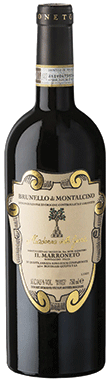

Those familiar with Il Marroneto will notice that with the 2019 vintage, the name of the estate is now at the fore on all labels....
2019
Il MarronetoBrunello di Montalcino

Gianni Brunelli, Brunello di Montalcino, Tuscany, Italy, 2019
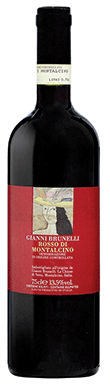
Just below Biondi-Santi in southeast Montalcino, this is one of the most classic estates of the denomination. The 2019 has a deep nose of amazing...
2019
Gianni BrunelliBrunello di Montalcino
Ciacci Piccolomini d'Aragona, Pianrosso, Brunello di Montalcino, Tuscany, Italy, 2019
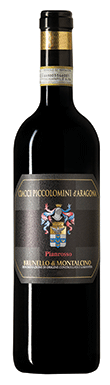
Aged in Slavonian oak for 36 months, Pianrosso is a selection from the self-titled vineyard: 11 hectares in the lower southeast of Montalcino. The grapes...
2019
Ciacci Piccolomini d'AragonaBrunello di Montalcino
San Filippo, Le Lucere, Brunello di Montalcino, Tuscany, Italy, 2019
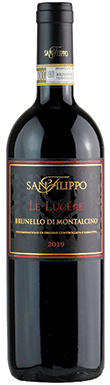
San Filippo is fully exposed to the east, meaning that in 2019 the Sangiovese was harvested relatively late, from 28 September to 7 October. The...
2019
San FilippoBrunello di Montalcino
Biondi-Santi, Riserva, Brunello di Montalcino, Tuscany, Italy, 2016
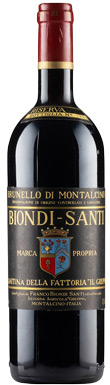
2016 was one of the best vintages of the past 20 years in Tuscany. This Riserva was managed by Biondi-Santi technical director, Federico Radi under...
2016
Biondi-SantiBrunello di Montalcino
La Cerbaiola di Salvioni, Brunello di Montalcino, Tuscany, Italy, 2015
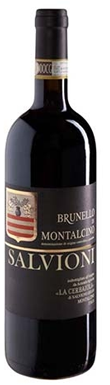
Attilio Pagli is the consultant at Salvioni, an estate well known for its powerful style harmonised with amazing grace. The 2015 was a warm, rich...
2015
La Cerbaiola di SalvioniBrunello di Montalcino
Le Potazzine, Brunello di Montalcino, Tuscany, Italy, 2019
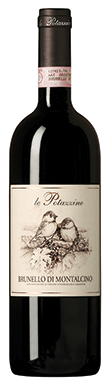
Le Potazzine's Brunello is a mix of Sangiovese from the vineyards around the estate in the centre of the appellation, and from vines in Sant'Angelo...
2019
Le PotazzineBrunello di Montalcino
Soldera - Case Basse, Toscana, Tuscany, Italy, 2015
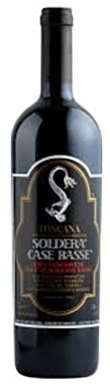
Soldera's Sangiovese is the result of a severe green harvest, carried out throughout the season in order to thin out the vines at each stage...
2015
Soldera - Case BasseToscana
Altesino, Montosoli, Brunello di Montalcino, Tuscany, Italy, 2019
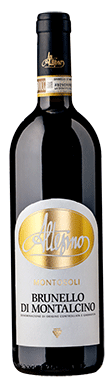
Altesino was the first producer in Montosoli, helping to elevate the fame of this cru. Montosoli undergoes extended ageing of 28 months in large 60hl...
2019
AltesinoBrunello di Montalcino
Poggio di Sotto, Brunello di Montalcino, Tuscany, Italy, 2019
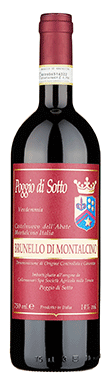
Despite heavy rain, there was very little disease in 2019 and the hot summer brought the grapes to full ripeness. The subdued cherry aromas reflect...
2019
Poggio di SottoBrunello di Montalcino
Villa Le Prata, Brunello di Montalcino, Tuscany, Italy, 2019
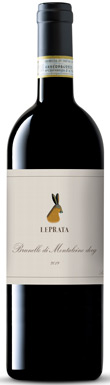
Villa Le Prata, overlooking Tavernelle and surrounded by forest at 500 metres above sea level, is a small 2.3-hectare hidden gem of Montalcino. Until recently,...
2019
Villa Le PrataBrunello di Montalcino
Il Poggione, Brunello di Montalcino, Tuscany, Italy, 2019
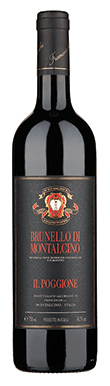
The 2019 is a vintage of balance, somewhere between 2016, 2013 and 2010. Sant'Angelo in Colle, which suffers in warmer vintages, performed very well and...
2019
Il PoggioneBrunello di Montalcino
Podere Giodo, Brunello di Montalcino, Tuscany, Italy, 2018
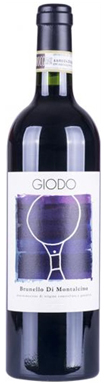
Carlo Ferrini's flair for elegant wines is exalted in his Brunello 2018, a light vintage. Aged in oak of different volumes, it is focused on...
2018
Podere GiodoBrunello di Montalcino
Salicutti, Piaggione, Brunello di Montalcino, Tuscany, Italy, 2018
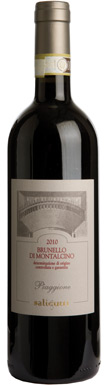
Salicutti is one of the few estates in Montalcino managed according to biodynamic principles. The must is fermented in stainless steel with indigenous yeasts and...
2018
SalicuttiBrunello di Montalcino
