
Buyer’s guide to Romagna Sangiovese
Across the Apennines, northeast from Tuscany, the Sangiovese grape is finding a new identity in Romagna DOC. The former inferiority complex towards its more illustrious neighbour has disappeared and today the region, established only in 2011, is full of energy and ambition


‘When you ask for water and someone gives you wine, that’s when you know you are in Romagna,’ laughs Giovanna Madonia.
She started the winery that bears her name in 1992, and together with one of her four daughters she makes wine in a small and unpretentious 18th-century wine cellar. In the beginning, she made Sangiovese with a lot of extraction and aged the wines in barrique.
Scroll down to see tasting notes and scores for six top Romagna Sangiovese wines
‘In the late 1990s, everyone tried to make structured wines with a lot of oak ageing. We wanted to be similar to Tuscany, but were unsuccessful,’ she says. Today her focus is on better expressing the local terroir of the Bertinoro sub-zone, just south of the city of Forli, using concrete tanks and large vats.
It is not easy to work with the most common red variety in Italy. For most wine drinkers, the grape is synonymous with Tuscany, Romagna’s famous neighbour on the other side of the Apennines.
So in 2011, to better define these wines (and with the help of wine journalist and map maker Alessandro Masnaghetti: enogea.it), Romagna DOC was formed, incorporating the five previous DOCs, including Sangiovese di Romagna, as official styles and represented by one consorzio rather than five, with 12 sub-zones and a plan to add four more.
Romagna DOC starts south of Via Emilia – the Roman road that connects Rimini at the Adriatic sea with Piacenza further north – and ends at the border with Tuscany in the Apennines.
Emilia and Romagna – one region, separate histories
Even though ‘Emilia Romagna’ is one wine region, there are significant differences between them. Historically, Emilia was influenced by the Germanic Longobards (or Lombards), who brought their foods and architecture to the region.
Whereas Romagna, close to the Adriatic sea, was an important centre for the Mediterranean Byzantines, who created the beautiful mosaics in Ravenna and influenced the food, culture and architecture.
For wine production, Emilia’s main grape varieties are Lambrusco, Croatina and Barbera, while Romagna’s focus has instead always been on Sangiovese and the white Albana, which has its own DOCG. Sitting between the two is Bologna, where the majority of grapes are Bordeaux varieties and Pignoletto.
Most vineyards in Romagna are on hillsides at between 100m and 300m, rising higher as they get closer to the Apennines down the central spine of the country.
Soils are primarily sedimentary, rich in clay compared with the soil in Tuscany, which is more complex, varied and less fertile.
Until 15 years ago, Sangiovese in Romagna lacked real reputation. But recently, ambitious and passionate wine producers have been bringing Romagna DOC into the spotlight, with the focus now on finding a distinct identity.
Wines are made using less oak and with the aim of expressing the different terroirs in the region. Many of them show great drinkability, complexity and a somewhat charming rustic character.
Redefining Romagna
There are three macro areas in Romagna:
In the west is Faentino, which surrounds the town of Faenza. This is the most important viticulture zone in the region in terms of hectares, with soils varying between iron-rich clay and more sandstone as you move closer to the Apennines. Here you find the sub-zones of Serra, Brisighella, Modigliana, Oriolo and Marzeno.

‘Here in Romagna, we have fruit and fragrance,’ says Villa Papiano’s agronomist and winemaker Francesco Bordini, about the local Sangiovese. A winery in the sub-zone of Modigliana in the Apennines, Villa Papiano’s vineyards reach altitudes of up to 500m. Modigliana is well known for the elegance, finesse and ageworthiness of its wines, due to this altitude as well as the sandstone and calcareous clay soils.
‘The positive thing about our soils is that they retain water, something that is more and more important due to climate change,’ says Vittorio Navacchia. He runs winery Tre Monti with his brother David and father Sergio in the sub-zone of Serra, close to Imola, a town famous for its Formula 1 circuit. Here the soil is iron-rich with almost no calcareous content, giving wines that have plenty of generous fruit.
The second macro area sits around the city of Forli, and is characterised by three valleys where the vines grow in clay-rich soil, with four sub-zones: Bertinoro, Castrocaro Terra del Sole, Meldola and Predappio.

Chiara Condello is one of the youngest winemakers in the region. She produces wines labelled under her name and also runs her father’s winery Condé, with about 100ha and an impressive wine resort. Both are in the sub-zone of Predappio.
‘The creation of the sub-zones made us begin to collaborate, and we started to better understand our territory and the potential it has,’ says Condello. ‘There are currently 15 wineries in Predappio, and we meet, taste and discuss things together to improve our skills.’
Giovanna Madonia’s vineyards are in Bertinoro, which has a distinct soil character with calcareous elements and rich in marine fossils.
‘We have a lot of calcareous clay known locally as spungone, which gives elegant tannins and a distinct saltiness to the wines,’ she explains.
The third area is around Cesena, in the heart of Romagna between Forli and the coastal town of Rimini. It has the strongest coastal influence, with soil consisting mainly of clay, and three sub-zones: Cesena, Longiano and San Vicino.
The region today
There are about 5,000 grape-growers in the Romagna DOC region and seven cooperatives make up 75% of the production, which in total reaches 11.5 million bottles a year.
In 2019, Sangiovese plantings covered 6,235ha in the DOC, however the majority of the fruit is destined for IGT or vino da tavola wines – in the same year, some 1,800ha (29%) of Sangiovese was bottled as the DOC wine.

Even though Romagna is so close to the Adriatic, it has a continental climate, with long, cold winters and warm summers. The average rainfall is 700mm near the coast but increases by some 200mm in the Apennines.
Compared with most places in Tuscany, Sangiovese in Romagna ripens later, which means a bigger risk of autumn rains while still on the vine, but there’s also excellent phenolic ripening.
The grape here seems to have the same origin as the Tuscan grape: monks living on the Apennines helped to spread the variety on both sides of the mountain range. But with time, different biotypes have developed, and the one found in Romagna has bigger bunches than the Tuscan variety.
The DOC allows producers to make three categories of wine. The first, annata, is young Sangiovese released a few months after harvest.
The second level in the pyramid is Sangiovese Superiore, which is often a selection of some kind. Typically, the Superiore category has a more tannic structure and the wines are aged longer, even though they can be released in the April following harvest.
At the top of the pyramid is the Sangiovese sottozona (‘sub-zone’), and these must consist of at least 95% Sangiovese. The sub-zones also require lower yields; the officially stated maximum is nine tonnes per hectare instead of the 10.5 tonnes for Superiore and 12 tonnes for annata. It is possible to use the term Riserva for all three categories if the wines are aged for longer than two years.
‘Compared with Tuscany, here in Romagna there is no tradition of blending Sangiovese with other varieties, even though it is allowed,’ says Cristina Geminiani from Fattoria Zerbina.
Geminiani took over her grandfather’s winery in 1987 and is one of the leading figures behind Romagna’s revival of Sangiovese. She has 40ha in the sub-zone of Marzeno, where the vines grow as albarello (bush vines), and she maintains low yields.
‘We will always be seen as second after Tuscany when it comes to Sangiovese, but after 2011 and the creation of the sub-zones we have new energy and more attention from the press, something that motivates us to improve,’ she says.
‘We are rediscovering the joy of making wine again, and our Sangiovese is straightforward, rustic and welcoming, just like the people in Romagna,’ concludes Villa Papiano’s Bordini.
See tasting notes and scores for Åsa Johansson’s top Romagna Sangiovese wines:
Related content:
Travel: A food and wine tour of Emilia Romagna and Lombardy
The Sangiovese crossword
The best new generation Sangiovese
Enio Ottaviani, Dado, Romagna, Sangiovese, Emilia Romagna, Italy, 2018
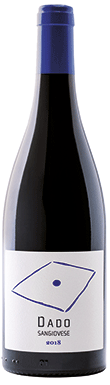

Eno Ottaviano started this winery in San Clemente, close to Rimini and the Adriatic Sea, in the 1960s. In 2007 the four cousins: Davide and...
2018
Enio OttavianiRomagna

Giovanna Madonia, Ombroso Riserva, Romagna, Sangiovese Bertinoro, Emilia Romagna, Italy, 2018
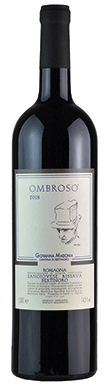
Giovanna Madonia has 14 hectares in the subzone of Bertinoro. Produced only in the best vintages, the grapes come from bush vines in a six-hectare...
2018
Giovanna MadoniaRomagna
Villa Papiano, Probi Riserva, Romagna, Sangiovese Modigliana, Emilia Romagna, Italy, 2018
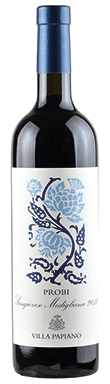
Villa Papiano works organically in the subzone of Modigliana, close to the Apennines. The vineyards are surrounded by wild nature and forests 500 metres above...
2018
Villa PapianoRomagna
Fattoria Zerbina, Pietramora Riserva, Romagna, Sangiovese Marzeno, Emilia Romagna, Italy, 2016
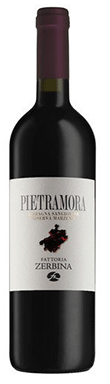
Cristina Geminiani is one of the leading figures behind the revival of Romagna DOC. In 1985 she started to make wine on her grandfather’s property,...
2016
Fattoria ZerbinaRomagna
Noelia Ricci, Il Sangiovese, Romagna, Sangiovese Predappio, Emilia Romagna, Italy, 2020
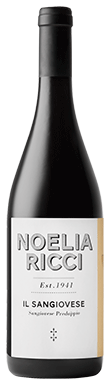
The Predappio zone is known for Sangiovese wines with depth and structure yet refined elegance too. Marco Cirese chose nine hectares of his best-suited, highest...
2020
Noelia RicciRomagna
Chiara Condello, Romagna, Sangiovese Predappio, Emilia Romagna, Italy, 2019
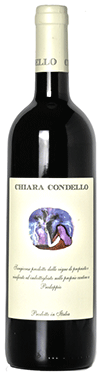
Chiara Condello is one of the young guns of Romagna DOC. She started to work as a winemaker in her father’s winery, Condè, but 10...
2019
Chiara CondelloRomagna
