
Castello di Fonterutoli’s Concerto: A Sangiovese-dominant SuperTuscan in its 40th vintage
Susan Hulme MW tastes nine vintages of Concerto, from 1981 to 2021, and discovers three key phases in the wine's stylistic evolution...


2023 marks the release of the 40th vintage of Concerto, a SuperTuscan blend of 80% Sangiovese and 20% Cabernet Sauvignon from the Chianti Classico region of Tuscany. To celebrate, a vertical tasting of nine wines was held at the Castello di Fonterutoli estate, starting with the first vintage, 1981, and culminating with the latest release, 2021.
There are three clear phases in Concerto’s evolution: from the 1980s to 1994; from 2011 to 2015; and 2016 onwards.
Scroll down to see tasting notes and scores for nine vintages of Concerto from 1981 to 2021
The first phase of Concerto
I admired the 1981 Concerto for its vibrancy and tenacious qualities. The fruit on this 42-year-old wine has faded somewhat but the wine is kept alive by a core of vibrant acidity, like an electric current coursing through its veins, and it reflects its time perfectly: in the 1980s and 1990s the climate was very different and growers often struggled to ripen the grapes. Acidity was naturally high, tannins were firmer and alcohols lighter, at 12.5 or 13%.
The wines of this first phase are never overpowering; their acidity has helped them to age and gives them vivacity, although sometimes with a crunchy, green herb, semi-ripe quality to the fruit. The 1986 is the exception here, coming from a warmer vintage and ageing particularly well with more fruit and roundness in the middle than the two wines either side – 1981 and 1990.
1994 was the last vintage of Concerto for several years, while the estate focused its energy on Chianti Classico, of which Filippo and Francesco’s father, Lapo Mazzei had been president from 1974 to 1994.
‘It was Francesco and I that stopped [making Concerto]…We restarted with the 2011 vintage because we had more vineyards with the acquisition of Caggio,’ explained Filippo.

The second phase of Concerto
The 2011, 2013 and 2015 vintages show the next phase of evolution for Concerto. The climate had by then changed significantly, and often there was too much heat and not enough rain. The alcohol in these wines is around 14 to 14.5%. Together with the changing climate, there was a fashion for big wines with powerful ripe fruit and big oak flavours.
These wines often remind me of the heavy ‘power dressing’ fashionable in the 1980s, and I found this to be the case with the Concerto 2011 in particular. The 2013, though, is an exception. Coming from a very good vintage with a longer, late-ripening season, this wine is an expression of coolness and harmony and is currently at a beautiful stage of its development: I particularly like the dark forest floor, cool fruit, and the new level of refinement in the tannins.
About Castello di Fonterutoli
Owned by the Mazzei family since 1435, the 650-hectare Castello di Fonterutoli estate comprises 110 hectares of vineyards divided into seven different sites in Chianti Classico.
The company is run on a day-to-day basis by brothers, Filippo and Francesco Mazzei. Filippo’s son, Giovanni is the export director but also manages the Il Caggio estate near Castellina in Chianti, which includes the Concerto vineyard.
Mazzei produces a very good Chianti Classico, ‘Fonterutoli’, a Chianti Classico Riserva called ‘Ser Lapo’, and three Gran Selezione wines: ‘Castello Fonterutoli’ is from Castellina in Chianti; ‘Badiola’ – often my favourite because of its elegance and vibrancy – is made from fruit grown at high altitude in Radda in Chianti; and ‘Vicoregio 36’ is made from 36 different Sangiovese biotypes grown in the Vicoregio vineyard, further south in the warmer UGA of Castelnuovo di Berardenga.
Castello di Fonterutoli also produces two Toscana IGT wines: Siepi is a 50:50 blend of Sangiovese and Merlot from very old vines, while Concerto – one of the early SuperTuscans – is a blend of 80% Sangiovese and 20% Cabernet Sauvignon.
The third phase of Concerto
With the most recent vintages of Concerto, there has been a decisive move towards wines that express harmony, balance and finesse instead of power. In 2006, Mazzei stopped spraying the vines with chemicals and, according to technical director, Gionata Puglinani, this had a big impact on the quality of the fruit.
An improved selection of Sangiovese clones has been planted over the last 20 years and – to mitigate the effects of climate change – a canopy of leaves is left over the grapes to protect them from the sun. Grassing and cover crops are also used between the rows to protect the soil from getting too hot, thereby reducing water evaporation.
In the winery, the influence of oak has been reduced. Sangiovese is now aged in larger tonneaux instead of barriques, and the wine spends the last three months before bottling in concrete tanks. In 2021, an optical grape selector system was purchased and consequently the quality of the tannins has improved even more.
The wines in this tasting were a fascinating reflection of these phases of development and the changes in climate and culture since 1981. I loved the 1981 for its rapier-like focus and acidity and its fragility, and the 2013 for its beautiful poise and balance, but the real star of the show for me was the Concerto 2021 – the culmination of years of careful attention to detail, deep vineyard knowledge, and fine tuning in the cellar to achieve a wine of sublime finesse and drinkability.
It represents the Mazzei family’s passion and commitment, and their desire to always improve; and that for me is what turns the liquid of wine into something magical.
A history of Concerto in nine wines:
Wines are listed in vintage order oldest to youngest
Related articles
- DFWE 2023 Ornellaia masterclass: Four decades of a Tuscan icon
- Luce vertical: A ‘winning varietal blend’
- Ageing Chianti Classico: Panel tasting results
Castello di Fonterutoli, Concerto, Vino da Tavola, Tuscany, Italy, 1981
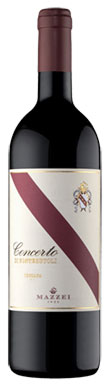

It is always such a thrill to taste the first vintage of an important wine that goes on to have a long history, and this...
1981
Castello di FonterutoliVino da Tavola

Castello di Fonterutoli, Concerto, Vino da Tavola, Tuscany, Italy, 1986
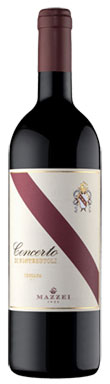
The 1986 Concerto was my favourite of the mature wines (1990, 1981 and 1986) with aromas and flavours that are tertiary and evolved but that...
1986
Castello di FonterutoliVino da Tavola
Castello di Fonterutoli, Concerto, Vino da Tavola, Tuscany, Italy, 1990
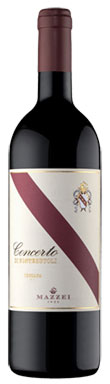
The 1990 Concerto, perhaps surprisingly, feels more mature than the 1986 – although it is important to remember that with older wines there can be a...
1990
Castello di FonterutoliVino da Tavola
Castello di Fonterutoli, Concerto, Vino da Tavola, Tuscany, Italy, 1994
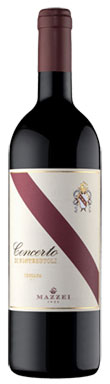
Concerto 1994 is an attractive snapshot of the vintage which, despite a hot, dry summer, suffered a very wet September. Mature aromas of fresh leather,...
1994
Castello di FonterutoliVino da Tavola
Castello di Fonterutoli, Concerto, Toscana, Tuscany, Italy, 2011
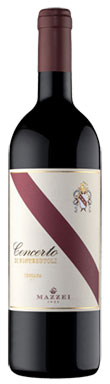
The 2011 Concerto is very expressive of its time and vintage. In 2011 the wine world was still infatuated with big, powerful wines full of...
2011
Castello di FonterutoliToscana
Castello di Fonterutoli, Concerto, Toscana, Tuscany, Italy, 2013
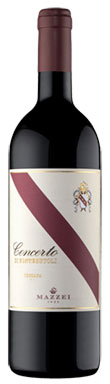
2013 was a very good year, with warm days, cool nights, and a longer growing season than the other wines in this vertical (the harvest...
2013
Castello di FonterutoliToscana
Castello di Fonterutoli, Concerto, Toscana, Tuscany, Italy, 2015
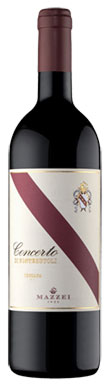
2015 is big and bold, but like a more refined version of 2011. The oak is less toasty and combines well with intense blackberry and...
2015
Castello di FonterutoliToscana
Castello di Fonterutoli, Concerto, Toscana, Tuscany, Italy, 2020
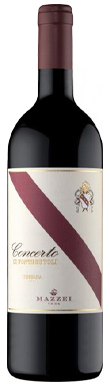
The 2020 Concerto shows even more finesse and harmony than in previous vintages. Since 2019, the time in oak has been reduced by three months,...
2020
Castello di FonterutoliToscana
Castello di Fonterutoli, Concerto, Toscana, Tuscany, Italy, 2021
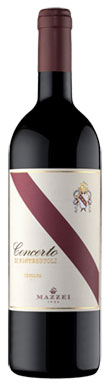
Despite a hot summer in 2021 the nights were cool, which allowed healthy grapes to ripen completely and contributed to the finesse of the tannins,...
2021
Castello di FonterutoliToscana
