
Champagne Grower-producers: the beginning of the end?


Are our beloved Champagne growers on a path to extinction? A concerned Tyson Stelzer reports...
Forces are at play that threaten the survival of Champagne’s grower-producers. The global economy, erratic harvests, incentives from négociants and even the French taxation system itself are driving growers to sell all their fruit, some to relinquish their status and become négociants, and others to sell up altogether.
Scroll down to see Stelzer’s pick of great Champagnes
The rise of the grower-producer has revolutionised this generation in Champagne. Recent decades have seen the little guy step forward to demonstrate that top Champagne is no longer the exclusive realm of the big players. Champagne is not just oceanic blends from everywhere, but single crus and individual vineyards, tended, crafted, matured and presented lovingly to the world by the same pair of hands.
Oh, how we have celebrated. Champagne’s grower-producers are the darlings of sommeliers and hip bars the world over; the prize of the most fanatical Champagne purists.
Top growers such as Egly-Ouriet and Jacques Selosse have realised prestige prices. Rightly or wrongly, the ‘RM’ (récoltant-manipulant) insignia on labels has become a status symbol over ‘NM’ (négociant-manipulant). And the négociants have taken notice, inspired into more sustainable viticultural practices, more creative vinification and the creation of specialist cuvées to capture the detail of single crus and vineyards. It’s been a heyday for Champagne.
But all this is changing.‘Champagne is going to be a very different place in the next decade,’ I was recently told by one small grower and négociant struggling to sustain his family business in a highly respected premier cru on the Montagne de Reims. ‘It will not be possible for many of the small brands to survive.’
Already many have given up. Last year, 87 grower-producers followed a growing trend, closing down production. In 2008, growers sold 78.5 million bottles, almost a quarter of all Champagne production. A decade later, grower sales declined to just 57.4m bottles, merely 18% of Champagne sales by volume and an even smaller 15% by value – a devastating drop of almost 27%.
Over the same time, sales by Champagne houses grew by almost 4% and cooperatives declined by 8% as Champagne continued its march towards a steadily increasing house dominance.
Global forces continue to fuel this trend, and 2017 marked a milestone turning point for the balance of Champagne sales. For the first time in history, Champagne exports grew to match French sales, after a decline in domestic sales of almost 5% – 153.7m bottles of were consumed by France (50%), 76.6m in the rest of the EU (24.9%) and 77m by other countries (25.1%).
Just 15 years ago, exports represented barely more than a third of the region’s production. In the UK in 2017, as the grip of Brexit tightened, there was a sharp decline for the second consecutive year, with shipments down a significant 11% by volume and 5.7% by value. Meanwhile, EU countries were down 1.3%.
This changing balance in Champagne sales hit growers much harder than houses and co-ops. Of Champagne’s 15,800 growers, 4,278 sold their own Champagnes last year, but only 1,232 exported their cuvées outside France and just 823 outside Europe. More than two-thirds of Champagne growers rely exclusively on domestic sales and more than four-fifths entirely on European countries.
‘Every year, we are losing sales to the big houses,’ reveals Nicolas Chiquet of respected grower-producer Gaston Chiquet in the village of Dizy. He is fortunate to be among the minority with global distribution. ‘Outside France we have less competition, and we have distribution through agents who are passionate about pushing growers. But in France we are alone, it is more difficult, and we have to work harder.’
Growers sold almost 50m bottles, 87% of their production, in France in 2017. This left exports at just 7.5m bottles, more than half of which (4.4m) were destined for other EU countries. The rest of the world shared just 3m grower bottles, compared with almost 70m from houses and close to 5m from co-ops.
‘The problem is that the French market is tough and very competitive,’ says Maxime Toubart, president of Champagne’s growers’ union, the Syndicat Général des Vignerons de la Champagne. ‘Vineyards are increasingly dependent on the houses to sell their stocks, because they have the means to go sell the bottles in distant markets at high prices. So they can afford to pay a lot for the grapes.’
Champagne pays its growers the highest grape price in the world, an average €6.20 per kg, more than 60% up on the price 15 years ago. In 2017, Champagne’s largest player, LVMH (Louis Vuitton-Moët Hennessy), maker of Moët & Chandon, Dom Pérignon, Veuve Clicquot, Mercier, Ruinart and Krug, offered its growers a premium of 6%-7% on the price of grapes, inflating prices across the region. It takes 1.2kg of grapes to make a bottle of wine, not to mention a production process more complex, more labour-intensive and more timeconsuming than any other in the wine world.
The only grower-producers able to sustain these rising costs are those able to pass on price increases in export markets. Yet Champagne remains one of the most pricesensitive luxuries in growing markets outside Europe. Big-brand discounting accounts for the vast majority of recent growth in key markets. Champagne is caught in the squeeze between the most expensive (and rising) cost of production in the wine world and the most price-competitive and frequently discounted premium wine category on the shelves.
This scenario coincides with the retirement of many of the founders who produced their own grower Champagnes for the first time. As the next generation takes over, many are recognising that strong grape prices and high demand for quality fruit presents a more stable and compelling opportunity to focus back on selling to négociants.
At a time when Champagne’s large houses are seeking to increase production, they are eager to be actively engaging growers to shore up supply. ‘I have been working on the relationship between growers and Champagne houses for 20 years, and something is changing now,’ says Dominique Demarville, chef de cave of Champagne’s second-largest house of Veuve Clicquot. His engagement and support has fostered loyal growers and he believes the balance in Champagne will change, and that inceasingly small growers will stop bottling.
‘We are creating a new generation of growers who don’t necessarily want to sell bottles, but who want to be top growers and sell their fruit to the leading houses,’ he says. ‘In the next 10 years, 35% of growers will retire, and most will lease or sell their vines to other growers.’
Climate disruption
This critical reconciliation in grower Champagnes has been amplified not only by economic forces but by the harrowing extremes of climate change. The vagaries of Champagne’s marginal climate and the diversity of its microclimates have long dictated a wine style dependent upon blending multiple vintages, varieties and crus. Ever more dramatic extremes are taking their toll, and the region has suffered bitterly in recent vintages. 2016 was a season of catastrophic weather events that reduced yields by almost 25%, and 2017 was even worse, claimed by many growers to be their most challenging vintage in 20 years.
‘A small grower in one village has nothing to compensate for difficult weather,’ says Benoît Gouez, chef de cave of Champagne’s largest house, Moët & Chandon. ‘Grower wines are very good, and I have friends among many of them, but by nature the quality of Champagne is uneven. The more grapes you can access, the more you can be consistent.’
Champagne’s average grower now owns less than 0.7ha. In a good harvest, this would facilitate production of just 7,000 bottles. Larger growers are more likely to bottle their own Champagnes, but the average production of Champagne’s 4,278 growers is a mere 14,000 bottles.
Jérôme Prévost is one of Champagne’s most celebrated growers, producing just 13,000 bottles from a 2.2ha vineyard he inherited from his grandmother in 1987. Although his wines are in high demand and sell for respectable prices worldwide, such a small production is insufficient to sustain his livelihood. In order to grow production by purchasing fruit, Prévost recently relinquished his récoltant-manipulant credentials to be reincarnated as a négociant-manipulant, to the collective gasp of the hip sommelier world.
This is a trend followed by an increasing band of Champagne’s most celebrated growers, and not all for the same reason. The acclaimed 9.5ha estate of Bérêche et Fils recently joined the négociant world, to open up the flexibility not only to buy from growers but, surprisingly, to purchase more vineyards. ‘We wanted to buy a 0.3ha plot in MaillyChampagne, but as a récoltant the authorities only permitted us to buy half because they said we were too big,’ explains co-owner and chef de cave Raphaël Bérêche. The change has opened the way for him to purchase small parcels from growers in other villages in order to make a new range of single-vineyard cuvées. In the village of Bouzy, famed grower André Clouet has likewise become a négociant to create new cuvées from fruit exchanged with growers in other villages.
For the De Sousa family in the fabled grand cru of Avize, the decision to become a négociant came for a very different reason. As third-generation grower Erick De Sousa prepares to pass the estate on to his three children, a threat has arisen more crippling than global economics and climate change.
France boasts one of the highest levels of inheritance tax in the world, and children are stung with 45% tax on assets worth more than €1.8m. A generation ago it was possible to pay off inheritance tax in a single harvest.
Today, the average Champagne vineyard is valued at more than €1.5m per hectare, making Champagne the highest value appellation viticultural land on earth, 60 times the value of an average Bordeaux vineyard. Champagne also ranks as the fastest inflating of France’s wine appellations, mushrooming in value more than five-fold in 25 years. Champagne’s top Côte des Blancs grands crus are now fetching up to €3m per hectare.
De Sousa owns 11ha of almost exclusively Côte des Blancs grands crus to produce 100,000 bottles, and at any time holds 250,000 bottles in the cellar. This little family estate must be worth well in excess of €30m. It would take a lifetime to pay off the tax on such an inheritance.
‘We changed to a négociant a few years ago so the domaine could pass to me and my two siblings,’ explains Erick’s daughter Charlotte. French taxation is kinder towards inheritance of a company than vineyard land. ‘And it’s easier for us to buy grapes than vineyards if we need them in the future!’ she adds.
Like in Burgundy, France’s heavy inheritance taxes make it increasingly unviable for Champagne’s top vineyards to remain in family hands as récoltants.
Blurred lines
In an age when Champagne markets religiously celebrate récoltant-manipulant status, relinquishments such as these are testimony to the reality that, in Champagne itself, there is no such segregation between récoltants and négociants, and its very suggestion is vigorously dismissed by both sides.
‘We need to change this stupid, simplistic view of the market!’ exclaims chef de cave Jean-Baptiste Lécaillon, who blends Louis Roederer’s vintage cuvées exclusively from estate sources. ‘There are some growers who are more négociants than growers; and some négociants who are more growers than négociants.’ The very designation of récoltant and négociant in Champagne has become so convoluted that it has diminished to virtually complete meaninglessness. The lines are blurring as négociants increasingly purchase vineyards, growers source from many villages rather than just their own, and cooperatives focus increasingly on selling their own brands.
Inspired by growers, many houses are launching single-vineyard and zero-dosage cuvées. The first new Roederer cuvée in 40 years – a Brut Nature made in collaboration with designer Philippe Starck – achieves both at once. ‘We hear so much about growers being able to make no-dosage because they have the grapes, and the négociants can’t do it because they need to use dosage to hide a lack of quality,’ says Lécaillon. ‘So we wanted to make this cuvée to show that we can do it. It’s not that growers make their wines in the vineyard and négociants make their wines in the cellar.’
Antoine Roland-Billecart reveals that Billecart-Salmon’s distinctive Sous Bois cuvée was also inspired by the growers. ‘With the diversity of Champagne’s regions and the rise of growers, it’s important for us to make more interesting, small-production wines,’ he says.
We are now at a critical junction in the evolution of the Champagne grower-producer. The years to come will see an increasing rationalisation among growers. While many smaller and lesser estates will return to selling their fruit to négociants, Demarville predicts that the top growers will grow and increase.
Jacquesson’s Jean-Hervé Chiquet suggests that in the grower world there is a ‘super top 10’ and 50-100 doing an interesting job. ‘But there are more than 4,000 making wine the way the laboratory tells them to make it, and the quality is very low.’
It would be no catastrophe for Champagne’s lesser growers to redirect their fruit to the négociant houses. And there is no doubt that the very best growers, well established and well loved across the Champagne world, will continue to strengthen their rightful place among the great wine estates of the world.
Tyson Stelzer is an awarded wine writer, author and communicator. His most recent book is The Champagne Guide 2018-2019 (Hardie Grant, £25)
See Stelzer’s selection of 12 great Champagnes
You might also like:
Wine region: Champagne
Vintage Champagne guides & ratings
Champagne travel: spend a weekend in Reims
Krug, Clos du Mesnil, Champagne, France, 2002
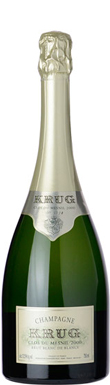

Singly and emphatically the greatest Champagne release of recent years. Grand malic acidity of dizzyingly heightened proportions is swept up in an immense, all-consuming tidal...
2002
Krug

Egly-Ouriet, Blanc de Noirs Vieilles Vignes Brut Grand Cru, Champagne, France
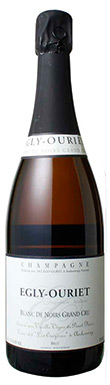
Some in Champagne can achieve grandeur of dizzying proportions, and the most talented can summon delicacy of lightfooted grace, but no village marries the two...
Egly-Ouriet
Bollinger, Vieilles Vignes Françaises, Champagne, France, 2006
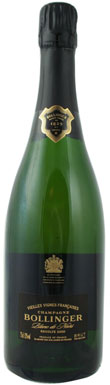
The legendary product of two tiny plots of ungrafted, untrellised Pinot Noir in Aÿ, this is a cuvée of profound concentration and ripeness. In sheer...
2006
Bollinger
Jacquesson, Terres Rouges, Champagne, France, 2012
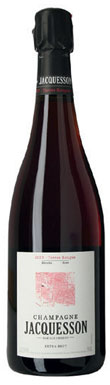
This vineyard transcends its humble terroir of Dizy in profound chalk minerality, which permeates the palate with remarkable distinction, opening into a breathtaking red cherry...
2012
Jacquesson
Pierre Gimonnet, Cuvée Special Club Grands Terroirs de Chardonnay, Champagne, France, 2008
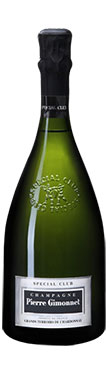
There is an inherent subjectivity in the pricing of wine that rarely sees a prestige cuvée of the utmost finesse and enduring stamina hit the...
2008
Pierre Gimonnet
André Clouet, Le Clos de Bouzy Grand Cru, Champagne, France, 2008
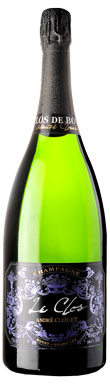
The flamboyant Jean- François Clouet extracts delicious cuvées from the depths of his historic family vineyards in Bouzy. His clos on the lower edge of...
2008
André Clouet
Bérêche & Fils, Le Cran Ludes 1er Cru, Champagne, France, 2008
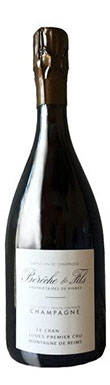
The 2008 season has delivered Bérêche’s finest work yet in this evocative and complex cuvée. It expresses the fruit cake and spice of barrel fermentation...
2008
Bérêche & Fils
Philipponnat, Clos des Goisses, Champagne, France, 2007
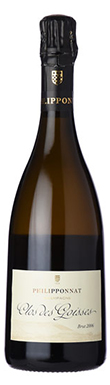
The steep, sun-drenched slope of Clos des Goisses has no equal in Champagne, but its thumping ripeness can be alarming. In some vintages it finds...
2007
Philipponnat
Pierre Péters, L’Esprit Grand Cru Blanc de Blancs, Champagne, France, 2012
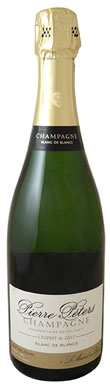
Very few Champagnes more eloquently articulate their terroir than those of Pierre Péters, infused with the texture of the Côte des Blancs’ finest grand crus...
2012
Pierre Péters
De Sousa, Cuvée des Caudalies Grand Cru Extra Brut, Champagne, France, 2008
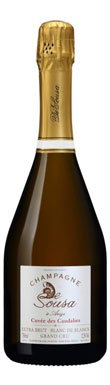
Erick De Sousa described 2008 as a perfect season, prompting him to bottle more than double the usual volume of this cuvée. It resonates with...
2008
De Sousa
Louis Roederer, Philippe Starck Brut Nature, Champagne, France, 2009
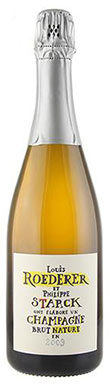
The key to Roederer’s distinctive cuvée is the terroir of its estate in Cumières, the most incredible biodynamic vineyard in Champagne. The sunny 2009 season...
2009
Louis Roederer
