
Château d’Esclans: Would you pay for rosé that tastes like Burgundy?
Joanna Simon tastes five vintages of two of the world's most expensive rosés, Garrus and Les Clans, siblings of Whispering Angel, and asks the question: is it worth it?


In the early 2000s, the French were drinking more white wine than rosé.
By 2008, however, mainstream media were reporting that sales of rosé had overtaken those of white for the first time. Since then rosé has swept the wine world.
The production and consumption of rosé has been increasing worldwide.
And styles are inevitably changing. Rosé is serious business and a serious wine. There are now rosés that can be cellared and aged.
Scroll down for notes and scores of five vintages of Garrus and Les Clans rosé from Château d’Esclans
Sea change

If there’s one man who can take the credit for this sea change, it’s Sacha Lichine.
In 2006, he created Whispering Angel, a Côtes de Provence rosé that he describes today as ‘closer to a spirits brand,’ as well as two pioneering oak-fermented rosés, Garrus and Les Clans, from his estate Château d’Esclans.
While he originally went on a property recce in search of the sun, his vision became to create the world’s most expensive rosé, a wine of elegance and precision, complexity and ageability, that could hold its own among other fine wines – whites, reds and not least Burgundy.
The estate’s vineyards are in the limestone-rich soils of the upper Esclans valley in the Var department, which he leased and then finally bought in 2005 after selling Château Prieuré-Lichine, in Margaux, in 1999.
Developing the style of a fine rosé

The technical director Lichine recruited to realise this vision was a Bordeaux winemaker, Patrick Léon, recently retired from Château Mouton Rothschild.
But the inspiration for the winemaking of Garrus and Les Clans was white Burgundy: fermentation and ageing in new oak with twice weekly batonnage.
There has been fine tuning over the years. Both fermentation and maturation are now in 600-litre demi-muids, instead of 500-litre barrels, and each is individually temperature controlled.
The wines are aged for 10 months and the oak is a mix of new, second and third use. Most of the barrels are from coopers Seguin Moreau and, critically, they’re only very lightly toasted.
Other fundamentals include picking in the cool early morning, a three-stage grape sorting process, cooling the grapes down to 7ºC-8ºC, and a closed-circuit ultra-light pressing process that results in very pale, basically free-run juice (85%-90% in the case of Les Clans).
The average vine age is 50-70 years for Les Clans and ‘a little bit older’ for Garrus, according to Lichine.
Where they diverge radically from Burgundy is of course in their grape varieties: 78%-80% Grenache ‘for elegance,’ says Lichine, and 18%-20% Rolle ‘for richness’.
There is a smidgen of Syrah and there could be a tad of Tibouren and Cinsault.
Making wine that sells
‘Everyone thought I was off my head to sell a fourth-growth Bordeaux to do this,’ says Lichine.
What they didn’t appreciate is that Sacha Lichine not only knows how to make wine and run an estate, he knows how to sell wine.
It may be the less romantic side of the wine business (although it can be glamorous at the upper echelons), but it was key to Esclans’ success and the subsequent global rise of rosé.
Has Lichine achieved what he set out to do? In my view, yes. The wines are rich and vinous yet elegant, and they become more complex with age.
Garrus, especially, starts out more like white Burgundy and can become more like red Burgundy with age, which surely can’t be bad.
Are they worth the money? Only you can decide what to spend your money on, but their quality compares with wines of equivalent price.
Notes and scores for five vintages of Garrus and Les Clans
Related articles
- Can rosé wines really age?
- Andrew Jefford: ‘Rosé, for the time being, is a pretty babble’
- Best rosé wines beyond Provence
Château d'Esclans, Garrus, Côtes de Provence, Provence, France, 2023
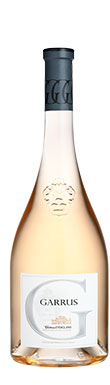

Made from a single vineyard of very old vines, some almost centenarians, Garrus is the pinnacle of the Esclan estate wines and, although it’s very...
2023
Château d'EsclansCôtes de Provence

Château d'Esclans, Garrus, Côtes de Provence, Provence, France, 2022
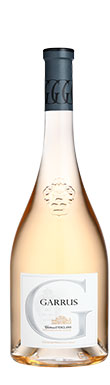
There’s a fresh and floral-accented immediacy on the nose of the 2022, followed by flattering vanilla and hazelnut from the oak and an attractive whisp...
2022
Château d'EsclansCôtes de Provence
Château d'Esclans, Garrus, Côtes de Provence, Provence, France, 2021
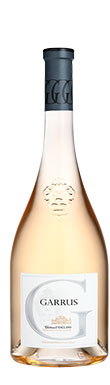
This has reached a stage where the interplay of fruit and oak on the nose has reached its first peak, although there will be much...
2021
Château d'EsclansCôtes de Provence
Château d'Esclans, Garrus, Côtes de Provence, Provence, France, 2020
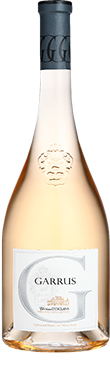
The colour is slightly paler than its predecessors, and at first the nose seems distinctly more evolved. It’s still fresh but with more mature, nutty...
2020
Château d'EsclansCôtes de Provence
Château d'Esclans, Garrus, Côtes de Provence, Provence, France, 2017
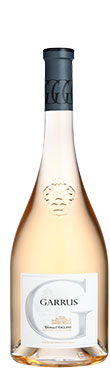
Like the 2017 Les Clans, the colour has softened to a peachy orange tone. The wine, tasted from magnum, is rich and complex, but still...
2017
Château d'EsclansCôtes de Provence
Château d'Esclans, Les Clans, Côtes de Provence, Provence, France, 2023
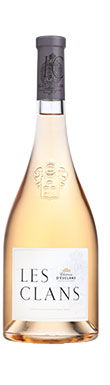
None of these rosés could be described as anything other than pale, but the 2023 is marginally paler than its three predecessors and more like...
2023
Château d'EsclansCôtes de Provence
Château d'Esclans, Les Clans, Côtes de Provence, Provence, France, 2022
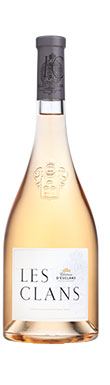
There is an immediate spiciness to the fruit on the nose, together with quite marked vanilla and sweet almond oak, then a tingling saline freshness....
2022
Château d'EsclansCôtes de Provence
Château d'Esclans, Les Clans, Côtes de Provence, Provence, France, 2021
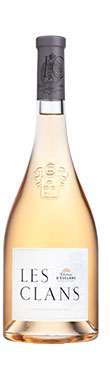
Like the 2022, this shows its oak, but in a more harmonious way, giving a savoury, white Burgundy quality and hazelnut, buttered almond and nougat...
2021
Château d'EsclansCôtes de Provence
Château d'Esclans, Les Clans, Côtes de Provence, Provence, France, 2020
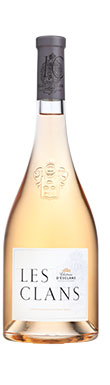
There's a notable citrus accent to the 2020 (tasted from a magnum), and a salty, mineral tang, alongside floral notes and sweet red apple fruit....
2020
Château d'EsclansCôtes de Provence
Château d'Esclans, Les Clans, Côtes de Provence, Provence, France, 2017
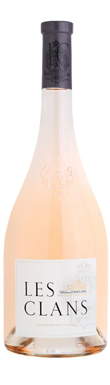
At more than seven years old, and tasted from a three-litre bottle, this is as complex, rich in texture, intense and fresh as it is...
2017
Château d'EsclansCôtes de Provence
