A guide to Chianti Classico’s new sub-zones
Chianti Classico wines will soon be able to show one of 11 new sub-zone names on their labels, although you won’t find them on shelves for a while yet. Emily O'Hare takes us on a tour of the new sub-zones, with a selection of wines to try.


Following much debate over several years, in the summer of 2021 the Chianti Classico consorzio approved a new sub-zone classification, the proposal having been to allow 11 Unità Geografiche Aggiuntive (UGAs: ‘additional geographical units’) in Chianti Classico to add the name of their commune or township to the front label of their Gran Selezione wines (in the coming years this will extend to the Riserva and annata-level wines).
The approval of this law change, said to be by a ‘very large majority’ of the governing consorzio’s members, has encouraged producers in those sub-zones to gather together to form their own member associations, in order to unify, define and promote their own zone.
Scroll down to see tasting notes and scores for eight top wines from Chianti Classico’s new sub-zones
To have more precise information regarding the origin of the wines will be greatly beneficial, believes David Gleave MW, chairman of importer Liberty Wines in the UK.
Sangiovese, like Pinot Noir, is a site-sensitive variety and expresses beautifully the nuance of place, so the new move gives the consumer more opportunity to understand that specific place through the wine, he argues.
It is a challenge to explain neatly the detailed qualities of each sub-zone involved – and there are further legal hurdles to be crossed before the current nine recognised Chianti Classico commune areas are officially superseded by the 11 new UGAs. However, here we shall go on a journey to understand in broad strokes the key differences, from village to village.

See also: Chianti Rùfina: regional profile plus top wines worth seeking out
Starting in the south: Vagliagli
A 15-minute drive north from the centre of Siena, Vagliagli is a hamlet within the commune of Castelnuovo Berardenga. Wineries here will be able to add the village name ‘Vagliagli’ to their label – though some producers are continuing with the more familiar commune name, Castelnuovo Berardenga.
With Castelnuovo Berardenga forming a butterfly shape at the southern edge of the Chianti Classico region, Vagliagli now denotes the ‘west wing’ of the butterfly, separated from the east wing of Castelnuovo Berardenga by the Arbia river at Pianella and the sub-zone of Gaiole. Altitude begins to creep up as you approach Vagliagli, and here the soils contain more alberese (a compact limestone rock) and less clay and tuff, a soft, porous rock created from volcanic ash, more common in Castelnuovo Berardenga. In his Italy’s Native Wine Grape Terroirs (UC Press, August 2019), Ian D’Agata notes that the wines from this zone are ‘generally lighter bodied, succulent and juicy’.
At slightly lower altitude in the east wing, Castelnuovo Berardenga is among the warmest communes in Chianti Classico. South-facing and sun-blessed, wines here are ample in body and dark in their fruit character, with tightly knit tannins that in their youth can appear austere. These wines often draw comparisons with the muscular wines of Montalcino, further south.
Castellina
With the warmth of the south as our theme, and Siena again as our starting point, a 15-minute drive northwest takes one to Castellina. Driving to Fattoria Pomona, a family-owned estate since 1890, this warmth can be felt and seen: cactus flowers and prickly pears protrude from the dry stone walls opposite the winery.
Castellina is not just warm, it also has one of the lowest levels of annual rainfall in Chianti Classico, according to D’Agata, who found Castellina to have an average annual precipitation rate of 770mm, compared with 920mm in Greve and 970mm in Gaiole, noting that ‘Castelnuovo Berardenga’s data are similar to that of Castellina’.
The fruit character of the wines is unsurprisingly juicy, concentrated and ripe, however the wines do not tend to fill the mouth so broadly as do the wines of Castelnuovo Berardenga.
San Donato in Poggio
Not far from Castellina to its northwest, San Donato in Poggio incorporates Barberino Val d’Elsa, Poggibonsi and Tavarnelle Val di Pesa. The most westerly of the sub-zones, from its hills (at an average of 350m) you can see the towers of San Gimignano and the city of Volterra away to the southwest, towards the coast.
The wind here has a powerful cooling effect on the vines, particularly at night, fixing colour, preserving acidity and heightening aromatics in the grapes. Laura Bianchi of Castello Monsanto tells me that this past summer, the temperatures would drop by 19°C at night, from about 25°C to 6°C. The moderating effect of the cooling winds also allows for a long ripening season, crucial for the later-ripening Sangiovese.
San Casciano Val di Pesa
Continuing north, we reach San Casciano Val di Pesa. It is, alongside Greve commune, at the northernmost point of the Chianti Classico zone and just minutes from the city of Florence. Notably, it is the sub-zone where harvest is likely to happen first. The soil is rich in ciottoli di fiume – small pebbles and large smooth stones, remnants of ancient river deposits – and sandy silt. The stones hold and radiate warmth, ensuring the vines achieve full maturation. The wines here have a beautiful fluidity to them, light and deft in tannins. These qualities are sympathetically expressed here in the wines of young winemakers Maddalena Fucile and Matteo Vaccari at Fattoria Cigliano di Sopra.
Where San Casciano meets Greve the altitude rises, as does the volume of galestro in the soil. Galestro is a brittle stone, flaky and crumbly – very different to the impenetrable alberese found in vineyards further south in the region. It is said to release precious elements into the soil for the plant – and the wines display a more steely character, more mineral and tense.
Greve
Crossing to the east and spiralling south, we are in Greve. The Greve river cuts through this region and styles of wine can vary according to which side of the valley and at what altitude a vineyard sits. On the eastern side it is warmer; vineyards face south and west, enjoying the potent afternoon sun. Here, just out of town to the north, works Englishman Tim Manning at Montecalvi, a 3ha estate at 200m with some very mature vines up to 80 years old. His wines have an explicit red fruit character and a freshness and sweetness to them that raises a smile for the drinker.
Montefioralle
Lying just west of Montecalvi, above Greve town, are the vineyards of Conte Sebastian Capponi, of Villa Calcinaia. His family have owned property in Greve since 1524 (their Villa Calcinaia is just outside Florence). His estate’s vineyards are all within the sub-zone of Montefioralle – the second smallest sub-zone after Lamole. Its rare combination of soil types for Greve – a mixture of montemorello (alberese and galestro-shale) and sillano (siltstone and claystone) – are also found at Ama in Gaiole and Montevertine in Radda, Capponi says. The vineyards of Montefioralle face east, appreciating morning sun and afternoon shade. In hotter years the wines retain a coolness and grace which, with the influence of the chalky, limestone-rich soil, makes for ease of drinking in youth but also allows them to age beautifully.
Panzano
A township within Greve, Panzano now has its own sub-zone to the west of the Greve river at a high altitude of about 500m. In Panzano, south-facing vineyards line the form of a natural amphitheatre-shaped basin known as the ‘Conca d’Oro’. The vines are bathed in sunlight and heat during the day, and thanks to their high altitude enjoy the drop in temperature as night becomes duly cool. Panzano wines, always deliciously ripe and full in body, show great balance and suppleness with chewy, satisfying tannins and flavoursome plum and cherry fruit flavours.
Lamole
Only a 7km drive away, and still within the municipality of Greve, there is Lamole. Along with Radda, Lamole is one of the highest sites within the Chianti Classico zone, rising up to 650m. There are vineyards here with vines trained to stakes, and dry stone terraces snaking down steep, sandy-soiled hills. The growing season is long because of the cooler average temperatures, and the wines are fine: slender yet persistent in tannins, long in flavour and nervy in acidity, they seem to vibrate with energy.
Radda
Moving south in the direction of Siena, but still at an altitude of 600m, we arrive at Radda. The medieval walled town with panoramic views of the surrounding countryside (pictured below) is gloriously atmospheric, and that sense of atmosphere undoubtedly translates into the sub-zone’s wines. Rich in detail, they read on the palate like an illuminated manuscript. Tannins thread through, neatly woven; a beautiful presence but weightless, like gold leaf. The perfume of Radda wines is heady, aromatic and colourful – of purple flowers, iris and violet, of blood orange, red cherries and sweet thyme.
Gaiole
We bring our tour to a close in the sub-zone which ‘is more Classico than thou’, as Nicholas Belfrage MW wrote in The Finest Wines of Tuscany & Central Italy (Aurum, 2009). In this sub-zone there is Castello di Brolio, the estate at which Baron Bettino Ricasoli in 1872 formulated the recipe for Chianti. Like Radda, Gaiole is also atmospheric, rugged and rocky. I meet winemaker Maurizio Alongi, Gaiole born and bred. He has worked in the region since the 1990s, initially in a cooperative in town before buying the 1.3ha Barbischio vineyard from a local centenarian who planted this vineyard aged 50. These are intent, vertical wines – the tannins are magnificent: sustained by the acidity, they are polished and persistent. I find myself captivated by the structural components of the wine.
How glorious it is to be at the beginning of the Chianti Classico sub-zone conversation, to watch, wait, swirl and taste the attempts of winemakers here to decipher their sites through – as Enogea publisher and expert map maker Alessandro Masnaghetti expresses it – that ‘exceptional and demanding… Sangiovese’.
Wines to try from Chianti Classico’s new sub-zones:
Related content:
Chianti Classico: a glowing future plus 12 must-try wines
Chianti Classico wineries approve new subzones
Chianti Rùfina: regional profile plus top wines worth seeking out
Castello di Monsanto, Il Poggio, Chianti Classico, Gran Selezione, Tuscany, Italy, 2017
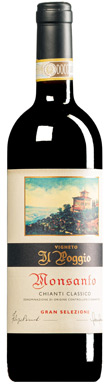

SAN DONATO IN POGGIO - Buoyant and yet with such depth, I finish a glass quickly (and happily) trying to work out this wine. Tannins...
2017
Castello di MonsantoChianti Classico

Montecalvi, Chianti Classico, Tuscany, Italy, 2019
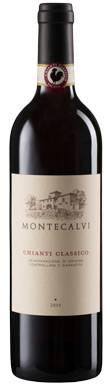
Montecalvi changed hands in 2017 and now boasts Brit expat Tim Manning at the winemaking helm. He does a long post-fermentation maceration for a portion...
2019
MontecalviChianti Classico
L'Erta di Radda, Chianti Classico, Tuscany, Italy, 2019
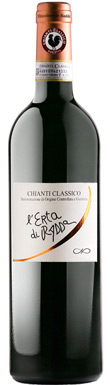
Erta di Radda’s owner and winemaker, Diego Finocchi includes a dollop of Canaiolo Nero in his annata to enhance floral and spice aromas as well...
2019
L'Erta di RaddaChianti Classico
Podere Castellinuzza, Chianti Classico, Tuscany, Italy, 2016
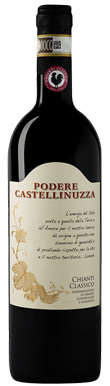
LAMOLE - On the sandy, warm and well drained soils of Lamole, Sangiovese vines and iris flowers thrive. Curiously, magically, the aromas of purple flowers...
2016
Podere CastellinuzzaChianti Classico
Fattoria Pomona, Chianti Classico, Tuscany, Italy, 2019
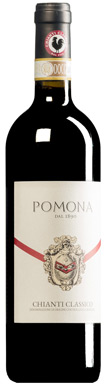
Pomona is located at the far southern tip of Castellina, abutting the township of Vagliagli to the west. From her six hectares, Monica Raspi makes...
2019
Fattoria PomonaChianti Classico
Le Fonti, Riserva, Chianti Classico, Tuscany, Italy, 2017
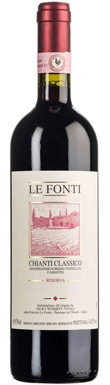
PANZANO - Glossy deep red in colour, beautifully fruity in aroma, the small addition of Cabernet Sauvignon is such a delight on the nose and...
2017
Le FontiChianti Classico
Villa di Geggiano, Chianti Classico, Tuscany, Italy, 2018
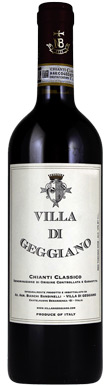
VAGLIAGLI - You feel you are further south in Tuscany with this Chianti Classico. Ruby reds become blue-tinged in the glass; aromas and flavours marry...
2018
Villa di GeggianoChianti Classico
Fattoria Cigliano di Sopra, Chianti Classico, Tuscany, Italy, 2019
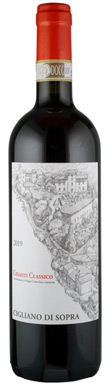
SAN CASCIANO VAL DI PESA - After graduating in Oenology at Florence University, winemaking duo Maddalena Fucile and Matteo Vaccari headed to California to work...
2019
Fattoria Cigliano di SopraChianti Classico
