Get our daily fine wine reviews, latest wine ratings, news and travel guides delivered straight to your inbox.
You are now subscribed
Your newsletter sign-up was successful
An account already exists for this email address, please log in.
Chianti Classico: a glowing future plus 12 must-try wines
Chianti Classico’s fortunes took a dive in the middle of the last century, when tenant farmers and traditional vineyard methods gave way to mechanisation and international grape varieties. Today a new generation of producers is returning to original ways while embracing advances in the winery, says Emily O’Hare, who believes the region’s star is rising again.
Is there any other wine appellation in the world with such a tumultuous past and glowing future as Chianti Classico? For almost a century, since 1924, the Gallo Nero – the black cockerel emblem of the DOCG wine region – has ruled the roost.
Perhaps a phoenix might be more appropriate.
Today, amid the dark forests and hamlets with smoking chimneys, one can spot dry-stone terraces housing young vines of indigenous Tuscan varieties such as Sangiovese and Canaiolo Nero.
Some vineyards are planted to stakes, next to those in rows along wire trellises. Any minute now, I imagine, a beanstalk will spring from the galestro soil and take me up to the clouds. I am surely in a fable, or have I gone back in time?
Scroll down for Emily O’Hare’s scores and tasting notes for her 12 must-try Chianti Classicos
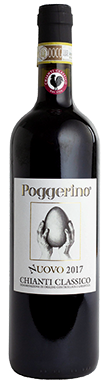
Visiting the wineries in the region, I am certain I have time-travelled: there are Etruscan-style terracotta amphorae at Fontodi, ceramic globes called Clayvers at Candialle, and at Poggerino in Radda I spot an enormous concrete egg capable of holding 650 litres of wine perched comfortably between large French oak tonneaux.
The changes happening in Chianti Classico at the moment are a fantastic mix of traditional and modern. There is an earnest, open willingness to experiment that I have not yet felt in any other region of Tuscany. Producers are diligently poring over the ashes of their glorious and inglorious past, aware they are working with a treasure of a terroir and a wealth of great indigenous grape varieties.
Vineyard turnaround
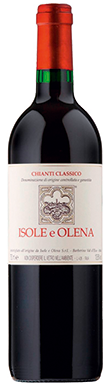
The landscape in Chianti Classico changed in the 1950s with the abolition of the 600-year- old sharecropping system. Paolo de Marchi of Isole e Olena tells me that the workforce in the commune of Barberino Val d’Elsa reduced by 90% in five years. Tenant farmers and their families left to begin their lives independently of their landlord, and without men to work the fields the terraced vineyards were too laborious to manage and maintain.
Decanter newsletter
Get our daily fine wine reviews, latest wine ratings, news and travel guides delivered straight to your inbox.
The situation became so desperate, he says, that the vineyards were nearly turned over to pasture for the production of goats’ cheese. The dry-stone walls that had stood for centuries were bulldozed to be replaced by wide-spaced, even rows of vines through which a tractor could pass. Mechanisation was essential to enable commercial production of Chianti Classico again.
At Isole e Olena and Fontodi, among others, they are now restoring or building dry-stone wall terraces on which to plant vines. The list of benefits of terraced vineyards is lengthy, explains Giovanni Manetti of Fontodi. They conserve water, reduce soil erosion and promote soil fertility. The walls retain heat and allow for airflow between the stones, and in those spaces insects and other plant life thrive. The quality of the fruit is more uniform from the top of the terrace to the bottom as each terrace receives a more even amount of sun and heat.
Josephin and Jarkko Peränen, owners of Candialle
(Image credit: Credit Unknown)
At Candialle in Panzano, Josephin and Jarkko Peränen have 10,000 bush-trained vines (‘alberello’) per hectare growing on old dry-stone terraces – the average vine density is 3,000-6,000/ha. This system is called ‘quinconce’, the vines spaced exactly 1m apart, and all the work is done by hand because the vines are inaccessible to tractors. The higher the density, the deeper the vine roots have to go in order not to compete with each other on the surface, making each vine more resistant to climatic challenges such as hydric stress.
Magical blend
If old traditions are being renewed and recovered in the vineyards, in the wineries producers seem to be willing to try anything to gain another angle on their wine, particularly with Sangiovese. Oak barriques have made way for futuristic-looking concrete eggs and ceramic balls, as well as terracotta amphorae inspired by ancient civilisations.
In addition to this serious experimentation designed to improve the understanding of Sangiovese, there is also a great buzz around the potential of the Canaiolo Nero variety.
In previous centuries, before Baron Bettino Ricasoli proposed his Chianti blend in 1872 with Sangiovese as the major variety, Canaiolo Nero made up the majority of the blend for these wines, with Sangiovese playing a supporting role alongside the white Malvasia grape.
Ian D’Agata, Vinitaly scientific advisor and author of Native Wine Grapes of Italy (UC Press, May 2014), writes that Canaiolo Nero is ‘one of Italy’s most misunderstood and less appreciated varieties.
More than any other variety – even Merlot – Canaiolo Nero blends with Sangiovese in an absolutely magical way’. There are certainly fewer blends now made with international varieties, and of all the native grapes, Canaiolo Nero is the most popular in blended Chianti Classico wines.
Concrete and clay
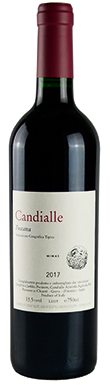
Back at Candialle, the Peränens’ cantina contains wooden barrels, concrete tanks and five ceramic balls called Clayvers. Candialle makes a small-production Sangiovese IGT wine called Mimas, a wine of great fervency and clarity. Made in tiny quantities, it is not labelled as a Chianti Classico, even though it technically could be. The Clayvers are less porous than oak and terracotta, and neutral in flavour, producing a fresh, vivid wine with a great expression of grape variety.
In Radda, third-generation winemaker Piero Lanza has managed the family estate Poggerino since 1988. He has 12.5ha of vineyards planted with 20 clones of Sangiovese. Each clone contributes something to the blend, ‘like musicians in an orchestra, many people playing one piece of music’. It has taken him years, he tells me, to understand the potential of his vineyards, though they may lie ‘like an open book’ across a single southeast-facing slope 500m above sea level.
A concrete egg at Poggerino
(Image credit: Credit Unknown)
Lanza has bought a concrete egg for fermenting a portion of his Sangiovese for a special bottling called (N)uovo. ‘I find the egg multiplies the flavour and style given to the wine by this unique territory. The shape creates a natural convection system, keeping the fine sediments constantly in suspension, adding depth and complexity to the wine.’
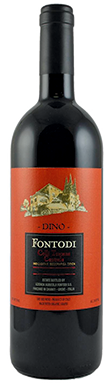
At Fontodi, also in Panzano, Manetti makes a 100% Sangiovese wine called Dino, to be bottled as a Chianti Classico from the 2018 vintage. The wine is macerated and fermented for four months in large terracotta amphorae, and after fermentation the wine remains in the amphorae for a further 14 months. The clay is a natural antioxidant and the only time sulphur dioxide is added is before bottling – a recent change, as it had previously seen no SO2 at all. The change was made at the request of his son and nephew, now working with him in the winery, who believed the SO2 would ‘tighten up’ the wine.
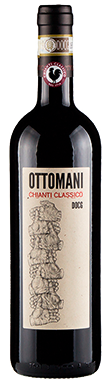
In the cantina of Ottomani in Impruneta, four friends – ‘eight hands’ – make excellent Chianti Classico. Next to the amphorae, stainless steel and oak tonneau, there is a large Italian oak barrel, one of only six made every year by artisan barrel maker Botti Carmignani, based 40km away in Rufina. The colleagues explain to me that the wines made in this botte grande have greater tension than the wines from the French oak tonneau; the wood is less porous and offers a lighter oak flavour, which they prefer.
I think I have translated correctly when they tell me the tannins of the wine from this barrel have a greater ‘rigidity’. Tasting from the cask, I note the tannins are certainly stern, but the wine is more upright than uptight, a characteristic I find common among my favourite Chianti Classico wines.
Return of the native
But what is happening with the international varieties – Cabernet Sauvignon, Merlot, Cabernet Franc, Syrah, Petit Verdot – in the vineyards and wineries of Chianti Classico?
There is a sense of respect and gratitude for the international varieties among the older generation of winemakers. Speaking with them, you can really connect with the fear they had in the 1960s and 1970s following the abolition of sharecropping. It was a period of survival. The younger generation have a different outlook on those Bordeaux varieties.
According to the Consorzio Vino Chianti Classico, applications for new plantings today are for Sangiovese, Canaiolo Nero, Ciliegiolo and Colorino, the native Tuscan varieties.
Michael Schmelzer, owner and winemaker, Monte Bernardi, Panzano
(Image credit: Credit Unknown)
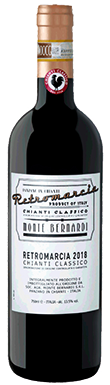
Michael Schmelzer of Monte Bernardi speaks fondly of the Merlot planted on the lower slopes of his vineyard in Panzano. He will not be pulling up these vines or head-grafting with native varieties, explaining that Sangiovese cannot ripen in that lower, cooler site, whereas Merlot can. He does not add any Merlot to his Chianti Classico, which is 100% Sangiovese, but uses the fruit for a Bordeaux blend with Cabernet Sauvignon, Petit Verdot and Cabernet Franc, called ‘Tzingana’, meaning ‘gypsy’.
On an emotional level, Schmelzer tells me these international varieties have a legacy here: they have a story to tell, but they will speak louder in a blend with Sangiovese.
I agree that it is Sangiovese’s voice that must be heard above all others. This chapter in the history of Chianti Classico looks set to be one of the most fascinating yet.
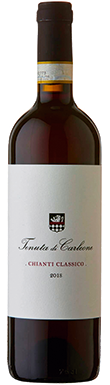
Tenuta di Carleone, Chianti Classico, Tuscany, Italy, 2018
My wines
Sean O’Callaghan, formerly at Riecine, heads up winemaking at Carleone. He ferments this with 10% whole bunches and gives it a long maceration of two...
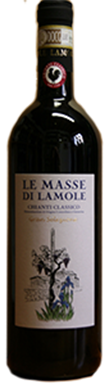
Le Masse di Lamole, Gran Selezione, Chianti Classico 2016
My wines
Le Masse di Lamole’s vineyards are considered paesaggio rurale storico, historic rural landscape, with their dry-stone walled terraces and bush- trained vines. In the cellar,...
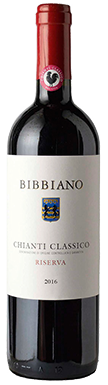
Bibbiano's vineyards sit on two slopes, one southwest-facing with a greater concentration of alberese soil and the other northeast-facing with small pebbles. The Riserva is...
My first thought on tasting this wine, ‘impish’, seemed incongruous with my surroundings. But in Old English, the word ‘imp’ referred to a young shoot...
This wine has drinkability aplenty, which is an attribute too often underrated. Here is a Sangiovese that displays a joyful simplicity, a really attractive charge...
Decanter Magazine, Wine Writer, Sommelier & Italian Expert
Emily O’Hare is a sommelier, wine writer and Italian wine ambassador. Based in Siena, she also organises wine retreats that combine food and wine workshops with teaching WSET wine programs. She left her job as Head Sommelier and Wine Buyer at London's The River Cafe in August 2014 to participate in the grape harvests in Italy with Bruno de Conciliis in Campania, Elisa Sesti in Tuscany and Luca de Marchi in Piedmont. She writes for Decanter and The Florentine, as well as her own blog, emilyoh.wine.