Wachau Austria
The Weitenberg.
(Image credit: Vinea Wachau / Herbst)

The Wachau region along the Danube valley is surely one of Europe’s unforgettable stretches of vineyard, alongside the Mosel in Germany and Douro in Portugal.

Most of the vineyards are very steep, and terraced within stone walls so as to benefit from maximum exposure to sunlight.


Scroll down to see notes and scores for wines from some of the Wachau’s leading producers


The soils in the Wachau are primary volcanic rock such as gneiss, which distinguishes them from the loess-dominated vineyards to the east along the Danube valley.

This accounts for the steely minerality of the wines, in contrast to the more opulent styles found in its neighbours to the east in the Kremstal and Kamptal.

However, on the lower sites one can also find gravel, sand, loess, and marine deposits, all better suited to Grüner Veltliner than Riesling.

Mineral grandeur

If today the Wachau is most renowned for those two varieties, it was not always thus. Fifty years ago one could encounter other varieties such as Weissburgunder (Pinot Blanc) and Neuburger, although these have mostly vanished.

They could produce excellent wines, but they rarely rivalled the intensity and grandeur of the two dominant grapes.

Such is the mineral dimension of the wines that I often find it hard to identify which of the two varieties I am tasting, especially when the source is a high elevation vineyard.

The Wachau has also benefited from its human dimension. There were a handful of producers of the highest quality – the wines from FX Pichler, Franz Hirtzberger, Prager, and Knoll, among others, are legends both within and beyond Austria.

But there was also a cooperative, the Freier Weingärtner, blessed with many outstanding sites, that also made great wines. Today it has been renamed as Domäne Wachau.

steinterrassen_c_PamelaSchmatz_6-copy.jpg

Stone terraces.
(Image credit: Vinea Wachau / Pamela Schmatz)

Individual styles

The wines have never been uniform in style. The influence of the river below, as well as the fact that the harvest was generally very late in the autumn, often into November, mean that botrytis could attack the grapes in damper vintages.

Some producers just accepted this as the vintage character, resulting in wines with a broader, more succulent profile (and often a few grams of residual sugar).

Other growers, such as Rudi Pichler, did everything possible to keep the grapes free of infection so as to preserve a purer, racier style.

There is no right or wrong here; just different approaches. Producers that tolerate some botrytis, and the 4-8 ensuing grams of residual sugar, generally ensure that any detectable sweetness is balanced by high acidity.

Overall, however, the wines seem more pristine and elegant than they were, say, 15 years ago. In part this is a vintage character, as in 2021 and 2022, but also a growing reluctance to pick later than necessary.

‘Most growers,’ says Emmerich Knoll Jr., ‘accept that if the fruit is ripe and healthy, then there is little to be gained by delaying the harvest.’

Grapes and lizards

In so many wine regions the growers love nothing better than to carp and quarrel, but not here, where in 1983 the great estates teamed up to create the Vinea Wachau association.

This established various ground rules focusing on maintaining quality (forbidding chaptalisation or mechanical concentration, and banning wood chips or tannin powder), but also created a kind of hierarchy based on ripeness levels at harvest.

The most basic wines were the simple, fresh Steinfeders; mid-tier wines with a bit more structure and around 12% alcohol were called Federspiel.

Meanwhile, the grandest and most long-lived wines, with alcohols ranging from 12.5% to 14.5%, were called Smaragd, referring to a local lizard encountered on the sun-baked terraces high above the river.

Today, however, Steinfeder is heading for extinction, as global warming makes that crisp uncomplicated style difficult to achieve.

Smaragdeidechse_c_Semrad-copy.jpg

A Smaragd (western green lizard) basking in the sun.
(Image credit: Vinea Wachau / Semrad)

Quality over ripeness

There is also a band of producers (the most renowned being Lucas Pichler of FX Pichler) that have left Vinea Wachau and thus opted out of the hierarchy.

They argue that it no longer makes sense to strive for maximum ripeness as a criterion of quality, especially if it comes at the expense of finesse.

Pichler also wants to be able to use some small oak barrels in addition to the large casks traditional to the region.

But few are following in his footsteps. Many regret the defections, but accept that in a small region with considerable competition between producers, it’s inevitable that some estates will seek to establish their own identity.

At the same time the Wachau growers agreed from 2020 to integrate the countrywide DAC system, which identifies and promotes the most typical grape variety and style of each region, such as Grüner Veltliner for the Weinviertel.

Since the Wachau already has its own classification, it didn’t make sense to many to abandon it in favour of the catch-all DAC.

Single-vineyard wines must be from the two main varieties; other varieties must be labelled as village wines. And there is no Reserve category in the Wachau.

Nothing here is controversial, and there has been no outcry from consumers. Of greater significance, according to Knoll, is the growers’ almost universal acceptance since 2023 of the criteria for sustainable farming and production promoted by ‘Sustainable Austria’.

Winning combinations

The Wachau remains the source of some of Europe’s greatest white wines.

Wines from the top sites – Kellerberg, Loibenberg, Schütt, and Steinertal to the warmer west; Singerriedel from the cooler east; and Achleiten, Klaus, Kollmütz, and Hochrain midway along the valley – have stood the test of time.

Although global warming and the need for irrigation may affect the character of some wines, the Wachau’s overall reputation is unlikely to be eclipsed.

This is due to a winning combination of factors: great vineyards, a range of elevations, a panoply of primary-rock soils, a general consensus on what constitutes an ideal expression of vineyard and wine variety, and a growing band of first-rate producers.

VINEA_KARTE_2023_100x68_web-copy.jpg

(Image credit: Vinea Wachau)

Leading producers in the Wachau

FX Pichler

This is probably the Wachau’s most celebrated estate. Based in Oberloiben, Franz Pichler practised the quality-oriented principles of Vinea Wachau years before the group was founded.

Since his retirement his son Lucas continues to maintain the highest standards. These are powerful wines, with great structure and longevity.

In the past some bottlings, often called ‘M’ for Monumental, were too forceful and alcoholic for some tastes, though they often met with great critical acclaim.


Nikolaihof

This estate, based in Mautern on the outskirts of Krems, has been unashamedly biodynamic for over 50 years.

The Saahs family have their own style, with some wines aged for around 10 years in casks before bottling.

They also tend to release their wines later than their neighbours, which is why they are not included in the list of recommended wines, which are all from the 2022 vintage.

The Nikolaihof wines are always modest in alcohol but never lack body, and can have remarkable longevity.

spitzer_graben_c_schmatz-2396-copy.jpg

The Spitzer Graben.
(Image credit: Vinea Wachau / Pamela Schmatz)

Domäne Wachau

This substantial cooperative, sourcing grapes from over 400 hectares, is a model of its kind.

The technical director, Heinz Frischengruber, works closely with the growers to maintain high viticultural standards, and a third of the vineyards are now farmed organically.

The cooperative produces a wide range of classic Wachau wines, but diverts its clientele with experimental bottlings aged in amphorae and even in marble tanks.

Prices are modest for the quality, so it’s worth opting for wines from top sites such as Achleiten.


Frischengruber

Heinz Frischengruber’s day job is at the Domäne Wachau, but his son Georg now runs the family property in Rossatz on the right bank of the Danube, across from the more celebrated wine village of Dürnstein.

The terraced vineyards are mostly on primary rock, with some loess lower down. They demonstrate that the right locations here can deliver wines of typicity and precision.


Grabenwerkstatt

Wachau native Franz Hofbauer and German Michael Linke met when working at Pyramid Valley in New Zealand.

In 2014 they created Grabenwerkstatt, sourcing grapes from a few hectares of mostly old vineyards in the decidedly cool Spitzer Graben.

They work by hand and don’t even own a tractor. They follow biodynamic principles and practise minimal intervention, creating small quantities of wine with great purity of fruit.

Ried_Loibenberg_c_herbst-0087-copy.jpg

The Loibenberg.
(Image credit: Vinea Wachau / Herbst)

Top picks from the Wachau


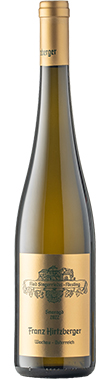
Franz Hirtzberger, Singerriedel Smaragd Riesling, Wachau, Niederösterreich, Austria, 2022
My wines
Locked score

<p>This wine from Spitz has an intense but subdued nose, with apple and apricot aromas. But the attack is explosive, with superb acidity giving focus...

2022

NiederösterreichAustria

Franz HirtzbergerWachau

Decanter Premium logo

Join Decanter Premium to unlock all our wines tastings and notes

Join Now

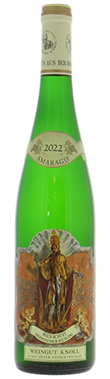
Emmerich Knoll, Schütt Smaragd Riesling, Wachau, Niederösterreich, Austria, 2022

My wines
Locked score

Emmerich Knoll passed the baton some years ago to his son, also called Emmerich, but the highest quality has been maintained. This signature wine displays...

2022

NiederösterreichAustria

Emmerich KnollWachau

Decanter Premium logo

Join Decanter Premium to unlock all our wines tastings and notes

Join Now

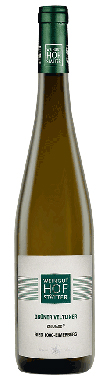
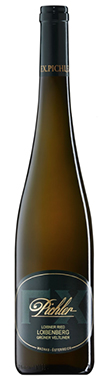
FX Pichler, Loibenberg Smaragd Grüner Veltliner, Wachau, Niederösterreich, Austria, 2022
My wines
Locked score

The intense nose expresses both elegance and power, and is suffused with apricot and quince aromas. The attack is vigorous, nutty and lively. There's ample...

2022

NiederösterreichAustria

FX PichlerWachau

Decanter Premium logo

Join Decanter Premium to unlock all our wines tastings and notes

Join Now

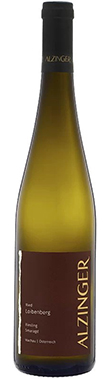
Alzinger, Loibenberg Smaragd Riesling, Wachau, Niederösterreich, Austria, 2022
My wines
Locked score

Although not quite as celebrated as some growers, Leo Alzinger and his son, also Leo, always produce outstanding wines. This classic style from Loibenberg has...

2022

NiederösterreichAustria

AlzingerWachau

Decanter Premium logo

Join Decanter Premium to unlock all our wines tastings and notes

Join Now

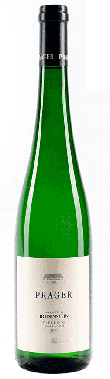
Prager, Wachstum 'Bodenstein' Smaragd Riesling, Wachau, Niederösterreich, Austria, 2022
My wines
Locked score

This Riesling is not designated as a single-vineyard wine, but comes from Prager's highest and coolest vineyards at 460 metres. It offers an intense citric...

2022

NiederösterreichAustria

PragerWachau

Decanter Premium logo

Join Decanter Premium to unlock all our wines tastings and notes

Join Now

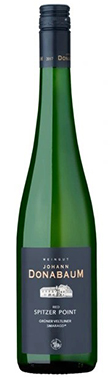
Johann Donabaum, Spitzer Point Smaragd Grüner Veltliner, Wachau, Niederösterreich, Austria, 2022
My wines
Locked score

There are many Donabaum estates in the Wachau, and this one is based in the cool Spitzer Graben gorge. The nose is muted, and the...

2022

NiederösterreichAustria

Johann DonabaumWachau

Decanter Premium logo

Join Decanter Premium to unlock all our wines tastings and notes

Join Now

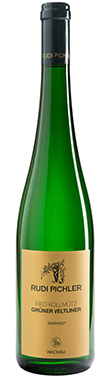
Rudi Pichler, Kollmütz Smaragd Grüner Veltliner, Wachau, Niederösterreich, Austria, 2022
My wines
Locked score

Rudi Pichler produces some of the purest and most mouthwatering wines of the region. This old-vine bottling is still reticent on the nose, but the...

2022

NiederösterreichAustria

Rudi PichlerWachau

Decanter Premium logo

Join Decanter Premium to unlock all our wines tastings and notes

Join Now

Domäne Wachau, Achleiten Smaragd Grüner Veltliner, Wachau, Niederösterreich, Austria, 2022
My wines
Locked score

The cooperative's offering from this legendary vineyard is exemplary: with a vibrant apricot nose that's lifted and elegant, and a fine attack. Fresh and limpid,...

2022

NiederösterreichAustria

Domäne WachauWachau

Decanter Premium logo

Join Decanter Premium to unlock all our wines tastings and notes

Join Now

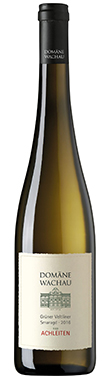
Schmelz, Steinertal Smaragd Grüner Veltliner, Wachau, Niederösterreich, Austria, 2022
My wines
Locked score

Although from a relatively warm site, this wine has a distinctly stony nose that's still austere. The attack is crystalline and bright, and while full...

2022

NiederösterreichAustria

SchmelzWachau

Decanter Premium logo

Join Decanter Premium to unlock all our wines tastings and notes

Join Now

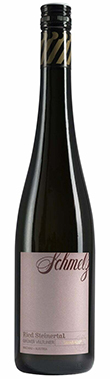
Franz Stierschneider, Klaus Smaragd Riesling, Wachau, Niederösterreich, Austria, 2022
My wines
Locked score

This 10-hectare estate owns some top sites in Weissenkirchen. This Riesling, from Klaus, displays a bright citrus, quince, and wet stones nose. The citric attack...

2022

NiederösterreichAustria

Franz StierschneiderWachau

Decanter Premium logo

Join Decanter Premium to unlock all our wines tastings and notes

Join Now

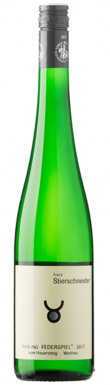
Pichler-Krutzler, Supperin Grüner Veltliner, Wachau, Niederösterreich, Austria, 2022
My wines
Locked score

The brand was founded in 2007 after the marriage of scions of estates from two very different regions: the Wachau and Eisenberg. The Supperin vineyard...

2022

NiederösterreichAustria

Pichler-KrutzlerWachau

Decanter Premium logo

Join Decanter Premium to unlock all our wines tastings and notes

Join Now

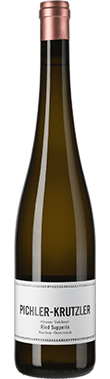
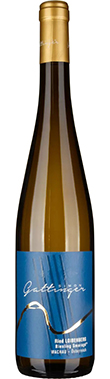
Gattinger, Loibenberg Smaragd Riesling, Wachau, Niederösterreich, Austria, 2022
My wines
Locked score

Since 2017 Simon Gattinger has been using his family's vineyards to fashion a small range of well crafted wines. This comes from the great Loibenberg....

2022

NiederösterreichAustria

GattingerWachau

Decanter Premium logo

Join Decanter Premium to unlock all our wines tastings and notes

Join Now

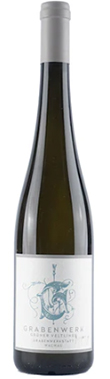
Grabenwerkstatt, Grabenwerk Grüner Veltliner, Wachau, Niederösterreich, Austria, 2022
My wines
Locked score

Given that this wine is sourced from some of the Wachau's coolest sites, it shows considerable richness. The nose offers apricot fruit, while the palate...

2022

NiederösterreichAustria

GrabenwerkstattWachau

Decanter Premium logo

Join Decanter Premium to unlock all our wines tastings and notes

Join Now

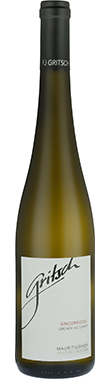
Gritsch, Singerriedel Smaragd Grüner Veltliner, Wachau, Niederösterreich, Austria, 2022
My wines
Locked score

Franz-Josef Gritsch has often opted for a richer, more opulent style, and this wine from the lower slopes of the renowned Singerriedel is no exception....

2022

NiederösterreichAustria

GritschWachau

Decanter Premium logo

Join Decanter Premium to unlock all our wines tastings and notes

Join Now

Weingut Hofstätter, 1000 Eimerberg Grüner Veltliner Smaragd, Wachau, Niederösterreich, Austria, 2022
My wines
Locked score

A very steep site in Spitz is the source of this well balanced wine. The nose is subdued, but aromas of apple and mint are...

2022

NiederösterreichAustria

Weingut HofstätterWachau

Decanter Premium logo

Join Decanter Premium to unlock all our wines tastings and notes

Join Now

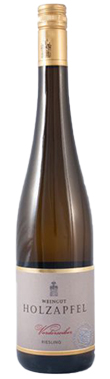
Holzapfel, Vorderseiber Smaragd Riesling, Wachau, Niederösterreich, Austria, 2020
My wines
Locked score

This Riesling comes from a large site with varied soils in Weissenkirchen. Aromas of lime and dried herbs mark the nose, while the palate is...

2020

NiederösterreichAustria

HolzapfelWachau

Decanter Premium logo

Join Decanter Premium to unlock all our wines tastings and notes

Join Now

Veyder-Malberg, Buschenberg Weissenkirchen Riesling, Wachau, Niederösterreich, Austria, 2020
My wines
Locked score

Peter Veyder-Malberg's winery is based in Spitz but he sources grapes from various parts of the Wachau. This Riesling comes from a little-known primary-rock site...

2020

NiederösterreichAustria

Veyder-MalbergWachau

Decanter Premium logo

Join Decanter Premium to unlock all our wines tastings and notes

Join Now

Frischengruber, Goldberg Smaragd Riesling, Wachau, Niederösterreich, Austria, 2020
My wines
Locked score

This Riesling from a steep site on the 'wrong' side of the Danube shows a light touch. The nose is elegant, with lightly herbal and...

2020

NiederösterreichAustria

FrischengruberWachau

Decanter Premium logo

Join Decanter Premium to unlock all our wines tastings and notes

Join Now

Mathias Hirtzberger, Kollmütz Smaragd Grüner Veltliner, Wachau, Niederösterreich, Austria, 2020
My wines
Locked score

From 2014 Mathias Hirtzberger, whose elder brother was set to inherit the family property in Spitz, began to produce his own wines, having purchased parcels...

2020

NiederösterreichAustria

Mathias HirtzbergerWachau

Decanter Premium logo

Join Decanter Premium to unlock all our wines tastings and notes

Join Now

Jamek, Klaus Smaragd Riesling, Wachau, Niederösterreich, Austria, 2020
My wines
Locked score

Josef Jamek, who died in 2011, was a pioneer of single-vineyard wines from the Wachau, and Klaus was his best known wine. The Jamek wines...

2020

NiederösterreichAustria

JamekWachau

Decanter Premium logo

Join Decanter Premium to unlock all our wines tastings and notes

Join Now
Stephen Brook

Stephen Brook has been a contributing editor to Decanter since 1996 and has won a clutch of awards for his writing on wine. The author of more than 30 books, his works include Complete Bordeaux, now the definitive study of the region and in its third edition, and The Wines of California, which won three awards. His most recently published book is The Wines of Austria. Brook also fully revised the last two editions of Hugh Johnson’s Wine Companion, and he writes for magazines in many countries.