Brunello di Montalcino 2020: Vintage report and 20 top picks
After tasting over 150 wines, Michaela Morris selects 20 labels from Brunello di Montalcino, focusing on those that offer the best value for money and, of course, the finest quality.
Get our daily fine wine reviews, latest wine ratings, news and travel guides delivered straight to your inbox.
You are now subscribed
Your newsletter sign-up was successful
Brunello di Montalcino 2020 vintage rating: 4/5
A hot and dry summer, with nights cooling in September and rain towards the end of the month. Graciously structured, seductive and immediately harmonious wines promise immense pleasure now and over the mid-term.
The global pandemic seems like a ghost of the distant past, yet as I tasted through the newly released 2020 Brunello di Montalcinos, inevitable references to that strange period kept cropping up. Producers welcomed the time it allowed them in the vineyard, regardless of what Mother Nature doled out.
The weather was not extreme, but it was just erratic enough to provoke minor, localised and ongoing challenges which affected some more than others. ‘It wasn’t a simple vintage’, acknowledges Giacomo Neri (Casanova di Neri). Riccardo Campinoti (Le Ragnaie), however, recalls that ‘there weren’t big problems’.
After another dry and mild winter, late March brought some rain and snow. Despite early budding, frost damage was minimal and restricted to lower lying vineyards. The first half of June brought significant downpours, simultaneously replenishing water reserves and lowering temperatures. Conditions were ripe for powdery mildew just as fruit set and berries started to develop. While fairly easy to manage in most spots, it was particularly persistent in the southeastern hamlet of San Polo.
‘Harnessing the leaf canopy to shade the grapes and protect them from sunburn was top priority, and is a practice Montalcino growers are now well-versed in.’
Scroll down for Michaela Morris’s 20 top Brunello di Montalcino 2020 recommendations
Summer cauldron
As temperatures rose steadily through July, summer was undeniably hot with negligible precipitation. There were two heatwaves – one beginning at the end of July and another in late August. While both were relatively brief, the first was particularly intense, with ‘temperatures over 35°C, topping out at 39°C’, according to Francesco Ripaccioli (Canalicchio di Sopra).
Harnessing the leaf canopy to shade the grapes and protect them from sunburn was top priority, and is a practice Montalcino growers are now well-versed in.
The other concern was hydric stress, yet at worst this was described as moderate, and by many accounts largely avoided. Lorenzo Maganelli (Le Chiuse) points to the importance of soil management, explaining that by keeping Le Chiuse’s clay-based terrain well-aerated, the vines cope more effectively with heat and drought. ‘Because the plants didn’t go into stress in August, maturation was regular and uniform from bunch to bunch,’ he asserts.
Get our daily fine wine reviews, latest wine ratings, news and travel guides delivered straight to your inbox.
Showers at the beginning of September were unanimously welcomed as they refreshed the vines and lowered temperatures. ‘The first 10 days of September were characterised by warm days and cold nights…excellent for the accumulation of polyphenols and aromas,’ says Sara Rossi (Padelletti). At Luce, in Montalcino’s southwest, winemaker Alessandro Marini concurs: ‘September was hot, but not too hot, with good temperature excursions.’
Conversely, both Salvioni and Salicutti in the southeast recall less marked temperature differences. ‘This is why we find less acidity in the wines’, explains Michela Piccioni (Salicutti). She also describes having to speed up picking to avoid over ripeness.
Picking dilemma
For most, harvest was comparatively early. Depending on location, it progressed from early September through the beginning of October. According to Riccardo Talenti (Talenti), whose vineyards are in the south, deciding when to pick was the most challenging aspect of the year.
‘The choice is to maintain the acidity and pH, so we harvested before achieving perfect phenolic maturity,’ he shares. It is a strategy mirrored at Le Ragnaie and Caprili.
In later-ripening areas, unsettled weather in late September played a determining role. A full 70mm of rain was recorded in the north on the 25th, dividing estates between those that chose to pick before and those that risked waiting.
In the former camp, Pietro Buffi (Baricci) cited sufficient ripeness, preferring not to dilute the grapes. In the latter, Roberto Giannelli (San Filippo) called the decision ‘a game changer’ for quality and style.
‘It allowed us to wait another 10 days to reach optimal phenolic maturity while maintaining a good balance of sugar and acidity’, he declares.
For others, the rain seemed inconsequential. ‘We managed to work well around the rain’, states Katia Nussbaum (San Polino). And Corte Pavone’s Hayo Loacker characterised the harvest as easygoing, noting that ‘we could pick whenever we wanted’.
A healthy crop
Thanks to low disease pressure, grapes came in healthy, although producers with hotter sites did have to contend with some dried berries. ‘Our optical selector was a big help in 2020,’ asserts Neri.
Yet compared to the prolific 2019 vintage, yields were lower, due in part to smaller grapes and bunches. ‘The average berry weight was just one gram, whereas usually the average is 1.5 to 2 grams,’ explains Buffi.
In the cellar, several winemakers mentioned slightly shorter maceration times and gentler extractions to either enhance elegance or balance intrinsic power. Yet others felt that the grapes could manage more assertive handling.
At Argiano, Bernardino Sani’s greatest concern was ensuring the wine didn’t tire during the long maturation in wood. ‘We refined the wine in big casks for the least amount of time possible – 24 months, then moved it to cement which, in my opinion, helps maintain freshness,’ he tells me.
Click here to view all of the wines included in Michaela’s Brunello di Montalcino 2020 report
Brunello di Montalcino 2020: A vintage of freshness
Freshness is one of the over-arching characteristics of 2020 and a strength of the vintage. It has been admirably preserved despite the substantial heat accumulation of the growing season.
I was also charmed by the generous aromas, seductiveness and immediate accessibility of the wines. The best description came from Federico Radi (Biondi Santi), who called the wines ‘suave’.
As admirable as these qualities are, in lesser wines this also translates as a superficiality. Specifically, I found several examples lacking fruit depth and structure. Other disappointing examples were simply overripe with hefty alcohol, suggesting that grapes were picked past their prime.
Sadly these miss out on what makes the vintage appealing.
The varying accounts of the vintage speak clearly to the diversity within Montalcino. This is echoed in the glass, where the wines are heterogenous in both quality and style. Beyond location, both picking time and winemaking approach also play an essential role.
‘Some examples are more reminiscent of 2015, a luminous year yielding a voluptuous fruit character. However, 2020 is slightly dialled back, and more radiant in acidity.’
Comparisons
2020 is not comparable to vintages of the last century. Instead, it is a curious combination of 2015 and 2018. Some examples are more reminiscent of 2015, a luminous year yielding a voluptuous fruit character. However, 2020 is slightly dialled back, and more radiant in acidity.
With an unexpected gentleness and finer frame, others recalled 2018, though with more substance. There are even similarities with 2019 – namely, the beautiful fragrances and freshness. 2020 doesn’t typically reach the same heights as 2019, which is generally more complete and nuanced, although there are a handful of 2020 wines which do outperform their 2019 counterparts.
Standouts
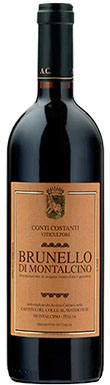
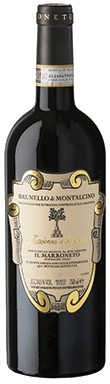
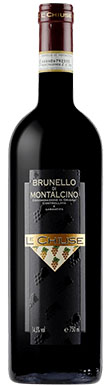
Among the standouts, Il Marroneto’s Madonna delle Grazie and Conti Costanti reach a rare level of profundity and density of structure. Le Chiuse and Padelletti are more finely framed but not lacking depth.
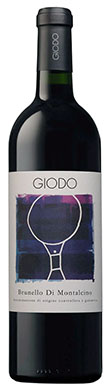
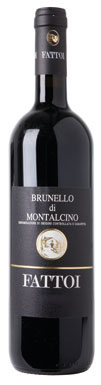
Though very different styles, Argiano, Luce and Sesti all capture the generous warmth of the southwest while remaining innately juicy. Giodo is one of my top picks for the second year in a row and Fattoi joins the ranks, not just for the sheer value it represents but for its palpable sense of place.
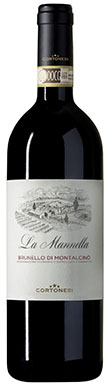
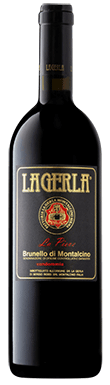
Most wineries came out with selection bottlings in 2020, though some were stronger than others. La Gerla’s La Pieve as well as both Cortonesi’s La Mannella and Vigna Poggiarelli labels proved their merit, while Riccardo Campinoti at Le Ragnaie continues to impress across his range of site-specific Brunellos, not to mention his estate blend.
For consideration, there are also the not-to-be-missed 2019 late releases, Biondi-Santi and Casanova di Neri’s Cerretalto.
‘This corroborated my impressions about the vintage. Not that it isn’t good – but that it isn’t unanimously outstanding.’
Worth buying?
When I asked producers if they will be releasing a 2020 Riserva, they were almost equally divided. Naysayers cited everything from insufficient quantity or not wanting to impoverish the ‘classic’ bottling, to the wine not having persuasive enough Riserva identity or stamina for long ageing. This corroborated my impressions about the vintage.
Not that it isn’t good – but that it isn’t unanimously outstanding. Of course, there are shining exceptions.
The burning question is if 2020 is worth buying. Honestly, price does give me pause, especially for the most easygoing, Rosso-esque examples. As such, I encourage buying selectively and above all, by producer.
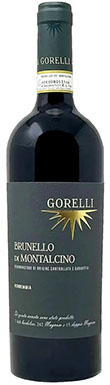
I am slightly less bullish about exploring beyond the tried and true in 2020, though there are lesser-known and newer estates like Villa La Prata and Giuseppe Gorelli that deserve attention too.
Which Brunello 2020 should I drink when?
Most 2020s will be ready to drink upon release. Some will be best within the next five to eight years; others over a more leisurely 10 to 12. Only a select few truly need to be tucked away but will reward for upwards of 15 years.
Short-term pleasure
Upfront in its attractions and should be enjoyed when all of these are in their exuberant prime.
A triple-threat in terms of accessibility; besides drinking delightfully now, it is affordably priced and widely available.
Has all the estate’s signature fragrance and texture; just ready to go a bit sooner than usual.
Mid-term appeal
Third vintage is a charm for this new winery. Well-structured for a mid-term stint in the cellar.
Highlights the gracious character of the vintage and should deliver gracefully for the next decade.
Long-term reward
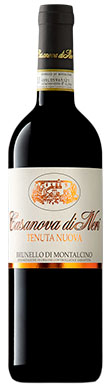
Casanova di Neri, Tenuta Nuova
Actually tempting now but will reveal even more of its intricacies gradually.
Il Marroneto, Madonna delle Grazie
An outlier of the vintage, the 2020 demonstrates greater density and power than its 2019 counterpart.
Brunello di Montalcino: Michaela’s recommendations, from top-scorers to value picks
View all wines from Michaela’s Brunello report
Italy newsletter: Sign up today
Get the best recommendations, vintage analysis, regional and cultural insights and more delivered to your inbox once a month, helping you to stay up-to-date with the latest in Italian wine.
Related articles
- Brunello di Montalcino 2019 Riserva: 10 picks from a triumphant return to form
- Best value Brunello di Montalcino 2020: 10 to buy
- Michaela Morris: My top 10 wines of 2024
Conti Costanti, Brunello di Montalcino, Tuscany, Italy, 2020
When I tried Costanti’s 2020 Rosso in 2022, Andrea described the vintage as better suited for Brunello given the high dry extract and sturdy structure....
2020
TuscanyItaly
Conti CostantiBrunello di Montalcino
Il Marroneto, Madonna delle Grazie, Brunello di Montalcino, Tuscany, Italy, 2020

This single-vineyard Brunello is one of the gems of the denomination. The 2020 reflects the vintage conditions wonderfully, trading in the generosity of 2019 for...
2020
TuscanyItaly
Il MarronetoBrunello di Montalcino
Podere Giodo, Brunello di Montalcino, Tuscany, Italy, 2020

A youthful 2020 with creamy undertones and a bright dollop of plum and dark cherry. Touches of herbs and spice lend some playfulness, while the...
2020
TuscanyItaly
Podere GiodoBrunello di Montalcino
Le Chiuse, Brunello di Montalcino, Tuscany, Italy, 2020

Among the top wines of the vintage, Le Chiuse was picked on 17 September just before a period of unsettled, rainy weather. It evokes its...
2020
TuscanyItaly
Le ChiuseBrunello di Montalcino
Casanova di Neri, Tenuta Nuova, Brunello di Montalcino, Tuscany, Italy, 2020

Crowning this estate’s three Brunello releases in 2020, Tenuta Nuova encapsulates its dry, balmy, forested surroundings near Sant’Angelo in Colle with aplomb. It was picked...
2020
TuscanyItaly
Casanova di NeriBrunello di Montalcino
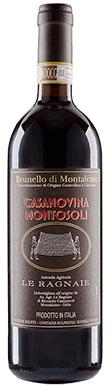
Le Ragnaie, Casanovina Montosoli, Brunello di Montalcino, Tuscany, Italy, 2020

Sitting just below Baricci’s holdings on the revered hill of Montosoli, Casanovina was the first of Le Ragnaie’s far-flung plots to be harvested, on 9...
2020
TuscanyItaly
Le RagnaieBrunello di Montalcino
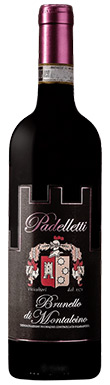
Padelletti, Brunello di Montalcino, Tuscany, Italy, 2020

With dry conditions continuing into September, the Padelletti estate says that ripeness proceeded rapidly. Brunello grapes were harvested on 15 September – a full two...
2020
TuscanyItaly
PadellettiBrunello di Montalcino
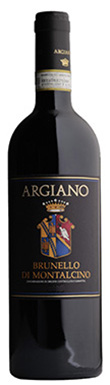
Argiano, Brunello di Montalcino, Tuscany, Italy, 2020

From six parcels blended after fermentation in cement and aged in 30- to 50-hectolitre oak casks, the 2020 estate Brunello is an absolute charmer. Exotically...
2020
TuscanyItaly
ArgianoBrunello di Montalcino
Cortonesi, La Mannella, Brunello di Montalcino, Tuscany, Italy, 2020

The estate’s home plots are nestled under the town of Montalcino. Picked between 20-30 September, the 2020 is a beautiful interpretation of the vintage. Still...
2020
TuscanyItaly
CortonesiBrunello di Montalcino
Fattoi, Brunello di Montalcino, Tuscany, Italy, 2020

Within the hamlet of Santa Restituta, the Fattoi family has been crafting Brunello since 1979. The approach is straightforward: spontaneous fermentations with indigenous yeast and...
2020
TuscanyItaly
FattoiBrunello di Montalcino
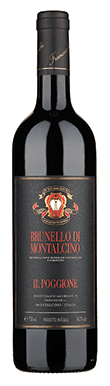
Il Poggione, Brunello di Montalcino, Tuscany, Italy, 2020

Stretching southward from Sant’Angelo in Colle, Il Poggione’s 140 hectares of vineyards rise from 120m to 430m above sea level. Vines with a minimum 25...
2020
TuscanyItaly
Il PoggioneBrunello di Montalcino
La Gerla, La Pieve, Brunello di Montalcino, Tuscany, Italy, 2020

The 1.5-hectare La Pieve plot is located near Castelnuovo dell’Abate in Montalcino’s southeast. It is a warm, sheltered site that slopes steeply on schisty marl....
2020
TuscanyItaly
La GerlaBrunello di Montalcino
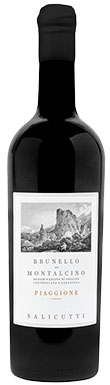
Salicutti, Piaggione, Brunello di Montalcino, Tuscany, Italy, 2020

The team at Salicutti describes 2020 as challenging. Besides pressure from powdery mildew, warm nights in September resulted in lower acidity and harvest was a...
2020
TuscanyItaly
SalicuttiBrunello di Montalcino
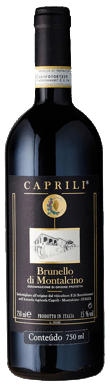
Caprili, Brunello di Montalcino, Tuscany, Italy, 2020

Owner and winemaker, Giacomo Bartolommei favours picking based on acidity, even if that means sacrificing some phenolic ripeness. In 2020, harvest took place during the...
2020
TuscanyItaly
CapriliBrunello di Montalcino
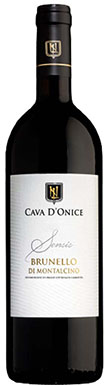
Cava d'Onice, Sensis, Brunello di Montalcino, Tuscany, Italy, 2020

This estate takes its name from the Etruscan-era onyx quarry near the Sant’Antimo abbey. Today, however, vineyard holdings are scattered throughout the entire Montalcino zone....
2020
TuscanyItaly
Cava d'OniceBrunello di Montalcino
Col di Lamo, Brunello di Montalcino, Tuscany, Italy, 2020

Owned by Giovanna Neri and her daughter Diletta, Col di Lamo is located in Torrenieri, in the far northeastern stretch of Montalcino. A slightly cooler...
2020
TuscanyItaly
Col di LamoBrunello di Montalcino
Giuseppe Gorelli, Brunello di Montalcino, Tuscany, Italy, 2020

The third Brunello release from renowned consulting oenologist Giuseppe Gorelli under his eponymous label – and in my opinion, the best so far. Clean and...
2020
TuscanyItaly
Giuseppe GorelliBrunello di Montalcino
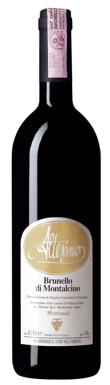
Altesino, Brunello di Montalcino, Tuscany, Italy, 2020

With vineyards in virtually every quadrant of Montalcino, Altesino can shape the blend according to the vintage. As some of their northern plots struggled in...
2020
TuscanyItaly
AltesinoBrunello di Montalcino
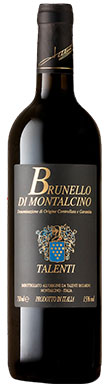
Talenti, Brunello di Montalcino, Tuscany, Italy, 2020

Between spring frost damage in lower holdings around Castelnuovo dell’Abate and the warm, dry summer yielding smaller berries and bunches, Riccardo Talenti estimates production at...
2020
TuscanyItaly
TalentiBrunello di Montalcino
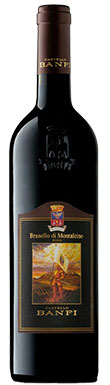
Castello Banfi, Brunello di Montalcino, Tuscany, Italy, 2020

Produced in ample quantities, Banfi’s estate Brunello is assembled from its 173.5ha of vineyards expanding over the rolling hills in Montalcino’s southwest corner. Attractive though...
2020
TuscanyItaly
Castello BanfiBrunello di Montalcino