
Comparing Cos d’Estournel wines: 2000 to 2016


Jane Anson reports on the second growth's evolution in style and provides fresh tasting notes on wines going back to the Bordeaux 2000 vintage - available exclusively for Premium members.
One of the best views of Château Cos d’Estournel comes from the dining room of its neighbour Lafite Rothschild.
Framed by the window, the sandstone pagodas that mark the St-Estèphe 2nd Growth are unmissable through the gentle rising vineyards that stretch between the two, their exotic shapes a reminder of founder Louis Gaspard d’Estournel’s obsession with India.
The story goes that d’Estournel himself was standing in…
…pretty much the same spot in 1811, in the vines at Lafite, when he looked back at his own land and decided to create a grand cru from the few plots he had inherited in 1791.He built the château to mark his ambition, and the shape of its spires gave him the name the Maharajah of St-Estèphe.
Less well known perhaps is that he died a ruined man in 1853, and so never got to see his estate ranked a 2nd Growth.
Today owned by luxury hotel magnate Michel Reybier, Cos has an allure all of its own, a slice of glamour and exoticism among the Médoc powerhouses.
Cos led the way in ultra-fancy new wineries, unveiling its gravity-fed version back in 2008, back when cranes in the Médoc were a relatively rare sight.
It marked a new level of ambition that has continued climbing ever since, even if the château has had its own fair share of drama, with staff changes including the loss of Jean-Guillaume Prats to LVMH (now at Lafite) in 2013 then his replacement Aymeric de Gironde just last year.
Along the way it has produced vintages that divided critical opinion such as the 2009 (Reybier told me during this year’s en primeur that it was the vintage that marked the wine, not any choices made in the winery or vineyard, something that is open for debate).
And yet Cos has always been Cos – one of the great names of Bordeaux, and one of its most sought-after wines.
The best way to put all of this into perspective is through opening a few bottles.
For this vertical, I tasted 17 vintages of Cos d’Estournel back to 2000, together with a few key years of Les Pagodes de Cos and two of the white wine Cos d’Estournel Blanc.
Tasting alongside me were technical director Dominique Arangoïts, white wine maker Angélique Meynieu (who since 2017 has also taken over the reds) and Reybier’s son Raphaël, who is taking an increasingly prominent role since the departure of de Gironde.
To get to know these wines is to understand why precision is the new watchword of great Bordeaux estates.
The new winery has here been used to brilliant effect, allowing a lighter touch with extraction, extreme temperature control even during the moving of grapes into the vats, and careful fractioning out of press wines.
The changes since Reybier arrived in 2000 are worth recapping.
One of the first things he did was carried out an extensive study of the soils and how they regulate water, and in 2004 further studies measured resistivity to more precisely examine moisture content, temperature and depth to bedrock.
Since 2005 the vineyard – which is made up largely of deep gravels, with pockets of clay – has been divided into ever-smaller plots, going from around 60 to over 100.
Picking now takes place on an intra-plot level, with the outlying vines picked separately from those in the centre of the plots for example.
Understanding the soils to this level perhaps helps them to analyse better what happened in 2009 according to Arangoïts.
‘We know that our vines can react extremely quickly to the elements and that we need to be careful about picking dates. The terroir at Cos is extremely reactive and powerful’.
A fascinating thought, particularly when put together with the choices made on a viticultural level.
The biggest story in recent years is that they have backed away from being too interventionist in the vineyard, and it has been to the benefit of the wine.
To explain what I mean, sometimes it’s the simplest things that tell the most illuminating stories – just look at the yields as recounted by Arangoïts.
‘Back in the 1990s, we had relatively high yields of 50hl/h or more, but by 2000 yields were down to around 45 hl/h, before dropping steeply from there.
‘We green harvested in 2000 until 2009, dropping often 50% of the fruit in the vines, and got down to 28hl/h in 2008. Then we began to question if we needed to do that. Now it is back up to 40 or 45hl/h.
‘We no longer have the same worries about ripening Cabernet Sauvignon as before, and slightly higher yields are also a natural way to control the alcohol levels.’
All of which suggests that the soils of Cos are powerful enough on their own, and don’t need an extra nudge of concentration by overly-low yields.
A further freshness has been introduced by leaving small amounts of stalks in the wines (or rather they don’t remove any further stalks after the second sorting of the grapes in the cellar).
My only slight hesitation was the whites. When the Cos Blanc launched I loved the Loire-style sculpting of it, but it has moved away from that model in recent years.
The fruit is from vines up in the Jau-et-Dignac commune of the Médoc (bottled as AOC Bordeaux Blanc), pretty much the most northerly white vines in Bordeaux, and they benefit from estuary breezes that are particularly marked at this spot.
This makes for huge potential for great whites, but I was surprised to feel that 2007 had held up almost better than the 2014.
There is still plenty to recommend – they are gourmet, rich whites with plenty of personality and clearly have a healthy lick of signature Cos glamour, but have sacrificed a touch of that earlier sculpting freshness.
The reds were a revelation, over-delivering on my already high expectations.
Fantastically consistent, with a few approaching perfection.
The Pagodes needs around five years before drinking, although some vintages will easily last for 20 years, such is the quality of the base material here.
For the main wine, even the older reds were still performing that time-defying trick that great Médocs do so well, and the fresh and powerful core of the St-Estèphe appellation, with its clay and limestone subsoils, gives Cos great leeway to go for rich, enticing flavours – particularly, as we have seen, when it is given the freedom to speak for itself.
Cos d’Estournel wines: Every vintage since 2000
Plus two vintages of Pagodes and two of the estate’s white wines, for comparison.
See Jane Anson’s en primeur tasting notes for Cos d’Estournel 2017 wines
Château Cos d'Estournel, St-Estèphe, 2ème Cru Classé, Bordeaux, France, 2016
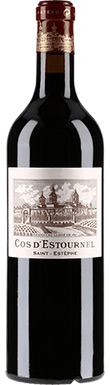

Cos continues to cement its place at the top of the second growths. It has moved on from the emphasis on heft and ripeness to...
2016
Château Cos d'EstournelSt-Estèphe

Château Cos d'Estournel, St-Estèphe, 2ème Cru Classé, Bordeaux, France, 2005
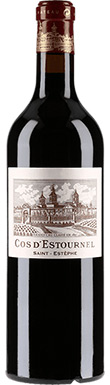
A bloody, slightly ferrous nose with the riper end of black fruit leaning into a touch of rose to balance out the powerful, mineral mouthfeel....
2005
Château Cos d'EstournelSt-Estèphe
Château Cos d'Estournel, St-Estèphe, 2ème Cru Classé, Bordeaux, France, 2014
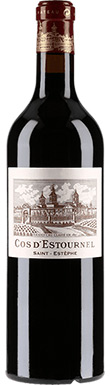
Szechuan peppercorns on the nose, something quite spiced, maybe woody, with fragrant blackcurrants too. Sleek and streamlined, tangy and vibrant but with some tension that...
2014
Château Cos d'EstournelSt-Estèphe
Château Cos d'Estournel, St-Estèphe, 2ème Cru Classé, Bordeaux, France, 2010
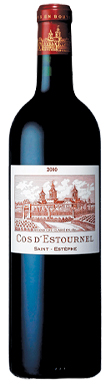
Darkly fragranced, with chocolate, blackcurrants and violets, ripe fruit and soft woody touches. Tense and compact, tannins with a lovely texture. Nice weight and balance....
2010
Château Cos d'EstournelSt-Estèphe
Château Cos d'Estournel, St-Estèphe, 2ème Cru Classé, Bordeaux, France, 2001
Gorgeous, a clear step up from the 2000 vintage as it approaches its second decade. This is not quite ready to drink, although a few...
2001
Château Cos d'EstournelSt-Estèphe
Château Cos d'Estournel, St-Estèphe, 2ème Cru Classé, Bordeaux, France, 2015
Rich fruit that is full of that classic exotic Cos spice, yet more restrained than in the past with a slatey graphite base. Beautifully put...
2015
Château Cos d'EstournelSt-Estèphe
Château Cos d'Estournel, St-Estèphe, 2ème Cru Classé, Bordeaux, France, 2009
This is a vintage that was naturally very generous, sporting a yield of around 35hl/ha. It's without question more spicy, peppery and exotic than many...
2009
Château Cos d'EstournelSt-Estèphe
Château Cos d'Estournel, St-Estèphe, 2ème Cru Classé, Bordeaux, France, 2006
The silky texture and understated elegance of the 2006 Cos d'Estournel appealed to me - I had this first in its flight, (ahead of my...
2006
Château Cos d'EstournelSt-Estèphe
Château Cos d'Estournel, St-Estèphe, 2ème Cru Classé, Bordeaux, France, 2000
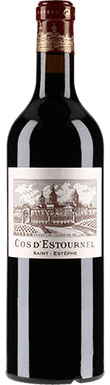
A big, rich St-Estèphe that’s full of pleasure. It’s perhaps a little bit more evolved than I might have expected, displaying gently burnished notes of...
2000
Château Cos d'EstournelSt-Estèphe
Château Cos d'Estournel, St-Estèphe, 2ème Cru Classé, Bordeaux, France, 2011
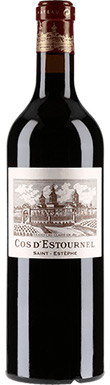
Rich, dark and spicy in its aromatics and its fruit - really get that feel of a red wine steeped in aromatic herbs and spices....
2011
Château Cos d'EstournelSt-Estèphe
Château Cos d'Estournel, St-Estèphe, 2ème Cru Classé, Bordeaux, France, 2004
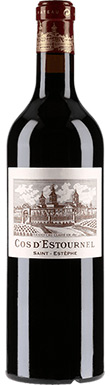
This wasn't an easy vintage when young because there was quite a bit of rain through the season, leading to a fairly high yield with...
2004
Château Cos d'EstournelSt-Estèphe
Château Cos d'Estournel, St-Estèphe, 2ème Cru Classé, Bordeaux, France, 2003
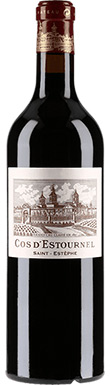
Excellent quality and surprisingly fresh given the vintage, this wine is clearly ready to drink now, however there’s no rush to drink this urgently -...
2003
Château Cos d'EstournelSt-Estèphe
Château Cos d'Estournel, St-Estèphe, 2ème Cru Classé, Bordeaux, France, 2002
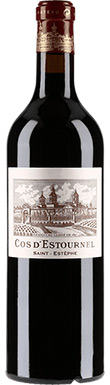
This has a truffle edge to the nose and almost a Pomerol character. A number of 2002s are a little awkward, but this is generous...
2002
Château Cos d'EstournelSt-Estèphe
Château Cos d'Estournel, St-Estèphe, 2ème Cru Classé, Bordeaux, France, 2012
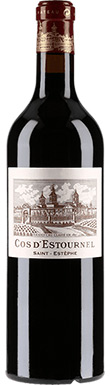
Deep-coloured, richly flavoured claret with an immediate and abundant ‘attack’, which then rather fades away. Will undoubtedly keep well but will always lack the class...
2012
Château Cos d'EstournelSt-Estèphe
Château Cos d'Estournel, St-Estèphe, 2ème Cru Classé, Bordeaux, France, 2013
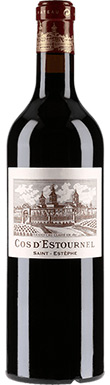
There's attractive upfront fruit here, with light tannins that avoid excessive extraction. The nose is subdued, and the palate also lacks some vigour and flair....
2013
Château Cos d'EstournelSt-Estèphe
Château Cos d'Estournel, Les Pagodes de Cos, St-Estèphe, Bordeaux, France, 2014
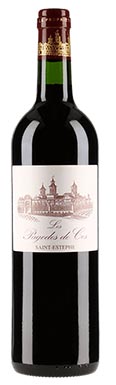
Fine, floral fruit –has Pauillac elegance. Quite fleshy and well-structured with a real sense of place. Attractive yet serious.
2014
Château Cos d'EstournelSt-Estèphe
Château Cos d'Estournel, Les Pagodes de Cos, St-Estèphe, Médoc, Bordeaux, France, 2010
Caramel, sweet chocolate, there is definite rich fruit here, contemporary dusting, an interesting, easy to drink wine.
2010
Château Cos d'EstournelSt-Estèphe
Château Cos d'Estournel, Blanc, Bordeaux Blanc, Bordeaux, France, 2007
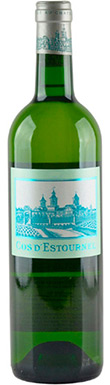
This was the third white wine vintage made by this château – and it still holds up, showing a rich colour that has deepened to...
2007
Château Cos d'EstournelBordeaux Blanc
Château Cos d'Estournel, Blanc, Bordeaux Blanc, Bordeaux, France, 2014
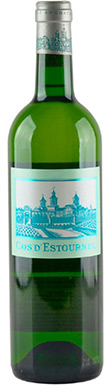
The vines are some of the most northerly of any white grape vines in the region. In addition, the grapes are left overnight in a...
2014
Château Cos d'EstournelBordeaux Blanc
