
Cristaldi: Seeking Napa Valley’s best ‘second label’ wines
In Napa Valley, ‘second labels’ aren’t always second best. While Bordeaux offers a time-honoured template, Napa’s versions are as diverse as the estates themselves — born not from leftovers, but from intention, innovation, and a desire to tell a different side of the story. Napa correspondent Jonathan Cristaldi reports.


In Bordeaux, the ‘second wine’ concept is both well-established and well-defined.
These wines, often called ‘second labels,’ are traditionally crafted from lots that don’t make the cut for the château’s grand vin.
Whether the fruit comes from younger vines, less favoured plots, or barrels that don’t align with the stylistic ideal of the flagship bottling, the idea is to preserve the prestige of the top wine while offering consumers a more accessible (and more affordable) entry into the estate’s style.
Scroll down for scores and reviews from Jonathan’s search for ‘second labels’ in Napa Valley
But in Napa Valley, as with much in the New World, the rules are looser, the philosophies more varied, and the marketing less beholden to tradition.
Many Napa wineries produce what could be called second labels – but scratch the surface, and you’ll often find a more complex origin story than simple declassification.
Not just the ‘second’ best

Some producers, such as Harlan Estate, follow a model close to the Bordeaux analogue. Its second label, The Maiden, is crafted as a barrel selection from the same estate vineyards that produce the Harlan Cabernet Sauvignon.
‘The Maiden represents a more approachable yet still site-reflective expression of the estate,’ says Director of Winemaking Cory Empting. It is, in essence, a second wine in the classic sense, a carefully curated counterpart to the grand vin.
Others fall into a different camp entirely. Take Dominus Estate’s Napanook, for instance. Though often lumped in with second labels, Napanook has never been a wine made from declassified Dominus fruit.
Instead, it is a purposeful expression of specific vineyard blocks — parcels that consistently yield vibrant, fresh, and more approachable fruit. ‘To us, it’s not a second label,’ notes Tod Mostero, ‘It’s a companion wine that expresses a different facet of the vineyard’s identity.’
Kassidy Harris, PR and Marketing Director for Dominus Estate says: ‘We don’t consider it an “entry-level” wine, especially at its $80 retail price point.
‘For those looking to experience the estate’s style at a more accessible price point, we also produce Othello, a separate wine retailing around $55 per bottle,’ which comes from vines rooted in soils along Hopper Creek, creating a wine with all its own style and personality.
Happy little accident
Scarecrow’s M. Étain, made by the indomitable Celia Welch, also charts its own path. Coco Lopez, the Executive Vice President of Scarecrow, described the creation of M. Étain as ‘a fortuitous event’ that transpired during the blending of the 2008 vintage.
‘The portion of juice that wasn’t included in the final Scarecrow blend was so undeniably superb that we were inspired to bottle it,’ recalls Lopez. ‘In 2014, we replanted approximately 1.25 acres (.5ha) to Merlot and Malbec, specifically for M. Étain.
‘Welch’s idea was to differentiate the flavour profile by creating more of a Bordeaux-style wine by also incorporating the Petit Verdot that grew on the JJ Cohn Ranch.’
Lopez concludes: ‘We refer to M. Étain as Scarecrow’s companion label because, despite coming from the same vineyard and having the same wine maker, it is very much its own wine.’
Wines of intentionality

This theme – intentionality rather than inferiority – runs through many of the wines often grouped under the second-label banner in Napa. While some are made from barrels or lots not included in the flagship bottling, others are produced from estate blocks explicitly earmarked for these wines.
Still others blend purchased fruit with estate-grown grapes, or are crafted to appeal to a different audience entirely.
Rudd’s Crossroads, Dalla Valle’s Collina, Bryant’s DB4, Accendo’s Laurea, Kinsman Eades’ Hierothesion, and Bella Oaks Le Genie all walk this line. They are wines born not from leftovers, but from decisions about style, accessibility, and audience.
Some lean into approachability and fruit-forward charm, while others still require time in the bottle to reveal their full potential.
‘My father founded Rudd Estate in 1996, with a vision to craft the ultimate expression of terroir,’ says his daughter, vintner Samantha Rudd.
‘We launched the Crossroads wines as a limited-edition second label from 2004 to 2008. But when my father passed away in 2018, I felt it was time to return the Crossroads label and fully use the land and the grapes we source for it.’
Rudd sources from organically and biodynamically farmed sites in the Oakville and Mt. Veeder appellations, crafted by winemaker Natalie Bath. The Crossroads wines serve as an introduction to Rudd’s higher-end estate offerings.
The deep dive
Dalla Valle’s Collina is historically from the younger vines on the property, many of which are over 10 years old. It’s the freshest and most approachable wine, made for early drinking, but it still possesses the thread of Dalla Valle’s structure, integrity, and ageability.
‘The real difference begins when we get onto the blending bench,’ says Nigel Kinsman, who makes Laurea, Hierothesion and Le Genie.
‘We do a deep dive into each flagship lot to assess quality and fit for the “first” wine, and once that blend has been decided, we then turn our attention to the “second” wine.’
Kinsman says there are many reasons for why a wine is not included in the blend for the first wine, but epmahsises that, ‘it’s not an inferior wine, it’s just that particular piece of the jigsaw puzzle doesn’t fit, or in some cases, we just didn’t need all of that particular component in the first wine – too much of a good thing!
‘We take the blending of the second wine seriously, and devote as much energy into this blend as we do for the first wine.’

Every icon needs a sidekick
There’s also the commercial reality. In an increasingly competitive landscape, having a wine that sits below the flagship in both price and positioning isn’t just savvy, it’s essential.
These wines help Napa producers reach new consumers, fill out high-end by-the-glass lists, and meet demand for more accessibly priced bottlings on a restaurant wine list that still bears the imprimatur of a top estate.
For collectors and enthusiasts, the appeal is obvious. Whether you’re seeking a preview of a winery’s house style, a more budget-friendly way to drink iconic fruit, or simply a delicious bottle with pedigree, Napa’s so-called second labels deliver.
And in many cases, these wines offer surprising ageability and exceptional value – especially when tasted alongside the flashier flagship wines.
Which brings us to the list. Below, a look at some of the most compelling wines from Napa producers whose second labels (or companion wines, or entry-level expressions) are every bit as considered, characterful, and cellar-worthy as their more famous siblings.
A selection of second wines from Napa’s top estates
Related articles
Cannabis & Cabernet: Shared challenges for California growers
Cristaldi: How Schrader Cellars powered its renaissance with a new approach at To Kalon
Bordeaux 2024: Weather & growing conditions
Harlan Estate, The Maiden, Napa Valley, Oakville, California, USA, 2022
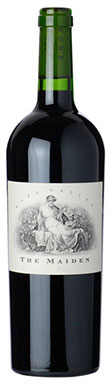

A slightly toned-down version of Harlan Estate, with more focused plum and red cherry fruit, alongside saline-velvety tannins that carry a firmer, more assertive presence....
2022
Harlan EstateNapa Valley

Bella Oaks, Le Genie Cabernet Sauvignon, Napa Valley, California, USA, 2022
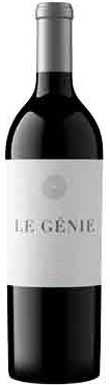
The 2022 Le Génie is 100% Cabernet Sauvignon from the Bella Oaks estate in Rutherford. Lifted wet-stone aromatics mingle with redcurrant, blackberry, and cherry, creating...
2022
Bella OaksNapa Valley
Kinsman Eades, Hierothesion Cabernet Blend, Napa Valley, California, USA, 2022
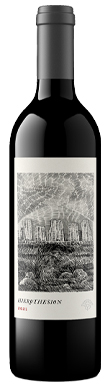
This is the personal project of winemaker Nigel Kinsman and his wife, Shea, with the name derived from their surnames. Their first vintage was in...
2022
Kinsman EadesNapa Valley
Scarecrow, M. Etain Red Wine, Napa Valley, Rutherford, California, USA, 2021
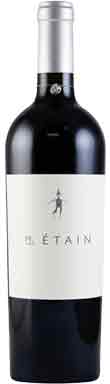
Scarecrow's 'M. Etain' label (French for Tin Man) debuted in 2008. 'We wanted to create a companion label to Scarecrow utilising the younger blocks, or...
2021
ScarecrowNapa Valley
Accendo Cellars, Laurea Red Wine, Napa Valley, California, USA, 2022
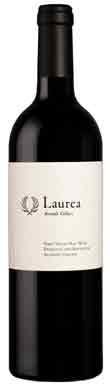
The entry-level wine for Accendo Cellars, first established in 2013, is a Cabernet Sauvignon-based blend that includes 6% Petit Verdot and was aged for 21...
2022
Accendo CellarsNapa Valley
Crossroads, By Rudd Cabernet Sauvignon, Napa Valley, Oakville, California, USA, 2021
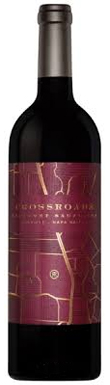
The Crossroads label serves as an introductory label for the Rudd Estate wines as far as price goes, and they are beautifully expressive of the...
2021
CrossroadsNapa Valley
Dalla Valle Vineyards, Collina Dalla Valle Red Wine, Napa Valley, Oakville, California, USA, 2021
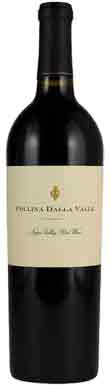
<p>Historically, from the younger vines on the property, which at this point are well over 10 years of age. It's the freshest and most approachable...
2021
Dalla Valle VineyardsNapa Valley
Dominus Estate, Napanook, Napa Valley, California, USA, 2021
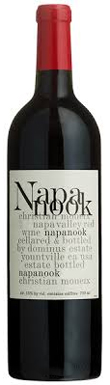
A delicately aromatic nose of red currants, spicebush, tobacco leaf, dusty minerals, and wildflowers. The palate is compact with a wonderful medium- to full-bodied mouthfeel...
2021
Dominus EstateNapa Valley
Grace Family Vineyards, Reliquus Cabernet Sauvignon, Napa Valley, St Helena, California, USA, 2022
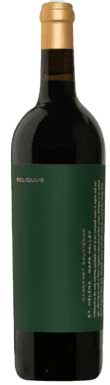
Dark fruits and dusty minerals lift from the glass, nuanced by rich cola and cherrywood character. Juicy upfront fruit transitions seamlessly to the palate, revealing...
2022
Grace Family VineyardsNapa Valley
Jayson by Pahlmeyer, Red Blend, Napa Valley, California, USA, 2022
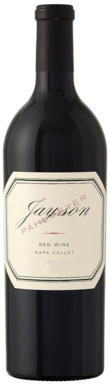
Leaps out of the glass with dusty red berry fruit and currant character, alongside cola nut and walnut husk. Plush plum and dark berry fruit...
2022
Jayson by PahlmeyerNapa Valley
Opus One, Ouverture, Napa Valley, Oakville, California, USA
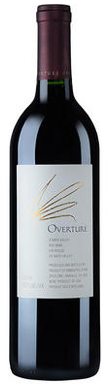
The first time specific blocks have been used for this wine. Dark forest berry notes on the nose with perfumed elements and notes of milk...
Opus OneNapa Valley
Schrader Cellars, Double Diamond Proprietary Red, Napa Valley, California, USA, 2022
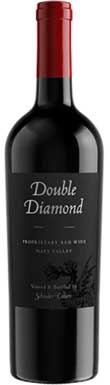
The 2022 Double Diamond Proprietary Red allows winemaker Thomas Rivers Brown to experiment with a blend under the Schrader label. Fruit is sourced from notable...
2022
Schrader CellarsNapa Valley
Bryant Estate, DB4, Napa Valley, California, USA, 2019
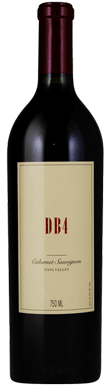
For a 'second' wine, this is no slouch. There's dense plummy fruit on the nose, which shows fine weight of fruit. The attack is soft...
2019
Bryant EstateNapa Valley
