
Discover Portugal’s talha wines
Alentejo’s unique amphora wines received their own DO in 2010, but they’re still unknown by most wine lovers. Simon Woolf meets the producers of this historic style and recommends bottles to try


A group of elderly men in flat caps sit at a gingham-clothed table, singing and drinking a russet-hued wine from small glasses. The cellar is filled with large clay amphorae ranged along each wall, but there are no barrels, tanks or bottles. Someone grills meat over an open fire.
It’s a picture that harks back to a bygone era, yet this is an Alentejo cellar in 21st century Portugal. The location is Adega Manuel Fernando in Vila Alva, where the 500-or-so inhabitants have made wine in amphorae for a couple of millennia. This tradition predominated all over the Alentejo region, until the rise of modern cooperative cellars in the 1950s tempted growers to sell their grapes rather than make their own wine.Talha wine and its associated culture was dealt a crushing blow, but never quite gave up the fight. It did however, remain largely invisible outside the region for decades.Visit the small cellars (adegas) that still operate around Vila de Frades, Vidigueira or Vila Alva and the low profile becomes clear – traditionally, talha wine is never bottled, but rather enjoyed in situ straight from the amphora. The adegas morph into simple taverns from mid-November, when the new wine becomes ready to drink. Friends will drop by to taste the wine, and stay for a chat. Before too long, someone shows up with snacks and the party gets going.
Cutural legacy
‘This is our culture,’ explains Daniel Parreira, a young civil engineer who grew up in Vila Alva but now lives in Lisbon. Parreira reopened his family’s then-dormant winery, Adega Mestre Daniel, in 2018. ‘Until I was 15 years old, I thought the only wine in the world was talha wine,’ he says. ‘Everyone in this village has a talha at home.’
Parreira and his friends refurbished the adega in 2010, using it initially as a museum and an event space. Childhood friend and winemaker, Ricardo Santos, suggested restarting production – ‘because the cellar isn’t the same without the smell of wine’ – and Mestre Daniel made its first vintage in 2018 under the brand name XXVI Talhas.

Parreira and Santos are keen to give their ancestral culture more publicity, hence they bottle a proportion of their annual production for visitors who come from Lisbon or further afield. That said, Santos admits: ‘I don’t really think it should be bottled.’ Instead he stresses that: ‘It should be drunk from the talha.’
These sentiments are echoed in dozens of small talha cellars in the region, where the tradition continues largely as it always did. A clutch of local adega-restaurants (Casa de Monte Pedral in Cuba or País das Uvas in Vila de Frades for example) also produce their own wine, with amphorae lining the walls, and jugs used to bring it straight to the table.
How talha wines are made
Making wine in these bulbous amphorae, typically holding 500-1,000 litres, is a simple, zero-technology affair. Talhas have a flat bottom and sit on the ground. Grapes are de-stemmed and sometimes lightly foot-trodden before everything (skins, juice and a portion of the stems) is put in the talha. A natural fermentation takes place, with punch-downs to break up the cap.
The wine will stay in the amphora until St Martin’s Day (11 November), and only then is a wooden tap inserted into the bunghole near the bottom of the amphora. The wine naturally filters through the solid mass of stems and skins at the bottom of the talha, and the cellars resound with a charming drip-drip-drip sound during the winter months, as the wine slowly drains into bowls, jugs or kegs.
Talha wines historically tended to be white – or orange, to coin the popular term for skin-fermented whites. A mix of red and white grapes known as palhete (or sometimes locally as petroleiro) is also popular. Talha wines made from white grapes typically have a light tannic prickle with a range of herbal and savoury overtones.
Usually made from field blends, and old vineyards full of almost-forgotten varieties, there’s a whole smorgasbord of aromas and flavours – sometimes more of dried fruits, sometimes more saline or honeyed. The slow, unhindered natural fermentation usually produces bone-dry wines with modest alcohol levels (11.5-12% is typical).
Growing popularity
The recent resurgence of interest in talha wine owes a great deal to the charismatic Professor Arlindo Ruivo, a retired school teacher living Vila de Frades. The Professor (as he’s known locally) wanted to continue his father’s winemaking tradition, and took early retirement in 1991 to focus on making talha wine.
His vaulted cellar in the village centre is stuffed with over 50 of the vessels, and his enthusiasm is clear to see, as he explains in his tremulous tenor: ‘Talha wine is simply incomparable – it’s totally natural, coming from grapes like they come from nature.’

In 1998 Ruivo helped to found Vitifrades, an organisation that promotes talha wine and organises a competition to find the best example each November. ‘In the first year we contacted everyone in the whole region, but only five wines were submitted,’ he laughs. By contrast, in 2019 there were some 140 entries.
Vitifrades successfully lobbied the Alentejo wine commission to create the Vinho de Talha DOC in 2010. To date, only a modest number of wines have qualified for the denomination, in part due to strict rules of production including the stipulation that the wine must stay in the talha until St Martin’s Day.
A number of Alentejo’s major wineries now produce and bottle their own talha wines, having hunted down the increasingly hard-to-find antique vessels – the last professional talha-makers stopped production around 1920.
José de Sousa winery has become famous for its well-preserved talha cellar, with some 114 of the vessels, aged up to 200 years old. Herdade do Rocim not only has two talha cellars (one ancestral and one modern) but now organises the annual Amphora Wine Day, where producers from all over Portugal, and beyond, show their amphora-fermented and aged wines.
Ultimately though, as delicious as the new crop of bottled talha wines may be, they cannot compare to the experience of tasting straight from the clay. Visiting one of the traditional adegas or adega-restaurants is the only way to get the whole picture. As The Professor says: ‘When you drink the wine straight from the talha, you need to engage all the senses – the sight, sound and smell, the feel of the glass, and the sound of the wine dripping.’
Woolf’s pick of talha wines to try
Esporão, Vinho de Talha Branco, Vinho de Talha DOC, Alentejo, Portugal, 2018
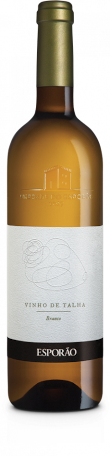

This is only Esporão's second talha vintage, but like the 2017, it's quite exceptional. Made from the Roupeiro grape, there's a sense of ripeness, with...
2018
EsporãoVinho de Talha DOC

Herdade do Rocim, Amphora Branco, Alentejo, Portugal, 2018
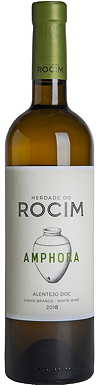
This stunning effort from winemaker Catarina Vieira stays on its skins (and some stems) in the talha for six months – too long to qualify...
2018
Herdade do Rocim
Bojador, Vinho de Talha Tinto, Vinho de Talha DOC, Alentejo, Portugal, 2018
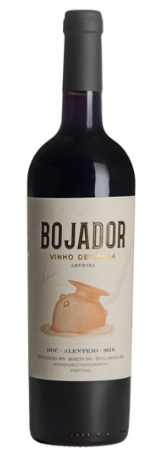
Pedro Ribeiro is winemaker and general manager at Rocim, but Bojador is his personal project. Juicy red cherries explode on the palate, with an attractive...
2018
BojadorVinho de Talha DOC
XXVI Talhas, Mestre Daniel Tinto, Vinho de Talha DOC, Alentejo, Portugal, 2018
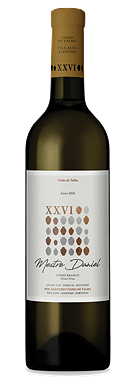
Subtle floral aromas lift the nose of this saline, sinewy talha red, with dusty cherry fruit and very clean, nutty tannins. Produced from old vines...
2018
XXVI TalhasVinho de Talha DOC
Adega Vidigueira, Vinho da Talha, Vinho de Talha DOC, Alentejo, Portugal, 2018
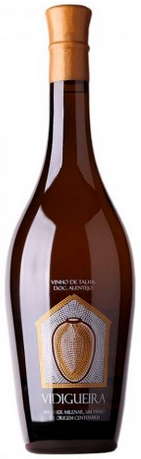
Vidigueira's huge cooperative contributed significantly to the talha tradition's demise, so enjoy the irony in its recent entry into the talha wine marketplace. This talha...
2018
Adega VidigueiraVinho de Talha DOC
