Discovering wines from Azerbaijan plus 11 to try
Simon FIeld MW presents a guide introducing Azerbaijan's key wine regions and grape varieties and selects his top 11 wines from the country worth seeking out.


The recent Azerbaijan Grand Prix was one of 23 events in this year’s Formula One calendar, a timely reminder of the self-confidence emanating from a county that can no longer be perceived as the Baku of beyond.
Indeed, as part of the bulwark hinging the landmasses of Greater Europe (and Russia beyond) and Asia Minor, its strategic position has long been appreciated.
Scroll down to see Simon Field MW’s tasting notes and scores for 11 wines from Azerbaijan
Roads rather dustier than those used for the Grand Prix lead the Silk Route through Azerbaijan, and, in vinous terms, the region, including neighbours Georgia and Armenia, is known as the ‘cradle’ of the civilization of wine. This is where it all began.
Background
Azerbaijan is also known as the ‘land of fire’, the metaphor fueled by natural underground gas reserves and illustrated by such tourist destinations as the eternal underground flame of Yanar Dag.
An unusual terroir is thereby engendered, its other key features being the Caucasus mountains to the north and the Caspian Sea to the east. The capital, Baku, is eye-catching, strong Islamic influences everywhere (the country is 95% Muslim), its heritage now peppered with decidedly modern gems, courtesy of architects such as Zaha Hadid.
Many buildings have flame-like shapes, dazzling towers of glass and steel; the Caucasus, after all, are where Prometheus was chained to a rock by Zeus as a punishment for stealing the fire of the gods.
Modern Azerbaijan describes itself as a semi-Presidential Republic, independence from the Soviet yoke having finally been secured in 1991, the ensuing loss of the key export markets promoting ongoing forays into the west.
Maybe as a result there is a distinctly Western feel to parts (and only parts) of the country, and it was not only the Grand Prix which was welcomed there recently, several of the Group A Games in the recent European Championships were also hosted in Baku.
Sporting endeavours aside, what about the wines?
Well, here everything is set fair, with climate, terroir, savoir-faire and the investment potential to develop an already-present infrastructure all fired up.
Azerbaijan wine regions
The country can be split into three main winemaking zones; Ganja and the Lesser Caucasus, Shirvan Valley and the Greater Caucasus and Caspian Shoreline.
Within these, there are eight autonomous sub-regions which may or may not form the part of a formalised legislation at some point.
The most significant is called Shirvan and is home to many of the most dynamic wineries. This photogenic region benefits from relative proximity to both the Caspian Sea and the Caucasus Mountains.
Some of the best vineyards are located in the province of Ismayilli, which has been compared to the famous enclave of Kaketi in Georgia. The soil, gaseous influence aside, is dominated by volcanic elements, by calcium and by limestone. Interesting.
Azerbaijan grape varieties
In terms of grape varieties, 54 ‘active’ indigenous varietals have been identified and the debate today centres on the extent to which they should be nurtured, or whether it may be safer to continue to develop the international varietals. Or maybe the better-known Caucasus grapes (for want of a better term), chief amongst them Rkatsiteli and Saperavi. Many progressive wineries hedge their bets, which seems sensible.
Of the indigenous varietals, the two which seem the most promising to me are the white Bayan Shira, which reminds me a little of Garganega, and the red Madrasa, which has something of the Grenache (or Cannonau) about it.
The charismatic Andrea Uliva, the ex-pat Italian winemaker at Chabiant, makes lovely examples of both. ‘I do not wish to replicate Italian styles here’ he says, somewhat disingenuously maybe, but there is something distinctly appealing in both wines. It must be those unusual soils.
Production
Azerbaijan makes about ten times more wine than the UK (in a warm year) and about ten times less than Georgia. It ranks in the low 50s in terms of global production. In terms of aspiration, however, it aims a lot higher.
It seems that there is only modest enthusiasm to try and emulate Georgia and the traditional Qvevri model, with more stress perhaps on demonstrating the historical backdrop through the development of traditional varietals.
Getting closer to the soil is important to many; Nizami Aliyev at Meysari is proud that his winery was the first to be certified as organic in Azerbaijan. Over at the larger scale Azgranata, on the other hand, Yusif Lezgiyev tells me that the altitude of his vines is fundamental to the personality of his wines. Many vineyards are located in sites at well over 650 metres. Here they make excellent whites from Rkatsiteli and superb reds from Saperavi, amongst many others. Indeed one common feature, as with the modern Savalan winery, is the sheer number of different wines are made and sold.
Maybe they should, for the export markets at least, narrow the range and thereby forge an identity, or at least put down a ‘calling card’, based on the very best of the rich tapestry of local varietals. It’s relatively early days for sure, but time marches on.
Before Gorbachev’s crackdown on alcohol in the early 1990s there was no need to seek new markets. Now the need is pressing, all the more so as Turkey, Azerbaijan’s closest ally, the country will not be in a position to pick up the slack.
There is a lot going on in the world of wine, with new markets opening up and an insatiable thirst for diversity from an increasingly mature, experienced and inquisitive demographic of wine lovers.
It seems most appropriate, essential even, that a part of this renaissance should take us all back to where it all started.
See Simon Field MW’s tasting notes and scores for 11 wines from Azerbaijan
Related content
Expert’s choice: Discovering wines from GeorgiaGeorgian wine guide plus 17 wines worth seeking outAmber champions: Top 30 orange wines
Meysari, Sadaf, Shamakhi, Azerbaijan, 2018
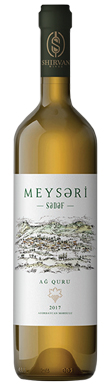

From the historically significant Shamakhi region, and certified by Ecocert, Meysari is an impressive operation, the modern winery belying a strictly organic approach throughout the process. The Sadaf is a Rhône blend of Grenache Blanc, Roussanne, Marsanne and Clairette and weighs in at a powerful 15%. There is a certain luminosity, with extract and aromatics from the oak both evident. Straw colour, quite pronounced. The nose recalls summer flowers, beeswax and a hint of poached pear. The palate intrigues with an almost resinous grip, wax and preserved salted lemon behind it. The alcohol is, unsurprisingly, fairly persuasive, yet there is no shortage of charm, lanolin and spice entwined with a hint of fennel and cashew on the finish.
2018
Meysari

Chabiant, Bayan Shira, Ismayilli, Azerbaijan, 2018
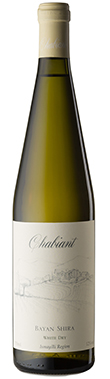
Bayan Shira is an indigenous clone and is here grown by Chabiant’s Italian winemaker Andrea Uliva in the province of Ismayilli in the eastern foothills of the Lesser Caucasus. Six months lees ageing after a stainless-steel fermentation; pale with attractive aromatics of jasmine, pink grapefruit and beeswax. In the mouth, these themes are developed; spring flowers, verbena and a Muscat-like lift. A very agreeable aperitif wine.
2018
Chabiant
Azgranata, Rkatsiteli, Shirvan, Azerbaijan, 2017
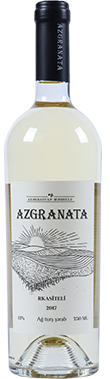
The most famous and widely planted white grape in the region (which stretches to Russia and beyond), Rkatsiteli is a noble varietal, but too often over-cropped and dull. Neither of which can be said for this impressive example. Already over four years of age, it has taken on an elegant glossy, almost luminous sheen. Its nose, post swirl, opens up with quince, tilleul and a little white pepper to the fore. The palate is viscous, maybe a little ponderous, but with fascinating subplots involving poached pears, iodine and even incense. It reminds me a little of a Roussanne, texturally, which I had not expected. Food friendly, for sure, this is very agreeable. I would be very interested to taste both the 2018 and the 2019.
2017
Azgranata
Savalan, Verdejo, Azerbaijan, 2019
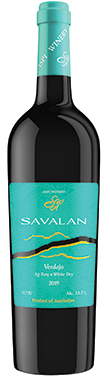
From the sunny Caucasian foothills which embrace the Savalan valley in the north-east of the country, an attractive Verdejo, both fermented and matured in stainless steel. Pale lemon with a watery rim; then aromatics which are fairly neutral with hints of almond, sherbet and lime. The palate is clean, with impressive varietal character, ripeness captured by hints of peach and spiced pear and the almond theme reiterated, with both greengage and lemon posset in support. Accomplished and refreshing, not without character.
2019
Savalan
Meysari, Sanam, Shamakhi, Azerbaijan, 2018
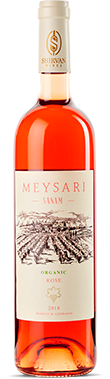
Made from 100% Cinsault, the 2018 has a rich rosehip coral hue, an initially reticent nose of strawberry and pomegranate, then a dry, somewhat austere palate, perhaps lacking a little of the energy that one expects, maybe incorrectly, from the category. There is certainly gastronomic potential here, and nothing approaching oxidation. On the palate the strawberries are joined by nectarines and a hint of mandarin; somewhat foursquare, but perfectly correct. I shall be interested to see the 2019, and, for that matter, the 2020.
2018
Meysari
Chabiant, Madrasa, Ismayilli, Azerbaijan, 2017
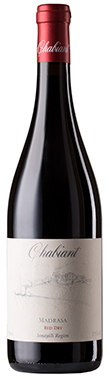
<p>Lovely, lively distinctive nose of sweet cooked plums, vanilla and sweet spices with dried roses and herbs. Soft and rounded palate. Nominated by: Simon Field MW.</p>
2017
Chabiant
Chabiant, Saperavi Cabernet Sauvignon, Ismayilli, Azerbaijan, 2017
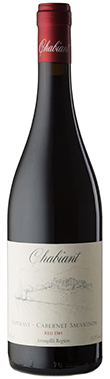
Although perhaps best known for its plantings in Georgia, Saperavi is popular throughout the Caucasus, unsurprisingly as it is versatile not only to add colour and flesh as a teinturier but also to provide a distinctive herbal personality to the wine. Herewith a case in point; a battle of the heavyweight grapes, with Cabernet Sauvignon taking the minority shareholding (30%). That considered, the resulting wine is surprisingly elegant; beyond the near opaque hue and soot/Elastoplast aromatic one can unearth a wealth of dark fruits, cassis, myrtle and sloe amongst them, a finely etched tannic profile and a pleasing tapering to the finish, which is powerful yet satisfying
2017
Chabiant
Meysari, Makhmari Premium, Shamakhi, Azerbaijan, 2018
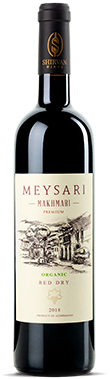
The theme of deference to the South of France is redoubled here with this intriguing blend of Marsalan, Carignan, Grenache Noir and Mourvèdre, all popular on the French Med, but only two, of course, actually permitted in Châteauneuf du Pape. Deep ruby with a raven core and cardinal’s robe for a rim; the nose is impressive; bilberry, laurel, graphite, sousbois, hints of peony and suede. The favourable impression carries onto the palate, although maybe here the sheer ripeness of fruit is a little overbearing. It’s a question of ripeness and sweetness rather than over-ripeness and burn; nonetheless the more subtle notes often associated with these varietals seem subsumed by a generous compote of fruit. Other facets are thereby somewhat undermined, viz tannins and spice complexity in particular. A very competent piece of work, however, and one which will not lack for adherents.
2018
Meysari
Savalan, Cabernet Sauvignon, Azerbaijan, 2015
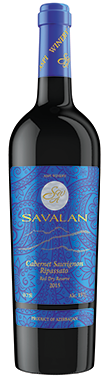
Farmed at 400 metres in the lower Caucasus, where the soils are dominated by clay, this is a potent Cabernet. Its power are in part explained by the use of the Ripasso technique, which has redoubled the extraction, thereby ensuring a deep near opaque colour, 15% of alcohol and a firm, tannic texture. The nose is attractive; ripe cassis, maybe a touch over-ripe, damson, with hints of tobacco, graphite and cedar. The palate boasts powdery if ripe tannins, hints of woodsmoke and peat beyond the dark fruit. The overall impression is positive, the alcohol kept under control and the tannins both ripe and powdery, not drying in any event. Very competent, very complete.
2015
Savalan
Azgranata, Madrasa, Shirvan, Azerbaijan, 2016
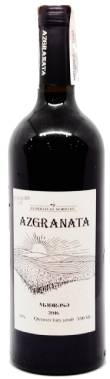
Indigenous to the Caucasus, Medrese (aka Madrasa) is a thick skinned later-ripener, which produces generously coloured, rich and spicy wines; or at least it does in this case. Temperamentally this reminded me of a cross between Touriga Nacional and Mourvèdre. I expect that it bears no actual relationship to either but in terms of forest floor spice, violets and tannic structure, there is some affinity. The palate has a pleasing floral lift and hints of jambon cru and tapenade evidenced. The tannins after five years are resolved and there is firm acidity and a herbal note on the back, which provides definitive closure.
2016
Azgranata
Savalan, Nobel Exclusive Collection, Azerbaijan, 2016
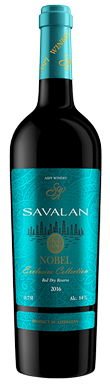
A heady blend of Cabernet Franc, Cabernet Sauvignon and, just for good measure the teinturier Alicante Bouschet, this is as dark of hue as one would expect, with only a little garnet fade at the rim to indicate its age. The nose is attractive, recalling a turbo-charged St Nicolas de Bourgueil maybe, the leafy notes infused with cardamom and hints of eucalypt. Ageing has taken place in large oak casks, none of them new; the power is thus mainly from this undeniably gutsy trio. Hints of charcoal and sweet tea underline a style which is not to everyone’s liking, but, once again, made with no lack of skill.
2016
Savalan
