
Domaine des Baumard’s Quarts de Chaume: World-class sweet wines
Despite sitting at the apex of the Loire Valley's classification pyramid, Michael Apstein argues the region's emblematic sweet wine, Quarts de Chaume, is criminally underrated and respect is long overdue.


You can be forgiven if you are unfamiliar with the Quarts de Chaume appellation. After all, when I mentioned to a well-known wine-writer colleague based in San Francisco that I was writing about it, he said, ‘What’s that?’
The appellation should be on every wine lover ’s radar, because it’s home to one of the world’s greatest sweet wines.
Scroll down for tasting notes and scores for Domaine des Baumard’s Quarts de Chaume
Only about 40ha in size, and shrinking, the appellation sits within the wider AP Coteaux du Layon in the Anjou district, in western Loire. It has the distinction of being the Loire’s sole grand cru, approved by the French National Institute for Origin and Quality (INAO) in 2014.
About 20 producers bottle just over 50,000 bottles annually, which helps explain why the wines are not as well-known as they rightly should be – compare that figure to the five million bottles produced each year in Sauternes and Barsac, home to another of the world’s finest sweet wines.
Domaine des Baumard, with its 6ha, is the largest producer of Quarts de Chaume, and is certainly one of, if not the, best producers.
Just below this pinnacle lies two appellations, Coteaux du Layon Premier Cru Chaume and Bonnezeaux. Rounding out the area for sweet wines is the broader Coteaux du Layon appellation.

Quarts de Chaume’s history
Quality wine from this section of the Loire has been known for 1,000 years. Indeed, Quarts de Chaume takes its name from the custom of winegrowers paying the Abbess of Ronceray in Angers in the Middle Ages a quarter (quart, in French) of the crop from the famed south-facing slope that comprises the appellation.
Because of its complexity – a mixture of schist, sandstone, quartz, rhyolites and spilites (volcanic rock like basalt) – winemakers have called the soil of this sunny hillside along the Layon river, a tributary of the Loire, ‘geological chaos’.
Exposure to morning mist rising from the Layon allows for the development of botrytis cinerea, also known as noble rot. Though Chenin Blanc is required for producing Quarts de Chaume, botrytis is not necessary, according to the appellation regulations. Indeed, Florent Baumard, who took the reins from his father, Jean, in 1990, explains that botrytis has the potential to overwhelm the character of wines and to obliterate the sense of terroir.
Chenin Blanc is excellent for transmitting the taste of the vineyard, according to Baumard, so in his mind, it is important not to overshadow it with botrytis. He likes a blend of roughly a third each of botrytis-affected grapes, concentrated berries and ripe ones, ‘to bring freshness, happiness and elegance’, to the wine.
Domaine des Baumard chronicled
Baumard dates the domaine to 1634 when his ancestors were cultivating grapes on land that is still part of the estate. After phylloxera, Baumard family members became nurserymen, supplying the region with new vines.
In 1955, the modern history of the domaine began in earnest with the arrival of Jean Baumard. Having trained in oenology in Dijon and Bordeaux, he started buying vineyards, including, in 1957, the 6ha of Quarts de Chaume, whose vines now average 35 years of age.
Jean is widely credited with the revival of the appellation. His son, Florent, returned to the domaine in 1987 after studying in England and the US, and became general director on Jean’s retirement in 1990.

In the vineyard and cellar
The two critical points in winemaking are picking and pressing the grapes, according to Baumard. He explains that harvesting Chenin Blanc for Quarts de Chaume is especially difficult because ripeness of the berries even within a bunch is variable.
As in other parts of the world known for sweet or late harvest wines, pickers go through the vineyard multiple times, harvesting by hand, selecting only the best bunches and discarding unsatisfactory fruit. Baumard notes that ‘the whole vineyard can change in a couple of days’.
The team uses small baskets, as though they were harvesting peaches, to collect the grape bunches, because ‘the grapes, like peaches, need to be pristine for the terroir to show,’ says Baumard. Between picking and pressing, the grapes are left in a cold room to avoid oxidation.
Baumard emphasises that gentle pressing is essential, otherwise the inherent quality of the fruit is lost, and along with it the unique sense of place. Since they press with low pressure, each run can last six to 12 hours.
They will then often collect six to eight different portions, or cuts, of juice from the same press run. The first cut is set apart because it is ‘dirty’, containing skins and water. Baumard explains how since the acidity and sugar levels vary in subsequent cuts, they ferment them separately because the yeast won’t work the same way in each batch. The cuts are blended only after fermentation is complete.
Baumard says that they ‘are not looking for super extraction or super richness, just the purest juice’. He says that if they make a mistake in the picking or the pressing, there’s no way to correct it.
Fermentation is slow, occurring at low temperature to preserve fruitiness and freshness. The wines then spend nine to 18 months on the lees in stainless steel vats. Oak barrels, which would alter the harmony of the flavours, are never used.
Starting with the 2003 vintage, Domaine des Baumard has bottled its wines under screwcaps. A vocal proponent of the closure, Baumard says: ‘I was so stupid. I should have used them 20 years earlier.’

Perfect food and wine pairing companions
As though the plethora of flavours and sensations that come with the yin-yang of sweetness and acidity is not sufficient, versatility is another major attribute of Quarts de Chaume.
Young vintages display floral and delicate honeysuckle sweetness, making them a good choice as standalone aperitifs. And while their sheer vibrancy is refreshing, the faint allure of sweetness is neither heavy nor overpowering. Thus, they brilliantly balance the brininess of olives or the saltiness of nuts. For the same reasons, a young Quarts de Chaume is an ideal foil to starters, such as smoked salmon or savoury patés.
While broad generalisations about sweet wines pairing well with Chinese and Indian food are true to an extent, they are overly simplistic. How could the same wine pair with both Sichuan and Cantonese dishes?
The charms and subtleties of most wines, including Quarts de Chaume, will be overwhelmed by very hot food, such as Hunan cuisine or a fiery Indian curry, so I’d stick to beer on those occasions. However, the vibrancy and gentle sweetness of youthful Quarts de Chaume is a superb way to offset and balance the gentler spice found in many Asian and Latin American dishes. They also work extremely well with the parade of flavours inherent in a sushi dish or an omakase meal.
With increasing age, Quarts de Chaume morphs from delicately honeyed to a richer amalgam of apricot skin and orange-like citrus flavours. Finally, with more bottle age still, they even acquire lush caramel nuances.
At the more mature stages, Quarts de Chaume maintains an enlivening and uplifting acidity, which makes them an excellent choice with both hot and cold foie gras. It’s a perfect Christmas splurge.
More practically, aged Quarts de Chaume is a superb choice with cheese, especially blue or other strongly flavoured varieties. After all, what better pairing could there be than Quarts de Chaume and Colston Bassett Stilton? That said, you might be surprised at how engaging these lovely wines are, especially the younger versions, with fresh or creamy goat’s cheese, or the nuttiness of well-aged Comté.
Although some favour sweet wines with dessert, I find that the sweetness in the dessert can fight and frequently overwhelm the wine. Far better, in my opinion, is a glass of Quarts de Chaume all by itself, as a dessert in its own right.

Looking to the future
Baumard notes that climate change has been beneficial for Quarts de Chaume, because it has aided maturation of the grapes. He recounts that in the 1970s, his father harvested in mid-October, and even by then the grapes often were not ripe, necessitating chaptalisation. But since 1987, with warming growing seasons, Baumard has not needed to chaptalise, even though harvest is earlier.
Growers are increasingly requesting permission from the INAO to make dry wines from the appellation, because the market for Quarts de Chaume and sweet wine in general, sadly, has been shrinking. As Baumard notes: ‘Everyone knows about Sauternes, few about Quarts de Chaume.’
In 1996, the INAO required growers in both Quarts de Chaume and nearby Savennières to choose whether to make dry or sweet wines from Chenin Blanc. Quarts de Chaume chose sweet. ‘A historic mistake,’ according to Ivan Massonnat, co-director of the Quarts de Chaume growers’ association, which they are now trying to correct – Savennières resisted and finally the INAO relented and granted its producers permission to make both.
Currently, the dry wines from Quarts de Chaume can be sold only as Anjou Blanc. To distinguish them, many producers are labelling them under the umbrella term, Ronceray, after the abbey, or writing Dry Chenin Blanc prominently on the label. In my limited experience – I tasted about a half-dozen Ronceray, mostly from the 2020 vintage, last year – they are a most welcome addition, showing great minerality and verve.
The best wines from Quarts de Chaume, especially those from Baumard, have a lightness and grace that distinguishes them from the heavier wines of Sauternes. With its delicacy, Quarts de Chaume is more akin to German late-harvest sweet wines.
Quarts de Chaume can stay fresh and invigorating for at least a week or two after opening, though the odds any will be left in the bottle even after a week are small.
These wines develop magnificently in bottle, reaching a plateau and remaining there for decades, making them a good choice for laying down a few bottles for the future.
Tasting notes and scores for Domaine des Baumard’s Quarts de Chaume
Wines are listed in score order
Related articles
- Best Sauternes and Barsac 2022 wines tasted en primeur
- Tours and Touraine: A wine lover’s guide
- Sancerre and Pouilly-Fumé: Panel tasting results
Domaine des Baumard, Anjou, Quarts de Chaume Grand Cru, Loire, France, 1989

A glistening, bright copper orange colour suggests you’re in for a treat even before the floral array hits your nose – and you are! It...
1989
Domaine des BaumardAnjou

Domaine des Baumard, Anjou, Quarts de Chaume Grand Cru, Loire, France, 1985
The gleaming, light orange colour and floral aromas belie the age of this graceful and riveting wine. At almost 40 years of age, it displays...
1985
Domaine des BaumardAnjou
Domaine des Baumard, Anjou, Quarts de Chaume Grand Cru, Loire, France, 2017
Leads with minerality, then a hint of botrytis, with the ever-present acidity adding balance. Not a weighty wine, its grandeur shows with a graceful and...
2017
Domaine des BaumardAnjou
Domaine des Baumard, Anjou, Quarts de Chaume Grand Cru, Loire, France, 2018
Even at five years of age, with its pale yellow colour, this is strikingly youthful. Reinforcing that character, vibrant aromas of white flowers explode from...
2018
Domaine des BaumardAnjou
Domaine des Baumard, Anjou, Quarts de Chaume Grand Cru, Loire, France, 2015
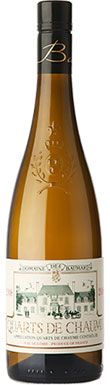
A slightly darker yellow colour and barest hint of apricots indicate that this, at eight years of age, is just starting to enter maturity. White...
2015
Domaine des BaumardAnjou
Domaine des Baumard, Anjou, Quarts de Chaume Grand Cru, Loire, France, 1997
The dark orange colour of this extraordinary wine is deceptive, giving the impression that it might be over the hill. Not at all! Astonishing acidity...
1997
Domaine des BaumardAnjou
Domaine des Baumard, Anjou, Quarts de Chaume Grand Cru, Loire, France, 1988
At 35 years of age, this charmer is lighter in colour – just a hint of orange – fresher and less dense on the palate...
1988
Domaine des BaumardAnjou
Domaine des Baumard, Anjou, Quarts de Chaume Grand Cru, Loire, France, 2007
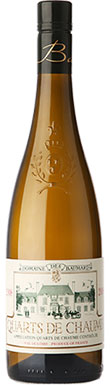
More golden than orange in colour, this is a luscious, decadent delight, with energy balancing its richness. It may lack the subtleties and grace of...
2007
Domaine des BaumardAnjou
Domaine des Baumard, Anjou, Quarts de Chaume Grand Cru, Loire, France, 1999
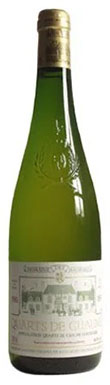
A great surprise from an unacclaimed vintage. Despite being over 20 years old, it still displays floral notes augmented by subtle nutty ones – a...
1999
Domaine des BaumardAnjou
Domaine des Baumard, Anjou, Quarts de Chaume Grand Cru, Loire, France, 2002
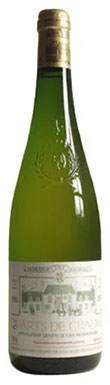
I was expecting a better showing, with 2002 being an acclaimed vintage. Unsurprisingly, its orange colour showed its age. A floral component is present, but...
2002
Domaine des BaumardAnjou
Domaine des Baumard, Anjou, Quarts de Chaume Grand Cru, Loire, France, 1992
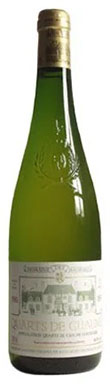
Another success from a lesser vintage. Florent Baumard describes 1992 almost as bad a vintage as the rain-soaked 2012. A dark orange colour is not...
1992
Domaine des BaumardAnjou
Domaine des Baumard, Anjou, Quarts de Chaume Grand Cru, Loire, France, 1980
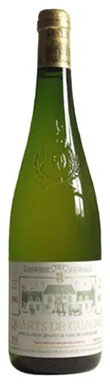
Fading and displays a duller orange colour. An array of dried fruit and nutty flavours show how these Quarts de Chaume transform from flowers to...
1980
Domaine des BaumardAnjou
