
Domaine Parent: A benchmark Pommard domaine
Long-regarded as one of Burgundy's more muscular appellations, the 2022 vintage from Domaine Parent reveal Pommard's more refined and sensuous side.


The wines of Pommard have long suffered from a less-exalted reputation compared to the more delicate wines of neighbouring Volnay, just to the south.
They are often considered burly and chunky compared to the lacey wines of Volnay. The different character, which indeed is a powerful and persuasive argument for terroir, comes, in large measure, from Pommard’s position lower on the slope where more iron-tinged clay, which imparts power to the wine, has accumulated over the millennia compared to the more limestone rich soil higher up on the slope of Volnay.
Scroll down to see tasting notes and scores for the 2022 Domaine Parent wines
But, if you are one of those who feels that the wines of Pommard should take a backseat to those of Volnay, then I suggest you try Domaine Parent’s dazzling array of 2022s, or any year for that matter, because the combination of power and elegance that Anne Parent imbues in the wines will convert you immediately.
Twelve generations

Though Domaine Parent was created in 1803, the family’s presence in Burgundy dates to the 17th century, making sisters Anne and Catherine Parent the 12th generation of the family involved in wine.
Anne and Catherine took over from their father Jacques, who ran the domaine from 1947 until 1988. Anne is responsible for the viticulture and winemaking, while Catherine runs the commercial side of the operation.
The domaine comprises 10 hectare (about 25 acres) mostly in Pommard along with two important Corton Grand Cru parcels from which she makes a stunning white Corton and an equally impressive red Corton Renardes.
Anne buys grapes, often from family members, and makes wines, technically as a négociant, and bottles them under the ‘Jacques Parent et Cie label’ (Jacques started the négociant side of the business in the mid-1970s.)
The meticulousness that Anne puts into the domaine wines is readily apparent in these négociant bottlings. To explore just how well Anne’s négociant bottlings evolve, I recently pulled a bottle of the 1990 Pommard Les Rugiens from my cellar.
Parent does not own any vines in Rugiens but obtains grapes from friends who do. The suave 1990, at 34 years, has developed magnificently, with silky tannins enrobing an iron-tinged core of dark fruit. Vibrant and fresh, it combines power and elegance. To paraphrase Robert Frost, it has miles to go before it sleeps.
Domaine Parent history:
1803: Claude Parent founds Domaine Parent.
1947-1988: Jacques Parent brings domaine into the modern era.
1974: Jacques starts négociant label, Jacques Parent et Cie.
1988-present: Daughters Anne and Catherine take charge.
1997: Jacques Parent “officially” retires.
2013: Ecocert certifies Domaine Parent as organic.
Currently: Applying for Demeter certification as biodynamic.
Consistent terroir expression
A hallmark of Parent’s wines, be they domaine or négociant – in addition to their superb quality – is their consistency and dazzling transparency. Having only two winemakers, Jacques and Anne Parent, for the last 70 years helps explain the consistency.
To learn about the subtle and not so subtle variations of terroir within Pommard, just taste Parent’s array. Each reflects the locale, the distinctiveness of the vineyard, from village wine to premier cru. Despite decades of lobbying, the authorities have yet to promote Les Epenots or Les Rugiens (the two generally accepted top premier crus) to grand cru.
When the sisters took over, Anne embraced organic viticulture, attaining Ecocert organic certification over a decade ago, in 2013.
She employs biodynamic practices, such as ploughing the premier and grand cru vineyards with horses and bottling the wines according to the lunar calendar, and is awaiting Demeter certification.
The grapes are harvested entirely by hand. Once back at the winery in the center of Pommard, the grapes pass over a vibrating sorting table and then a stationary sorting table where the eyes of four to six workers remove the less healthy grapes.
Anne has no stricture formula for destemming, explaining that It depends on the vintage and the particular site. Fermentation, always done with native yeast, varies from 10 to 20 days, again depending on vintage and site.
Barrel-ageing at Domaine Parent is, similarly, non-formulaic, but always occurs in French oak, of which 25% to 40% are new, except for the grand cru bottling, which can see from 80% to 100% new oak.
Anne uses the traditional 228-litre Burgundy barrel (in French, la pièce) for ageing most of her wines, but she is experimenting with larger, 600-litre barrels. She intends to experiment with amphora in the future but is sceptical. Still, as she says” ‘I want to see what all the buzz is about.’
During the many years I’ve tasted in Parent’s cellars, I’ve always been amazed at the seamless integration of what sounds like a lot of new oak for the grand cru bottlings. It reminds me of something another winemaker once told me, ‘the wine is not over-oaked, it’s under-fruited!’
The ‘easy’ 2022s

The 2022 growing season, like 2018, 2019, and 2020, was hot and dry. Unusually heavy rain in June helps explains why the wines turned out so splendidly and have been widely acclaimed.
The rain replenished the water table, which allowed the vines and grapes to avoid stress, and prevented the grapes from becoming over-ripe. Unusually for such a hot year, the sugars and tannins ripened simultaneously.
And, unlike the previous hot and dry years, the wines are balanced and fresh with normal or even low levels of alcohol. One suspects that Pommard’s clay soil with its water-retaining ability, may have contributed to the success of Parent’s wines in 2022.
Anne is positively ecstatic about her 2022s, exclaiming: ‘The more I taste them, the more I like them.’
She was especially impressed – as was I – by the purity of fruit and the suaveness of the tannins. The harvest at Domaine Parent began on 31 August, earlier than usual, to preserve acidity, which judging from the wines, worked.
Anne explains that: ‘Winemaking was easy in 2022 without any problems during fermentation.’ She continues: ‘In 2020, if you waited for phenolic maturity (maturity of the tannins) you could wind up with high alcohols.’
Fortunately, in 2022 the tannins were ripe at a lower level of potential alcohol (based on sugar ripeness), therefore, Anne didn’t need to include as many whole bunches – which she believes imparts delicacy by moderating the alcohol.
Hence, although the measured acidity is lower in the 2022s compared to the 2020s, the wines still taste vibrant and fresh because the alcohols are lower and the tannins riper.
As the tasting notes show, Parent’s 2022 Pommard are gorgeous – floral, elegant, and powerful. They combine gracefulness with the innate power of Pommard. They will evolve magnificently to express the magic of Burgundy, that is, if you can keep your corkscrew away from them.
Attention consumers without cellars, many of the 2022s can be enjoyed young, within the first few years of bottling, because of their charm and youthful fruitiness.
I suspect they will continue to display youthful seductiveness for a couple of years but they do have the requisite balance and structure to reward long term ageing.
Vineyard holdings and production:
9.7 hectares (25 acres) of vineyards:
Corton Grand Cru Renardes (0.1 ha),
Pommard 1er cru Les Chaponnières (0.6 ha)
Pommard 1er cru Les Chanlins (0.3 ha)
Pommard 1er cru Les Argillières (0.3 ha)
Pommard 1er cru Les Epenots (0.5 ha)
Beaune 1er cru Les Epenottes (1.7 ha)
Pommard 1er cru Les Croix Noires (0.1 ha)
Ladoix 1er cru La Corvée (0.3 ha)
Pommard La Croix Blanche (0.3 ha)
Pommard Les Noizons (0.1 ha)
Ladoix (0.3 ha)
Corton Grand Cru white (0.2 ha)
Bourgogne Côte d’Or (4.3 ha)
Average annual production of Domaine wine: 65,000 bottles (vintage dependent)
Average annual production of Jacques Parent et Cie: 40,000 bottles (vintage dependent)
Drinking state of back vintages
Parent’s 2021s, another fine vintage showing great vibrancy because of the overall cooler temperatures – what I call a pre-climate change vintage – are lovely to drink now, and, like the 2022s, are likely to close down for a decade or so.
The riper and more structured 2020s will need more bottle age, perhaps another five or six years, before their allure will re-emerge.
Meanwhile, Anne describes her 2019s as ‘charming, easy to drink, and sexy’. The bolder 2018s, however, like the 2020s, will benefit from another four or five years of bottle age, while the enchanting 2017s, from a lighter vintage, are delightful for current consumption.
Happily, for consumers, a variety of older vintages of Parent’s Pommard are still available. The 2018 to 2020 vintages of Croix Blanche for around £60 a bottle, the 2020 Pommard Premier Cru Les Argillères and 2019 Pommard Premier Cru Les Chanlins for £90 apiece, and 2020 and 2017 Pommard Premier Cru Les Chaponnières for roughly £100 per bottle.
To confirm my impression that Domaine Parent’s Pommard evolve harmoniously over time, I retreated to my cellar to taste – and then drink – two older Les Epenots after returning from Burgundy in November when I tasted their 2022s.
The still youthful 2012 Les Epenots has just started to show the complexity of maturity along with a graceful elegance, while the vibrant 1985 conveyed a near magical combination of sweet black fruit, clean savoury mushroom-like nuances, all enrobed with silky fine tannins. A show-stopping wine.
Domaine Parent: 2022 wines
Related articles
- Burgundy 2022 en primeur: full report
- Top Pommard & Volnay 2022 wines
- Norwegian Burgundy fans queue for a month for wines
Domaine Parent, Corton Grand Cru, Burgundy, France, 2022
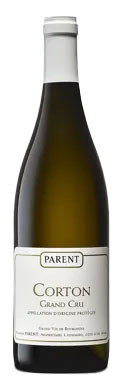

Even at this youthful stage, the 2022 Corton Blanc packs power. I find it more minerally and dense than the typical Corton-Charlemagne, so I understand...
2022
Domaine ParentCorton Grand Cru

Jacques Parent et Cie, Monthélie, Burgundy, France, 2022
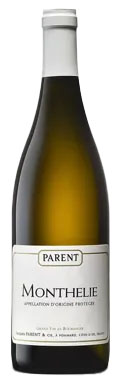
Showing the importance of appellation, this négociant bottling from two distinct parcels in the village is a distinct step up from the Parent’s Bourgogne Blanc....
2022
Jacques Parent et CieMonthélie
Jacques Parent et Cie, Bourgogne, Burgundy, France, 2022
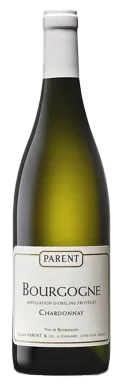
A négociant bottling, this is a charming, fruity expression of Burgundy meant to be enjoyed now. Good acidity and a touch of minerality remind you...
2022
Jacques Parent et CieBourgogne
Domaine Parent, Corton Les Renardes Grand Cru, Burgundy, France, 2022
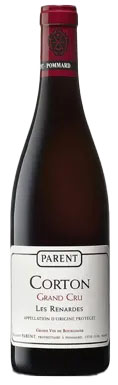
Parent’s dazzling 2022 Corton Les Renardes is my definition of quintessential Burgundy – flavour without weight. You feel the effect of 100% new oak ageing...
2022
Domaine ParentCorton Les Renardes Grand Cru
Domaine Parent, Pommard, 1er Cru Chaponnières, Burgundy, France, 2022
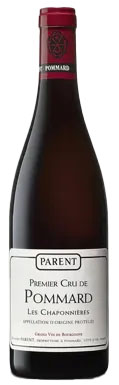
Characteristic of her 2022s, pure luscious black fruit is apparent, supplemented by an alluring floral component. The tannins are sturdier yet still supple, and unobtrusive....
2022
Domaine ParentPommard
Domaine Parent, Pommard, 1er Cru Croix Noires, Burgundy, France, 2022
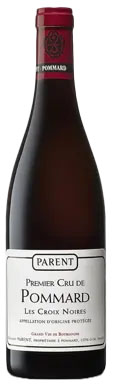
Like Les Argillières, the ripe succulent fruit shines, but here more savoury elements come into focus. It’s chewy and rich, but not heavy. The tannins...
2022
Domaine ParentPommard
Domaine Parent, Pommard, 1er Cru Épenots, Burgundy, France, 2022
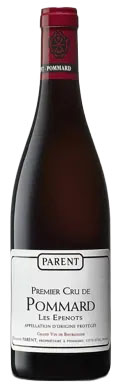
The gorgeous 2022 displays the vintage’s signature ripe and pure succulent black fruit with unobtrusive structure and freshness. Powerful, to be sure, but not overdone...
2022
Domaine ParentPommard
Domaine Parent, Pommard, 1er Cru Chanlins, Burgundy, France, 2022
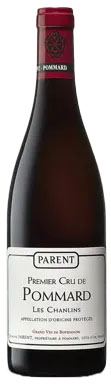
Like her other 2022s, the pure and lush dark fruit is front and centre supported by a sturdy structure. You feel the elegance in the...
2022
Domaine ParentPommard
Domaine Parent, Ladoix, 1er Cru La Corvée, Burgundy, France, 2022
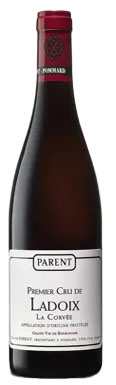
This domaine wine, a touch heftier than Parent’s Monthélie, displays the same alluring glossiness and succulent black fruit. A captivating not-just-fruit element and a seductive...
2022
Domaine ParentLadoix
Domaine Parent, Pommard, 1er Cru Argilières, Burgundy, France, 2022
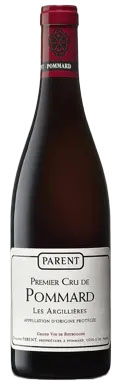
Along with the heft, Parent’s 2022 displays a lush and suave texture. A combination of pure dense red and black fruit is front and centre,...
2022
Domaine ParentPommard
Jacques Parent et Cie, Monthélie, 1er Cru Champs Fuillot, Burgundy, France, 2022
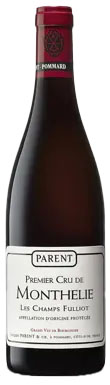
The suave 2022 Monthélie Premier Cru Les Champs Fulliot, a vineyard that is basically an extension of Volnay’s Clos des Chênes, conveys the purity of...
2022
Jacques Parent et CieMonthélie
Domaine Parent, Sélection Pomone, Bourgogne, Burgundy, France, 2022
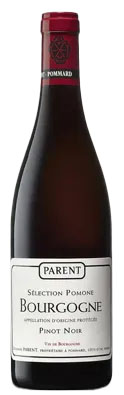
The stellar 2022 Sélection Pomone, with its elegance, density, and complexity, is just one example. It hits far above its weight and class. The Sélection...
2022
Domaine ParentBourgogne
Domaine Parent, La Croix Blanche, Pommard, Burgundy, France, 2022
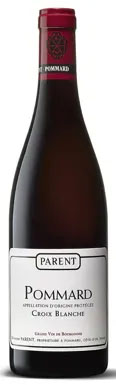
Winemaker Anne has always felt that the wine from the Croix Blanche, a village lieu-dit that lies just across the road from Les Grand Epenots,...
2022
Domaine ParentPommard
Domaine Parent, Beaune, 1er Cru Les Epenottes, Burgundy, France, 2022
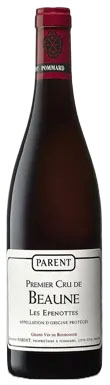
Parent’s broad-shouldered 2022 Beaune Premier Cru Epenottes displays pure ripe fruit of the vintage supported by fine tannins. Though big, it’s not a boisterous wine....
2022
Domaine ParentBeaune
