
Dry German Riesling Grosses Gewächs: Panel tasting results


From the top-rated vineyards in Germany, these dry wines are vaunted as the pinnacle of quality – and the focus is shifting from power to finesse. Read this report on 95 wines tasted by our three-strong expert panel, with an introduction by Anne Krebiehl MW...
95 wines tasted with one rated Exceptional and six Outstanding
The panel tasters were: Gearoid Devaney MS, Anne Krebiehl MW and Sebastian Thomas
This panel tasting encompassed the whole of Germany – 13 wine-growing regions covering 4° of latitude (from 47.5°N in Baden to 51.5°N in Saale-Unstrut), and every imaginable kind of soil. However, rather than look at all levels of Riesling, it focussed in on Grosses Gewächs (‘great growth’), the top category of the VDP’s private classification.
So the wines came only from VDP member-estates, but covered the breadth of German dry Riesling: only the tiny Hessische Bergstrasse and Mittelrhein were missing, as were the easterly outposts of Sachsen and Saale-Unstrut. But certainly the heartlands of German Riesling were well represented.
Grosses Gewächs wines are made from clearly delimited single vineyards that have been classified as Grosse Lage (‘grand cru’), and are produced to stringent regulations. All GGs are trocken (dry), which in Germany means no more than 9g/l of residual sugar.
Only three of the 95 wines tasted touched this mark, while a further seven were in the vicinity – but they had the acidity to provide the balance.
Scroll down to see the top wines from this panel tasting
I must emphasise that at these levels sugar acts as flavour-enhancer rather than sweetener, as is amply demonstrated in brut sparkling wines, which likewise come with high acidity and easily accommodate 6-8g of dosage while being perfectly dry. All this is to say: if you are looking for dry Riesling, the GGs are your go-to category. Most of these wines were around the 5g/l mark and below, with higher acidities than your average white.
Quick link: View all 95 wines from this panel tasting
Delicate balance
When GG wines were first made in the early 2000s, it was still thought that an estate’s top wines had to show their mettle. The mindset has since shifted from power back towards elegance, with delicate alcohols of 12.5% and below for almost half the wines here. The Germans have discovered what makes their wines truly German: a cool finesse and depth.
When the 2016 white GGs were first released last August, the regions that stood out were the Nahe, Rheinhessen and the Pfalz: the Nahe for its uncompromising drive for purity and expression; Rheinhessen for embracing its inherent diversity, from Roter Hang via Wonnegau to its far west, close to the Nahe; and Pfalz for its exemplary restraint and nuance.
The scores
95 wines tasted
Entry criteria: Producers and UK agents were invited to submit their latest-release dry Grosses Gewächs VDP Rieslings. One wine per producer was permitted.
Exceptional 1
Outstanding 6
Highly Recommended 68
Recommended 16
Commended 3
Fair 0
Poor 1
Faulty 0
Continue reading below
The results
A consistently high-scoring tasting, showcasing the finesse and ageability of dry German Riesling. Our experts tell Tina Gellie why wine lovers need to try them.
Our trio of expert judges were impressed at the quality of wines on show in this tasting, encouraging wine lovers to stock up their cellars.
German Riesling has ‘finally come of age’, said Sebastian Thomas: ‘Five years ago I don’t think anyone would have considered doing a Grosses Gewächs tasting, because even as recently as that Riesling wasn’t really mainstream. But the GG category has been very successful in a short space of time, and that’s very exciting.’
Anne Krebiehl MW was pleased that producers had toned down the wines’ power. ‘In 2002, when GG was first presented as an official category, winemakers thought, “If this is my top wine, then bigger is better”. The GG wines almost got lost in a power play. But German Riesling is powerful not by brawn, but by acidity, ageability and finesse. I’m so happy producers have stopped chasing that misguided idea.’
In terms of regions, quality was very consistent. ‘I’ve never seen so many wines scoring 90 points or more,’ said Thomas. ‘Of course there were some poorer examples, but there wasn’t a single region we thought was underperforming – even those we don’t know well.’
In the latter camp was Württemberg, which was ‘a real discovery’ for Gearoid Devaney MS. ‘It was a really solid showing,’ he said. ‘They probably weren’t troubling the higher scores, but the wines were good, in a richer, spicier style.’
There was unanimous agreement that Rheinhessen was the most exciting region, offering a broad range of styles with real energy. ‘Lots of balance, elegance and purity,’ said Devaney, ‘and when I think of Riesling, purity is always the key word.’ Close behind was Nahe, whose wines Devaney found had ‘good acidity, lovely fruit expression and excellent tension – “wine for grown-ups” was what I wrote in my notes’.
Pfalz divided the judges somewhat, with Thomas enjoying them more than Krebiehl and Devaney, who found the toasty oak a bit dominant in a few examples.
Rheingau was criticised for being a bit uneven in fruit weight and oak, as well having ‘unsuitable oxidative or natural winemaking elements’. ‘We should have seen more from these historic vineyards,’ bemoaned Krebiehl.
Meanwhile, Mosel was deemed ‘a work in progress’. Thomas explained: ‘The wines are good, but the winemakers are still coming to terms with the fact that residual sugar is not what is wanted in this dry GG style. But they’ll get there.’
Regardless of the region, the big selling point with these wines was their incredible capacity to age, said Thomas, particularly the ‘luscious, perfumed’ 2016s and ‘powerful, rounder’ 2015s. ‘Some of the great dry wines of Germany have matured very well, so these GGs have enormous capacity to last – 15, 20, 30 years no problem.’ But drinking them earlier was fine too, assured Devaney. ‘It’s subjective, but for my palate, I think the sweet spot would be 10 to 12 years from the vintage. Of course they will age beautifully for far longer, but if you pull a cork on one, you’re not going to be upset!’
Our experts urged those unfamiliar with or unsure about dry German Riesling to give them a try. ‘The producers have really stepped up to the plate,’ said Thomas. ‘They’re making wines that easily hold their own with the best dry whites in the world, and you can really taste that here.’
Our tasters each pick their top 3 wines from the tasting:
Gearoid Devaney MS
Devaney is a director of independent merchant Flint Wines. A Master Sommelier since 2009, he was UK Sommelier of the Year 2008. He was head sommelier at London’s Capital Hotel when it had two Michelin stars with Eric Chavot, and he helped open Tom Aikens’ one-star Michelin restaurant, where his wine list won awards with the AA and Wine Spectator.
Geheimer Rat Dr von Bassermann-Jordan, Jesuitengarten, Pfalz 2016
I was very happy to see a wine from Basserman-Jordan among my top picks: I have been following the wines for a long time and it is an estate steeped in the history of wine in the Pfalz. This wine was complex, elegant with so much potential. Enjoy! 96 Drink 2019-2035
Kühling-Gillot, Hipping, Rheinhessen 2016
From red shale soils on one of the top terroirs in Nierstien, this wine was excellent and shows the depth of quality of dry wines in Rheinhessen right now. Definitely a wine I will source for my own cellar. 96 Drink 2018-2032
Dönnhoff, Hermannshöhle, Nahe 2016
A wine that I have bought for my own cellar and it never disappoints. From the best vineyard in the Nahe, full of black slate and good south-facing aspect and one of Germany’s great winemaking families. 93 Drink 2019-2030
Anne Krebiehl MW
Krebiehl is a freelance wine writer and lecturer. She is the contributing editor for Austria, Alsace and England for Wine Enthusiast and publishes in other trade and consumer titles including Decanter. She is a judge in the DWWA and other international wine competitions, and has helped to harvest and make wine in Germany, Italy and New Zealand.
Wagner-Stempel, Heerkretz, Rheinhessen 2016
A cooler site than Höllenberg, Wagner-Stempel’s other GG site. Gentle and complete, its seamless elegance shows what this part of the Rheinhessen can do. 97 Drink 2019-2032
Krüger-Rumpf, Im Pitterberg, Nahe, 2016
I have to highlight one Nahe wine. My tasting note really encapsulates what German Riesling is all about: a wine that’s transparent, racy and refreshing, something that you simply want more of. 95 Drink 2019-2034
Schloss Neuweier, Robert Schätzle, Goldenes Loch, Baden 2016
From a tiny, steep 1ha vineyard on granitic soils, restored in 1993. A sunnier, rounder Riesling than Rheingau and Mosel; immense juiciness, zesty tension, purity and length. 93 Drink 2018-2026
Sebastian Thomas
Thomas came late to wine, beginning his career in book publishing. His first wine job was selling to New York restaurants, then on his return to the UK he worked for Laytons, where he fell head over heels for Burgundy. Lured by Howard Ripley’s fabulous range of Burgundy domaines, he joined him in 2000, introducing a portfolio of his other love, German wines.
Wagner-Stempel, Heerkretz, Rheinhessen 2016
I had heard good things about this estate, but never tried its wines. Tasting the flagship Heerkretz was a revelation: it was understated and astonishingly fine. 99 Drink 2019-2032
St Antony, Hipping, Rheinhessen 2016
It is a pleasure to taste this long, supremely elegant wine bursting with spicy, herbal flavours, fresh orchard fruit and zesty citrus. 97 Drink 2019-2033
Karl Haidle, Pulvermächer, Württemberg 2016
It is not hard to sell your wines if you are in the Remstal: local demand is so great that not many wines leave the area. Yet many excellent wines are produced, among them those by the charming Moritz Haidle, who sidelines as a rapper. This has clear minerality and a pure weighty finish. 91 Drink 2018-2027
German Riesling: the facts (2016)
Total Riesling 23,700ha (of a total 102,493ha under vine)
Riesling plantings by region Pfalz 5,850ha; Mosel 5,395ha; Rheinhessen 4,536ha; Rheingau 2,495ha; Württemberg 2,113ha; Nahe 1,202ha; Baden 1,069ha; Franken 343ha.
Riesling is Germany’s most planted grape variety, the 23,700ha planted representing 49% of the world’s Riesling plantings. While 23% of Germany’s vineyards are planted to Riesling, the variety accounts for 55% of VDP estate vineyards. According to the VDP, its members are responsible for 12% of Germany’s Riesling vineyards and 5% of the world’s. The VDP has just 3% of the total German harvest, but this accounts for 7.5% of the total turnover. Grosses Gewächs represents just 5% of production.
Source: Deutscher Wein Statistik 2017/18 and www.vdp.de
Germany: know your vintages
2016 A difficult year: a humid spring and summer affected yields rather than quality, but a long, dry and warm autumn saved the day, allowing great aromatic development. Subtle Rieslings for the long run.
2015 A dry, warm year with a ‘gloriously sunny’ September gave rounded, sunny, ripe Rieslings. Hailed as a great vintage.
2014 Challenging year with some rain, but stringent selection delivered racy, taut wines.
2013 Tiny vintage, difficult year, selection was everything.
2012 Ripe, balanced, long-lived.
2011 Great in the Mosel, very good in other regions.
Exceptional & Outstanding Grosses Gewächs Rieslings from the panel tasting:
See all 95 wines from the panel tasting
You may also like:
Understanding Grosses Gewächs Riesling and wines to look for
Alsace Riesling: Comparing grand cru sites
Australian Riesling: Panel tasting results
Wagner Stempel, Heerkretz Riesling, Grosses Gewächs, Rheinhessen, Germany, 2016
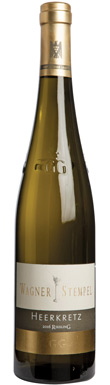
98
Established in 1845, Wagner Stempel is now well into its ninth generation of family stewardship. Current proprietor Daniel Wagner has converted the vineyards to organic production, and has lowered yields. Half of the Heerkretz vineyard, overlooking the village of Siefersheim, is planted to Riesling, ripening up to two weeks later than its neighbours. This wine is fermented in stainless steel before maturing in medium and large German oak barrels. Gearoid Devaney MS: Fresh and open, with plenty of concentrated lime zest and green apple on the palate, balanced by bright acid and leading to a mineral finish. Anne Krebiehl MW: This is a very subtle wine, only slowly revealing its depth of citrus fruit. Gentle, delicate and long, demonstrating seamless elegance. Sebastian Thomas: Very elegant and understated, this is gorgeously fine on the palate. The integrated, ripe acidity balances the subtle but juicy mineral character. Very long and fresh. Another sip please!
2016
Wagner StempelGrosses Gewächs
Kloster Eberbach, Marcobrunn Riesling, Grosses Gewächs, Rheingau, Germany, 2016
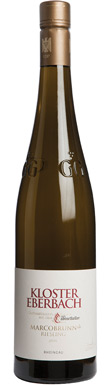
96
The monks of Kloster Eberbach have been producing wine here for almost nine centuries, and at one point in its history laid claim to being the largest wine estate in all of Germany. The Marcobrunn vineyard's existence can be traced back to the end of the 14th Century, making it one of the oldest monastic vineyards in the world. It's a south-facing site on deep calcareous clay-marl soils, farmed using organic methods. Gearoid Devaney MS: This has fresh, lively green apple, citrus and lime zest flavours. It's linear and focussed; a classic style with a long and pleasing finish. Anne Krebiehl MW: A plump fullness on the nose leads into a palate of concentrated freshness, with easy fruit and a textured mouthfeel. Sebastian Thomas: A muted nose, yet very elegant and refined in the mouth with smooth, vibrant acidity and powerful orchard fruits accompanied by notes of spice. A long, bright finish.
2016
Kloster EberbachGrosses Gewächs
Kühling-Gillot, Hipping Riesling, Grosses Gewächs, Rheinhessen, Germany, 2016
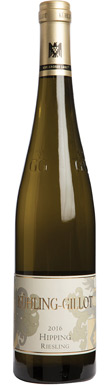
96
Although Kühling-Gillot can point to more than 200 years of winemaking heritage, it is very much at the vanguard of contemporary German winemaking. Its vineyards are located in the area of Nierstein, overlooking the Rhine, and are run using biodynamic practices. Their plot in the south-east facing Hipping vineyard is near the top of the slope, where the vines sit on bare rock composed of red slate. The hand-picked grapes are fermented using wild yeasts, then the wine is racked to 12 hectolitre barrels where it rests on its fine lees until bottling. Gearoid Devaney MS: This shows ripe, juicy fruits with great concentration. Pleasing and elegant. Anne Krebiehl MW: A touch of reduction, but underneath there's an honest purity. It's a wine that is light but expressive, slender but toned. Very lean, with a cleansing finish. Sebastian Thomas: Bright, perfumed floral and citrus flavours are accompanied by a fine dash of smoky minerality. It's fine and ripe, wearing the residual sugar well. Very understated and elegant on the long finish.
2016
Kühling-GillotGrosses Gewächs
St Antony, Hipping Riesling, Grosses Gewächs, Rheinhessen, Germany, 2016
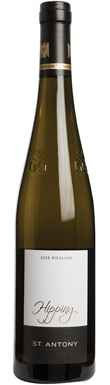
96
The limestone from the land around St Antony was once used to smelt iron, but as demand slumped following the end of the First World War, the ironworks’ owners moved into wine production instead. The Hipping vineyard plot, on the Roter Hang escarpment, is exposed to the north, bringing cooler conditions which ensure the grapes ripen slowly, helped by its proximity to the Rhine. The vines are tended following biodynamic practices, which extends to gentle, gravity-fed handling in the winery. This Riesling was fermented in a 100-year-old barrel. Gearoid Devaney MS: Bright and open, this has lots of ripe apple and pear on the nose. It' more citrussy on the palate, with well-balanced acidity and alcohol. Elegant and harmonious, with a long finish. Anne Krebiehl MW: Fragrant herbal notes with tangerine and lemon flavours. It's a gentle wine, not overdone. Bright and fresh. Sebastian Thomas: Very spicy, with some herbal notes. It shows lovely balance and ripeness, with very well integrated ripe acidity leading to a long, juicy finish. Fine and elegant.
2016
St AntonyGrosses Gewächs
Geheimer Rat Dr von Bassermann-Jordan, Jesuitengarten Riesling, Grosses Gewächs, Pfalz, Germany, 2016
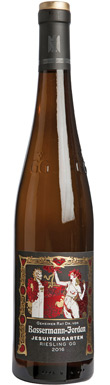
95
The Jesuitengarten vineyard, previously owned by a Jesuit monastery, was acquired by the Jordan family in 1793. It is one of the top sites in Pfalz, boasting soil which is absolutely crammed with minerals. The grapes are hand-harvested in several 'tries', and the must is given time to settle naturally. Wild yeasts trigger fermentation, after which the wine matures on its lees, undergoing regular battonage. Gearoid Devaney MS: Fresh and floral, the palate has sweet fruit flavours of peach and ripe pear, with good acid and texture. It's harmonious and complex, with a long finish. Anne Krebiehl MW: There's a slightly tropical overtone, with tons of lemon at the core. It's taut and clean, with some texture and a hint of creamy richness. Austere, but so promising. Sebastian Thomas: Very pure, juicy and fine. There is bright acidity alongside smooth, ripe citrus and tropical fruit, and a long, mineral-driven finish. Plenty of power and elegance, with lots of energy.
2016
Geheimer Rat Dr von Bassermann-JordanGrosses Gewächs
Joh. Bapt. Schäfer, Pittermännchen Riesling, Grosses Gewächs, Nahe, Germany, 2016
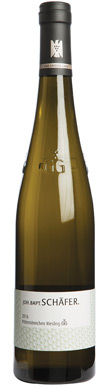
95
Established in 1900, this winery is now run by fourth-generation winemaker Sebastian Schäfer, who oversees 8ha of vineyards. The Pittermännchen vineyard is on slatey, loamy soil with a high clay content. The hand-picked grapes are macerated for 14 hours prior to spontaneous fermentation, then the wine is matured in 12 hectolitre barrels on its lees until the end of April. Gearoid Devaney MS: Flavours of green apple and lime are defined by energetic, refreshing acidity and a linear finish. Very harmonious. Anne Krebiehl MW: Gorgeous freshness and tempered balance, with lovely texture. Underneath, the fruit has a pristine apple juiciness. A highly drinkable wine - long, zesty and moreish. Sebastian Thomas: Very perfumed and floral, with a fine, understated palate of pure, bright acidity, finely textured minerality, and a long finish.
2016
Joh. Bapt. SchäferGrosses Gewächs
Kruger-Rumpf, Im Pitterberg Riesling, Grosses Gewächs, Nahe, Germany, 2016
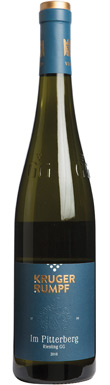
95
The Kruger-Rumpf family have been in the winemaking business since the end of the 18th century, although it wasn’t until 1984 that they took a major step forward when Stefan Rumpf began to produce his own estate wines instead of selling his crop on. Today, his sons Georg and Philipp run the property. Pitterberg is a steep, south-facing vineyard on slate soils, and at 5.5ha represents the estate’s largest plot of land. The vines here were planted in the 1940s and 1960s, and are tended following sustainable methods. Gearoid Devaney MS: Clean and fresh, showing lots of lime and Granny Smith apple flavours. There's a refreshing acidity and an intense, stony minerality. Long and complex. Anne Krebiehl MW: Gentle apple notes with some reduction lead into a vivid, textured palate of citrus fruit. Taut and pristine, it has a lasting freshness and purity that makes you really want to drink this. Sebastian Thomas: Bright, elegant and vibrant on the nose, with a smooth, elegant palate with some weight to it, balanced by good energy and brightness. Fresh and pure on the long finish.
2016
Kruger-RumpfGrosses Gewächs
