
Enjoying mature Bordeaux: top tips and the best old vintages
Tasting wines from decades – and even centuries – gone by can be a magical experience, and there’s a treasure trove of legendary vintages out there. You just need to know what you’re looking for, and where to find it.

How old is old? The concept of ‘mature’ wine is a slippery one. My stock answer has long been, ‘wine is mature when it is older than I am’.
Born in 1963, I have the 1961 Bordeaux wines firmly in my sights, and I have often found them celestial. The appeal of this magical, legendary vintage in Bordeaux has always been self-evident to me, but the fact that not everyone loves mature wine prompts me to reflect. When is a bottle of wine really ‘ready to drink’?
Scroll down to see a selection of mature Bordeaux wines chosen by Charles Curtis MW
Many wine lovers enjoy young wine the most. I love it too – tonight’s Bordeaux is a 2016 from the Right Bank. Still, I have always felt that there should be something more. Although some will argue that the first duty of a wine is to have fruit, I have often loved – extravagantly – wines with no discernible fruit at all (if by ‘fruit’ one means ‘primary’ aromas coming from the grapes).
Secondary aromas are those from the winemaking process (such as barrel-ageing), and tertiary aromas come from bottle age. Sometimes I want all tertiary, all the time. These are evocative aromas: cedar and gunflint, earth and truffle, salty, savoury and gamey notes. Dried flowers, dried fruits and a suggestion of soy sauce can all appear – complex, deep, resonant aromas.

My first exposure to this sort of wine was at pre-auction tastings during the late 1990s, attending some of the early sales in New York as a buyer. Auction houses have long asked their consignors for samples. It was possible, 25 years ago, to attend a walk-around tasting of 20 or 30 of the wines to be sold. I bought wine at auction – some great, some less good, but the positive experiences outweighed the negative ones.
Eventually, I came to work as head of the wine department for Christie’s, first in New York and then in Hong Kong. Occasionally, we organised special events such as the retrospective of the 1961 vintage we staged at the great three-star Michelin Chinese restaurant Lung King Heen in Hong Kong. The wines were sourced for us from private collections by Linden Wilkie, who founded The Fine Wine Experience (now based in Hong Kong) out of his love for old wine.
Wilkie notes: ‘The key to sourcing old bottles is provenance… Don’t be put off by dirty bottles and badly damaged labels; they’re often a good sign of long storage in a traditional damp cellar – the main source of really old bottles. The starting point is to find a merchant or auction house that you can trust. When the provenance of a collection is really top-notch, they will usually make a fuss about it. Prices may be higher as a result, but [one should] focus on these collections.’
Close examination

Sourcing bottles from private collections or buying at auction is no guarantee of quality. It is necessary to scrutinise the wines yourself – look for a high fill, a solid cork, good colour and clarity of the liquid, and good provenance. One may occasionally be disappointed, but the risk is a part of the chase that one must accept and attempt to minimise. The only way to eliminate it (or very nearly so) is to buy wine that has been released directly from the cellars of a château. Christie’s Hong Kong organised a series of tastings of wines straight from Château Latour that included the 1863, 1897, 1929, and 1945 vintages, and many more, much to my delight.
Sometimes, one doesn’t want to wait for this type of wine to come up for sale. When you are overcome by impatience, the best solution can often be to visit a restaurant with a proper wine list and plunder it. Stocks dwindle over time, but there are still restaurants with treasures lurking on their wine list.
One of these is Bern’s Steak House in Tampa, Florida. The restaurant claims to have more than half a million bottles in inventory, many purchased by founder Bern Laxer in the 1970s and 1980s on the advice of consultant Harry Waugh.
Another revered restaurant source for top bottles of incredible lineage is the one-star Michelin Le Chat-Botté at the Beau Rivage in Geneva, a hotel established in 1865. Touring the wine cellar, one can see where the sommeliers of previous generations would bottle from cask the wines bought directly from the châteaux. Many of the wines we tasted are still on its list, including Châteaux Margaux 1928, Haut-Brion 1929, Lafite, Latour and (for the budget-conscious) Léoville Las Cases 1945. Perhaps the most lustrous ‘unicorn’ is Château Cheval Blanc 1947, listed at CHF8,500 (£6,900). Expensive, but for a certain clientele, irreplaceable.
One of the world’s greatest wine lists is at the Palais Coburg in Vienna, where some 60,000 bottles are housed across six cellars. The collections at all these three restaurants will satisfy lovers of mature claret. At least as important as where to source is what to source. My advice is to stick with what are considered to be the best vintages, and it is useful at this stage to have a guide.
Among the most unerring is Michael Broadbent’s Vintage Wine, which, with its one- to five-star ratings of the vintages, remains a classic. For a little more vintage commentary, Edmund Penning-Rowsell’s The Wines of Bordeaux is invaluable.
Here are 10 mature Bordeaux vintages to seek out…
1961
This was, along with 1945, one of the shortest vintages of the century, the yield reduced by hail (accounting for its concentration). Although it was warm and reasonably dry, the year’s best wines lack the hard tannins of the 1945s. A severe frost further disrupted the initial growth in May, and the summer was dry but cool for the most part, with heat at the end of August to concentrate the wines.
1959
A scorching year, 1959 produced wines that are super-ripe and low in acidity but have lasted well. The growing conditions led to wines of concentration and length. All the first growths save Château Margaux made extraordinary wine. A recent tasting of Pontet-Canet revealed a delicious wine that was still very youthful among the lesser growths.
1955
This is generally considered a strong vintage throughout Bordeaux, offering ripe, lush wines with reasonably soft acidity. Part of the reason is that this was a fairly large vintage, with rain just before harvest plumping the grapes without diluting flavours. It is also the last vintage on the Right Bank before the devastating frosts that killed so many vines in 1956. The wine of the vintage is Château La Mission Haut-Brion, which continues to set records at auction.
1953
Although the year didn’t begin very auspiciously, 1953 is a legendary vintage at many properties. Spring and early summer were cool and somewhat wet, but the weather was perfect in August, and the fine conditions remained through the harvest, which did not begin until October. The wines present a lovely, elegant balance and plenty of sweet fruit.
1949
Along with 1947, 1949 was one of the hottest years of the 20th century, with brilliant sunshine all summer. Fortunately, the year didn’t lack a spot of rain late in the season to refresh the vines – an essential characteristic of a good year. Château Mouton Rothschild is seen as the wine of the vintage, along with La Mission Haut-Brion.
1947
Another scorching year. The fruit contained so much sugar that some properties had difficulty fermenting all of it, and there were several cases of stuck fermentation and volatile acidity. Today, the year is known for the great wines of the Right Bank: Châteaux Cheval Blanc, Petrus and Latour à Pomerol. On the Left Bank, Mouton Rothschild and Margaux led the pack.
1945
As in 1961, the size of the harvest in 1945 was reduced by frost in May. Unlike 1961, however, the growing season was very hot and dry, giving wines with tannin and body comparable to 1928. However, the best of the wines are still youthful, vibrant and lovely today.
1934
The 1930s was a poor decade for Bordeaux wine, and the Great Depression didn’t help matters. Given the economy, 1934 was a much larger vintage than anyone needed. The crop, however, was of good quality, and top producers made very fine wine. The year was a drought year, saved by rain at the end. The drought stress produced thick skins and firm tannins that will stand the test of time.
1929
Many regard this as one of the vintages of the century, along with 1961. The yield was high, yet the fruit shows exceptional ripeness. The wines have always been supple and sweet, and the aromas are more exotic and floral than the smoky, meaty 1928s. Châteaux Latour and Mouton Rothschild are the wines of the vintage.
1928
Another legendary ‘hot’ year, with a small amount of rain falling just at the end to finish the ripening cycle. The harvest, however, took place under good conditions, beginning on 25 September. The extreme conditions produced, in some cases, tough tannins that hopefully are resolving now. The sulphurous heat has led many to comment on a distinctly smoky taste in the wine.
A taste of decades past: Curtis on the delights of mature Bordeaux wines
Caveat emptor: bottles of these old vintages may be found via merchants or auctions, but check condition carefully if purchasing
Related articles
- Bordeaux 2012: The top-rated wines tasted 10 years on
- Bordeaux 2021 wines: Our en primeur verdict
- Stephen Brook: ‘It is astonishing how rapidly changes can take place in the Bordeaux region’
Château Haut-Brion, Pessac-Léognan, 1er Cru Classé, Bordeaux, France, 1961
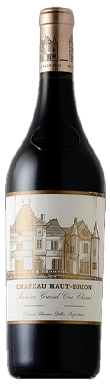

A recent bottle of 1961 Haut-Brion sourced from a private cellar at a dinner hosted by Christie's confirmed the status of the wine as one...
1961
Château Haut-BrionPessac-Léognan

Château Lafite Rothschild, Pauillac, 1er Cru Classé, Bordeaux, France, 1961
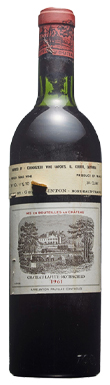
A bottle of 1961 Lafite from a collector's cellar was an absolute delight over the holidays. It was one of the best bottles of mature...
1961
Château Lafite RothschildPauillac
Château Palmer, Margaux, 3ème Cru Classé, Bordeaux, France, 1961
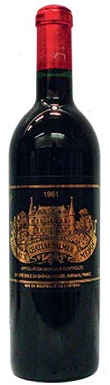
The 1961 Palmer showed spectacularly well at our recent horizontal of the 1961 vintage. The wine was almost impossibly youthful, with plenty of blackcurrant fruit...
1961
Château PalmerMargaux
Château Gruaud-Larose, St-Julien, 2ème Cru Classé, Bordeaux, France, 1961
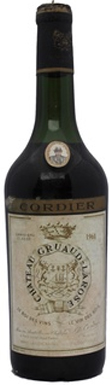
The 1961 Gruaud Larose was still fresh and bright, with a surprisingly fresh redcurrant fruit character alongside the developed mature notes of tobacco, truffle, smoke...
1961
Château Gruaud-LaroseSt-Julien
Château Cheval Blanc, St-Émilion, Grand Cru Classé, Bordeaux, France, 1955
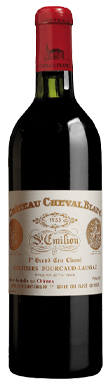
A bottle of 1955 Cheval from the Palais Coburg cellar was truly magnificent, one of the best wines of the decade, and better than a...
1955
Château Cheval BlancSt-Émilion
Château Ausone, St-Émilion, Grand Cru Classé, Bordeaux, France, 1955
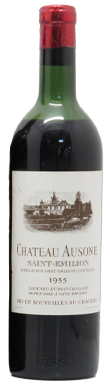
Ausone from the 1950s does not have the strongest reputation in the wine trade. However, 1955 is a good year, and Ausone has a great...
1955
Château AusoneSt-Émilion
Château Latour, Pauillac, 1er Cru Classé, Bordeaux, France, 1949
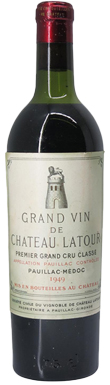
A bottle of 1949 Latour direct from the château enjoyed at The Eight in Macau was stunning. The colour was still a deep garnet, and...
1949
Château LatourPauillac
Château Mouton Rothschild, Pauillac, 1er Cru Classé, Bordeaux, France, 1947
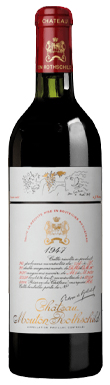
A 1947 Mouton was a wonderful treat from the wine list at the Beau Rivage in Geneva. It seemed a bit musty at first examination,...
1947
Château Mouton RothschildPauillac
Château La Mission Haut-Brion, Pessac-Léognan, Cru Classé de Graves, Bordeaux, France, 1929
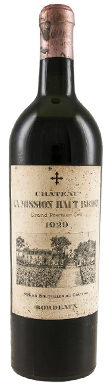
The 1929 La Mission Haut-Brion was a wonderful and moving experience, with a nose of extraordinary clarity, depth and concentration, showing notes of plum, fig...
1929
Château La Mission Haut-BrionPessac-Léognan
Château Pontet-Canet, Pauillac, 5ème Cru Classé, Bordeaux, France, 1919
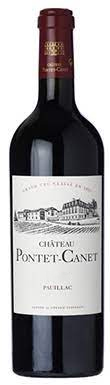
The sommelier warned us that this might be over the hill, and we were delighted to find that he was utterly wrong! The colour was...
1919
Château Pontet-CanetPauillac