
Etna Bianco Superiore: Sicily’s volcanic grand cru
Decanter's DWWA regional chair for south Italy discusses the factors that make the tiny denomination of Etna Superiore Sicily's de facto ‘grand cru’.


On the eastern slope of Etna lies the town of Milo, a small village with the exclusive right to produce wine labelled ‘Etna Bianco Superiore DOC’.
Approaching by car from the south or north, you might be struck by the sudden disappearance of the sun and the descent of mists, or by the dustpans and brushes that the residents keep on their balconies to sweep up volcanic ash.
The power of Etna feels closer and more present in high-elevation Milo than anywhere else, and it’s here that the mountain’s most thrilling wines – of any colour – are made.
Jason’s pick of the best Etna Bianco Superiore below
Etna’s greatest grape
The vineyard terraces that characterise the Milo zone rise like verdant ziggurats, broad and planted almost entirely with Carricante, a contrast to the more varied slopes of the south or the basalt-hemmed vineyards of the north.
Carricante is a high yielding grape – its name stems from the Italian word for ‘to carry’, or ‘to load’, a reference to its ability to bear many bunches. As a result, it benefits from the natural restriction of bush vine viticulture, dry farming and strict pruning.
Etna is now famous for its reds, but the modern quality revolution arguably began with white wine and, above all, Benanti’s Pietra Marina, first made in the 1990 vintage.
As Salvino Benanti points out, his family were among the first to focus on Etna DOC wines, convinced that the native grapes could achieve world-class stature.
‘Carricante is the most ageworthy grape of Mount Etna,’ he says. ‘We regularly drink our Bianco Superiore from the late 1990s and early 2000s and they still show beautifully.’
Importantly, Etna Bianco Superiore from Milo demands at least 80% of the ageworthy Carricante, while the broader Etna Bianco DOC allows as little as 60%. In practice, most Superiore wines are 90-100% Carricante, which makes for more stylistically consistent and ageworthy wines than the larger and more flexible Etna Bianco.
Etna Bianco DOC now regularly produces over 14,000 hectolitres annually, but Etna Bianco Superiore DOC, with less than 1% of Etna’s total output, averaged just 1,200hl in 2023–24.
To put it into context, that’s around a quarter of the production of Chablis Grand Cru.
A unique microclimate

Milo’s vineyards are some of the volcano’s highest and coolest, but altitude is only part of the story. The village also has a wetter microclimate, with the highest rainfall of all Etna’s vineyards.
‘Milo is always under the rain, we always have clouds,’ says Gea Cali of Maugeri, a small family winery renovated in 2011.
Soils here are geologically young and unusually varied, formed by relatively recent lava flows.
‘This side of the volcano was shaped by an ancient landslide triggered by volcanic activity, which caused various stratifications of terrain to be mixed and carried down the east-facing slope towards the sea. The result is soils with extraordinarily high mineral content compared with the other slopes of the volcano,’ says Fabio Torrisi of Barone di Villagrande, explaining the formation of the Valle del Bove.
The microclimate of the Valle del Bove is crucial. Milo is directly exposed to the east, and although the clash of the cold northerly and warm Mediterranean winds creates significant humidity, there is also a constant breeze coming up from the sea. ‘Fifteen minutes after the rain has fallen, the winds dry everything up,’ Cali points out.
Shaping the wines
Harvests come late in Milo, around the middle of October, and the long ripening period means that the Etna Superiore wines often display a remarkably complete combination of flavour and acidity at relatively low alcohols.
Diurnal ranges of up to 20°C slow down ripening, producing complex flavours in the grapes with high acidity and low pH.
It is Carricante’s thrilling acidity that defines the Superiore wines of Etna’s east slope. It surges through the heart of the wines, present yet subtle, a virtuoso first violinist in an orchestra of flavours. Like the finest silk it is delicate but strong, and after the first attack it can seem to vanish for a moment – only to emerge again on the finish.
Winemaking approaches vary. Traditionalists such as Benanti use long lees ageing, no oak and extended bottle maturation, while newer producers like Maugeri keep the long lees contact but incorporate large-format oak for breadth, and shorter bottle ageing before release.
Growing pains
Milo’s reputation for exceptional wines has brought challenges, however. There are around 43 growers and 25 producers of Etna Bianco Superiore, but only six or seven of those are based in Milo and truly specialise in Carricante.
And the zone’s 56 delimited hectares have now been fully planted, leaving little room to expand production. Local producers are now discussing a dedicated association to safeguard Etna Bianco Superiore’s integrity, with some expressing concerns about the typicity of wines vinified by north-slope producers with no more than a commercial connection to the area.
Yet whatever the politics of Milo, the wines are magnificent; as distinctive as top Chablis, as precise as fine German Riesling, and yet with a flavour profile quite distinct from either. There is no better way to taste all of the danger, potential and beauty of this volcano.
Six wines to discover from Sicily’s volcanic ‘grand cru’
Italy newsletter: Sign up today
Get the best recommendations, vintage analysis, regional and cultural insights and more delivered to your inbox once a month, helping you to stay up-to-date with the latest in Italian wine.

Related articles
- What’s hot on Sicily? Our editor’s 2025 guide
- From the volcano’s edge: Eight smoking hot wines from Etna picked by our expert
- Savour Sicily: The essential food and wine pairings you must try
Barone Di Villagrande, Contrada Villagrande, Etna, Superiore, Sicily, Italy, 2021
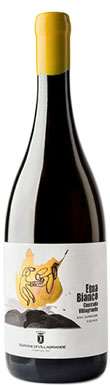

The Nicolosi family founded this estate in 1727 and were central in establishing the shape of the Etna DOC. From their base in Milo, they...
2021
Barone Di VillagrandeEtna

Benanti, Pietra Marina, Etna, Superiore, Sicily, Italy, 2020
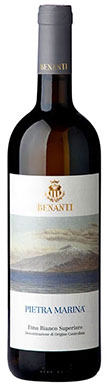
A beautifully layered nose delivers lanolin, beeswax, flower pollen, green olive, poached pear, camomile and ripe Amalfi lemon, leading into a taut, firmly structured palate....
2020
BenantiEtna
Maugeri, Contrada Volpare Frontebosco, Etna, Superiore, Sicily, Italy, 2024
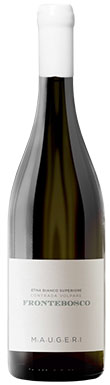
The Maugeri family’s story is interesting. They have owned land here for decades but by the 1980s the vineyards and terraces had fallen into disrepair....
2024
MaugeriEtna
I Vigneri, Aurora, Etna, Sicily, Italy, 2024
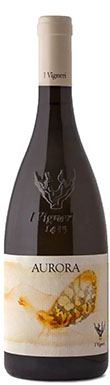
First made in 2013 from an abandoned vineyard that has been slowly replanted, Aurora is a characteristically uncompromising Etna Bianco from Salvo Foti, the winemaker...
2024
I VigneriEtna
I Custodi Delle Vigne Dell'Etna, Imbris, Etna, Superiore, Sicily, Italy, 2018
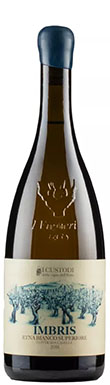
From fruit grown at 800m elevation in Contrada Caselle, this is a lean, pungent and idiosyncratic Etna Bianco Superiore that has developed considerable character with...
2018
I Custodi Delle Vigne Dell'EtnaEtna
Tenute dei Ciclopi, Etna, Superiore, Sicily, Italy, 2023
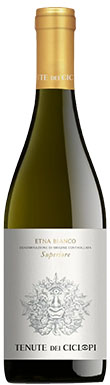
Firm, bright and taut on the nose with aromas of pear, lemon rind and tart green apple, this is a quintessential Etna Bianco Superiore with...
2023
Tenute dei CiclopiEtna
Barone Di Villagrande, Contrada Villagrande, Etna, Superiore, Sicily, Italy, 2021
The Nicolosi family founded this estate in 1727 and were central in establishing the shape of the Etna DOC. From their base in Milo, they...
2021
Barone Di VillagrandeEtna
Benanti, Pietra Marina, Etna, Superiore, Sicily, Italy, 2020
A beautifully layered nose delivers lanolin, beeswax, flower pollen, green olive, poached pear, camomile and ripe Amalfi lemon, leading into a taut, firmly structured palate....
2020
BenantiEtna
Maugeri, Contrada Volpare Frontebosco, Etna, Superiore, Sicily, Italy, 2024
The Maugeri family’s story is interesting. They have owned land here for decades but by the 1980s the vineyards and terraces had fallen into disrepair....
2024
MaugeriEtna
I Vigneri, Aurora, Etna, Sicily, Italy, 2024
First made in 2013 from an abandoned vineyard that has been slowly replanted, Aurora is a characteristically uncompromising Etna Bianco from Salvo Foti, the winemaker...
2024
I VigneriEtna
I Custodi Delle Vigne Dell'Etna, Imbris, Etna, Superiore, Sicily, Italy, 2018
From fruit grown at 800m elevation in Contrada Caselle, this is a lean, pungent and idiosyncratic Etna Bianco Superiore that has developed considerable character with...
2018
I Custodi Delle Vigne Dell'EtnaEtna
Tenute dei Ciclopi, Etna, Superiore, Sicily, Italy, 2023
Firm, bright and taut on the nose with aromas of pear, lemon rind and tart green apple, this is a quintessential Etna Bianco Superiore with...
2023
Tenute dei CiclopiEtna
