Eva Fricke: Producer profile and latest releases tasted
Founded in 2011, Eva Fricke has become synonymous with ‘a new Rheinghau’. Decanter's Ines Salpico talks to this German maverick and tastes six of her wines.


Pioneers are easily celebrated for exploring unknown territories. On the other hand, those who challenge the status quo of familiar landscapes and call for a reinterpretation of classics can find it difficult to carve a space for themselves.
The latter does not apply to Eva Fricke. Although a winemaker in one of Germany’s most classical regions, she has carved a space of her own on the global wine scene in just a few years.
Scroll down to see tasting notes and scores for six Eva Fricke wines tasted
Her eponymous estate, founded in 2011, has become synonymous with ‘a new Rheinghau’, its reputation first built upon international recognition against the backdrop of some domestic scepticism.
Fricke epitomises, both as winemaker and individual, what it means to bring a fresh approach to a well-established region, home of icons such as Schloss Vollrads and Schloss Johannisberg.

The journey
‘For a long time, even when presenting my own wines, people referred to me as “Eva from Leitz”.’ Fricke is referring to her previous position as winemaker at Weingut Leitz. It is another renowned Rheingau estate, where she honed her craft.
While at Leitz she started experimenting in her spare time, making wines from a mere 0.27ha. The process made it apparent that there was potential for much more than a side gig and for Fricke to pursue her own approach. ‘I always wanted to work organic, more handcrafted and small,’ she says.
Her limited resources opened the path for her international success. With little time to develop sales channels and very little wine to sell, she allocated all her production to three international importers (in Norway, the UK and the US) and one German retailer.
The wines quickly started turning heads.
‘Internationalisation was more a matter of necessity rather than a business plan,’ Fricke says. ‘At some point, I looked at the numbers and understood that this project could be the basis of my future, founded on principles I had very clear in my mind; Riesling from slate; minerality, elegance, organic farming.’
Weingut Eva Fricke is now a 13-strong team, with 77ha of vineyards, including parcels in the Krone and Schlossberg ‘crus’, under a long-term lease. All are farmed organically but not all her wines yet have the organic stamp. Some plots are still transitioning from the conventional practices of previous leaseholders.

‘A new Rheinghau’
Eva Fricke’s journey has been one of self-discovery and reckoning with unexpected success. Her 2019 Lorcher Krone Trockenbeerenauslese became the first Rheingau wine to be awarded 100 points by Robert Parker’s Wine Advocate.
This in turn fueled unprecedented demand and prompted her UK importer, Berry Bros & Rudd, to suggest the wines be auctioned at Sotheby’s. This made her one of the youngest winemakers to go under the hammer.
How has the unassuming maverick processed these achievements? One harvest at a time.
‘I always thought these were things that only happened to the big classical domaines. We knew it was a special vintage but never imagined we would get 100 points. When the ratings came out the staff asked me “What will we do now?!”. I told them we do nothing differently. We keep making the best out of what we get each year.’
Challenging the norms
2019 was the first vintage Fricke released noble sweet wines. Like other producers of her generation, Fricke only uses Prädikat levels for her Beerenauslese (BA) and Trockenbeerenauslese (TBA) bottlings.
The wines that would fall under the Kabinett, Spätlese and Auslese categories are simply labelled as Qualitätswein.
‘I believe this way it becomes much clearer that the focus is on terroir expression. The focus is on the vineyards, and only the vineyards determine the style,’ says Fricke.
This long-standing discussion, among German producers, around the relevance of a quality classification based on must weight at harvest (the basis of the Prädikat system) rather than the origin (as per the Burgundy model), has direct implications on Fricke’s work.
‘I want to keep my labels and my wines clear and very easy to understand. The assessment of the wines has to be based on the quality of the land and the character of the vintage. The goal I’ve set for my team is to create a clear picture of Rheingau with its different soil profiles, microclimates and vines of different ages.’
What is Eva Fricke’s wine style?
Her wines and style are not, admittedly, about experimentation or challenging classicism. If anything, they strip unnecessary fat from the classic styles to rediscover the character of each vineyard and of the Rheingau region as a whole.
The linearity – and lineage – of Fricke’s style is determined by how vintage and plot shape the final result, willingly ceding to more or less structure, more or less aromatics.
There’s energy and pulse but also a sense of ease; the wines have precision but have not been forced into a structural framework. This gives them approachability, even if they have great potential to age.
It’s impossible not to think of the wines as highly expressive of Fricke’s own personality. They are restrained yet assertive; softly-spoken but extremely clear.
Of the 2020 vintage, which has now been released, she says that, following three years of extreme heat, there was an easy balance to the plants and, ultimately, the wines.
‘It is a vintage with great ageing potential that will truly start to show all its character in two to three years,’ she says.
The high mineral extract is coupled with textural complexity and a sense of calm vibrancy. They are indeed very ‘Eva Fricke’.
Eva Fricke recent releases – tasting notes and scores:
Related content:
100-point German wine from maverick producer Eva Fricke auctioned at Sotheby’s
Schloss Gobelsburg: Tasting five decades of Heiligenstein Riesling
German Grosses Gewächs 2021 releases: the top wines
Eva Fricke, Riesling, Rheingau, Germany, 2020
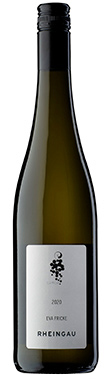

Nothing ‘entry-level’ about Eva Fricke’s regional blend, from plots in Kiedrich, Lorch, Hattenheim and Eltville. Mineral extract balances the suppleness of fruit. Generous aromas of peach, yellow apple and preserved lemons are supported by precise, nervy acidity. It widens in the glass, revealing a breadth equal to its vertical minerality.
2020
Eva Fricke

Eva Fricke, Kiedrich Riesling, Kiedrich, Rheingau, Germany, 2020
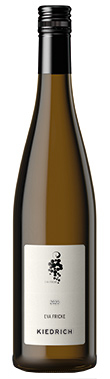
A village blend from rich sandy loess and clay soils, with good drainage, on south-facing plots, that lend warmth and complexity to the fruit. This is offset by the freshness brought by the wide diurnal temperature range. Bright, ripe citrus - mandarin, kumquat - makes this an approachable wine, with soft texture and fragrant finish. A juicy, solar, benchmark Rheingau Riesling.
2020
Eva FrickeKiedrich
Eva Fricke, Mélange Riesling, Rheingau, Germany, 2020
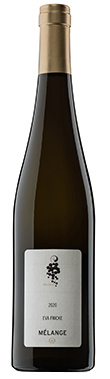
A blend from old vines grown around Eltville. A rich, muscular Riesling with a crystalline, mineral finish. There’s an incredible inner tension, with the opulence of fruit perfectly balanced by razor-sharp focus. Pear, peach and lemon, with a nutty lining of fresh almonds.
2020
Eva Fricke
Eva Fricke, Lorch Riesling, Lorch, Rheingau, Germany, 2020
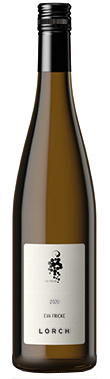
This is another village blend from the southwest Lorch vineyards, some of which have up to 44% incline. The slate and quartzite soils shape this wine’s fundamental characteristic: a delicious, intense salinity. There’s austerity but also luscious crunchy orchard fruit - yellow apple, apple peel. 11 months on the lees have lent it a gentle creaminess that only helps bring out the intense minerality.
2020
Eva FrickeLorch
Eva Fricke, Lorcher Krone Riesling, Lorch, Rheingau, Germany, 2020
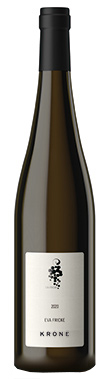
A wine that needs time in the glass to reveal all its layered complexity. Aromas of pear and quince are followed by royal gala apple, frangipane and toasted almonds. The distinct chalky salinity is textural, firm and altogether delicious. Limey zestiness driving the long finish.
2020
Eva FrickeLorch
Eva Fricke, Lorcher Schlossberg Riesling, Lorch, Rheingau, Germany, 2020
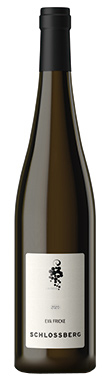
From the old, and much prized, Schlossberg parcel in Lorch planted in the 1950s. The quartzite soils might explain the transparent salinity of this wine, reminiscent of oyster shells and seawater. A perfect example of the golden trio of acidity, minerality, and sugar, honed to perfect balance. The 23 g/l residual sugar is barely perceptible, rather giving poise to the firm backbone.
2020
Eva FrickeLorch
