
Exploring Monferrato plus six wines worth seeking out
Boasting a huge number of different, variety-focused denominations, Monferrato’s wines celebrate the region’s many indigenous grapes – including, but not limited to, Barbera.


The wine region of Monferrato expands across the provinces of Asti and Alessandria in southern Piedmont. It lies to the east of Cuneo, where Barolo and Barbaresco are located. But before heading directly to those hallowed hills, it’s worth stopping in Monferrato to explore its wines.
Monferrato embraces a dizzying number of overlapping denominations and is home to many of Italy’s fascinating native varieties.
Scroll down to see tasting notes and scores for six top Monferrato red wines
Leading the way is Barbera. Widely spread throughout Italy, Barbera is thought to have its origins in Monferrato – and the region certainly boasts some of its finest specimens. This sunloving grape is given plenty of opportunity to shine as it typically occupies the best sites, whereas in neighbouring Langhe these are reserved for Nebbiolo.
Barbera produces deeply hued wines with a signature red cherry flavour. Mouthwatering acidity is this grape’s calling card, yet Barbera is conversely discreet in tannins. Its most ambitious versions come from low-yielding vines and are concentrated. Ageing vessels provide palpable differences in style: stainless steel emphasises youthful, vivacious fruit, whereas oak ageing may be used to build up mid-palate weight, soften acidity and lend wood tannins. Depending on size, percentage of new wood and toast levels, oak barrels add notes ranging from subtle spice and toast to overt chocolate and vanilla.
Monferrato’s various Barbera denominations reflect this diversity. The intersecting regions of Barbera d’Asti DOCG and Barbera del Monferrato DOC account for much of the area’s Barbera bottlings. Wines labelled as such are generally fresh, unoaked examples, and more than one third of the latter are made frizzante or lightly sparkling. The Superiore category of both Barbera d’Asti and Barbera del Monferrato requires a minimum of six months in barrel, so these will have varying degrees of wood influence
Nestled within Asti, Nizza was once a sub-zone but was promoted to a DOCG in its own right in 2014. With strict production regulations demanding Barbera in purezza at low maximum yields, Nizza favours high-quality production. Wines are uniform in style in that they always include oak ageing of at least six months (12 for Riserva). Yet even in the contained area of Nizza, there are differences – soils are described as clay-sandy marl of marine origin, but the terrain is varied. In the north, sandier soil is said to give lighter, racier, more immediate wines. In the south, a greater presence of marl and sandstone is associated with denser, more powerful Barbera. Subtle distinctions, nonetheless, can be obscured by winemaking.
Nizza is, without a doubt, a laudable source of complex and concentrated Barbera, and I have enjoyed many extraordinary bottles. The caveat is that they often come with heady alcohol, sometimes even upwards of 16%. ‘High alcohol in Barbera can be a problem,’ admits Andrea Faccio at Villa Giada. He relates the challenge to climate change and points to less drastic green harvesting as one approach to mitigating rising sugar levels.
Monferrato: four producers to know
Accornero Besides outstanding Barbera and convincing Nebbiolo, Accornero crafts serious Grignolino.
Michele Chiarlo Despite having one foot in the Langhe, this top Barbera producer is firmly rooted in Monferrato.
Olim Bauda From Barbera d’Asti to Nizza Riserva, wines are deftly balanced and polished. Its Grignolino and Freisa are also highly recommended.
Scarpa A great name for beautifully aged Barbera. Scarpa’s Rouchet (Ruchè) is also a standout.
Lesser known grapes
While Barbera reigns in Monferrato, it graciously leaves space for a host of red cohorts. Dolcetto is widely planted, with four variety-focused denominations – Dolcetto d’Asti, Dolcetto d’Acqui, Dolcetto di Ovada and Dolcetto di Ovada Superiore.
However, lesser-known grapes Freisa and Grignolino are intrinsic to Monferrato’s identity and responsible for the region’s repute. ‘Freisa is a direct offspring of Nebbiolo,’ says renowned grape geneticist Dr Anna Schneider. Assertive in both tannins and acidity, it tends to be more rustic than Nebbiolo. Asti’s sandy soil accentuates its aromas, which can be redolent of strawberry – as the name freisa suggests.
A distant relative of Nebbiolo, Grignolino was once as highly thought of as its famous ancestor. Alas, it fell out of favour due in part to its unfashionable expression. Pale in colour, with crisp acidity and scratchy tannins, Grignolino is definitely not fruit-plump. Rather, it is thoroughly mouth-cleansing, with crunchy berries and white pepper. While most Grignolino today is vinified in stainless steel, traditional vinification methods – such as long macerations and ageing in oak casks – are being revived to make ageworthy examples.
Then there are highly local specialties, such as the exotically scented Ruchè. Mostly limited to the Ruchè di Castagnole Monferrato DOCG, it produces a fleshy, dry, aromatic red.
Monferrato has also embraced international grapes such as Cabernet Franc, Cabernet Sauvignon and Pinot Nero. The catch-all denomination of Monferrato Rosso allows any proportion of these, as well as native grapes Barbera, Bonarda, Dolcetto, Freisa, Grignolino and Nebbiolo. This makes for a mixed bag of wines under one umbrella.
Despite being considered Piedmont’s flagship grape, Nebbiolo plantings are small-scale in Monferrato. Nevertheless, it has a long history in the zone. ‘At the beginning of the 1900s, it was widely cultivated,’ says Gianni Bertolino at Olim Bauda. ‘Over time, it was replaced by more productive grapes like Barbera and Moscato.’
When the Monferrato DOC was established in the 1990s, it allowed varietal labelling for the Dolcetto and Freisa varieties – but not Nebbiolo.
Only as of the 2019 vintage has Monferrato DOC Nebbiolo been permitted (see below). Producers are pleased with this change for several reasons, not least of which is how Nebbiolo might alleviate the grave challenge of flavescence dorée. A type of grapevine yellowing, this phytoplasma disease is decimating vineyards in Monferrato. ‘Nebbiolo is more resistant than Barbera and Grignolino, so it could be a help to local viticulture,’ says Bertolino.

Beyond reds
Taking a backstage to red, Monferrato’s white wines are led by Cortese. Its best-known appellation is Gavi DOCG. The neighbouring Colli Tortonesi DOC occupies the far east of Monferrato and allows everything from Barbera and Dolcetto to Cortese; however, the recently rediscovered Timorasso is the grape that is garnering all the attention (these wines are often labelled with the historic Roman name of the region: Derthona). It thrives in pockets of light, limestone-rich clay, making structured, textural and intensely mineral white wines.
Fizz fans will appreciate Monferrato’s plethora of bubbles. Fragrant Moscato Bianco gives the sweet, lithe, frothy wines of the Moscato d’Asti DOCG as well as the fully sparkling Asti DOCG, which covers all sweetness levels. Likewise, the rare but delightful sparkling red Brachetto d’Acqui DOCG ranges from dry to charmingly sweet. Finally, the Langhe spills over into Asti at its southern point, where it is known as Langhe Astigiano. In this hilly area, the DOCG of Alta Langa proposes high-quality, traditional-method sparklers from Chardonnay and Pinot Noir.
From sweet to dry, sparkling to still – in every hue, Monferrato’s offerings are boundless. The region’s indigenous grapes provide plenty for the adventurous. And when only a satisfying glass of Barbera will do, Monferrato can’t be beaten.
Gathering pace: Monferrato DOC Nebbiolo
Prior to 2019, Nebbiolo wines in Monferrato were only entitled to the Monferrato Rosso DOC. ‘It was a handicap not being able to name the grape variety on the label,’ says Villa Giada’s Andrea Faccio. Finally approved, the new denomination stipulates a minimum of 90% Nebbiolo in two categories: Monferrato Nebbiolo must age for 12 months before release, while those labelled Monferrato Nebbiolo Superiore require at least 18 months, including six in wood. Maximum yields are 63hl/ha and 56hl/ha respectively.
To date, the inaugural 2019 vintage is the only one to have been fully declared at just 122,000 bottles, and 2020 numbers have yet to be finalised. However, the denomination is set to grow: as of October 2021, the consorzio recorded 248ha of Nebbiolo, which represents a twofold increase since the date of approval.
Despite this increase, plantings of Nebbiolo remain limited. ‘I don’t think we will see a conversion to Nebbiolo,’ asserts Ermanno Accornero, a producer in Vignale Monferrato. ‘Our territory remains principally designated for Barbera and Grignolino.’ Faccio, however, does see a potential risk of Nebbiolo being planted on unsuitable sites, especially as Nebbiolo grapes command a higher price than Barbera. ‘If it isn’t planted in the right spot, it’s hard to make even a mediocre wine. Hopefully, appropriate controls will ensure that this doesn’t occur,’ he says.
Stefano Chiarlo at Michele Chiarlo says the area around San Marzano Oliveto an Moasca in southern Asti is well suited. ‘The soil is the same Tortonian geological matrix similar to La Morra [in the Barolo region],’ he explains. In Vignale, further north, Accornero says the Nebbiolo is ‘more robust, full-bodied and structured’ than Barolo.
Nebbiolo from Monferrato is inevitably different from its Langhe brethren. Those I have so far sampled may not show the precision and finesse of Barbaresco and Barolo, but they do exhibit personality of place. Given the ageing requirements, wines labelled Monferrato Nebbiolo are only just trickling onto the market. Villa Giada’s Treponti, Accornero’s Girotondo and Il Falchetto’s Barbarossa are all worth seeking out, though pre-2019 bottlings still bear the Monferrato Rosso DOC.
Morris selects: six Monferrato red wines to explore
Related content
A guide to Chianti Classico’s new sub zones
Alto Piemonte revival plus 12 wines to try
Marchesi Incisa della Rocchetta, Sant'Emiliano, Barbera d'Alba, Superiore, Piedmont, Italy, 2017
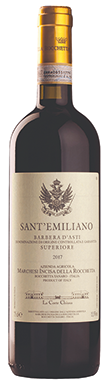

Barrique-aged Barbera from a sunny, south-facing vineyard just north of the Nizza zone. Polished toasty oak introduces - but leaves room for - pretty floral...
2017
Marchesi Incisa della RocchettaBarbera d'Alba

Coppo, Bric del Marchese, Nizza, Piedmont, Italy, 2018
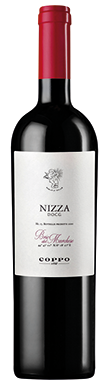
Coppo makes three Nizza bottlings to highlight the diverse areas within this denomination. Bric del Marchese is in the heart of the zone on silty...
2018
CoppoNizza
La Spinetta, Pin, Monferrato, Piedmont, Italy, 2017
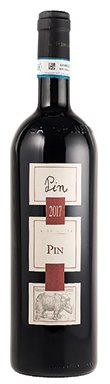
First produced in 1989, this wine is dedicated to Giorgio Rivetto’s father, who was nicknamed Pin. It starts with cedar, eucalyptus and pressed flowers. As...
2017
La SpinettaMonferrato
Olim Bauda, Isolavilla, Grignolino d'Asti, Piedmont, Italy, 2020
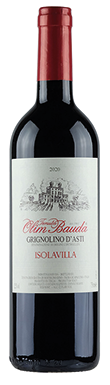
Low yielding vines pushing 70 years old are planted on light, sandy marl rich in marine fossils. Pale garnet in colour, it explodes with rose...
2020
Olim BaudaGrignolino d'Asti
La Gironda, La Gena, Barbera d'Asti, Superiore, Piedmont, Italy, 2018
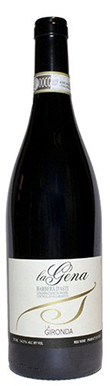
Grape growers for generations, the Galandrino family started producing wine in 2000 and La Gena was their first Barbera. This 2018 is restrained but compelling,...
2018
La GirondaBarbera d'Asti
Villa Giada, Treponti, Monferrato, Piedmont, Italy, 2016
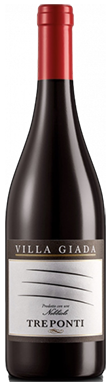
Andrea Faccio decided to plant Nebbiolo in the Nizza township of Agliano Terme in 1998 after trying his neighbour’s bottling. Surprisingly youthful for a 5+...
2016
Villa GiadaMonferrato
