
Chambertin Grand Cru has enjoyed a preeminent place in the world of fine wine for several hundred years. Dr Denis Morelot, writing in 1831, notes ‘all the wines of this slope…can be considered as holding the first rank among those of the Côte d’Or.’
Part of the credit goes to Napoleon Bonaparte, who was reputed to drink a bottle of Chambertin every day.
Travelling down the Côte d’Or from Dijon, the grands crus of Gevrey-Chambertin are the first a thirsty traveller will encounter. There are nine in total, more than in any other village of the Côte de Nuits, located in a single block south of the village.
Chambertin and Clos de Bèze form the central nucleus, surrounded by their satellites. Moving clockwise, these include Ruchottes-Chambertin, Mazis-Chambertin, Chapelle-Chambertin, Griotte-Chambertin, Mazoyères-Chambertin, Charmes-Chambertin, and Latricières-Chambertin.
Despite their proximity, each has a markedly different character, making Gevrey a fascinating place to explore.
Scroll down to see tasting notes and scores for Charles Curtis MW’s top Gevrey-Chambertin grand cru wines
The grands crus of Gevrey-Chambertin:
Chambertin 12.9ha
Chambertin-Clos de Bèze 15.4ha
Ruchottes-Chambertin 3.3ha
Mazis-Chambertin 9.1ha
Chapelle-Chambertin 5.49ha
Griotte-Chambertin 2.69ha
Mazoyères-Chambertin 18.59ha
Charmes-Chambertin 12.25ha
Latricières-Chambertin 7.35ha
Chambertin-Clos-de-Bèze – 15.4ha
Clos de Bèze is among the most venerable vineyards in Burgundy. The vineyard was donated by Duke Amalgaire to the monastery of St-Pierre de Bèze in 630 AD, and according to Dr Lavalle, an important figure in the classification of Burgundian vineyards, was already planted to vines.
The establishment of the vineyard was completed by the monks, who constructed a winery and surrounded it with walls. They remained the owners for nearly 600 years until they sold it (along with neighbouring property) in 1219 to the Cathedral of Langres.
This site lies at the centre of the slope south of the village of Gevrey, between two valleys, the Combe Lavaux and the Combe Grisard.
The Clos de Bèze is just slightly steeper than Chambertin. According to Burgundy expert Jacky Rigaux, the thin topsoil is primarily white marl near the top of the slope, while further down, the brown soils have a high calcium content and more limestone pebbles near the bottom of the slope.
Beneath this lies crinoidal limestone from the middle Jurassic (a period known as Bajocien in French).
The best wines of Clos de Bèze excel with a voluptuous sensuality, with a character that is often approachable even when young. The wines do not lack substance or structure, yet it is the approachable nature that comes to the fore.
The largest proprietor in Clos de Bèze is Pierre Damoy, with 5.3ha, which makes up one-third of the entire appellation. His youngest vines are 21 years old and the oldest are 101, split between two parcels.
He picks late and is looking for a wine that is ‘dense, with shoulders’, a style that is serious and structured. He will vinify the old vines separately in some years to make a ‘reserve’ bottling.
The next largest owner in Clos de Bèze is Rousseau, with 1.42ha in three parcels. The maceration is long here, but the extraction is very gentle, and the style is superbly elegant.
Nuits-St-Georges-based Joseph Faiveley is not far behind with 1.2ha, spread over four parcels. Three of the parcels are blended together, while a fourth parcel of old vines, known as Ouvrées Rodin, is bottled separately.
Another essential source for delicious wines in Clos de Bèze is Bruno Clair, who has nearly a hectare that stretches from the top of the slope to the bottom. Two-thirds of the vines were planted in 1912 and give a wine of great concentration.
Chambertin – 12.9ha
Chambertin is located immediately south of Clos de Bèze. Although the history is not documented as thoroughly as that of Clos de Bèze, it appears that this was also first planted in the seventh century.
By the time Clos de Bèze was sold to the Cathedral of Langres, the monks owned both vineyards. Today, wine from Clos de Bèze can be labelled as Chambertin, but the opposite is not true.
The two vineyards are similar in terms of soil composition, but the slope of Chambertin is less steep than that of Clos de Bèze, and the former is further south and thus closer to the Combe Grisard.
The combe brings cool air down from the Hautes Côtes, making Chambertin slightly cooler than Clos de Bèze. Eric Rousseau, at Domaine Armand Rousseau, is the largest owner of Chambertin vineyards, with 2.15ha spread over four parcels.
Rousseau feels that Chambertin is a cooler terroir and thus better in warmer years, while Clos de Bèze is a slightly warmer terroir and therefore preferable in cooler years. The distinction, however, is a personal matter.
His daughter Cyrielle will not come down either way, but seemed to prefer Clos de Bèze in many vintages, saying it showed best in its youth.
What is certain is that the best Chambertins shows all the elements of the Côte de Nuits – there is abundantly perfumed cherry fruit but also notes of violets and a mineral note on the nose. The palate is firm, even strict in its youth. Usually there is an impressive tannic charge, lots of substance, and remarkable persistence on the finish.
It would be impossible to leave Chambertin without talking about the Trapet family. Arthur Trapet started buying vines in Chambertin in 1920, and his son Louis and grandson Jean continued to amass property there.
By 1990, the estate owned 3.8ha of Chambertin, which was split between Jean’s son Jean-Louis and daughter Mado. Jean-Louis took over Domaine Jean Trapet, while his sister and her husband Jacques Rossignol created Rossignol-Trapet.
Both estates work biodynamically, and Jean-Louis Trapet is one of the vintners here who is going back to planting vines on stakes (en échalas) to increase the density of plantation and the concentration of the wine.
The wines of both estates are superb in quality, if very different, in their velvety richness, from the classical purity of the Rousseau wines.
The Trapet vines, now split between the two estates, occupy a large chunk of the centre of the Clos de Bèze vineyard, bordered to the north by vines belonging to Meursault-based Jacques Prieur and to the south by vines owned by Domaine Camus.
Prieur owns 0.83ha spread over four parcels, while Domaine Camus owns 1.69ha in two large parcels. The Prieur wines are well made in a traditional style, but the Domaine Camus wines sometimes fall short of the quality of the vineyard sites.

Ruchottes-Chambertin – 3.3ha
Among the satellite appellations of Chambertin, Ruchottes-Chambertin is the furthest north. It is located at the very top of the slope on soils of thin white marl directly over the limestone.
The name comes from roche, French for rock, as the exposed limestone of the Côte is never far.
Despite being only 3.3ha in size, Ruchottes-Chambertin is composed of two lieux-dits, Ruchottes du Dessus and Ruchottes du Bas.
Within the former, which is also the upper part, is Clos des Ruchottes, a monopole of 1.1ha that belongs entirely to Domaine Armand Rousseau.
Ruchottes-Chambertin in its entirety is shared between eight owners. In the past, the biggest landholder was the Thomas-Bassot estate which sold its holding to three separate buyers in a single transaction in 1976; Rousseau acquired the monopole of the Clos, Dr Georges Mugneret (Mugneret-Gibourg) acquired two-thirds of a hectare in Ruchottes du Bas, and an investor named Michel Bonnefond purchased just over half a hectare in Ruchottes du Dessus. Bonnefond’s parcel is farmed by Christophe Roumier under a metayage agreement.
All three of these wines are superb and are noted for their minerality and finesse.
In a typical Ruchottes-Chambertin there is plenty of perfume and fruit, but less power than Chambertin and less velvety lushness than Clos de Bèze.
Mazis-Chambertin – 9.1ha
Mazis-Chambertin is also located at the northern end of this collection of grands crus, just down the slope from Ruchottes-Chambertin.
The name derives from the Latin word mansus, ‘farm or country house’, according to professor Marie-Hélène Landrieu-Lussigny.
As with its neighbour, Mazis (sometimes spelled Mazy) is divided into two lieux-dits: Les Mazis-Haut and Les Mazis-Bas.
The Thomas-Collignon family were once the largest owners of Mazis-Chambertin. Their holdings were the source of the 1.75ha donation to the Hospices de Beaune, used to produce the Cuvée Madeleine Collignon.
In the past these vines had been the source for the Maison Leroy bottlings, and the family sold a parcel of Mazis-Chambertin to Lalou Bize-Leroy for the Domaine d’Auvenay.
In Mazis-Chambertin, the upper part of the vineyard is considered superior to the lower part; Dr Lavalle ranked this section higher, just as he ranked Ruchottes du Dessus above Ruchottes du Bas. The Thomas-Collignon holdings were located in Mazis-Haut.
Faiveley also owns a parcel of 1.56ha located in Mazis-Haut. Most of this part of the vineyard borders Clos de Bèze on the north side and is surrounded by grands crus.
A small bit of Mazis-Bas is just downslope from the lower part of Clos de Bèze, and it borders the premier cru band. This lower part of Mazis is where Rousseau’s vines are located, planted in slightly deeper soils on the scree that has come through the Combe Lavaux.
A third significant owner in the appellation is Henri Rebourseau, who owns nearly a hectare in the centre of Mazis. Rebourseau formerly seemed to lag behind its peers, but since a 2018 investment by the Bouygues family they seem to have taken on renewed vigour.

Chapelle-Chambertin – 5.49ha
There are two grands crus downslope from Clos de Bèze, on the eastern side of the Route des Grands Crus as it slopes into the plain.
To the north lies Chapelle-Chambertin in two lieux-dits: Les Gémeaux, 1.79ha, and En La Chapelle, 3.69ha.
The soil is deeper, and the wines can be rich, soft and lacking the firm grip and structure of the wines further up the slope.
The largest proprietor here is Pierre Damoy, with 2.2ha. Damoy opines that ‘Chapelle-Chambertin is the Musigny of Gevrey. It gives a wine of exceptional delicacy. The soil is thin, however, and the vines suffer in a hot year such as 2020.’
Other significant owners include Domaine Ponsot with 0.7ha, and Trapet Père et Fils and Rossignol-Trapet with just over half a hectare each.
Griotte-Chambertin – 2.73ha
Griotte-Chambertin is the smallest of the Chambertin satellites, at just 2.69ha. It lies just south of Chapelle-Chambertin. Many believe that the name refers to the sweet, tart cherries of the same name, but Professor Landieu-Lussigny suggests it derives from crais, or pebbles.
The largest owner of Griotte-Chambertin is the Mercier family of Domaine des Chézeaux, and the 1.6ha of vines are divided between Laurent Ponsot (who farms 0.9ha) and René Leclerc (0.68ha).
Griotte is one of Ponsot’s favourite sites—he has referred to it as ‘the Lolita of grands crus’—and tasting his wine, one can see why he loves it.
Another compelling example comes from the old vines of the Domanie Fourrier holding, where Jean-Marie is turning in inspiring work. The best have marvellously sweet fruit which the French call sucrosité.
Charmes-Chambertin 12.15ha & Mazoyères-Chambertin 18.59ha
Charmes- and Mazoyères-Chambertin are adjoining vineyards also on the far side of the Route des Grands Crus. The soils here are also somewhat denser, the slope is flatter, and the vineyards do not enjoy the same reputation as their more famous neighbours.
It is often said that Charmes-Chambertin is the ‘most disappointing’ of the grands crus. However, wine lovers who say this without tasting the wines risk repeating a truism with little basis in fact. The truth is that there are many delicious wines produced in Charmes, although there are some disappointing ones as well – even from growers of the highest calibre.
Some point to the size of the appellation as the cause of its variability. In total it stretches to 30.83ha. There are two lieux-dits in the appellation: Aux Charmes (12.25ha) lies under Chambertin, and Mazoyères (18.59ha) is down the slope from Latricières.
Mazoyères continues all the way to the Route Nationale 74, the only grand cru besides the Clos de Vougeot to extend this far. Despite this location, growers have been allowed to sell Mazoyères under the name of Charmes since the 19th century.
The largest owner in Charmes is Domaine Camus, with more than 3ha each in Aux Charmes and Mazoyères, followed by Perrot-Minot, with nearly a hectare in Charmes and almost three-quarters of a hectare in Mazoyères. This estate, currently directed by Christophe Perrot-Minot, does a top-notch job in these appellations. Curiously, Christophe Perrot-Minot suggests that his holding in Mazoyères is better than the one in Charmes, in contrast to the commonly received wisdom about the two.
He explains that although the topsoil is deeper in Mazoyères, there are more limestone pebbles to provide drainage here. The same appears to be true at Dugat-Py, where Loïc Dugat-Py explains that the wine from Mazoyères is consistently superior, and it is shown after the Charmes when tasting.
At Rousseau, the two are blended together, and are generally shown fairly early in a tasting. The logical conclusion must be that the location within the lieu-dit is the most important consideration and it is impossible to say that one is innately superior to the other.
Latricières-Chambertin – 7.35ha
We finish our look at the grands crus of Gevrey with Latricières-Chambertin, which is the southern continuation of Chambertin, up the slope from Mazoyères.
Here the soil is generally similar to Chambertin, with a relatively thin layer of topsoil directly over the hard limestone subsoil.
The appellation is also more significantly influenced by the cool air of the Combe Grisard, yet the fruit generally tends to ripen well.
There are two lieux-dits: 6.91ha of Latricières and 0.45ha of Premier Cru Aux Combottes, giving a total of 7.35ha.
Aux Combottes is at the southern end of Latricières, in the portion owned by Domaine Camus. Just to the north are the vines belonging to Trapet and Rossignol-Trapet (who each own approximately three-quarters of a hectare), followed by those belonging to Faively (1.21ha).
Throughout the appellation, the cooling influence of the combe can help give these wines structure.
Impressive variety to be found
From this overview, one can see a remarkable range of influences within this compact and relatively cohesive block of vineyards. Even more surprising, however, is the variety of styles of wine found here.
Much of this is down to the techniques employed in the winery by these very different vignerons. Understanding the differences in terroir and style is key to appreciating these beautiful wines to the fullest.
See tasting notes and scores for Charles Curtis MW’s top Gevrey-Chambertin grand cru wines
Related content
Exploring Montrachet and the surrounding grands crus
Exploring the premiers crus surrounding Montrachet
Burgundy 2020 en primeur: Full report plus top-scoring wines
Domaine Armand Rousseau, Chambertin Grand Cru, Burgundy, France, 2012
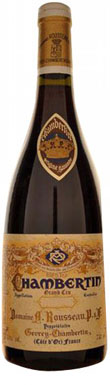

A monumental, magnificent wine. The Rousseau Chambertin 2012 tasted six years out was a bit closed at first: still slightly reduced and showing a fair bit of wood. Now, as it sits in the glass, it reveals majestic black cherry fruit with all the nuance of Burgundy: violets, smoke, a hint of leather, mineral, fresh earth and a savoury note at the end. Concentrated on the palate and wonderfully long on the finish. Simply spectacular.
2012
Domaine Armand RousseauChambertin Grand Cru

Domaine Armand Rousseau, Chambertin-Clos de Bèze Grand Cru, Burgundy, France, 2014
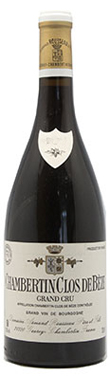
This wine stood out at a recent vertical that stretched back to 1964. The 2014 vintage is an unqualified success here, with voluptuously ripe red and blackberry fruit, nuances of smoke and spice. The texture is silky and dense but perfectly balanced by a lovely freshness that carries the fruit to an impressively long finish. It is assembled from the three Rousseau parcels that total 1.42ha. Destemmed and fermented slowly on native yeasts before ageing in new casks.
2014
Domaine Armand RousseauChambertin-Clos de Bèze Grand Cru
Domaine Perrot-Minot, Chambertin-Clos de Bèze Grand Cru, Burgundy, France, 2019
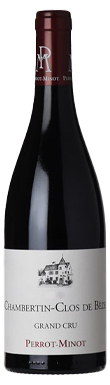
The aromas range from red plum to black cherry, with lovely notes of rose petal and ginger. The structure is subtle and understated, with a completely limpid tannic web that firmly sustains the wine without anything harsh or aggressive. The wine is approachable even now but should live for 50 years or more - a triumph. ‘Elegant, mineral, ethereal,' in the words of Christophe Perrot-Minot, who often finishes his tastings with the Clos de Bèze because of its aristocratic refinement.
2019
Domaine Perrot-MinotChambertin-Clos de Bèze Grand Cru
Domaine Rossignol-Trapet, Chapelle-Chambertin Grand Cru, Burgundy, France, 1993
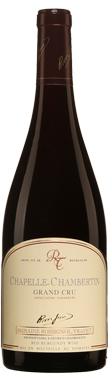
The 1993 vintage is today at an exquisite point of evolution. The wine is very expressive, showing plenty of fresh cherry and red plum fruit accented with fresh and dried flowers. One can almost sense the truffle aromas to come, but the emphasis is still on the lively, youthful fruit. From family holdings split between the En La Chapelle (Grande Chapelle) and Les Gémeaux, which was planted in the 1920s.
1993
Domaine Rossignol-TrapetChapelle-Chambertin Grand Cru
Domaine Trapet Père et Fils, Chambertin Grand Cru, Burgundy, France, 2019
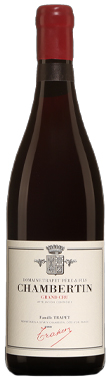
Velvety and dense, showing enchanting approachability even at this early stage. There are forward, sweet aromas of red and black plum, cassis, and bramble on the nose, with a distinct floral edge and a hint of liquorice. There is enough extract to suggest that, despite its approachability, this will age for decades to come. Made with grapes from two well-placed parcels in the centre of Chambertin, running from the bottom nearly to the top of the slope.
2019
Domaine Trapet Père et FilsChambertin Grand Cru
Domaine Trapet Père et Fils, Chambertin Grand Cru, Burgundy, France, 2018
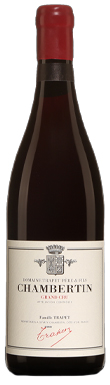
Breathtakingly ripe, lush and fruity, with a deep mulberry and cassis fruit but no lack of spicy mineral depth. This Chambertin is immensely pleasurable now, yet there is plenty of substance, extract and structure to age for decades to come. The 1.85ha that Trapet farms over three parcels in Chambertin is slowly being converted to planting individual vines on stakes (‘en échalas') without hedging the canopy. One can only describe the results as extraordinary.
2018
Domaine Trapet Père et FilsChambertin Grand Cru
Domaine Dugat-Py, Chambertin Grand Cru, Burgundy, France, 2019
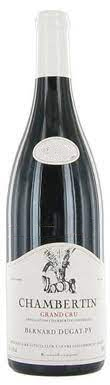
In 2019 Dugat-Py has produced a genuinely spectacular, subtle and nuanced Chambertin. The wine is surprisingly expressive for its age, and the lush, ripe mulberry fruit with accents of liquorice and violets hint at a glorious future. The domaine owns a single parcel of just over five acres near the top of the slope where the vines are influenced by the Combe Grisard. This cool location, coupled with the reasonably early picking of the domaine in most years, delivers a structured, firm style that works incredibly well in a warm vintage such as 2019.
2019
Domaine Dugat-PyChambertin Grand Cru
Domaine Perrot-Minot, Chambertin Grand Cru, Burgundy, France, 2019
Monumental but silky and lush, with a very fine-grained tannic structure underneath expressive blackberry and plum fruit. Although this is an elegant style of Chambertin, it does not lack the power or structure to let it age for decades to come. This seductive wine is made from old-vine fruit near the southern end of Chambertin, close to the Clos de Bèze. Yields were low in 2019 (no more than 25 hl/ha), and punching down was avoided to ensure finesse; the same rationale was behind the use of just 30% new casks.
2019
Domaine Perrot-MinotChambertin Grand Cru
Domaine Armand Rousseau, Mazis-Chambertin Grand Cru, Burgundy, France, 2010
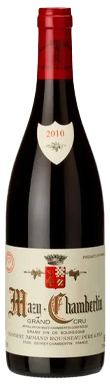
This is fabulous, with an impressive brambly blue fruit component upfront, then great density mid-palate. The wine is nuanced, structured and long, with a hearty tannic finish. Rousseau’s Mazy (to use their spelling) is a half-hectare in Mazy-Bas exposed to the east. At the domaine, it often feels that it is not so highly regarded: it is usually tasted just after the Charmes and it often does not get any new casks for ageing.
2010
Domaine Armand RousseauMazis-Chambertin Grand Cru
Domaine Bruno Clair, Chambertin-Clos de Bèze Grand Cru, Burgundy, France, 2009
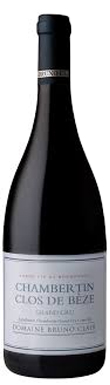
Bruno Clair’s large parcel of very old vines (about half date to 1912) delivers a wine of exceptional concentration. With a bit of age in bottle, this is showing smoky, lush black plum fruit with accents of leather, smoke and earth. The texture is impressively open, with a silky feel, yet there is no lack of tension and structure. To open this now is not an error, but neither would be cellaring it for another 20 years.
2009
Domaine Bruno ClairChambertin-Clos de Bèze Grand Cru
Domaine David Duband, Latricières-Chambertin Grand Cru, Burgundy, France, 2019
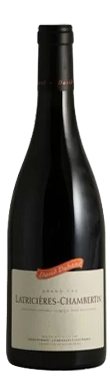
This imposing wine features lush, ripe plum and cassis aromas marked with exotic spices and a firm underpinning of minerality. Aromas from the cask ageing enhance without overwhelming the wine. There is a silky, very fine texture on the palate and an impressively dense, substantial body. This wine will age brilliantly for years to come.
2019
Domaine David DubandLatricières-Chambertin Grand Cru
Domaine Dugat-Py, Mazoyères-Chambertin Grand Cru, Burgundy, France, 2020
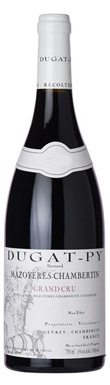
A massive wine with black fruit and an imposing structure, plenty of depth, and impressive persistence on the palate. Although this is muscular, it is perfectly balanced. The Mazoyères from Dugat-Py is unlike any other. Loïc Dugat-Py explains that the soil in his quarter-hectare parcel of Mazoyères has larger pebbles than the parcel of Charmes just 100m distant.
2020
Domaine Dugat-PyMazoyères-Chambertin Grand Cru
Domaine Perrot-Minot, Mazoyères-Chambertin Grand Cru, Burgundy, France, 2019
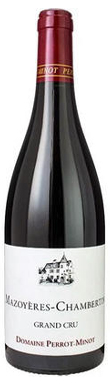
Superb. The 2019 vintage enchants with an expressive, exotic fruit character with an almost tropical cast and hints of orange peel, floral notes and spice. The wine is substantial and tannic on the palate, yet it retains a surprising elegance and finesse straight through the lingering finish. Perrot-Minot has a hectare of 55-year-old vines planted in the thin, rocky soil of Mazoyères.
2019
Domaine Perrot-MinotMazoyères-Chambertin Grand Cru
Domaine Rossignol-Trapet, Chambertin Grand Cru, Burgundy, France, 2005
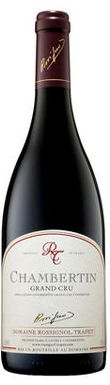
The 2005 vintage is a monumental wine with an impressive, tannic structure. The nose is slightly closed, even at 15 years of age, and Rossignol likens it to 'a block of granite – often polished, but still massive’. Continue to hold if you can wait – patience will have its reward. The Rossignol side of the family owns an impressive 1.6ha of Chambertin in two large parcels. This site was among the first that brothers Nicolas and David converted to biodynamics in the 1990s, and their efforts are paying off.
2005
Domaine Rossignol-TrapetChambertin Grand Cru
Domaine Trapet Père et Fils, Latricières-Chambertin Grand Cru, Burgundy, France, 2019
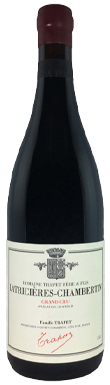
The cooler terroir has produced an exotic wine with ripe black fruit, a floral note, and a savoury, salty hint of earth. The texture is silky and the tannins are firm. There is enough substance here to age for decades. The Trapet family has owned this parcel of Latricières since 1904 when it purchased 1.5ha from the Savot family. Jean-Louis now works 74 acres, as do his cousins Nicolas and David Rossignol.
2019
Domaine Trapet Père et FilsLatricières-Chambertin Grand Cru
Domaine David Duband, Charmes-Chambertin Grand Cru, Burgundy, France, 2019
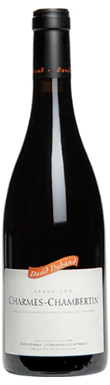
Cool terroir has produced a perfumed and structured wine, with more tannin and substance than you might expect from Charmes, along with a seductive, velvety red berry fruit. If slightly austere today, this will open beautifully with some more time in bottle. Produced from a parcel that Duband farms in Mazoyères, near the border with Latricières that formerly belonged to Jacky Truchot; some parts planted in the 1920s in the alluvial soils from the Combe Grisard.
2019
Domaine David DubandCharmes-Chambertin Grand Cru
Domaine David Duband, Chambertin Grand Cru, Burgundy, France, 2019
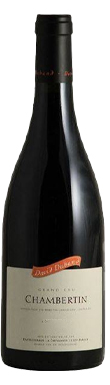
David Duband and his business partner François Feuillet own 22 acres of Chambertin at the very top of the slope, surrounded by the woods. This cool terroir delivers a structured, firm wine that Duband vinifies carefully, with few pigeages, many whole clusters, and restrained use of new casks (40% for the grands crus). The fruit is subtle and elegant, and the wine has a massive structure. With time this should blossom into something truly lovely.
2019
Domaine David DubandChambertin Grand Cru
Domaine Fourrier, Griotte-Chambertin Grand Cru, Burgundy, France, 2010
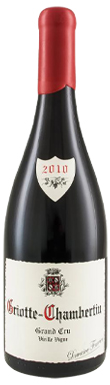
One of the stars of the Fourrier line-up is its quarter-hectare of very old vines in Griottes. It has delivered a ripe, softly spicy cherry fruit on the nose and a firmly traditional, somewhat earthy cast to the fruit. There is good ripeness, substantial tannin and classic elegance that is very appealing on the palate. Just beginning to open up now, this should age for decades.
2010
Domaine FourrierGriotte-Chambertin Grand Cru
Domaine Trapet Père et Fils, Chapelle-Chambertin Grand Cru, Burgundy, France, 2019
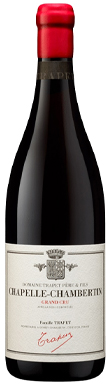
A lovely, accessible wine with bright cherry and blackberry fruit, scented with spice and smoke. The texture is voluptuously rich, almost decadent, and lingers enticingly on the finish. From the oldest vines in Trapet’s 0.6ha parcel of Chapelle-Chambertin, planted in 1945. Jean-Louis notes that the vines ripen early because of the thin soils here.
2019
Domaine Trapet Père et FilsChapelle-Chambertin Grand Cru
Maison Joseph Faiveley, Chambertin-Clos de Bèze Grand Cru, Burgundy, France, 2014
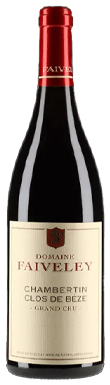
Perfumed plum and black cherry fruit with hints of violet, mineral and a savoury undercurrent. The texture is firm and immensely tannic but not unforgiving, and there is enough substance to age for decades to come. Produced from three of the four Faiveley parcels in the Clos de Bèze, this is fermented with a large proportion of whole clusters before ageing in casks (70% new) for 18 months.
2014
Maison Joseph FaiveleyChambertin-Clos de Bèze Grand Cru