
Ferrari: Producer profile and new releases tasted
Aldo Fiordelli profiles the leading Trento sparkling producer, takes stock of the challenges imposed by climate change and tastes the newly-released cuvées. Among the line-up is the 2001 iteration of the Giulio Ferrari Collezione, soon on the market after spending 18 years resting on the lees.


Among the one million bottles stored in the Ferrari cellar, there is also a collection of old winemaking equipment from the beginning of the twentieth century that includes an equally old, shiny silver dosage machine. It was created under Giulio Ferrari’s direction (almost 100 years before the discovery of ‘jetting’ in Champagne) with the purpose of reducing oxidation, then a common issue resulting from the other metals used in machinery at the time.
Scroll down for Ferrari’s new releases tasted by Aldo Fiordelli
Obsession with quality
The founder of the Ferrari maison in the north-eastern Italy province of Trento had been obsessed with quality since the house’s inception in 1902. Seeing as he had no children, Giulio Ferrari began looking for a successor that would carry on the pursuit of his dream: to produce a wine in Trentino capable of competing with the best French champagnes.
Among many candidates he chose Bruno Lunelli, the owner of a local wine shop in Trento. Today, as a tribute to Giulio, the winery is releasing another cult cuvée, the new ‘Collezione 2001’.
According to Marcello Lunelli, third generation of the family at the helm of the Ferrari-Lunelli group and currently its vice president, when the old silver dosage machine was in use, around 9,000 bottles were disgorged per year – as opposed to 9,000 disgorged per hour today. In 2019 the estate sold 5.6 million bottles of sparkling.
‘We’ve decided to invest in increased storage space, and the aim is to produce seven million bottles,’ claims Marcello Lunelli. The winery’s expansion, with an additional 12,000 square meters for ageing sur lattes (on the lees), has already been approved. The project is no small endeavour and will result in the displacement of the public main road along the Adige river.
Climate Change – the challenge to retain balance
Ferrari is not, needless to say, an estate for RM (récoltant manipulant) wine lovers. Still, the maison only exports 20% of its total production therefore having a huge potential for global growth.
The Lunelli family has managed the estate since 1952 and currently owns 100 hectares of vineyards. But fruit is sourced from a total of 500-600ha owned by 600 different growers. Average land ownership in Trentino is 1ha, hence the significant number of growers.
Ferrari’s vineyards lie on both east and west slopes of the Adige valley as well as on the lateral valleys which branch out from Trento and benefit from north and south exposition. Peculiar plots such as the ones planted in the porfidic soils of Val di Cembra provide intriguing components: ‘from here we compose reserve wines which are much like the spice in a recipe,’ notes Marcello Lunelli.
New investments include the recent acquisition of 20ha in the Brenta sub-region which will be planted next year. ‘We want to preserve the freshness of our wines and are therefore trying to raise the average altitude of our vineyards by increasing plots to around 700 metres above sea level.’
Over the past 30 years the average temperatures in Trentino have increased by up to 1°C. ‘Nonetheless,’ – continues Lunelli – ‘we are determined to maintain the ‘golden triad’ for harvest: 3 to 3.05 pH; 10 to 11 points of acidity; around 19 Brix. Today 20 to 30% of our vineyards are above 500 metres, with fruit used for the great reserve wines only’.
See all Ferrari tasting notes on Decanter
The quest for premium long-aged cuvées
Giulio Ferrari ‘Riserva del Fondatore’ is one of such wines, produced with fruit from Maso Pianizza, a high-altitude vineyard facing the winery on the east side of the Adige. Its 15ha are planted with Guyot-trained Chardonnay vines, soaring 550 to 700 metres above sea level on mostly chalky soils.
A portion of the still wine (15%) is fermented in large oak vessels, then aged in bottle for 10 to 11 years before disgorging. The first edition of Riserva del Fondatore was released in 1972 and the wine has since been produced every year with the exception of 1973, 1977, 1981, 1984 (‘because of the snow’), 1998 (‘due to severe hail’), and 2003 (‘too hot’).
This ‘Riserva del Fondatore’ has consistently been considered the best sparkling wine of Trentodoc and one of the best traditional methods in Italy year on year. The ‘Collezione 2001’, with its sleek black packaging, was produced in a limited quantity – just, fittingly, 2001 bottles – and is a late-release millesime showing the astounding ageing potential of this wine.
The quest for a premium long-aged wine launched in 1972 by Mauro Lunelli with the Giulio Ferrari Riserva del Fondatore, has been rendered even more extreme by the Giulio Ferrari Collezione, the one and only Italian sparkling to mature on its lees for at least 18 years.
First bottled following the 1995 harvest, 2001 joins 1995 and 1997 as the third vintage deemed capable of expressing itself to the fullest after such prolonged lees ageing. “Collezione 2001”, tasted great just after disgorgement, full of complexity and tension without any of the overt evolution sometimes found in the Riserva del Fondatore.
However, if it is true that a good estate should be judged by its house wine, it must be said that Ferrari produces one of the best Italian traditional method sparkling wines in terms of value-for-money. Tight and citrusy, it doesn’t lack the complexity typical of the maison. The blend contains 2% of still wine aged in oak and 20% of reserve wines.
According to Ruber Larenti, winemaker of the Ferrari estate, today there are 30,000 magnums to age reserve wines. Ferrari Brut maison is sold in the Italian mass market for around €10, at more or less £20 in the UK and $23-25 in the USA.

In the past few years, the maison has also released the Perlé Zero, the ‘pain and glory’ of Marcello Lunelli and winemaker Ruben Larentis. At times austere, though only on the first sip, then progressing to a chalky elegance and boasting the signature savouriness inherent to all Ferrari wines. A lower dosage in my opinion is beneficial for these wines. Maybe less popular, maybe less Italian-style, but certainly more suggestive.
See Ferrari’s new releases tasted by Aldo Fiordelli
You may also like:
Traditional Method Italian sparkling wines: Panel tasting results
What is Satèn wine? – ask Decanter
Berlucchi: Producer profile plus six Franciacortas tasted
Ferrari, Giulio Ferrari Collezione, Trento, Trentino-Alto Adige, Italy, 2001
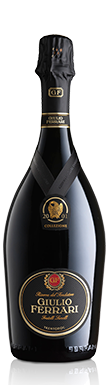

Giulio Ferrari Collezione, so far produced only in the 1995, 1997 and 2001 vintages, is a step beyond in the quest started by Mauro Lunelli...
2001
FerrariTrento

Ferrari, Giulio Ferrari Riserva del Fondatore, Trento, Trentino-Alto Adige, Italy, 2004
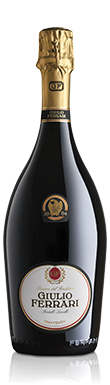
Gold in the glass, with pinprick bubbles, this Giulio comes from a very good vintage: balanced, fresh and with great selection possibilities. Austere at its...
2004
FerrariTrento
Ferrari, Giulio Ferrari Rosé, Trento, Trentino-Alto Adige, Italy, 2008
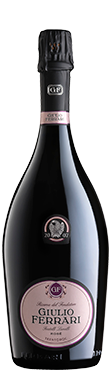
2008 was the third vintage of Giulio Ferrari Rosé, an extreme season, "the most rainy and hot in the history in Trento" according to Marcello...
2008
FerrariTrento
Ferrari, Perlé Bianco, Trento, Trentino-Alto Adige, Italy, 2012
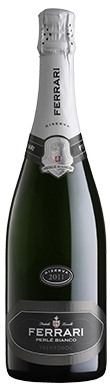
In this 2012, the Perlé Bianco seems to be more approachable compared to the Ferrari selection, but definitely more complex in comparison to the Maximum...
2012
FerrariTrento
Ferrari, Perlé Nero, Trento, Trentino-Alto Adige, Italy, 2012
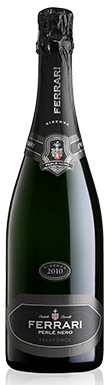
Aged for at least 50% in big oak vessels, this 2012 is reminiscent of strawberry pie, with hints of toasted nuts, crusted bread and chesnut...
2012
FerrariTrento
Ferrari, Perlé Zero 10, Trento, Trentino-Alto Adige, Italy
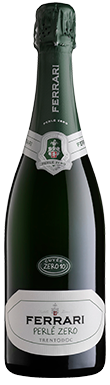
Cuvée Zero 10 is a very good example of how a good wine can become great after softening its sterner style after disgorgement. This bottle...
FerrariTrento
Ferrari, Riserva Lunelli, Trento, Trentino-Alto Adige, Italy, 2006
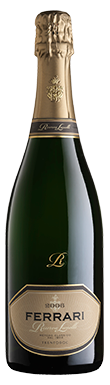
This Riserva Lunelli, disgorged in 2014, will please lovers of oxidative style sparkling wines with some extra bottle ageing. A product of the 2006 vintage,...
2006
FerrariTrento
Ferrari, Perlé Nero, Trento, Trentino-Alto Adige, Italy, 2008
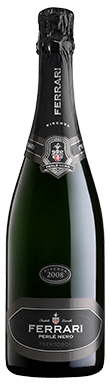
Based on Pinot Noir from the quite extreme 2008 vintage, and with 85% of the base wine aged in oak, this Perlé Noir disgorged in...
2008
FerrariTrento
Ferrari, Perlé Bianco, Trento, Trentino-Alto Adige, Italy, 2006
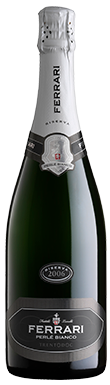
The 2006 vintage, a warm harvest in Trentino, produced "the most sapid wines of the history" said winemaker Ruben Larentis. It was the first vintage...
2006
FerrariTrento
Ferrari, Riserva Lunelli, Trento, Trentino-Alto Adige, Italy, 2012
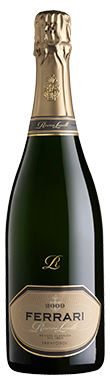
Riserva Lunelli is a 100% oak-aged Trento Doc for long-term maturation and enjoyment. According to Ruben Larentis, Ferrari’s winemaker, the oak helps avoiding Chardonnay’s green...
2012
FerrariTrento
Ferrari, Perlé Zero 13, Trento, Trentino-Alto Adige, Italy
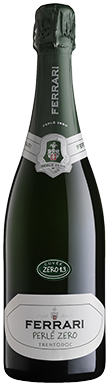
Ferrari wines are often under of at the lower end of the Brut level. But ten years ago, the estate launched their Perlé Zero, without...
FerrariTrento
Ferrari, Giulio Ferrari Riserva del Fondatore, Trento, Trentino-Alto Adige, Italy, 2009
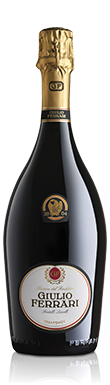
Disgorged in May, this last version of Giulio Ferrari Riserva del Fondatore will be released in 2021. Tasted at two different dosage levels (2.7 g/l...
2009
FerrariTrento
