
Friuli-Venezia Giulia: Regional profile and wines to try
Aldo Fiordelli takes a look at the wines from this north-eastern region of Italy...


Up until the early 20th century, Friuli-Venezia Giulia was not considered part of north-eastern Italy but instead a southern part of the Austrian Hapsburg empire. This rich region provided the Austro-Hungarian population with fruit, food and wine.
After World War I, the entire region became Italian but its eastern border was still far from peaceful. Gorizia was considered the Berlin of southern Europe and identity here was always crucial.
Things are now far more open and producers can easily manage a winery in Slovenia but own vineyards in Italy, or vice-versa – travelling with tractors and grapes across the border. Indeed, famed Italian producer Mateja Gravner is currently inquiring with the European Commission to clarify if grapes harvested in Italy could be labelled under the Slovenian Brda appellation.
In 2018, according to Assovini and Istat sources, there were 23,880 hectares of vines in the region, and since 2012 the production of wine (excluding must) has increased 24%: a more or less ‘natural’ growth when considering, for example, the 50% increase in Veneto and 56% increase in Puglia.
Pinot Grigio
Pinot Grigio delle Venezie is one of north-east Italy’s most important wines, accounting for 85% of the country’s production of Pinot Grigio, and the first in the world by volume. The Consorzio delle Venezie DOC maintains 26,400ha of Pinot Grigio vines across Friuli-Venezia Giulia, Veneto and Trento, from which 1.7 million hectolitres and 200 million bottles are produced annually, resulting in 45% of the global production.
Of these, Friuli-Venezia Giulia produces quite possibly the best examples. Here, the varietal is often vinified to render its unique copper colour, a result of lower yields. It is regularly supplemented with international varieties such as Chardonnay and Sauvignon Blanc, although Friuli-Venezia Giulia also boasts a wide range of indigenous grape varieties such as Pignolo, Tazzelenghe, Terrano, Refosco dal Peduncolo Rosso, Ribolla Gialla, Picolit, Verduzzo Friulano and Friulano. The latter is the old so-called ‘Tocai’ which, since the famous legal dispute with Hungary in 2007, is now referred to as Friulano.
There is another grape, however, that is to be considered indigenous, at least on the border of the region: Vitovska originated in Slovenia but has been planted equally on both sides of the border, across Collio and Carso – since before the region was divided between the two countries. Edi Kante, based in Prepotto near Trieste, is famed for his Vitovska, a wine that has been vinified for long ageing since the 1990s.
Climate and geology
The climate in this north-eastern corner of Italy is mostly continental, with cool winters and dry, warm summers, but influenced by the Adriatic Sea to the south and sheltered from the north winds by the Prealpi Giulie mountains.
Yet more so than the climate, it is the soil that characterises the region. The eastern part, with the exception of the iron-rich and chalky soils of Carso, is mostly based on the so called ponca. Ponca is Friuli’s signature soil for top wines, found mostly throughout the eastern part of the region where Colli Orientali, part of Isonzo and Collio Goriziano can be found. Composed of marl which contains varying amounts of clay and silt in addition to sandstone, it is a kind of schist that can resemble Tuscan galestro, with friable flakes that resemble stones but crumble upon touch.
On these terrains, international varieties such as Chardonnay and Sauvignon Blanc are overwhelmed by the profound character of the soil. Ribolla Gialla, however, is in its element here, making very different wines to those from the high yielding plains. This extremely late ripening variety is known to produce white wines that drink like red wines. The stony minerality on the nose, coupled with a vibrancy on the palate and a savoury finish enhance the experience of these wines.
Producers to watch
Friuli-Venezia Giulia is the indisputable motherland of orange wines in Italy, and arguably the world. The best site is Oslavia, a village on the border with Slovenia which has recently solicited for its own identity within the Collio. It would be the first appellation dedicated to and recognised for orange wines.
Sasa Radikon, son of the famed Stanko, is one of the producers leading the petition. His wines are sharp and concentrated, with an ever-present umami note, released only four to five years following the harvest and perfectly suited to accompany a pot roast or meats braised with wine. Primosic produce a more orthodox style of Ribolla that bathes in elegant grapefruit aromas, while Dario Princic’s is an example that straddles the two in terms of style, a perfect synthesis in my opinion of the more or less macerated styles.
On the other side of the border in Brda, Slovenia, the Kristančič family (Movia winery) and Marjan Simčič are worth tracking down for outstanding wines full of minerality.
Moving to the west, towards Pradis and Cormons, Ribolla is replaced by Friulano and Malvasia Istriana. This area is home to Edi Keber of Terre del Faet.
Recent vintages
The 2018 vintage was warm and optimistic in terms of quantity and quality, much more balanced than the dry 2017. However, the last great vintage was undeniably 2016, which was mild and dry with no extremes.
Going further back, the hot 2015 was considered great throughout the region – even in warmer vintages the top plots do not deny Friuli’s wines their striking minerality and vibrant identity.
Wines to try:
You may also like:
Resurrecting Monferace Grignolino in Piedmont
Stars of Southern Italy – and the wines to try
Bolgheri 2016: One of the best vintages ever?
Kante, Vitovska, Kras, Friuli Venezia Giulia, Italy, 2016
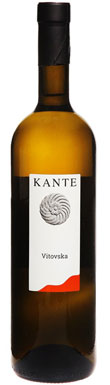

Edi Kante is a pioneer when it comes to the indigenous grape Vitovska, which is grown just across the border in Slovenia. The soil here...
2016
KanteKras

Marjan Simcic, Opoka Jordano Sauvignon Blanc, Goriska Brda, Slovenia, 2017
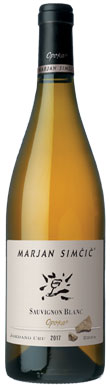
Marjan Simčič is one of the most talented winemakers in Friuli and Slovenia, where he produces wines in the Brda appellation. The Opoka cru is...
2017
Marjan Simcic
Terre del Faet, Friulano, Collio, Friuli Venezia Giulia, Italy, 2017
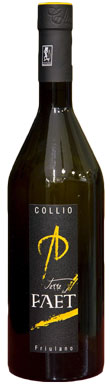
<p>This is a small, historical winery to follow. The young winemaker is the pupil of Edi Keber, and the fruit comes from the vineyards of...
2017
Terre del FaetCollio
Ronco del Gelso, Siet Vignis, Friuli, Isonzo, Friuli Venezia Giulia, Italy, 2017
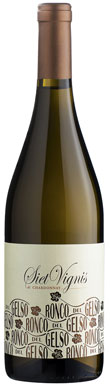
Siet Vignis means 'seven vineyards', from where the Chardonnay grapes hail. The volume is low, with fewer than 3ha in total, and the yields are...
2017
Ronco del GelsoFriuli
Colle Duga, Collio, Friuli Venezia Giulia, Italy, 2018
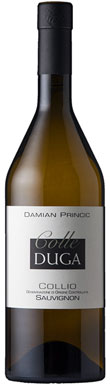
<p>Yields in 2018 were up 15% in Friuli Venezia Giulia. It was a warm year and a meaningful vintage marking 100 years since the end...
2018
Colle DugaCollio
Muzic, Valeris Friulano, Collio, Friuli Venezia Giulia, Italy, 2018
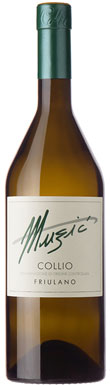
From Eocene marls of San Floriano, the Muzic family grow around 20ha including some old vines. This Tocai Friulano is one of the flagship wines...
2018
MuzicCollio
Colutta, Friulano, Friuli, Colli Orientali, Friuli Venezia Giulia, Italy, 2018
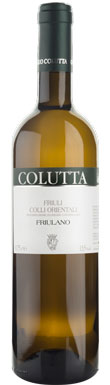
This winery in Colli Orientali del Friuli has vineyards in Buttrio, Rosazzo and Manzano. The style here is fairly classic, with the exception of 12...
2018
ColuttaFriuli
Murva, Paladis, Friuli, Isonzo, Friuli Venezia Giulia, Italy, 2017
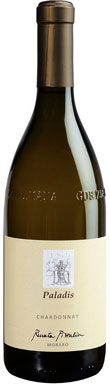
<p>Murva is a small winery founded in 2009 and although relatively young it is deeply involved in viticulture. The soils are based on limestone and...
2017
MurvaFriuli
Vie di Romans, Chardonnay, Friuli, Isonzo, Friuli Venezia Giulia, Italy, 2017
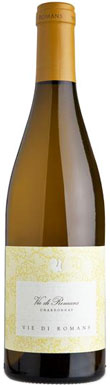
In a warm vintage this Chardonnay is representative of the region's expression of the grape, with rich and mature aromas such as cantaloupe melon and...
2017
Vie di RomansFriuli
Meroi, Zitelle Barchetta, Friuli, Colli Orientali, Friuli Venezia Giulia, Italy, 2017
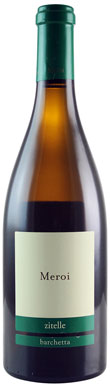
Paolo Meroi’s Sauvignon Blanc comes from Vigna Zitelle, a southeast-facing vineyard on the Eocene marls of Buttrio. It is vinified in oak for 12 months....
2017
MeroiFriuli
Canus, Chardonnay, Friuli, Colli Orientali, Friuli Venezia Giulia, Italy, 2017
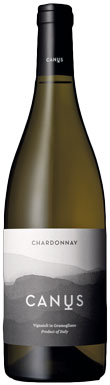
<p>Canus is a producer of Friuli Collio Orientali based in the Gramogliano hills, looking towards the Italian-Slovenian border. The vineyards are planted on schisty ponca...
2017
CanusFriuli
