
Ten full bodied wines that are big, balanced and delicious


Lean, zippy styles may be the zeitgeist, but there are great terroirs all over the world which naturally produce wines that are rich, ripe, full and fine, says Andrew Jefford. Don’t miss out…
Toronto’s Pearson Airport, January 2014; my first steps on Canadian soil. The immigration officer wanted to know why I’d come. Wine, I said. He relaxed a little, looking up from his screen.
We chatted some more. ‘You wanna know the definition of a good wine?’ That, I replied in all honesty, would be very helpful to me. ‘A good wine,’ he said, fixing me with a professionally unwavering gaze, ‘is one that says 14.5% or more on the label.’
Perhaps you’re smiling; perhaps you’re rolling your eyes. It’s possible that Decanter readers prefer 13.5% to 14.5%; there may even be ultras among you who prize 12.5% as the path to heaven and to righteousness. Fair enough – but most drinkers aren’t with you.
‘It’s a terrible mistake to say everyone is moving toward low-alcohol wines.’ Justin Howard-Sneyd MW
‘Big, full-flavoured wines have an enduring appeal.’ The speaker is Justin Howard-Sneyd MW, whose work for Safeway, Sainsbury’s, Waitrose and Laithwaite’s (now for the latter as a consultant) makes him one of the UK’s most experienced wine retailers.
‘It’s a terrible mistake to say everyone is moving toward low-alcohol wines,’ he says. ‘At Laithwaite’s, the cases the team put together of rich, dark reds are almost the best-selling cases they have. I’m very cautious about listening to critics who say that freshness and lightness is what everybody likes. Freshness and lightness can be lovely – but so can the succulent, lush flavours of deliciously ripe wines.’
I’m not quite with the guy at the immigration desk, but I’m certainly with Justin on this.
Three case studies
Let’s briefly visit three wine landscapes.
The first is Pinhão, in Portugal’s Douro valley: river moorings, a heroic train line through a small, elaborately tiled station – then terrace after terrace of vines soaring upwards on mountain slopes groomed and combed over centuries into swirling, multi-faceted elegance.
Porrera in Spain’s Priorat is less orderly, but no less dramatic: a village which seems to have landed like a feather on a stormy sea of brown rock.
Then there’s Maury in Roussillon, southwest France: dark, glittering stonefields surveyed, eyelessly, by ruined Cathar castles from a high ridgeline.
Each has a resonant wine tradition, both before and after phylloxera; each can furnish multiple bottled proofs of greatness.
Yes, two out of the three are perhaps best known for fortified wines (in which richness, we might care to note, is actually amplified, the better to preserve sweetness), but in each case their original reputation was made with unfortified wines, and it is those unfortified wines which now attract most attention once again.
If you want to taste the greatness of those terroirs, then you must be open to generosity of flavour in wine. Rock, sunlight, steep slopes, and the stubborn, deep-rooted old vines which have seen out 80 or more summers here (as well as the no-less-brutal winters which follow them) can give you nothing else.
If your palate is closed to wines of this sort, your wine world will be smaller. You’ll miss out. Europe has many fine wine regions of this sort, and the wine world outside Europe has even more: Napa, Mendoza and the Barossa are all outstanding quality regions offering variations on this richly orchestrated theme. A lifetime of wincing avoidance would be sad.
Proper place
Temperate regions (such as Bordeaux) may not express generosity by dint of terroir itself – but all the evidence suggests that their wines are best after generous seasons.
No one wants Bordeaux 2013s, though they’re as light and fresh as snowdrops. We’d rather get our hands on Bordeaux 2009, 2010 and 2016.
Why? The wines are richer, more complex, denser, longer and in every way more satisfying. You may point out that there is freshness in 2010 and 2016; you may, indeed, say that is why you prefer them to the frankly unctuous 2009s. I agree – but that freshness is encased in depth and in substance, not shivering and naked, like a snowdrop.
It’s the depth and substance which ensures that the wines will endure. Balance on its own, unsupported by depth and substance, may get a wine into middle age, but not much further. The 2001s were lovely, but the richer 2000s and 2005s will last longer.
True cool-climate wines (like those of the Loire valley, of Burgundy or of Germany) make a more nuanced case for richness, since the much-loved classicism of their profiles is predicated on a vitality of balance, and a truly hot year can mute that.
Yet richness there must be – in order for their fruit flavours to possess resonance, and for their acidity levels to achieve pitch and poise without becoming over-dominant and shrill. Great cool-climate varieties like Riesling, Pinot Noir and Chardonnay, growing in distinguished sites where they enjoy an extended season, all have the ability to express density and resonance alongside vitality.
The evidence here, too, suggests that richer vintages age more successfully than slighter ones – and for dessert-wine residual sugar styles, of course, the richness of a generous harvest is essential.
I don’t believe in the primacy of the grape variety in creating wine flavour; it’s places which matter above all, so the contentment of the variety in its place is all that matters.
Suppose, though, that you love the paleness, the delicacy and the nuance which Pinot Noir is capable of expressing, yet you’re curious to taste the fine wines of distinguished sites in warmer locations.
Step forward, Grenache – a variety whose nobility can take different forms of expression, but which can be decidedly Pinot-like in warmer, dry places such as Australia’s Clare Valley, in the sandy zones of Châteauneuf-du-Pape, or in the mountainous Gredos region near Madrid.
So what if it’s 16%? Grace is possible in Grenache at 16%, just as it is in Pinot Noir at 13%. The difference you will taste is the difference of the place itself. Don’t miss out.
Balance of power
Given all of this, how did it come about that richness ever fell from favour?
One cause may be the obligatory labelling of alcohol. This leads, I’d argue, to cognitive bias (a deviation from rationality in judgement). Simply knowing that a wine is 14.5% or 15% alcohol predisposes some tasters and drinkers to find that wine ‘alcoholic’.
Without that knowledge, they might have enjoyed the wine for its freshness, its balance or its other outstanding qualities (see the tasting notes that follow).
Any principled objection to an alcohol level of 14.5% or more is illogical unless such drinkers systematically avoid fortified wines (15.5%- 22%) and spirits. The average strength of a home-made gin and tonic or a watered whisky will be 15%-20%, while anyone prepared to sip Cognac (enjoying record sales at present) can cope with a drink more than twice as strong as the richest Châteauneuf-du-Pape or Priorat.
I fully understand, though, any drinker who dislikes wines which are laboriously or artificially rich. I dislike such wines, too – and it is perhaps true that, at the apogee of Robert Parker’s critical hegemony, aspirational wines of this sort crowded the world stage, since (rightly or wrongly) it was felt that Parker’s tastes lay in that direction.
Not all rich wines are great
What are the hallmarks of ‘bad’ richness? Raisiny notes in the fruit would be one; these are particularly horrible when combined with excessive oak in a wine deficient in other factors of balance, such as acidity, tannin and extract.
Rich, generous wines must of course be balanced if their alcohol levels are not to assume excessive prominence – and the best support for such wines, given that they hail from warmer zones and climates, is amplitude of fruit backed by a ‘mineral’ or ‘stony’ density, often woven into tannins or extract.
Attempting to give such wines a prominent acid balance by artificial means is another route to ‘bad’ richness, since the result usually tastes artificial and chimerical.
An acid intervention of this sort, indeed, actually destroys balance, making both alcohol and oak taste all the more prominent, particularly if the tannin profile is modest.
We must accept that rich, generous wines are sometimes low in acidity; indeed their low acidity may be a key part of their pleasure. A low-acid wine balanced in some other manner can offer some of the most sensually beguiling of all wine experiences.
Warm feeling
Other naturally articulated rich wines do indeed contain prominent acid levels – like rich, Carignan dominated red wines from Roussillon or Priorat, especially if grown at higher altitudes.
It’s also worth noting that, contrary to received opinion, alcohol is almost always a quiet note in great rich wines. I doubt that anyone who has a chance to compare 2015 Châteauneuf-du-Pape with 2016 will prefer the 2015s; the 2016s are much denser and fresher, which inevitably suggests that they are lower in alcohol and ‘less rich’ than the 2015s. Wrong. The 2016s are generally higher in alcohol; it’s just that the alcohol is a less prominent part of their constitution, and their fruit style is brighter.
As always with questions of wine aesthetics, it’s the whole that matters, not the individual parts.
Trying to make fresh, light wines by picking early in sites which would naturally deliver rich wines is, in my opinion, also an error – but not one that need concern us here, since such wines will never taste rich but will rather be lean, austere and hard.
There are better solutions in order to endow wines grown in ‘rich’ regions with freshness – like vineyard soil restoration, canopy work, ultra-rapid harvesting at the first moment of ripeness, ever-more fastidious fruit sorting, delicate and unhurried extraction, or the use of whole-bunch fruit for red wines or skin contact for whites.
Those suffering ‘rich-wine neurosis’ should seek a cure. The world’s climate is warming. Shifting the location of vineyards to higher altitudes or latitudes, or changing the varietal plantings of distinguished sites, will take time. Winemakers’ understanding of ‘balance’ is deepening and becoming more profound all the time.
Ripe wines are here to stay – and they’re getting better all the time.
See Jefford’s top 10 wines that are big, balanced and delicious
You may also like
Top Stellenbosch Cabernet Sauvignon: Panel tasting results
California Cabernet 2011: Panel tasting results
Top Barolo 2008 wines: Panel tasting results
Australian Shiraz: Panel tasting results
Romano Dal Forno, Monte Lodoletta, Amarone della Valpolicella, Veneto, Italy, 2011
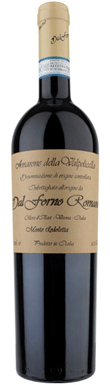

The strongest wine in my selection, yet this magnificent Amarone’s alcohol is barely visible thanks to its astonishing depth, texture and sumptuousness. Pressed black fruits...
2011
Romano Dal FornoAmarone della Valpolicella

Domaine André et Mireille Tissot, Château-Chalon, Côtes du Jura, Jura, France, 2010
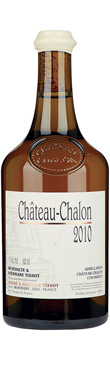
An outlier in my ‘generous 10’, perhaps – but I defy anyone to taste this aromatically complex, hugely energetic vin jaune and not find it...
2010
Domaine André et Mireille TissotCôtes du Jura
Château La Mission Haut-Brion, Pessac-Léognan, Cru Classé de Graves, Bordeaux, France, 2010
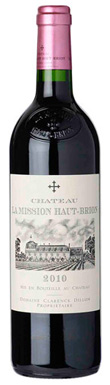
Luxurious, rich and ripe in the mouth, there are fragrant violet notes on the nose, a smoothness to the tannins and supple oak which indicate...
2010
Château La Mission Haut-BrionPessac-Léognan
Dominus Estate, Napa Valley, Yountville, California, USA, 2007
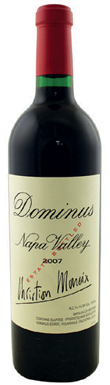
This mature wine remains dark black-red in colour. Dark chocolate, roast meat and forest resins haunt the blackberry and plum fruits, but it’s surprisingly vital...
2007
Dominus EstateNapa Valley
Stag's Leap Wine Cellars, Cask 23, Napa Valley, Stags Leap District, California, USA, 2013
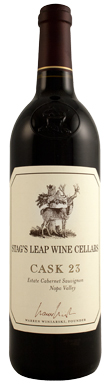
This head-turner of a wine is saturatedly dark black-red, with irresistible scents of blue forest fruits, a pencilly freshness and a little bitter-orange charm. Intense,...
2013
Stag's Leap Wine CellarsNapa Valley
Le Clos du Caillou, La Réserve, Châteauneuf-du-Pape, Rhône, France, 2016
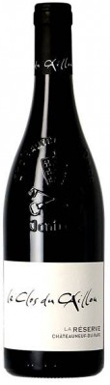
Grenache with Mourvèdre, aged in demi-muids and amphorae. Dry thyme and underbrush scents mingle with graceful cherry and pomegranate. Smoky, nutty warmth lurks behind the...
2016
Le Clos du CaillouChâteauneuf-du-Pape
Quinta do Vale Meão, Douro Valley, Portugal, 2012
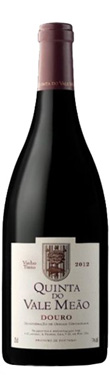
Deep, savoury, complex, enticing: generosity is just one side of a multi-faceted personality; indeed it’s hard to imagine expressive force of this order without the...
2012
Quinta do Vale Meão
Torres, Mas La Plana, Penedès, Catalonia, Spain, 2013
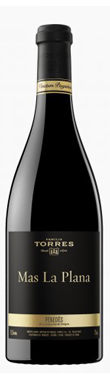
A dark, fragrant, aromatically enticing wine whose richly curranty black fruits have now had the time in bottle to meld and soften into something more...
2013
TorresPenedès
Borie La Vitarèle, Les Schistes, St-Chinian, Languedoc-Roussillon, France, 2015
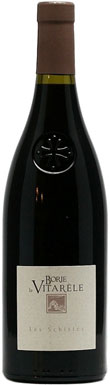
The scents of this high-grown blend of Grenache and Syrah, with a dash of Carignan, are pure garrigue: pristine and hauntingly perfumed with leaf oils,...
2015
Borie La VitarèleSt-Chinian
