
German Grosses Gewächs new releases: Top wines
Is 2018 a Riesling vintage for non-Riesling drinkers? Anne Krebiehl MW investigates as she gets to grips with this year's top Grosses Gewächs releases.

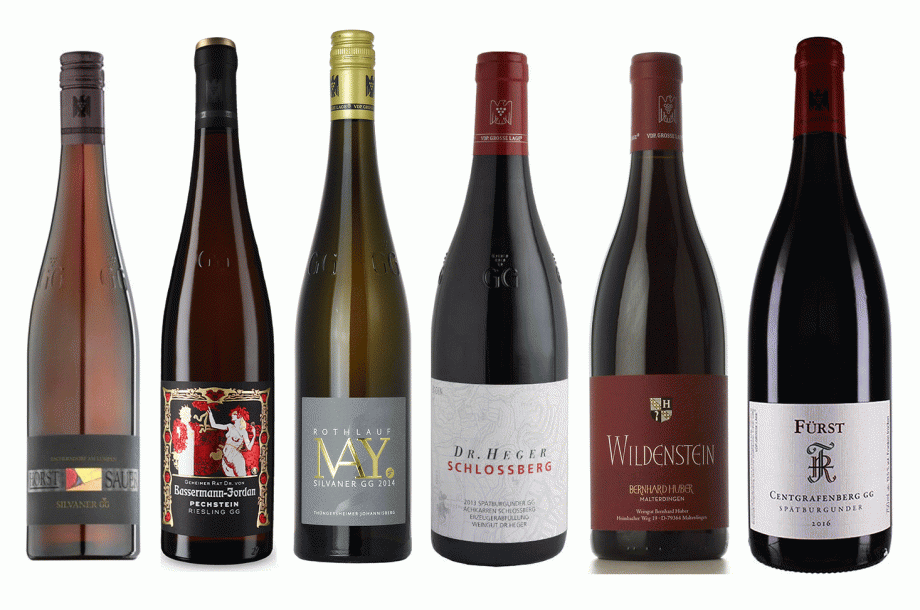
A first glimpse of the new German vintage can always be had at the VDP Weinbörse in April in Mainz: but it is a jostle and tasting conditions are not ideal. The real test comes in August in the airy, light-flooded space of Wiesbaden’s Kurhaus, an ideal tasting environment with flawless organisation where more than 500 Grosse Gewächse, Germany’s ‘grands crus’, are presented: still dry wines from single, classified sites produced to stringent standards. More than 500 wines could be tasted: from Weiss- and Grauburgunder, via Silvaner, Chardonnay, Lemberger to Spätburgunder – and Riesling of course: 298 of them.
While some have already praised 2018 to the rafters, as though the old paradigm of ‘the riper the better’ still held true, 2018 was a challenging year viticulturally, if not a challenging harvest. It was the year which illustrated who had adapted best to the ever-changing whims of nature since 2018 presented growers with a heatwave, drought and record yields.
Scroll down to see the top 20 Grosses Gewächs recommendations
See the top 40 wines tasted here
Vineyards late last summer looked downright biblical: groaning with picture-perfect, healthy grapes. Most of the vines were still in fine fettle when other vegetation had started to droop. Particularly old vines took everything in their stride. But what of the burgeoning fruit? Only those with careful yield and canopy management could harvest wines with tension. Rot was not a problem, but possibly concentration.
One winemaker encapsulated it: ‘There are hardly any bad wines, many decent wines and very few outstanding wines.’ Another said: ‘Great wines are not made in extreme years. Really great Riesling vintages are those where the vines can develop in a more normal fashion.’ A third said: ‘You have to pick wisely in 2018.’
A Riesling vintage for non-Riesling drinkers?
Tasting the wines, there was a lot of variation – but down to winemaker rather than region, even though Rheingau was one of the patchiest. The Mosel did well but really is atypical – but again, those who were in tune with their vineyards delivered.
Germans often speak of ‘ripe acidity’ and mean an acid structure that is pleasantly fresh without being bracing, think Cox Orange Pippin rather than Granny Smith, or golden Amalfi vis-à-vis pale, anaemic lemon. The good 2018s had that in spades. Almost every winemaker remarked on it.
Philipp Wittmann of Weingut Wittmann in Rheinhessen said: ‘Indeed, a crazy year, but cool nights afforded us a vintage with German virtues: freshness, elegance and thankfully moderate alcohol levels, more classic than we all expected. We all worried about overripeness, about acid that would be too soft, but acid levels were stable. Harvest logistics, as we learnt in [previous hot years] 2009 and 2011, had to be spot on.’
Urban Kaufmann of Weingut Kaufmann in the Rheingau said the same: low pH levels and surprisingly stable acidity plus a good weather forecast made this harvest almost ‘relaxing’. According to Hansjörg Rebholz, of Ökonomierat Rebholz in the Pfalz, ‘picking the right harvest point, not too early, not too late, was the biggest challenge of the year.’ But he also mused: ‘I think we have learned such a lot in the meantime when it comes to hot, dry years. We worked a lot in the vineyards, reduced yields accordingly, shaded the fruit to prevent overly phenolic notes. I think all these measures paid off.’
Cooler nights in late summer also helped to save the day. The combination of ripeness and freshness prompted Dr Carl von Schubert at Maximin Grünhaus in the Ruwer to say: ‘Even for someone like me who has 40 vintages under his belt this was astonishing.’
What of the sweet wines? Caroline Diel of Schlossgut Diel in the Nahe said ‘with really great ripeness and juiciness but also gripping acid structure we could make thrilling Kabinett style wines.’ Veronika Lintner at Egon Müller Scharzhof in the Saar noted that botrytis could develop despite the dry conditions: ‘Even if 2018 was not a strong botrytis vintage, we nonetheless had an early onset of very clean, clear botrytis. Of course, the acid levels were not quite as high as usual but the pH levels, on average at 2.9, were very low, so the wines remain very expressive. We were able to harvest all Prädikat levels up to Trockenbeerenauslese.’
2017 red wines
As regards the reds from the 2017 vintage, a year diminished by frost and hail damage, a new German paradigm starts taking hold – and this goes for both Spätburgunder (Pinot Noir) and Lemberger (Blaufränkisch). The best estates no longer chase power and have shifted the focus on the purity of their fruit which only really shines when sufficient acid is present. This pristine fruit is no longer cloaked in too much oak, either. Depth, purity and poise speak for themselves. Especially Baden has turned a corner while Franken has led the way for some time. This, however, only goes for the best estates. There still are some ungainly reds marred by the triple flaw of overripeness, extraction and oak. But what is good is spectacular.
Now that a few more Silvaners are exported, two wines have made it to the top 20 selection, too. It is an exquisite, understated and underrated variety worth getting to know better. More and more estates presented their GGs with (welcome) delay – two 2017 Rieslings are thus also included.
Riesling, Silvaner, Pinot & Blaufränkisch: Anne’s 20 top Grosses Gewächs picks
See the top 40 wines tasted here
Peter Jakob Kühn, Oestricher Doosberg, Grosses Gewächs, Rheingau, Germany, 2017

Gravel, loess and loam provide an ideal mix of drainage and water retention on the Doosberg while an extra year of maturity does wonders for...
2017
Peter Jakob KühnGrosses Gewächs

Dr Bürklin-Wolf, Forster Pechstein, Grosses Gewächs, Pfalz, Germany, 2017
The Pechstein trumps again, and again from biodynamically farmed vines: Smoke and earth almost have an edge of cured, smoked meat. The palate carries these...
2017
Dr Bürklin-WolfGrosses Gewächs
Clemens Busch, Pündericher Marienburg 'Rothenpfad', Grosses Gewächs, Mosel, Germany, 2018
Both a touch of reduction and a notion of fine, freshly crushed herbs rise from the glass. The palate is concentrated and brings layered notions...
2018
Clemens BuschGrosses Gewächs
Van Volxem, Wiltinger Scharzhofberg Pergentsknopp, Grosses Gewächs, Mosel, Germany, 2018
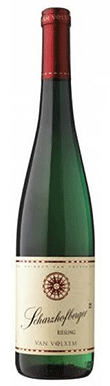
From the top knoll on the crest of the legendary Scharzhofberg, the Pergentsknopp does honour to this windy parcel, ideal for dry wines. Cool concentration,...
2018
Van VolxemGrosses Gewächs
Horst Sauer, Am Lumpen 1655, Grosses Gewächs, Franken, Germany, 2018
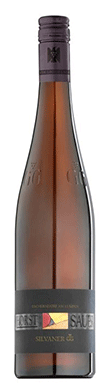
Horst Sauer is the master of Silvaner and the Echerndorfer Lump, a steep amthitheater-shaped vineyard on a loop of the Main is his chief site....
2018
Horst SauerGrosses Gewächs
Ökonomierat Rebholz, Siebeldinger 'Ganzhorn' Im Sonnenschein, Grosses Gewächs, 2018, Grosses Gewächs, Pfalz, Germany, 2018
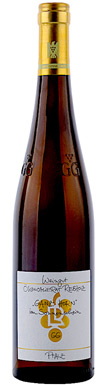
Stony tautness is apparent from the off. Grown on a tiny parcel of coloured sandstone with lots of gravel sand and loam deposited by the...
2018
Ökonomierat RebholzGrosses Gewächs
Gelama, Forster Pechstein, Grosses Gewächs, Pfalz, Germany, 2018
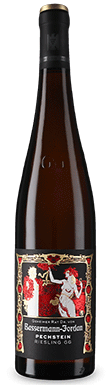
The nose is shy to wake up but slowly reveals smoke and ripe mandarine peel. The palate is immensely concentrated, vivid with citric verve, luscious...
2018
GelamaGrosses Gewächs
Wittmann, Westhofener Kirchspiel, Grosses Gewächs, Rheinhessen, Germany, 2018
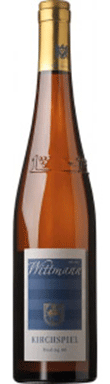
Gorgeous precision, lemony tautness, sharp linearity: even in 2018 the inherent coolness of the limestone soils in this gently east-south-east facing site afforded these vines...
2018
WittmannGrosses Gewächs
Dönnhoff, Norheimer Dellchen, Grosses Gewächs, Nahe, Germany, 2018
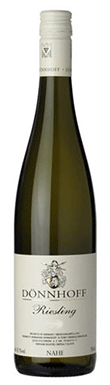
From a site of slate and porphyry facing the Nahe river and from Cornelius Dönnhoff's capable hands, this is an expression of stone and sun....
2018
DönnhoffGrosses Gewächs
Gut Hermannsberg, Altenbamberger Rotenberg, Grosses Gewächs, Nahe, Germany, 2018
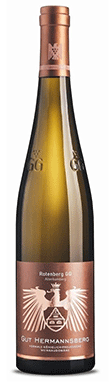
The Altenbamberger Rotenberg is an isolated, out-of-the way site of rhyolite and slate, surrounded by forest and rising to 350m. Despite the relative coolness of...
2018
Gut HermannsbergGrosses Gewächs
Schloss Lieser, Lieserer Niederberg Helden, Grosses Gewächs, Mosel, Germany, 2018
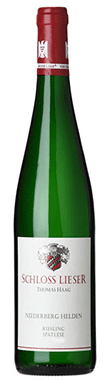
Thomas Haag simply is a master. The brilliance of his collection once again stands out. His take on this south-facing site of blue Devonian slate....
2018
Schloss LieserGrosses Gewächs
Rudolf May, Rothlauf, Grosses Gewächs, Franken, Germany, 2018
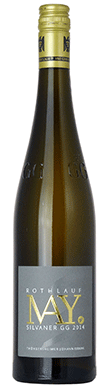
From a site that combines two of Franken's chief soils, Muschelkalk (Triassic limestone) and Buntsandstein (Triassic red sandstone), in a lateral valley of the Main...
2018
Rudolf MayGrosses Gewächs
Bernhard Huber, Malterdinger Bienenberg Wildenstein, Grosses Gewächs, Baden, Germany, 2017
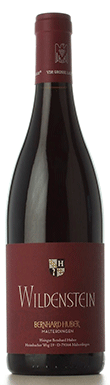
The nose is a little shy but the structure is one of fluid, unimpeded elegance. The manicured vines on the reddish limestone on this tiny...
2017
Bernhard HuberGrosses Gewächs
Rudolf Fürst, Bürgstadter Centgrafenberg, Grosses Gewächs, Franken, Germany, 2017
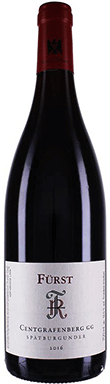
Blood, iron-oxide and lovage on the nose express an incredible savouriness that is intensified on the slender palate by notions of white pepper. The palate...
2017
Rudolf FürstGrosses Gewächs
Rudolf Fürst, Klingenberger Schlossberg, Grosses Gewächs, Franken, Germany, 2017
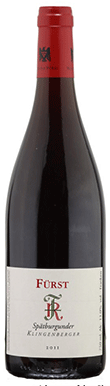
The Klingenberger Schlossberg is one of Franken's iconic sites: steep, terraced and of poor, red sandstone. Some of that stone and freshness appears on the...
2017
Rudolf FürstGrosses Gewächs
Dr Heger, Achkarrer Schlossberg, Grosses Gewächs, Baden, Germany, 2017
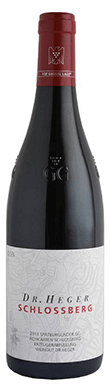
Joachim Heger is another one of those Kaiserstuhl winemakers who has never rested on his laurels. The stylistic evolution thus carries apace and we are...
2017
Dr HegerGrosses Gewächs
Aldinger, Gips Marienglas, Grosses Gewächs, Württemberg, Germany, 2017
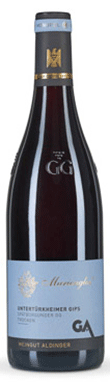
Named after the gypsym crystals that can be found in this south-facing site of Triassic keuper, Marienglas shows the dynamic spirit of the Aldinger brothers...
2017
AldingerGrosses Gewächs
Friedrich Becker, Sankt Paul, Grosses Gewächs, Pfalz, Germany, 2016
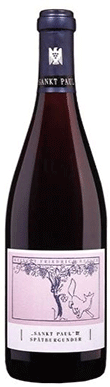
There is no doubt that the Becker Pinot Noirs are muscular and structured in style, but of the three GGs presented here, Sankt Paul shows...
2016
Friedrich BeckerGrosses Gewächs
Schnaitmann, Fellbacher Lämmler, Grosses Gewächs, Württemberg, Germany, 2017
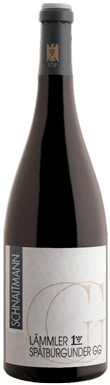
Lemberger, at home in Württemberg, is Germany's last red wine secret. At an altitude of 380m, grown on coloured marls, this variety, the same...
2017
SchnaitmannGrosses Gewächs
Jean Stodden, Recher Herrenberg, Grosses Gewächs, Ahr, Germany, 2017
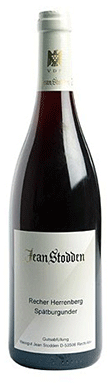
In his steep and partially terraced greywacke site of Herrenberg, Alexander Stodden shows off a slimmed-down Ahr style. A shy nose is not yet willing...
2017
Jean StoddenGrosses Gewächs
