Gusbourne still wines: the new range tasted
Simon Field MW tastes the new range of four Gusbourne still wines now being produced alongside their sparkling bottles.


Gusbourne has built an enviable reputation for its portfolio of sparkling wines over the last fifteen years, the dynamic Charlie Holland now acknowledged as a world-class winemaker. His contagious enthusiasm has now spread to an impressive range of still wines.
Speaking about the new venture, Holland said: ‘It makes sense with climate change to broaden our perspective, and to demonstrate that we can now also compete on the global stage with the still wines’.
Scroll down to see tasting notes and scores for the four new Gusbourne still wines
He added that even though the still range – comprising two Chardonnays and two Pinot Noirs, makes up only 5% of production it is a ‘really exciting development and sure to grow’.
If England can now rival Champagne with its fizz, why not, eventually, do the same with the still wines? Puligny Montrachet beware!
Grape sourcing
Ripeness is all, according to Holland and this is why the still wines are sourced only from Gusbourne’s Kent holdings. All the grapes come from their own vineyards, which cover 220 acres (just under 90 hectares), two thirds in Kent, near to Rye and Romney Marsh, and one third further east in West Sussex.
‘The soils in Kent are better suited to still wines,’ he maintained, ‘in Sussex there is more ‘cool’ chalk, whereas in Kent the soil is predominantly clay – (Weldon clay loam to be precise) which warms up more and therefore suits the still wines.’
The range is evolving all the time, with further single-vineyard projects promised and even a Pinot Meunier bottling from the warm 2020 vintage on the cards.
The stalwarts are the Pinot Noir and the Chardonnay ‘Guinevere’, the only wine in the range with an obviously branded name, courtesy of the owner Andrew Weeber.
Style profile
The clones used for both wines are Burgundian, but the style, according to Holland, is deliberately English rather than aspirational Burgundian.
The Chardonnay Guinevere, for example, has a structure of acidity which may recall Chablis, but both the barrel influence and the lees stirring employed also remind one of the Mâconnais or the Chalonnaise. One thinks of Burgundy, for sure, but only to identify subtle points of difference.
In the same vein, although Holland does not deny that everyone would like to make wines structured like the best from Gevrey Chambertin, the style actually achieved with his Pinot Noir is cooler and more approachable, recalling Central Otago as much as the Côte de Beane.
The nine months oak ageing underlines a seriousness of intent, however, the resulting wine is impressively structured even if 2019 was a cooler vintage. A refreshing early summer BBQ wine, according to Holland, and it’s impossible to disagree.
The remaining pair of the quartet currently coming to market is made up of the unusual Chardonnay Clone 809 (aka Musqué), and a lively rosé from their Mill Hill vineyard.
The Musqué clone is less obviously related to Muscat in the cool 2019 vintage, and, aromatically, ventures closer to Sauvignon Blanc. Fascinating – all the more so as the palate brings us back with confidence to the structure of an elegant, apéritif style of Chardonnay.
The rosé, to me, is the least successful of the four this time, ‘bags of flavour and fruit’ per Holland, but maybe a little less subtle than its siblings. That’s what rosé should be all about, one may argue, and it’s a fair point. The extraordinary almost luminous orange hue is certainly something to behold.
Oak experiments
An impressive break-away family of wines, all in all. Holland is currently experimenting with large oak barrels (500-litres as opposed to the 228 ltr Burgundian pièces used thus far) and has even sourced a couple of Kentish barrels from the local Butler’s Wood, which had just been returned from Champagne, seasoned and toasted and ready for some wine.
Watch this space to see which particular wine is deemed to be the best fit for English oak.
English still wine (not to mention its sparking cousin) is definitely in very good hands with Gusbourne; the marriage of the very specific Kentish terroir and the ever-evolving climatic patterns is proving most felicitous for the development of this exciting and hitherto somewhat under-appreciated category.
New tasting notes: four Gusbourne still wines
You may also like
English blanc de blancs: expert’s choiceExperimenting with sweet wine as dosage for English sparkling wineProducer Profile: NyetimberFirst taste: Ridgeview Oak Reserve NV
Gusbourne Estate, Pinot Noir Rose, Kent, England, United Kingdom, 2020
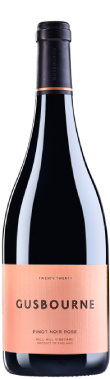

An immediately arresting colour, somewhere between a flamingo and an orange rose, probably closer to the rose, on reflection! The nose stays with the flowers, adding nectarine, soft plum and tangerine for good measure. The palate brings strawberries and cranberry into the equation, the citric grip assuaging an impression of sweetness with impressive discipline. Something of the orange grove here, every which way, and generous on the finish.
2020
Gusbourne EstateKent

Gusbourne Estate, Chardonnay 809, Kent, England, United Kingdom, 2019
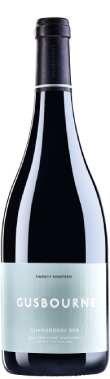
Ghostly pale yet bright and welcoming. The nose recalls Spring blossom, hawthorn maybe and a hint of orange peel. The palate is gentle, discreet, yet pleasantly allusive. The citric notes are complemented by hints of almond, white peach and Braeburn apple. Muscat freshness and a modest whisper of salinity at the end. The texture is pure and unassuming, for sure, but, as with all of Charlie Holland’s wines, there is excellent balance and harmony, real satisfaction and persistence in the mouth. This wine is to be released on 7th June 2021.
2019
Gusbourne EstateKent
Gusbourne Estate, Chardonnay Guinevere, Kent, England, United Kingdom, 2019
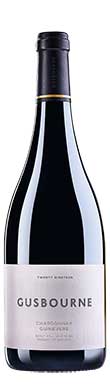
Soft straw colour, the rim watery but not lacking for viscosity. An attractive nose of papaya, mango and poached pear, hints of vanillin deferring to the wood and a lick of spice. The palate is once again finely judged, vestigial lees evidenced with hints of sourdough and brioche, impressively entwined with ripe fruit, both citric and modestly exotic, and a Burgundian sense of place; the place in question being Kent!
2019
Gusbourne EstateKent
Gusbourne Estate, Pinot Noir, Kent, England, United Kingdom, 2019
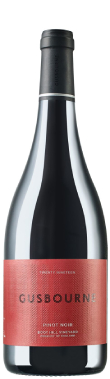
Attractive soft ruby, hints of pink at the rim. A delightful nose with summer pudding, strawberry and blackberry to the fore, then a little spice and a hint of menthol and eucalypt. The palate is soft and approachable, acidity finely balanced but far from obtrusive, hints of spice and pepper from the oak. The ethereal charm belies harmonious weight and a texture which will work well, gastronomically speaking. The finish is poised and persuasive, soft spice framing the edifice very agreeably.
2019
Gusbourne EstateKent
