
Hugel Schoelhammer: The first three vintages compared


Stephen Brook tastes all three vintages of Hugel's new single-vineyard Riesling, Schoelhammer, including the new 2009 release...
Grand cru or not grand cru?
There are various reasons for this, including an underlying scepticism about the system’s validity, and the established success of their own brand names.
Scroll down for Stephen’s Schoelhammer tasting notes
So, although the respected house of Hugel has substantial holdings in grand cru Schoenenbourg, its top Rieslings have never borne the name of the vineyard.
When I asked winemaker Marc Hugel over a recent lunch why this was so, he replied: ‘We own 14 parcels of Riesling in Schoenenbourg and have always vinified them separately. Some of them have always stood out in our in-house blind tastings, and we eventually decided to bottle these outstanding wines on their own.’
Schoelhammer
That is how Schoelhammer Riesling came into existence. It is, the Hugel team insists, not just a wine from grand cru Schoenenbourg, but a specific selection of organically farmed dry Riesling from within the site. In short, it’s a ‘grand cru plus’.
Moreover, Hugel produce a second Schoenenbourg wine from younger vines, mostly grown on marl and clay soils. This is known as Grossi Laüe, an Alsatian dialect term equivalent to the German ‘Gross Lage’ (great site).
The plots reserved for Schoelhammer consist of 0.5 ha on the mid-slope of Schoenenbourg, facing south and southeast at an elevation of 290 metres.
The wine is aged in large casks and also in stainless steel – as volumes are small, the ageing of the wine has to be on a pragmatic basis, as it’s unlikely that a single cask will exactly match the volume produced in any vintage. The wine is bottled in August or September.
The tasting
The launch of the Schoelhammer 2009 on 14th June at Galvin at Windows, Park Lane, gave everybody present the opportunity to compare all three vintages – 2007, 2008, and 2009.
They showed distinct vintage characters, and all effortlessly accompanied a rich and meaty fillet of stone bass with caponata and lightly battered baby squid.
You might also like:
Producer profile: Hugel
Alsace Riesling: Comparing grand cru sites
Dry German Riesling Grosses Gewächs: Panel tasting results
Hugel, Schoelhammer Riesling, Alsace, France, 2009
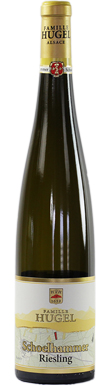

2009 was a warm year capped by an Indian summer, producing rich and healthy grapes. Many wines had less acidity than usual, however the clay...
2009
Hugel

Hugel, Schoelhammer Riesling, Alsace, France, 2008
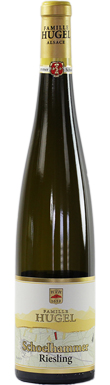
In contrast to 2007, 2008 was a cool and late vintage, but the grapes were harvested healthy if at slightly lower maturity than usual. The...
2008
Hugel
Hugel, Schoelhammer Riesling, Alsace, France, 2007
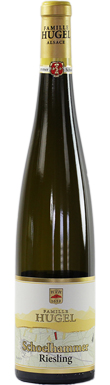
This year showed all the signs of being another torrid vintage comparable to 2003, but a cooler August slowed down the ripening process. Even so,...
2007
Hugel
