
Investing in Champagne: Will the surge top out?
With the region’s top brands still seeing steep price rises, can the momentum continue much longer?


Champagne heads into 2023 after a year largely marked by strong demand and more price rises for top prestige cuvées, but also with some questions around the sector’s momentum.
Champagne was a standout performer on the fine wine market for much of 2022, alongside blue-chip Burgundy.
Several individual wines saw strong price rises, led by Cristal and Krug, according to Bordeaux Index. Data from the merchant’s LiveTrade trading platform, supplied on 1 December, showed Krug 2003 up by 44% year-to- date, Cristal 2013 up 40%, Dom Pérignon P2 1998 and Cristal 2004 both up 39%, and Cristal 2002 up 38%.
Matthew O’Connell, CEO of LiveTrade, also noted steep price rises in 2021 and said some cuvées have ‘really changed context’ on the market. An ongoing expansion of consumer interest in luxury Champagne labels has benefited top brands, he said.
‘Cristal is obviously on an amazing run qualitatively, but it’s also Cristal,’ he said. ‘If people are coming to the wine market new, whether as an investor, collector or consumer, they buy Cristal because they recognise it, and that’s a big tail-wind.’
Once considered a slow and steady performer, ‘Champagne has found itself fast-tracked into the big leagues of investment-worthy wines’, said Liv-ex, a global marketplace for the trade, in a recent report on the region.
Its Champagne 50 index has more than doubled in the past five years. It tracks Bollinger La Grande Année, Dom Pérignon, Krug, Cristal (including rosé), Pol Roger Sir Winston Churchill, Salon Le Mesnil and Taittinger Comtes de Champagne.
UK merchant Goedhuis & Co also recently noted demand for other names. ‘New releases of top cuvées, such as Billecart-Salmon Cuvée Nicolas François 2002 and Charles Heidsieck Blanc des Millénaires 2007, found ready buyers,’ it said in its report on the third quarter of 2022, prior to the release of Taittinger’s Comtes de Champagne 2012.
However, Liv-ex’s Champagne 50 index fell by 2.5% in November. It was still up 20% for the first 11 months of 2022, outpacing the broader Liv-ex 1000 index.
In its Champagne report, published in October, Liv-ex questioned whether the region’s momentum would continue. ‘Any region on the boil will eventually get too hot for some,’ it said.
‘Champagne’s core strength lies in brand power and an enviable global distribution network,’ Liv-ex said in its report. ‘The question is whether these two elements alone will be enough to sustain the current run, as the old rules of engagement evolve, and the world loses its enthusiasm for celebration.’
There have been some signs of greater caution on the fine wine market in general in recent months, amid worsening macroeconomic conditions.
O’Connell said Champagne still looks relatively strong. ‘There’s good momentum, we see very strong trading activity, parcels move quickly,’ he said.
Several factors may affect prices, but he sees a ‘medium- to long-term phase’ of increased global consumption, collector interest and brand strength.
He highlighted a potential opportunity for prestige cuvée Champagne in Asia. ‘There used to be a really blanket observation that Asia doesn’t like bubbles. But that has changed very significantly,’ he said.
‘It’s our central thesis that there’s a lot further to go,’ he said, although adding that the timing and pace of change depended on socioeconomic factors.
Jamie Ritchie, worldwide chairman of wine and spirits at auction house Sotheby’s, noted drinkers’ rising interest in grower Champagnes, alongside traditional market leaders.

Monitor: latest sales activity – Champagne
Cristal was a star performer in 2022, shows Bordeaux Index data from LiveTrade transactions (see chart). Its Cristal index was up by 30% in value year-to-date (YTD), as of 1 December.
The chart also shows the difference between 18-month and 2022 (YTD) performance of several Champagne brands. Price momentum cooled to some extent in 2022, but that is compared with particularly steep growth in 2021.
At auction, Christie’s offered 11 lots direct from Champagne Philipponnat cellars in December. All lots sold, with three magnums of Clos des Goisses LV 1996 fetching £2,750 (US$3,380; high estimate: £3,000). In New York, Sotheby’s saw 12 bottles of Dom Pérignon 1985 fetch $8,125 (£6,610; high e: $5,000). Its auction featured several 1990-vintage lots of Dom Pérignon and Cristal. Highlights were a 12-bottle lot of Dom Pérignon 1990, which fetched $6,000 (high e: $5,000), and six bottles of Cristal 1990 fetching $4,375 (high e: $3,500). Three bottles of Jacques Selosse, Grand Cru Blanc de Blancs 1990 also fetched $7,500 (high e: $9,000). ‘Champagne has been generating stronger demand throughout the year,’ said Jamie Ritchie, worldwide chairman of Sotheby’s Wine & Spirits.

Tasted & rated for Decanter Premium
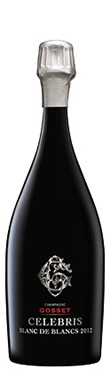
Gosset, Celebris Blanc de Blancs, Champagne 2012
This is Gosset’s first vintage blanc de blancs release, wrote Decanter’s Yohan Castaing. ‘The initial nose is quite shy, but coaxing reveals a character expressing white fruit such as pear and spring flowers enhanced by pastry and citrussy notes,’ Castaing said, rating the wine at 95 points. ‘The palate has a suave, even mouthcoating texture and remarkable depth that is beautifully sustained by chalky salinity and a gorgeous grapefruit taste.’ He also suggested the wine, disgorged in March 2022, could benefit from a decade of further ageing. The Whisky Exchange was offering the wine at £225 a bottle.
The Bordeaux Index view
Fine wine & spirits specialist Bordeaux Index kindly sponsors this section of Decanter, and provides its view on the market here every issue. It can be found at bordeauxindex.com.
The Champagne market has experienced a sharp rise in pricing since summer 2021. While this pace of growth has slowed somewhat in 2022, the upwards momentum persists. There is reason to expect this to continue: luxury consumption is a growing dynamic and this manifests itself in brand focus – pertinent in Champagne (as it has been for Tuscan wines).
These brand focus and luxury consumption drivers mean it is not surprising that Cristal and Krug sit broadly at the top of the performance table, though most top names have seen upwards of +50% gains since summer 2021. This year, mid-age vintages (1998-2004 type period) have seen the greatest gains – not surprising given the waning supply – but young vintages have nevertheless seen strong growth. We expect 2012 in particular to gather pace, as its strength has perhaps been disguised somewhat by 2013 and 2014 also being good vintages; and then there’s a ‘gap’ before the 2018-2020 trilogy which is looking compelling from a quality perspective.

Related articles
- Vintage rosé Champagne: panel tasting results
- Champagne houses announce ‘first’ with B Corp certification
- Champagne 2022 harvest: yield set is highest in over a decade
Gosset, Celebris Blanc de Blancs, Champagne, France, 2012

The initial nose is quite shy, but coaxing reveals a character expressing white fruit such as pear and spring flowers enhanced by pastry and citrusy...
2012
Gosset

