
Isole e Olena: Cepparello wines to drink and to keep

Christelle Guibert got to grips with the famed Tuscan estate at Decanter's Fine Wine Encounter in November 2017, during a masterclass hosted by owner Paolo de Marchi.
View all of Decanter’s Isole e Olena tasting notes
Paolo de Marchi, who has just completed his 42nd vintage, is one of Tuscany’s movers and shakers and yet, perhaps surprisingly for the man known as ‘Mr Sangiovese’, his career began in Piedmont where the de Marchi family had a small Barolo estate.
The move into Chianti occurred in the 1950s, a time when many were giving up viticulture in the aftermath of phylloxera and switching to the textile industry.
However, Paolo’s father seized the opportunity to purchase two adjoining small estates, ‘Isole’ and ‘Olena’, and so Isole e Olena was born.
Both were tiny hamlets at the time, and when sharecropping came to an end in the 60s, so did the village of Olena.
In 1967, the first appellations were set, along with a five year plan to subsidise the Chianti zone. A huge amount of white grapes were planted, with the main focus being quantity rather than quality.
In 1976, at the age of 25, Paolo took over the property, buying his first barrels and making a Sangiovese blended with white grapes – in those days Chianti was legally required to include Trebbiano and Malvasia in the blend.
In the 1990s some important changes were made to the Chianti production rules, and since 2006 white grapes can no longer be used. As Paolo jokingly illuminated, ‘it’s much easier to make red wines using red grapes’.
Paolo made his first 100% Sangiovese, Cepparello, in 1980 and had to label it as an IGT. He spent the next two decades replanting, improving the vineyards, increasing the density and restoring the terraces.
The estate is located in the centre of the Chianti hill, on the western slope. Vineyards go from 350 to 500 metres in altitude, benefitting from a cooling breeze and resulting in colder winter temperatures than the rest of Chianti. Bud break is usually earlier that the rest of the region, and they tend to harvest late here.
Paolo doesn’t look for power but for elegance and finesse, which are the central threads running through all his wines. When praised for his achievements, he modestly replies with a twinkle in his eyes ‘I’m just trying to do what I believe in.’
Cepparello – a mini vertical:
See also: Wine Legend: Cepparello 1982
Isole e Olena, Cepparello, Tuscany, Italy, 2012
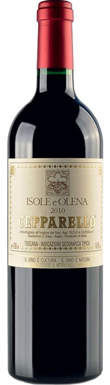

Cepparello refers to the name of the valley where the vines are grown. It isn't a single vineyard expression, but a selection of the best...
2012
Isole e Olena

Isole e Olena, Cepparello, Tuscany, Italy, 2010
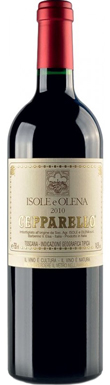
This flagship cuvée never sees more than 30% of new oak, around only 3% of which is American. This is a stunning wine which is...
2010
Isole e Olena
Isole e Olena, Cepparello, Tuscany, Italy, 2006
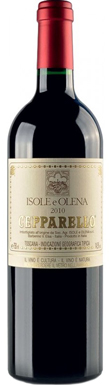
One of Paolo de Marchi’s favourite vintages, which saw a beautiful dry summer with hot days, cool nights and plenty of bright sunshine. It's not...
2006
Isole e Olena
Isole e Olena, Cepparello, Tuscany, Italy, 2004
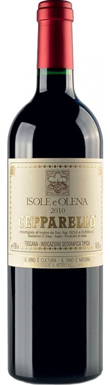
2004 was a big crop vintage, and the estate had to drop more than 50% of the grapes during green harvest. The aromas suggest a...
2004
Isole e Olena
Isole e Olena, Cepparello, Tuscany, Italy, 2003
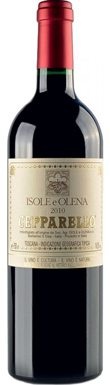
In contrast to the 2004, 2003 was a very small crop due to the very hot and very dry weather, which caused the vines to...
2003
Isole e Olena
Isole e Olena, Cepparello, Tuscany, Italy, 1990
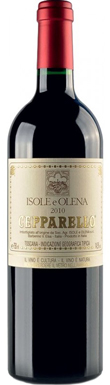
1990 was the first vintage that Isole e Olena really felt changes in the climate; 1988 was a warning, and in 1990 they had to...
1990
Isole e Olena