
La Poja vertical: The rebel of Valpolicella


Aldo Fiordelli takes a closer look at a real rarity; a "cru" wine produced in Valpolicella.
La Poja is a “Chinese-box” cru on top of La Grola hill in Veneto’s Valpolicella, owned by the Allegrini estate.
Scroll down for La Poja tasting notes
Valpolicella is, of course, known for Amarone and for its distinguishable winemaking style – not for its crus. Valpolicella’s two territories can be generalised by the classic, elegant wines from Fumane and Marano to the West, and the more powerful wines from the flat eastern “step”.
Even so, it is the territory’s trademarked style of appassimento that remains the more important factor in the wine’s style.
What makes La Poja so special?
Few are the exceptions, but La Poja is certainly one of note. Planted in 1979, this was a pioneering vineyard in Valpolicella for at least four reasons.
- It was established at a relatively higher density with 4.240 vines per hectare compared with average of 1.600 to 2.000 of that time
- The choice of training system favoured double Guyot (instead of the omnipresent Pergola), to achieve more colour and concentration
- The vineyard was planted only with Corvina from the “Graspo rosso” clone, rather than the field blend of the varietals; Rondinella, Molinara or Vespolina normally used for Amarone
- Last but not least, it has never been intended to produce grapes for appassimento
Why would anyone do that in this area?
So was Giovanni Allegrini absolutely crazy? The founder of the estate certainly had a way with the land, and the intuition to match. He understood straightaway the value of La Grola’s climate and soil.
With its southeastern exposure La Poja enjoys the exceptional microclimate of Fumane, sheltered to the North by Mount Pastello and to the west by Monte Baldo, with the cooling influence of the Adige Valley and less continental influence thanks to Lake Garda.
In September, it experiences an accentuated diurnal temperature range: in 2006, one of the best vintages tasted, differences were as notable as 8°C at night from 25°C during the day.
But the most important factor remains the shallow, calcareous soil. Each guest at this vertical tasting, held at VinItaly, got a box of soil to keep.
Containing 16% of active limestone, it is low in potential alcohol yet ideal in achieving sugar concentration – once a ratio relied on to indicate the moment to pick grapes – but nowadays noted as a beneficial element in phenolic maturity.
Clearly, Allegrini didn’t need appassimento to attain richness in their wines.
The result is a full bodied red bursting with perfume, completely dry, lower in alcohol and more precise than Amarone, almost never showing a hint of volatile acidity, nor raisin or treacle notes, full of the spiciness due to the aging in new French oak barrels.
At times perhaps showing less complexity than Amarone when young, La Poja develops with an incredible suppleness improving its signature Morello cherry aroma along with spiciness and overall elegance.
La Poja wines in this tasting:
Click on the wines to see the full tasting note and stockist details.
More Valpolicella content on Decanter.com

Jefford on Monday: Valpolicella Revealed
Andrew Jefford gets to know a fractious Italian champion....

Credit: Cantina di Negrar
Introducing appassimento wines from Veneto
Rich and textured, appassimento wines are a calling card for the region of Veneto in Italy. Here are some delicious

Jefford on Monday: The alpha and omega wine
Andrew Jefford recommends wines to try...
Allegrini, La Poja, Veneto, Italy, 2010
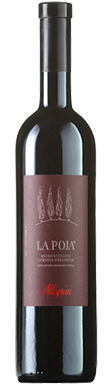

The youngest wine of the flight. A denser ruby color and assertive clove aroma, elegance over power due to the mild vintage which lacked excessive...
2010
Allegrini

Allegrini, La Poja, Veneto, Italy, 2008
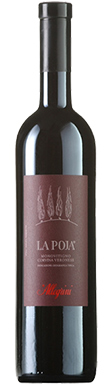
One of the less precise wines in this flight. Deep in colour yet garnet at the rim. Evolved on the nose with aromas of leaves...
2008
Allegrini
Allegrini, La Poja, Veneto, Italy, 2005
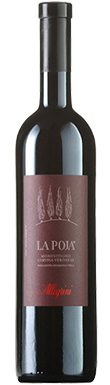
A lesser vintage due to a lot of rain which results in a surprisingly refreshing, wiry version of La Poja with a paler ruby, brick...
2005
Allegrini
Allegrini, La Poja, Veneto, Italy, 2004
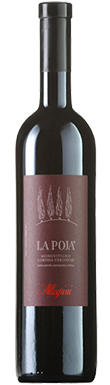
A longer growing season in this vintage gifted this wine complexity, with more focus on elegance than power. Very classic in colour (pale ruby to...
2004
Allegrini
Allegrini, La Poja, Veneto, Italy, 2000
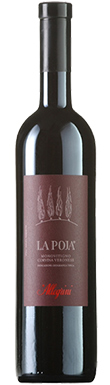
A softer, riper vintage, without overpoweringly stewed or cooked aromas but rich and complex from cherry and chocolate to bay leaf. Creamy on the palate...
2000
Allegrini
Allegrini, La Poja, Veneto, Italy, 1995
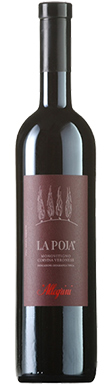
One of the most classic examples, an almost “old fashioned” style of Corvina with a complex dark nose of meat, wild fruits, cedar wood and...
1995
Allegrini
