
Leo Erazo: Inspired by Itata and Chile’s wild south
The old vines and special terroir of Itata, southern Chile, have been a source of inspiration for this intrepid winemaker. The 2023 fires were a setback, but his commitment to this wine land is undiminished.

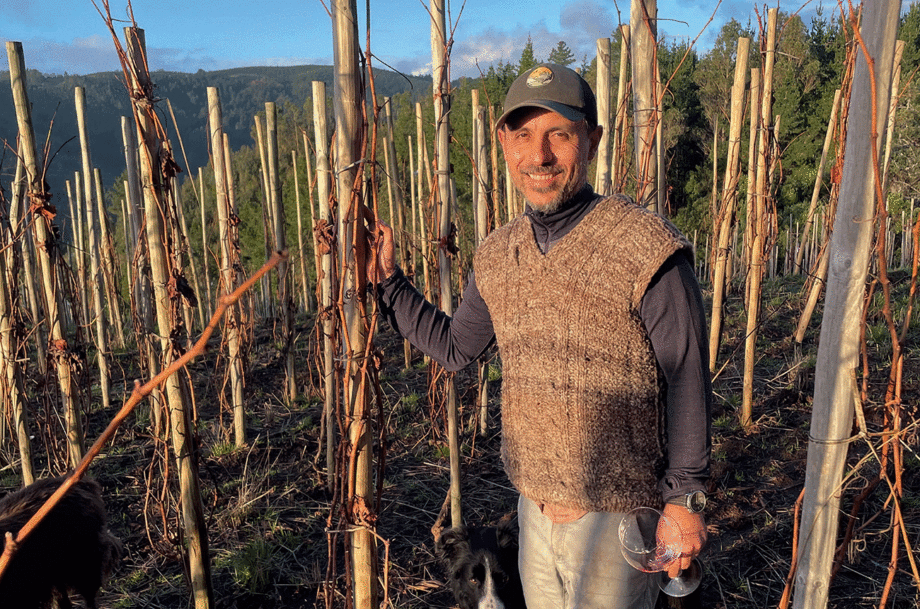
The path that leads to Leonardo Erazo’s winery is narrow and slippery. The mud is thick from rain that has not stopped for almost a week, and the pine forests on both sides barely let in the light.
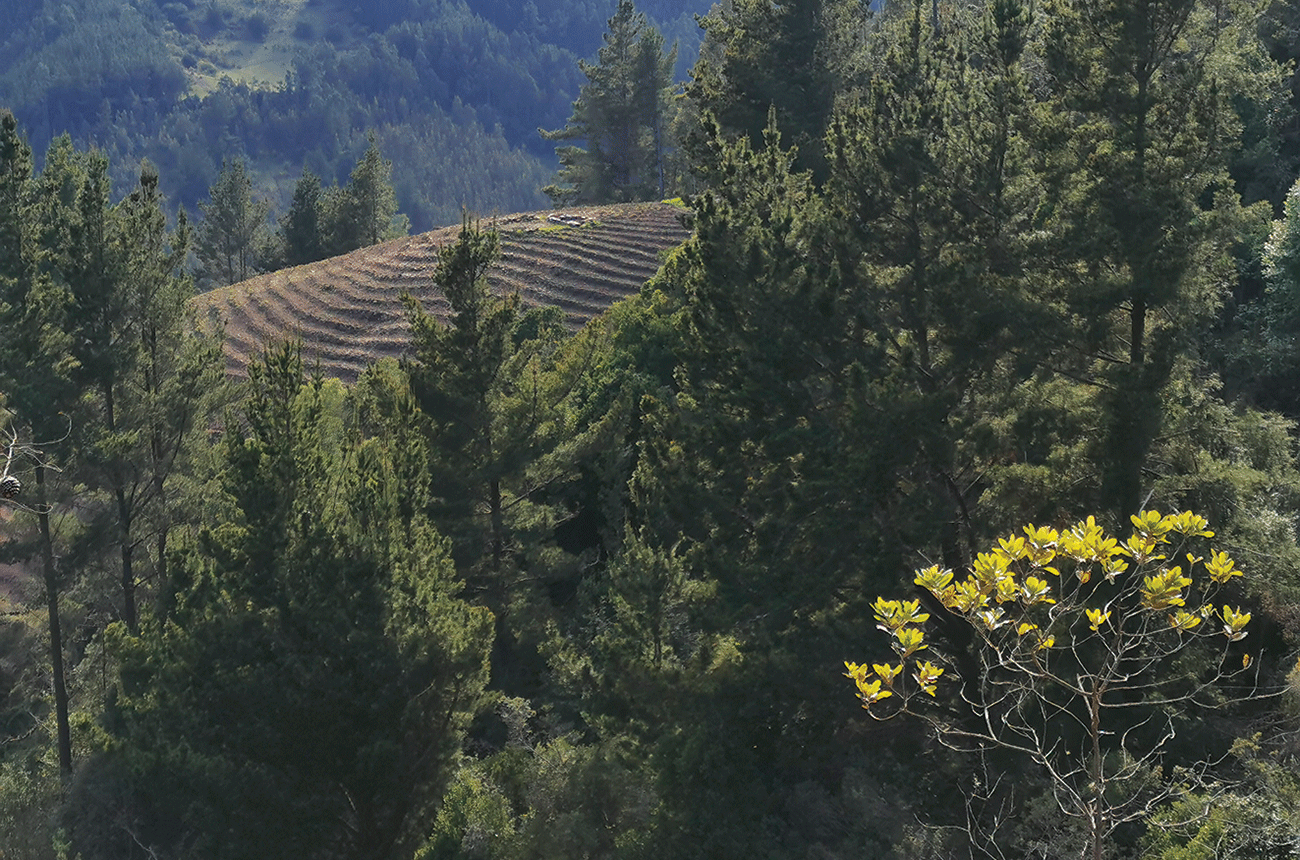
I should have listened to Erazo when he told me to rent a 4×4 – instead I’m inching across the mud in a sedan. Fortunately, it manages to reach the end of the road, where the pine trees suddenly give way to a spectacular view.
Tasting notes for eight of Erazo’s must-try wines below
This place is called Cobquecura. It has no viticultural tradition to speak of, but it is close to the southern Chilean DO region of Itata, 500km south of Santiago, where vines have been cultivated for 500 years.
Itata’s vines fell into neglect when Chile’s Central Valley rose to vinous prominence from the mid-20th century, but they’ve undergone a renaissance in recent decades, with forward-looking producers such as Erazo rescuing this rich heritage of old, dry-farmed vineyards.
Today, a growing number of vintners work small vineyards of ancient País, Moscatel or Cinsault vines in Itata.
After the fires
The rain has stopped falling for a moment and the sky allows timid rays of winter sun to sneak through the dense layers of clouds. Erazo, 45 years old, is waiting for me among the vines. He wears a thick sleeveless vest, shorts and working boots. He smiles with his usual warmth.
We haven’t seen each other for a couple of years, since just before Itata was devastated by the 2023 fires that destroyed, according to USDA Foreign Agriculture Service reports, about 440,000ha of land (mostly pine forests), killed 26 people and destroyed houses, wineries and an unknown number of old vineyards.
Fortunately, the fire did not reach Erazo’s property in Cobquecura, but it did destroy four of his six hectares in the Guarilihue area of Itata – the heart of the valley and the source of his best Cinsault wines.
‘It was very fast. In a matter of hours there was nothing left. Fortunately, the winery was not damaged, although the flames came close,’ he remembers.
Erazo is slowly recovering from the disaster, trying to revive his 6ha of burned vines in Guarilihue, while rearing his 4ha of new vines at home in Cobquecura.
He planted the latter in 2020 – all to white varieties such as Chenin Blanc, Albariño, Riesling and Chardonnay – and they are just now producing their first wines, which are not yet on the market.
These are fresh and refreshing white wines, marked by the cold breezes of the Pacific ocean. ‘I tried to make reds, like País or Pinot Noir, but they didn’t work, he explains. ‘It is too cold here. Maybe if the soil held more water they could ripen, but the stone soil doesn’t retain anything.’
The journey so far
After graduating as a winemaker and working briefly for Chilean wineries such as Pérez Cruz and Via Wines, Erazo decided to travel the world. He made wines in Priorat, Catalonia; Sonoma, California; Hawke’s Bay, New Zealand; and also in South Africa.
From 2012 to 2020 he was the winemaker at Altos Las Hormigas in Mendoza. Seduced by the rich heritage of old vineyards, he decided to settle permanently around Itata.
‘In 2010, while working as a viticulture professor at the University of Concepción, I was able to get to know the valley more closely and also made my first Cinsault wines,’ he says.
Cinsault seems to be what attracted Erazo to Itata, but instead of starting a new life in the region’s interior, where plenty of old Cinsault vines exists, he moved west to Cobquecura, on the coast north of Concepción.
Erazo lives with his wife Zjos and their four children – Emilia, Esteban, Matías and six-month-old Teresa – in their ocean-facing home, next to the winery and large warehouse, built of recycled materials.
‘There is another energy here, the energy of the Pacific. And there is much more to do,’ he says, smiling. ‘It’s a place without history, without vineyards – we don’t know what we’re doing, it’s all trial and error. And that is the challenge.
The sense of Cinsault
Erazo produces about 60,000 bottles from Itata vines, from his own vineyards as well as those he rents and others from which he purchases fruit. He works mostly with Cinsault, but also País, Moscatel, Semillon and Carignan.
‘Some have told me I should plant Gamay or Trousseau, but I don’t agree. Cinsault is already here, it has already acclimatised – it just needs to be polished,’ he says.
He has been committed to the variety since he made his first Cinsault in 2013, under the Rogue Vine brand, a joint project with his friend Justin Decker, a Californian who settled in the area.
Cinsault is not easy to work with. Until De Martino winery rescued it for the market in 2010 (with its Viejas Tinajas label), it was considered an unimportant variety that produced uninteresting wine.
In Chile it is still known as la cargadora (‘the loader’) because of its tendency to produce too many bunches. But De Martino paved the way for others to follow, offering juicy, refreshing reds ideal for relieving the heat of summer.
Some, like Erazo, decided to take Cinsault to an even higher level. ‘We have heard so much rubbish about this variety that it is difficult to forget, but like most grapes, if it is planted in the right places and cared for it can produce great reds,’ he assures.
From his first trials he realised that Cinsault was very sensitive to soil type and that its bad reputation could be partly attributed to being planted in an unsuitable terroir.
‘One of the things I learned first was that if Cinsault is grown in soils with too much clay, without stones, it produces a bland wine, without grip or bones,’ he explains.
Wines under the A los Viñateros Bravos label come from partner vineyards, small plots spread across the slopes of the Guarilihue mountains. Wines under the Leonardo Erazo label (featuring a drawing of an owl on the label) are sourced from parcels that Erazo owns or manages himself, some no bigger than a few rows.
Talking terroir
Erazo divides the terroir of the Guarilihue region in Burgundian terms for his own reference. The A Los Viñateros Bravos’ Granítico and Pipeño labels (see tasting notes, p54) equate to ‘village’ wines, from soils with a higher proportion of clay.
The Leonardo Erazo ‘premier crus’ (such as Las Curvas, La Ruptura, Hombre en Llamas and El Tunel) come from soils where rock predominates over clay; and for the Leonardo Erazo ‘grand cru’ Amigo Piedra, the soils are rockier still.
All in all, Erazo makes about 35 wines, spread across different markets. Some don’t even go to market, but are simply tests of a few hundred bottles that he makes for fun.
‘Commercially, it may not be the best option to make so many different wines, but it is the way I interpret the diversity of Itata,’ he smiles. ‘I couldn’t make vineyard blends. I don’t see the point.’
Altogether this is a portfolio of delicious wines. Juicy, tense whites; mouthwatering País; and especially the charming, profound Cinsault reds. These tiny patches of semi-forgotten old bush vines, rescued by committed vignerons like Erazo, are producing Chile’s most characterful wines.
Alternative Chile: Erazo style, eight to try from Itata
Related articles
- Chile: The long, thin country of iconic red wines
- Chile’s new wave white wines
- Caballo Loco: Profile of a Chilean icon and 12 wines to try
A Los Viñateros Bravos, Granítico Semillon, Itata Valley, Chile, 2021
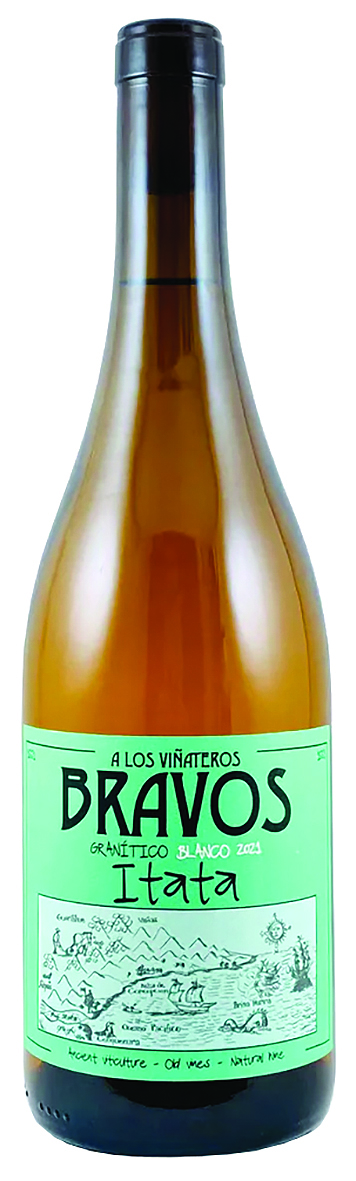

A 50/50 blend of Semillon and Moscatel, both from very old vineyards planted on granite-rich soils in Itata; fermented in steel and then aged in...
2021
A Los Viñateros Bravos

A Los Viñateros Bravos, Pipeño Blanco, Itata Valley, Chile, 2022
For this pipeño, Leonardo Erazo blends 60% of the fragrant Moscatel with 40% of the more austere Torontel, both from very old vineyards in cool...
2022
A Los Viñateros Bravos
Leonardo Erazo, Amigo Piedra, Itata Valley, Chile, 2020
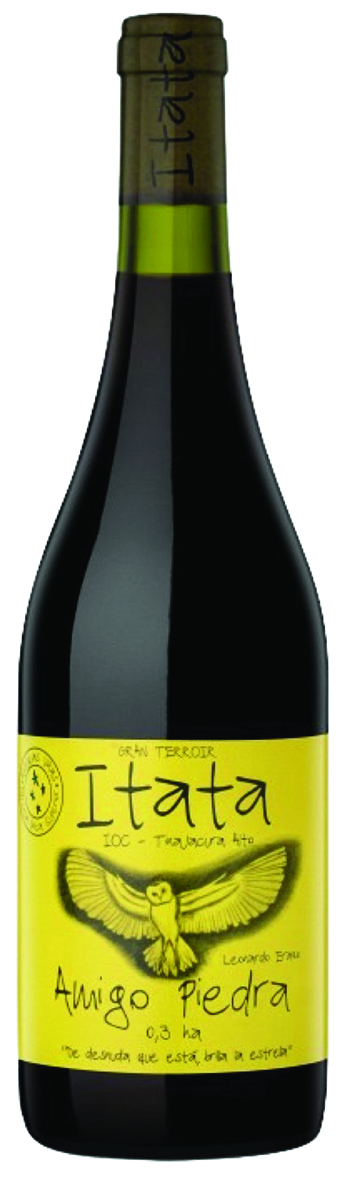
Amigo Piedra is Leonardo Erazo's top wine and comes from old vines planted in a small, rocky 0.3ha vineyard in Guarilihue, in the Itata Valley....
2020
Leonardo Erazo
Leonardo Erazo, Las Curvas, Itata Valley, Chile, 2021
From an old 0.3ha Cinsault plot that Leo purchased in 2017, Las Curvas is a red wine full of fruity flavours, sharp acidity and a...
2021
Leonardo Erazo
A Los Viñateros Bravos, Granítico Cinsault, Itata Valley, Chile, 2021
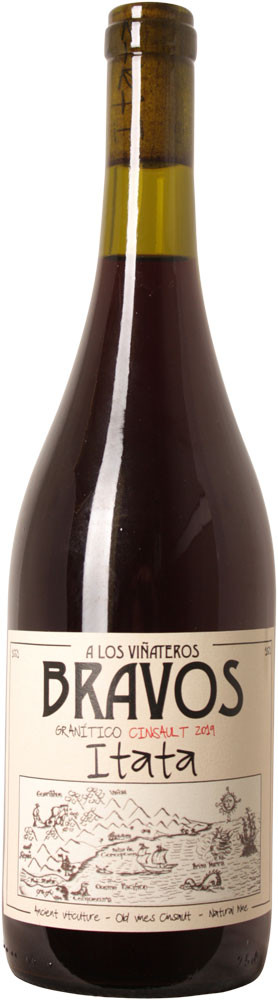
From Guarilihue, between the Itata Valley and the coast. The cool 2021 vintage and the ocean influence combine to give this wine a nervous edge,...
2021
A Los Viñateros Bravos
Leonardo Erazo, Hombre en Llamas, Itata Valley, Chile, 2019
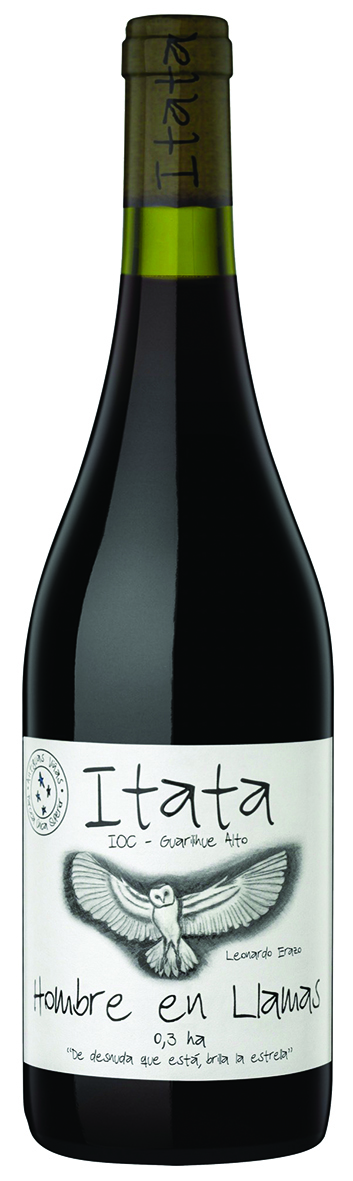
Chilean Carignan typically comes from the warm Maule Valley, but there are also small plots in cooler Itata. This wine comes from young vineyards planted...
2019
Leonardo Erazo
Leonardo Erazo, La Resistencia, Itata Valley, Chile, 2019
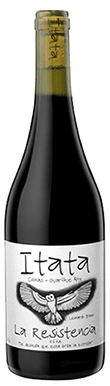
This is sourced from one of the oldest vineyards that Leonardo Erazo manages in Itata, 0.2ha of País planted in 1867. The granite-rich soils make...
2019
Leonardo Erazo
A Los Viñateros Bravos, Pipeño Tinto, Itata Valley, Chile, 2022
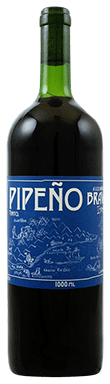
Pipeño is the name given to Chilean peasant wines, designed to quench thirst while working in the fields. This 95% Cinsault with a hint of...
2022
A Los Viñateros Bravos
