Louis Jadot: producer profile
Michael Apstein takes a look at the prolific Burgundy négociant and grower, and rates twelve Louis Jadot wines including recent releases and older bottlings.


It’s unbeknown to many that Maison Louis Jadot, one of Burgundy’s most venerable négociants, is also one of the region’s major growers – and a top one at that.
Jadot owns or controls over 141 hectares of vineyards in the Côte d’Or, the majority of which are Premier and Grand Cru.
Jadot actually began as a grower in 1827 when Louis Henry Denis Jadot acquired the Clos des Ursules through marriage. Three decades later, in 1859, he founded the négociant firm.
Frédéric Barnier, who joined Jadot in 2010 and succeeded the legendary, Jacques Lardière, as Jadot’s winemaker in 2012, points out that most négociants started as growers because, as entrepreneurs, they realised they needed more than one plot.
Scroll down to see Michael Apstein’s tasting notes and scores for 12 Louis Jadot wines
Management remained within the family until 1962 when Louis Auguste Jadot, the grandson of the founder, died suddenly without heirs.
His widow appointed André Gagey, her husband’s longtime assistant, as managing director.
In 1985, the Jadot heirs sold the business to Americans the Kopf family, owners of the Kobrand Corporation, Jadot’s American importer. Little changed.
Upon André’s retirement in 1992, his son, Pierre-Henry, became President of Maison Louis Jadot.

How did the transformation from négociant to grower occur?
The grower side of the business has exploded over the last 35 years with a series of purchases, starting in 1985 with what was likely the most significant transfer of prized vineyards in modern Burgundy history – the acquisition of Clair-Daü.
With the parcels Jadot acquired, Chambertin Clos de Bèze, Chapelle Chambertin, Bonne Mares, Musigny, and Clos Vougeot, the Clair-Daü purchase transformed them from a Côte de Beaune domaine to a major grower spanning the entire Côte d’Or.
Also included in the sale were a host of Premier Cru parcels, including a piece of Les Amoureuses in Chambolle-Musigny, and in Gevrey-Chambertin, a section of Clos St. Jacques.
Barnier lights up when describing the significance of the purchase: ‘It was a key acquisition—a great opportunity.’ Although it was widely assumed that American money helped finance the Clair-Daü purchase, Gagey emphatically reminds that all of Jadot’s acquisitions have been done with Maison Louis Jadot’s resources.
In addition to Jadot’s purchases of Maison Champy (1989) and Domaine Prieur-Brunet (2017), they acquired portions of the vineyards of Château de Chorey lès Beaune (2012), and managed to pick up parcels in Echézeaux, Meursault (Perrières and Narvaux) and other locales.
Additionally, Jadot oversees Domaine Gagey, which includes, among others, a piece of Clos St. Denis and another plot in Echézeaux.
Jadot scored more coups when they purchased a leading estate in Moulin-à-Vent, Château des Jacques in 1996, and a similar jewel in Pouilly-Fuissé, Domaine J. A. Ferret (2008).
Today, with increased prestige – and prices – of wines from the lieux-dits of Beaujolais and the approval of Premier Cru vineyards in Pouilly-Fuissé, it is clear just how prescient those purchases were.
These vineyards, combined with the talents of Jacques Lardière and now, Frédéric Barnier, put Maison Louis Jadot squarely in the ranks of Burgundy’s great growers.
How has Burgundy changed over the years?
The Burgundian business model, Barnier explains, has changed enormously over the last 50 years. Previously, even the most famous growers sold wine to négociants to generate cash. But that, as he says, ‘was another time. Unbelievable, when you think about it, now.’
Sales of Premier and Grand Cru grapes to négociants have shrunken further as a younger generation returns to run family estates and bottle more wine themselves.
Gagey points out that owning vineyards assures a steady supply of top grapes. He continues; ‘you also control the farming, the harvest, and the yield, all factors contributing to quality.’
Gagey estimates that 80% of Jadot’s Premier and Grand cru wines come from their vineyards, noting, ‘our soul is in the vineyard.’
Louis Jadot: fact file
Date founded: 1859
Owned by: Kopf family
President: Pierre-Henry Gagey
Winemaker: Frédéric Barnier
Annual production: 10-12 million bottles, sold in 120 countries
Wines: 150 different wines from Grand Cru to Beaujolais-Villages to Bourgogne
Key vineyards: Chevalier-Montrachet ‘Les Demoiselles’, Corton-Charlemagne, Beaune 1er Cru Clos des Ursules, Corton-Pougets, Gevrey-Chambertin 1er Cru Clos St. Jacques, Echézeaux, Bonnes Mares, Chambertin Clos de Bèze, Musigny, Domaine Ferret, Château des Jacques

How has the viticulture and winemaking evolved?
Without fanfare, much of Jadot’s vineyards have been farmed organically for years. This year, Jadot began the obligatory, three-year transition period after which all its Côte d’Or vineyards will be certified organic.
Barnier insists that the primary motive was maintaining the land and employees’ health. Mixing philosophy and practicality, Barnier says ‘This is the way to live for tomorrow. Of course, if we make better wine, that’s good, but there are many factors in making better wine.’
The opening of a state-of-the-art winery in Beaune in 1996 and the addition of a section dedicated to white wines in 2009, marked new phases for Jadot.
At the time, Lardière was positively giddy about the winery. The functional, but architecturally beautiful, circular winery boasts varying-sized fermenting vats that reflect the size of vineyards, allowing more precise vinification.
Also, in the 1990s, Jadot and Canadell, a top French timber company, established Cadus to make barrels, assuring them of the oak’s provenance and controlling the whole process, from drying the staves to toasting the barrels.
Barnier’s winemaking philosophy remains minimally interventional, like his predecessor’s. With the changes in the vineyards and winery, the wines are more precise and focused. They still are made to evolve with bottle age. Even village and regional ones benefit from bottle age while their Premier and Grand Crus benefit from at least a decade of careful storage.
What is special about the négociant side of Jadot?
Gagey remains enormously proud of their négociant business. He emphasises that Jadot is unique among négociants because they buy grapes and vinify over 80% of their négociant bottlings, including regional wines.
Gagey notes that vinification is a key determinant of quality and style, which explains why they have six wineries: Chablis, Beaune, the Côte Chalonnaise, the Mâconnais, Domaine Ferret and Beaujolais.
The labels of the négociant and domaine wines are almost identical. On closer inspection, the domaine appears in a small rectangle at the bottom of the label.
For the consumer, the plethora of names could be confusing.
Luckily, there’s a wonderful consistency whether the bottle proclaims Domaine Louis Jadot, Domaine Gagey, Domaine des Héritiers Louis Jadot, or no domaine name at all, indicating a négociant bottling.
Indeed, Pierre-Henry Gagey once told me that one of the best wines they have made, a 1959 Romanée St. Vivant, came from someone else’s grapes.
What’s happening outside of France?
In 2013, Jadot expanded overseas, buying vineyards in Oregon’s Willamette Valley and building a winery, Résonance, there.
Carrying on the tradition, Pierre-Henry’s son, Thibault, heads-up that project. Echoing Louis Henry Denis Jadot, Gagey told me at the time ‘Maison Jadot has the DNA of an entrepreneur.’
Michael Apstein rates and scores 12 Louis Jadot wines
You may also like
Top five red Burgundy vintages ready to drink now
Best value 2019 red Burgundy en primeur to buy
Ramonet: behind the acclaimed Burgundy estate plus 30 wines tasted
Louis Jadot, Meursault, 1er Cru Perrieres, Burgundy, France, 2018
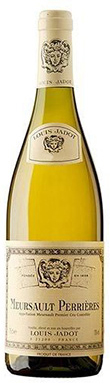

Jadot’s parcel lies near the top of the Les Perrières Dessus lieu-dit, a cooler site, which explains, in part, why this wine has such brilliant acidity, and, as a consequence, incredible length. Winemaker Frédéric Barnier also notes that they blocked the malolactic fermentation, preserving the more prominent malic acid in the wine. The slower ripening imparted a distinct and wonderful stony aspect to wine, characteristic of the site. Its mineral component is simply stunning.
2018
Louis JadotMeursault

Louis Jadot, Domaine des Héritiers, Les Demoiselles, Chevalier-Montrachet Grand Cru, Burgundy, France, 2018
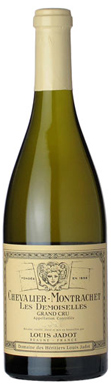
Maison Louis Jadot owns half of this 1.05 hectare lieu-dit that lies on the northern end of the Chevalier-Montrachet climat (Maison Louis Latour owns the other half). Typically, it is stonier and firmer with less richness compared to Montrachet itself. But Jadot’s 2018 displays a hint of butterscotch, reminiscent of Montrachet itself, alongside its characteristic minerality. It’s fabulously energetic with surprising acidity for that warm vintage. Befitting a youthful grand cru, it expands in the glass while the freshness in the finish magnifies its grandeur.
2018
Louis JadotChevalier-Montrachet Grand Cru
Louis Jadot, Domaine des Héritiers Louis Jadot, Corton-Charlemagne Grand Cru, Burgundy, France, 2011
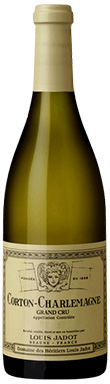
At a decade of age, this Jadot Corton-Charlemagne is a stunning surprise from this poorly-regarded vintage. Bright, fresh and long, it delivers distinct minerality, depth and an alluring hint of orange-rind spice. It’s a beautifully developed Corton-Charlemagne that is just hitting its stride and shows no signs of fading soon. It reminds us of the importance of producer, more so than vintage, when selecting Burgundy.
2011
Louis JadotCorton-Charlemagne Grand Cru
Louis Jadot, Domaine Gagey, Le Clos Blanc, Beaune, 1er Cru Grèves, Burgundy, France, 2018
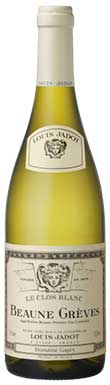
Pierre-Henry Gagey’s grandfather planted Chardonnay in this vineyard about 70 years ago. Then, Pierre-Henry’s father purchased another 0.8 hectares, which they planted entirely to Chardonnay. One of few fine white wines from Beaune, Le Clos Blanc is always a generous wine. The 2018 has finesse and structure that balances its opulence. Long and fresh, it’s another success in this warm vintage.
2018
Louis JadotBeaune
Louis Jadot, Domaine Héritiers, Clos de la Croix de Pierre, Pernand-Vergelesses, 1er Cru En Caradeux, Burgundy, France, 2018
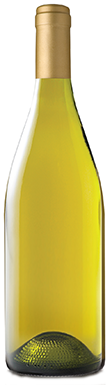
Jadot typically transforms Chardonnay from this east-facing parcel in the 1er cru En Caradeux climat into a readily accessible wine. The overt and forward 2018 fits that mould, delivering a ripe fruitiness buttressed by fresh minerality. Despite its immediate appeal, it developed more complexity sitting in fridge overnight and became more alluring the next evening.
2018
Louis JadotPernand-Vergelesses
Louis Jadot, Chambertin-Clos de Bèze Grand Cru, Burgundy, France, 2018
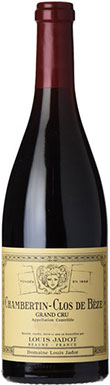
Jadot’s 0.4 hectares of this prized site lies near the top of the slope and densely planted (10,000 vines/ha). The 2018 came in at 14 percent alcohol, reflecting a rare level of ripeness, but nonetheless, displays marvelous acidity, which keeps the wine full of energy. Long and precise, this is a brilliantly balanced wine that shows why the site is so revered. Though packed with flavour, it is light on the palate, which is my definition of Burgundy - flavour without weight.
2018
Louis JadotChambertin-Clos de Bèze Grand Cru
Louis Jadot, Domaine des Héritiers Louis Jadot, Beaune, 1er Cru Clos des Ursules, Burgundy, France, 2018
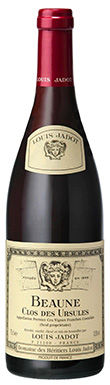
Still owned by the Jadot family, (hence, Domaine des Héritiers Louis Jadot), this 2.8 hectare walled plot included within the 1er cru Vignes Franches, is Jadot’s flagship Beaune bottling. The 2018, to my mind, is one of the best Clos des Ursules Jadot has ever made - it is explosive, delivering both power and finesse, buttressed by freshness. Slightly exotic, with a chiseled refinement, it is very appealing now, but it has glorious development ahead of it. Barnier thinks the Côte de Beaune out did the Côte de Nuits in 2018, perhaps because, in general, they picked slightly earlier there. The energy of this 2018 Clos des Ursules supports that theory.
2018
Louis JadotBeaune
Louis Jadot, Bonnes-Mares Grand Cru, Burgundy, France, 2002
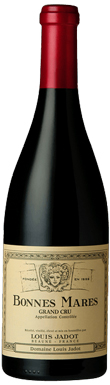
At nearly 20 years of age, Jadot’s fabulous 2002 Bonnes Mares is just starting to show a hint of maturity. It conveys the Chambolle plushness combined with a crushed stone mineral component. For all its depth and power, its finesse is what makes this wine memorable. Fresh, without a hint of fatigue, this Bonnes Mares is developing beautifully with miles to go before it sleeps.
2002
Louis JadotBonnes-Mares Grand Cru
Louis Jadot, Domaine des Héritiers Louis Jadot, Corton Les Pougets Grand Cru, Burgundy, France, 2018
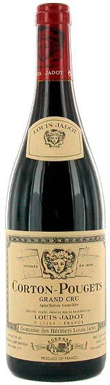
Jadot’s Pinot Noir in the Corton Les Pougets climat (also the site for their Corton-Charlemagne) is planted high up on the slope and faces south, which likely explains its consistent ripeness. The 2018 is, like Jadot’s other 2018 Côte de Beaune bottlings, wonderfully fresh and lively, balancing its iron-tinged fleshiness. Its suave texture is deceiving because it imparts a sense of precociousness. This Corton needs a decade to reveal its grandeur.
2018
Louis JadotCorton Les Pougets Grand Cru
Louis Jadot, Domaine des Héritiers Louis Jadot, Beaune, 1er Cru Chouacheux, Burgundy, France, 1995
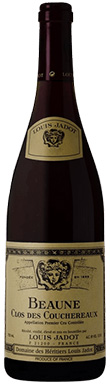
The 1er Cru Chouacheux lies near the bottom of the slope, just below Vignes Franches, in the southern portion of Beaune, an area known for more muscular wines. This 1995 has developed marvelously, displaying clean mushroomy nuances. Very refined, it’s paradoxically delicate and powerful. It shows that, in the right hands, the best Beaune 1er cru evolve beautifully with bottle age.
1995
Louis JadotBeaune
Louis Jadot, Domaine Gagey, Les Beaumonts, Chorey-lès-Beaune, Burgundy, France, 2018
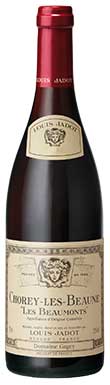
Chorey lès Beaune has no 1er cru and much of its vineyards lie on the other side of the D974 road connecting Dijon and Beaune. Les Beaumonts climat, however, lies on the 'good' side of the road, nestled between Aloxe-Corton and Savigny-lès-Beaune, which perhaps explains part of the nexpected grandeur for this unassuming village wine. Surprisingly sumptuous - the vintage speaking - it’s broad, yet spritely, with an alluring not-just-fruit component. Its suave texture makes it easy to enjoy now, but added complexity appeared the next night, suggesting it will develop nicely with a few years of bottle age. It’s a great village wine.
2018
Louis JadotChorey-lès-Beaune
Louis Jadot, Côte de Beaune-Villages, Burgundy, France, 2018
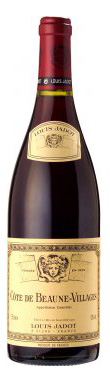
Warm vintages such as 2018, provide less prestigious appellations, such as this one, with often-needed ripeness which enhances their appeal. Though a négociant bottling, winemaker Frédéric Barnier included some declassified estate fruit from Santenay, Monthélie, Chorey- and Savigny-lès-Beaune, which likely accounts for the wine’s density. Subtle earthy notes balance its bright cherry-scented fruitiness. Despite the warmth of the vintage, it remains fresh and lively. Charming now, it has the requisite structure to develop over the next few years.
2018
Louis JadotCôte de Beaune-Villages
