Ramonet: behind the acclaimed Burgundy estate plus 30 wines tasted
Considered one of the masters of white wine in the Côte de Beaune, Domaine Ramonet is among Burgundy's most revered and mysterious producers. Charles Curtis MW explores the history and winemaking philosophy of this cult estate and selects his top Montrachet wines from 2018 and past vintages.
Get our daily fine wine reviews, latest wine ratings, news and travel guides delivered straight to your inbox.
You are now subscribed
Your newsletter sign-up was successful
Viewed by many as one of the best white wine producers on the planet, Domaine Jean-Claude Ramonet is cloaked in mystery despite a long history of making sublime wines.
Domaine Ramonet: history
The confluence of some of the world’s greatest white wine appellations and a cult-like mystique provide a compelling rationale to discover the wines of Domaine Ramonet.
The appellations include Montrachet, Bâtard-Montrachet, Bienvenues-Bâtard-Montrachet and more than 20 others.
Scroll down for 30 Ramonet wine tasting notes and scores
The cult status began long ago with Pierre Ramonet, who founded the domaine officially in 1930. His passion and drive built the domaine from scratch, beginning with his first vineyard purchase in Les Grandes Ruchottes in 1934.
His first champion was Raymond Baudoin, founder of La Revue du Vin de France, who discovered his work in the 1930s. Baudoin, in turn, raised the interest of American wine importer-cum-spymaster Frank Schoonmaker. Throughout the post-war years, Ramonet continued to build his vineyard holdings and his reputation. Today, the vineyard holdings are impressive, and the reputation has never been more lustrous.
Mystique
‘The best white wine I’ve ever had’ is a big statement. Many factors come into play: how old was the bottle? When and where did you drink it? With who? It’s too difficult, perhaps, to narrow to a single bottle. Yet, if the task were a shortlist of three, it is inevitable that a wine from Domaine Ramonet would appear on very many lists, including my own. The mystique is undeniable.
As with all mysteries, the whole is greater than the sum of the parts, but there are a few facts that we can ascertain.
Get our daily fine wine reviews, latest wine ratings, news and travel guides delivered straight to your inbox.
Grandsons Noël and Jean-Claude Ramonet began to work alongside their father, André, in 1983. André’s role was limited, however, and the true heirs to Père Ramonet’s winemaking mojo were his grandsons.
Since the 2014 vintage, Noël has stepped back from day-to-day operations and the wines made subsequently bear the name Jean-Claude Ramonet, who has lately been joined by his daughters Anne-France (since 2016) and Clarisse to complete a team of seven in the vineyard and two in the office.
Ramonet: the wine philosophy
Anne-France explained their way of working: the grapes are lightly crushed before pressing, and the must is not settled before fermentation.
Very little sulphites are used, and the total quantity is reduced each year. The fermentation is usually started in tank and continued in cask.
A modest amount of new wood is normally used: 5% for the Bourgogne and 25–35% for the premiers crus. Only the Montrachet is fermented and aged exclusively in new casks.
The wines are aged with most of the lees, but seldom stirred, and are left as long as possible without racking. The typical length of aging is eighteen months.
Premox
As grape growing and winemaking began to evolve in the 1990s, Burgundian winemakers were haunted by the spectre of premature oxidation of their white wines (often referred to as ‘premox’).
This phenomenon began to appear with the vintages in the mid-1990s, and particularly with 1996. Thereafter followed a number of vintages where buying white Burgundy could be a dangerous pastime as wines were ruined by seemingly random oxidation.
Fortunately, although it seems that Ramonet had some issues with corks in the 1990s, its way of aging the wines with most of the lees and avoiding bâtonnage has helped prevent widespread problems with premox.
In my own experience, prematurely oxidised Ramonet has been a rare occurrence.
Date founded: 1930
Owners: Noël and Jean-Claude Ramonet
Winemaker: Jean-Claude Ramonet
Annual production: 100,000 bottles
Area under vine: 19.75 ha
Key wines: Montrachet, Bâtard-Montrachet, Bienvenues-Bâtard-Montrachet, Chassagne-Montrachet Premier Cru Les Ruchottes, Chassagne-Montrachet Premier Cru La Boudriotte (red and white), Chassagne-Montrachet Premier Cru Morgeot, Saint-Aubin Premier Cru En Remilly, Pernand-Vergelesses Les Belles Filles
The vineyards
Some of the first plots acquired in Chassagne-Montrachet Premier Cru Les Ruchottes were cleared and planted by Pierre himself.
Expansion continued in the 1940s with new holdings in Morgeot. This appellation can be confusing: seven different climats can be labeled as Morgeot.
One of these is La Boudriotte, which also includes another five climats that can be called either by their own name, or La Boudriotte, or Morgeot. Ramonet’s Boudriottes blanc, for example, is in the climat Les Fairendes; the Morgeot blanc comes from in Champ Jeandreau (also part of Boudriotte), and the red Morgeot is from Ez Crottes.
If that were not complicated enough, the winery is based in Chassagne-Montrachet, but the superlative grand cru vineyards are all located within Puligny-Montrachet.
The three parcels of Bâtard-Montrachet and the 0.45 hectares in Bienvenues-Bâtard-Montrachet were purchased from Domaine Henri Coquet in the 1950s. These lie next to each other at the southernmost end of Bienvenues.
The iconic parcel in Montrachet that lies between the Bouchard holdings and those of Boillerault de Chauvigny was purchased in 1978, reportedly for cash.
Other holdings have entered the portfolio in other ways.
The tiny sliver of Chevalier-Montrachet comes from an exchange with Domaine Jean Chartron. Among the most recent acquisitions are the Clos du Cailleret, Abbaye de Morgeot, St.-Aubin En Remilly and St.-Aubin Murgers des Dents de Chien. These are all included in a métayage agreement with FICOFI and its investors, and they entered the portfolio in 2014 after FICOFI purchased the vineyards from Vincent Girardin.
Another recent acquisition is the hectare of Pernand-Vergelesses Les Belles Filles. This large village-level climat stretches from the top of the slope down to the village and has a reputation for good value red and white wines. Ramonet has vinified these grapes since 2012.
Ramonet’s red wines
For me, the most overlooked wines from Ramonet are the reds. Ramonet reds were for many years among the best deals on the wine list at the charming bistro at l’Hôtel de Beaune. I would order them, not because they were well-priced but because I loved to drink them with the roast chicken.
Chassagne-Montrachet had a great reputation for red wine throughout the 18th and 19th centuries. Dr. Lavalle classified no fewer than three climats as ‘Hors Ligne’ (his top rating) in his authoritative 1855 book on Burgundy. Well into the middle of the 20th century, production in Chassagne was two-thirds red wine and one-third white. Today that ratio has reversed, but there are still some lovely red wines produced in the commune.
Ramonet owns 6.79 hectares of black grapes, including 2.39 hectares in the most well-regarded premier crus: the Clos St.-Jean, Clos de la Boudriotte, and Morgeot.
The grapes are destemmed and undergo a maceration before being fermented with a gentle extraction that avoids the sometimes astringent tannins found in reds from Chassagne.
These are charming and age well. They are a perfect counterpart to the profound and riveting whites.
Red and white alike, all the wines produced by Ramonet warrant the attention of the serious wine lover.
Tasting the wines of Jean-Claude Ramonet:
You may also like:
Five Burgundy micro-négociants to know and wines to tryDomaine de la Pousse d’Or: a quest for qualityBest Burgundy 2019 Premier Cru wines
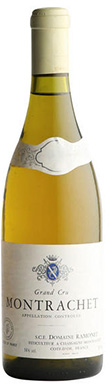
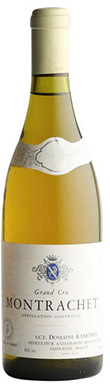
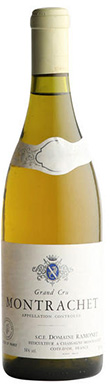
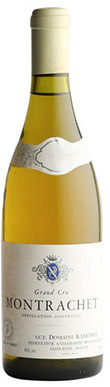
Domaine Ramonet, Montrachet Grand Cru, Burgundy, France, 1989

Out of magnum, this wine was almost impossibly youthful, with a bright lemon yellow color and a fresh, lemony scent that developed with time to show notes of butter and cream and with more time a rich, tropical note of fresh coconut water and starfruit sweetness. The wine has kept a lively acidity and a rich, silken texture that led to a lingering finish on the palate. This wine will last for decades in a proper cellar.
1989
BurgundyFrance
Domaine RamonetMontrachet Grand Cru
Domaine Ramonet, Montrachet Grand Cru, Burgundy, France, 1988

This thrilling bottle of Montrachet was made from the old vines of the domaine's parcel before they were grubbed up and re-planted. Almost thirty years of age when consumed, the wine was beginning to open up, showing mature notes of caramel, smoke, and truffle. However, there is also great mineral tension and thrilling acidity to balance the aromatic richness of the nose. Although this is ready to drink now, it will continue to hold at this level.
1988
BurgundyFrance
Domaine RamonetMontrachet Grand Cru
Jean-Claude Ramonet, Montrachet Grand Cru, Burgundy, France, 2018

Here we arrive at the pinnacle of white wine, and the results are breathtaking. The initial impression is surprisingly approachable, with abundant fruit aromas of ripe apples and lemon peel with generous notes of vanilla, ginger, and smoke and a firm mineral underpinning. It is a wine of intense concentration and power on the palate with fabulous extract and vibrant acidity. Despite all the power, however, it never loses its elegance or finesse. Truly a marvel.
2018
BurgundyFrance
Jean-Claude RamonetMontrachet Grand Cru
Domaine Ramonet, Montrachet Grand Cru, Burgundy, France, 2008

Although consumed at an almost sinfully young age, this wine was thrilling to drink. The initial attack was intensely concentrated, with pronounced notes of citrus peel and greengage plums accented with acacia blossoms and just a hint of vanilla spice. The aromas have a striking purity and should develop well. The texture is silky and fresh, with a snap and tension that balances quite well with the creamy, luxurious density of extract—a wine to age for fifty years.
2008
BurgundyFrance
Domaine RamonetMontrachet Grand Cru
Domaine Ramonet, Bâtard-Montrachet Grand Cru, Burgundy, France, 1971

A tremendously nuanced bouquet began with smoke and honey, candied mandarin peel, anise, and dried flowers on the initial attack. There was a beguiling mix of fresh and mature aromas that paired well with the richness and structure on the palate. The wine was mature, but certainly not past its prime. This was a glorious experience of white Burgundy at its peak, more than forty years on. Marvelous.
1971
BurgundyFrance
Domaine RamonetBâtard-Montrachet Grand Cru
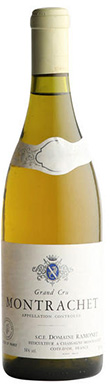
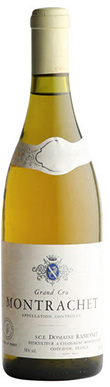
Domaine Ramonet, Montrachet Grand Cru, Burgundy, France, 1996

Domaine Ramonet owns just over a quarter-hectare of Montrachet on the Puligny side of the vineyard, just north of the Bouchard parcel. It consistently delivers one of the most profound wines on the planet. The 1996 vintage recently showed great complexity on the nose. Primary notes of citrus peel and tropical fruit were beginning to develop hints of smoke, truffle, and earth. The vibrant acidity supported this depth of flavor well, yet the wine still managed a dense, rich feel on the palate, with extraordinary concentration and immeasurable finesse.
1996
BurgundyFrance
Domaine RamonetMontrachet Grand Cru
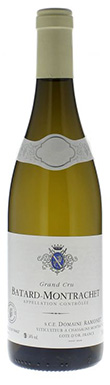
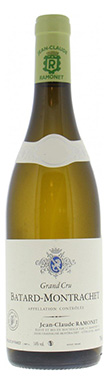
Jean-Claude Ramonet, Bâtard-Montrachet Grand Cru, Burgundy, France, 2018

The Bâtard is produced from three parcels, all on the Puligny side. This iconic wine in the portfolio is striking above all for its elegance. There is a graceful beauty to the ripe apple and apricot fruit with notes of hazelnut, white flowers, and a well-integrated bit of spice and butter from the cask ferment and 18 months of aging, although nothing is overdone here. The wine is admirable precisely because it has less butter and fat than some Bâtards show, even in 2018. There is impressive length here, but absolutely no heaviness. Masterful.
2018
BurgundyFrance
Jean-Claude RamonetBâtard-Montrachet Grand Cru
Domaine Ramonet, Montrachet Grand Cru, Burgundy, France, 2009

This Montrachet showed all the approachable, lush ripeness of this sunny vintage. The wine was incredibly concentrated on the nose, with aromas of ripe golden apples and notes of honey, marzipan, beeswax, coconut water, and vanilla. The wine shows an almost unctuous texture and full body on the palate, but enough acidity to bring it into balance. With its imposing length on the palate, this is a wine to last a half-century. Give this some time to show its full potential, and it will show you wonders.
2009
BurgundyFrance
Domaine RamonetMontrachet Grand Cru
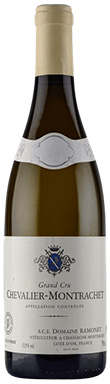
Jean-Claude Ramonet, Chevalier-Montrachet Grand Cru, Burgundy, France, 2018

This wine is possibly the rarest treat from Ramonet, produced from just 0.09 hectares of vines that are exchanged with Jean Chartron. The location further up the slope from Montrachet gives the wine a high-toned fruit of green apple and citrus with a pronounced saline minerality on the nose. The texture is notably lighter than the Bâtard or Bienvenues, but it retains in common with these a superb elegance and admirable integration of the influence of the cask aging. The lemony fruit is impressively persistent on the finish.
2018
BurgundyFrance
Jean-Claude RamonetChevalier-Montrachet Grand Cru
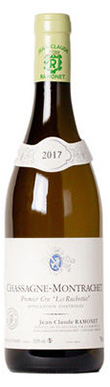
Jean-Claude Ramonet, Chassagne-Montrachet, 1er Cru Les Grandes Ruchottes, Burgundy, France, 2018

Among the most iconic Ramonet vineyards, this site on the slopes above Les Fairendes still has some of the vines planted by Pierre in the thirties. This old-vine fruit delivers a wine of impressive concentration. There is still a floral elegance typical of Ramonet, but there are also hints of ripe pear and white nectarine on the nose. The texture is firmly wound but not acerbic, the tension balanced by the ripe heft and extract of 2018. The superb balance carries this to a very satisfying finish.
2018
BurgundyFrance
Jean-Claude RamonetChassagne-Montrachet
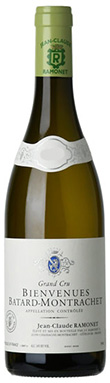
Jean-Claude Ramonet, Bienvenues-Bâtard-Montrachet Grand Cru, Burgundy, France, 2018

The Bienvenues is produced from a 0.45-hectare parcel at the southernmost end of Bienvenues on the Bâtard border that was acquired by Pierre Ramonet in the 1950s. The wine has a beautiful definition of crisp lemon-scented fruit and bright acacia blossom aromas, and a brisk, refreshing texture. It lacks perhaps the density and heft of the Bâtard, yet it is a fully complete and vibrantly alive wine that resonates on the long, subtle finish.
2018
BurgundyFrance
Jean-Claude RamonetBienvenues-Bâtard-Montrachet Grand Cru
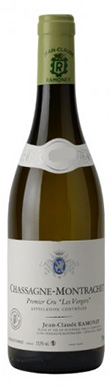
Jean-Claude Ramonet, Chassagne-Montrachet, 1er Cru Vergers, Burgundy, France, 2018

This vineyard, located at the northern end of the appellation, is downslope from Les Chaumées. In 2018 it has given a rich, approachable wine with warm, approachable aromas of ripe apple, spice, and butter. The texture is dense and lush, with balanced acidity and an impressive concentration of extract. More massive than the wines further up the slope, this will be an easy wine to love and one that will drink reasonably early in life.
2018
BurgundyFrance
Jean-Claude RamonetChassagne-Montrachet
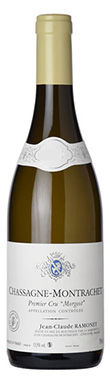
Jean-Claude Ramonet, Chassagne-Montrachet, 1er Cru Morgeot, Burgundy, France, 2018

Produced from the Champ Jeandreau section of Morgeot, at the bottom of the premier cru slope, this is impressive, regal wine, with a ripe apple fruit laced with white blossoms and spice on the initial attack that opens with time on the palate. This wine shows great substance with a rich, creamy texture balanced by plenty of structure and vibrancy that lasts through a satisfyingly long finish.
2018
BurgundyFrance
Jean-Claude RamonetChassagne-Montrachet
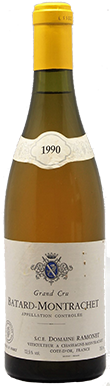
Domaine Ramonet, Bâtard-Montrachet Grand Cru, Burgundy, France, 1990

Incredibly youthful more than twenty years after the vintage, with a zippy, fresh, lemony scent that slowly revealed hints of mineral, butter, fresh coconut juice, and passionfruit. On the other hand, this Bâtard in no way lacked the rich, creamy side of the appellation. On the palate, the wine was still tightly wound, with full body and crisp acidity. The impressive density and concentration carried the intense flavours from the beginning right through the very long finish.
1990
BurgundyFrance
Domaine RamonetBâtard-Montrachet Grand Cru
Jean-Claude Ramonet, Chassagne-Montrachet, 1er Cru Boudriotte, Burgundy, France, 2018

The Boudriotte blanc is produced from the climat Les Fairendes, located reasonably high on the slope, reaching almost to Les Ruchottes. This superb terroir for white wine has provided in 2018 a result that seamlessly melds citrus, mineral, and ripe apple aromas and balances them with surprisingly fresh acidity, a lovely depth of flavour on the palate, and impressive weight and length.
2018
BurgundyFrance
Jean-Claude RamonetChassagne-Montrachet
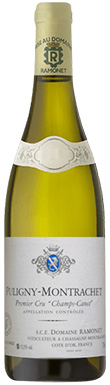
Jean-Claude Ramonet, Puligny-Montrachet, 1er Cru Champ-Canet, Burgundy, France, 2018

From a third of a hectare here near the top of the slope, this vineyard provided a classic Puligny expression in 2018, with a lemon peel nose and plenty of flinty minerality, and a smoky edge. There is plenty of freshness on the palate and enough substance to make this a dynamic, mouth-filling wine with great length and style.
2018
BurgundyFrance
Jean-Claude RamonetPuligny-Montrachet
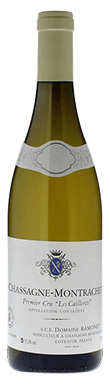
Jean-Claude Ramonet, Chassagne-Montrachet, 1er Cru Caillerets, Burgundy, France, 2018

This wine is initially a bit restrained, but with time it opens to show delicate aromas of gooseberry and quince with a suggestion of chamomile. The texture is silky and very fine; there is surprising freshness for this vintage, no doubt due to the high position on the slope and the thin, rocky soils of this climat. For all its elegance, however, the wine still has backbone, grip, and depth.
2018
BurgundyFrance
Jean-Claude RamonetChassagne-Montrachet
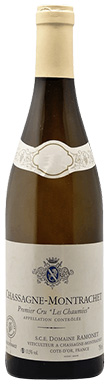
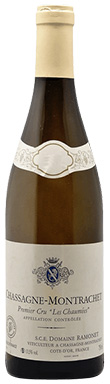
Jean-Claude Ramonet, Chassagne-Montrachet, 1er Cru Chaumées, Burgundy, France, 2018

Above Les Vergers and just next to Saint-Aubin, this vineyard has delivered ripe, concentrated fruit with an outstanding balance between the fruit and the structure. The initial attack reveals notes of acacia flowers and lemon peel that warm and open with time. The texture is rich but still surprisingly vibrant, and a fresh tension balances the creamy richness of the year.
2018
BurgundyFrance
Jean-Claude RamonetChassagne-Montrachet
Jean-Claude Ramonet, St-Aubin, 1er Cru En Remilly, Burgundy, France, 2014

The inaugural vintage of Ramonet’s rented vines in St. Aubin was nothing short of superb. This site, high on the slope as it turns into the combe has provided a wine that balances perfect ripe, warm apple fruit and racy citric acidity. The maturation using just a bit of new wood gives it a sheen and a spicy gloss that are entirely attractive. The balance and finesse carry straight through to the lingering finish.
2014
BurgundyFrance
Jean-Claude RamonetSt-Aubin
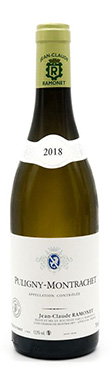
Jean-Claude Ramonet, Puligny-Montrachet, Burgundy, France, 2018

This wine comes from village-level vines just down the slope from Bâtard- and Bienvenues-Bâtard-Montrachet. The grapes have delivered a supple, accessible wine with aromas of ripe apple, hazelnut, chamomile, and spice. The texture is loosely knit, and it lacks the tension of some wines. However, the lovely floral character and the bit soft, supple texture make it very pleasant. The Enseignères is most often blended with a wine from Nosroyes to produce the village-level Puligny.
2018
BurgundyFrance
Jean-Claude RamonetPuligny-Montrachet
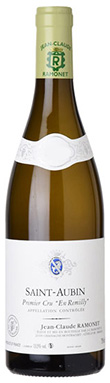
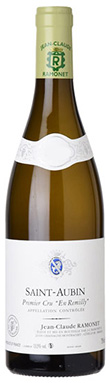
Jean-Claude Ramonet, St-Aubin, 1er Cru En Remilly, Burgundy, France, 2018

En Remilly has only been in the portfolio since 2014. This beautiful terroir has a south/southwest exposition and is located just as the Montrachet slope swings to the west. This rich wine has a great definition of ripe apple fruit accented with acacia, marzipan, and spice. The texture is pleasantly plump and waxy, but there is enough freshness to keep the wine in perfect balance. Truly a pleasure.
2018
BurgundyFrance
Jean-Claude RamonetSt-Aubin
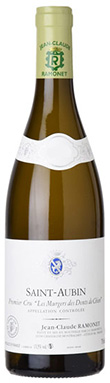
Jean-Claude Ramonet, St-Aubin, 1er Cru Les Murgers des Dents de Chien, Burgundy, France, 2018

This wine is an interesting contrast to the En Remilly. It shows much more gunflint and smoke on the nose, along with a bit of smoke and a salty tang. The lemony fruit is very fine, although there is not as much breadth or heft as En Remilly. The wine, however, is lovely—crisp and refreshing, particularly in 2018.
2018
BurgundyFrance
Jean-Claude RamonetSt-Aubin
Jean-Claude Ramonet, Chassagne-Montrachet, 1er Cru Clos St-Jean, Burgundy, France, 2018

This wine clearly shows the potential of this terroir for white wines, located as it is on the slopes above the village. There is a fresh, saline note and a lemony fruit set off by subtle hints of white blossom on the nose. The wine is substantial but not heavy on the palate, with a creamy intensity and lovely spice to the fruit that lingers on the impressive finish.
2018
BurgundyFrance
Jean-Claude RamonetChassagne-Montrachet
Jean-Claude Ramonet, Chassagne-Montrachet, Burgundy, France, 2018

Produced from a blend of grapes from Les Masures, Les Benoîtes, Le Clos Roland, and Les Voillenots, this wine provides a superb introduction to the commune, with its forward lemony fruit accented with a bit of spice, a lovely, rich texture, and enough density to carry it to a lingering finish. Strikingly good at this level.
2018
BurgundyFrance
Jean-Claude RamonetChassagne-Montrachet
Jean-Claude Ramonet, Bouzeron, Burgundy, France, 2018
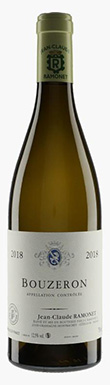
This wine is a reliably typical Aligoté, even in a warm year such as 2018. The initial attack reveals lovely lemony aromas with a hint of fresh green herbs about them and a touch of spice. On the palate, there is enough acidity to provide balance but no unpleasant tartness. Elegant and quaffable if not particularly long.
2018
BurgundyFrance
Jean-Claude RamonetBouzeron
Jean-Claude Ramonet, Bourgogne, Burgundy, France, 2018
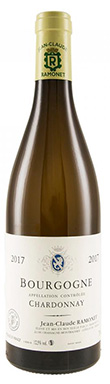
This reliable entry point for the producer is remarkably consistent, and 2018 is no exception. Produced mostly from fruit harvested in the flatter vineyards on the borders of the Chassagne itself, blended with a bit from Corpeau it produced a wine that is somewhat closed on the nose and fairly rich, almost fat on the palate.
2018
BurgundyFrance
Jean-Claude RamonetBourgogne
Jean-Claude Ramonet, Chassagne-Montrachet, 1er Cru Les Chaumes, Burgundy, France, 2018

This village-level vineyard is surrounded on two sides by the premiers crus of the Morgeot sector. The wine it delivers has a fantastic, forward aroma with ripe apple fruit and floral notes. The texture on the palate is approachable and friendly, with a supple, silky feel, balanced acidity, and a great deal of finesse on the finish. Elegant rather than powerful.
2018
BurgundyFrance
Jean-Claude RamonetChassagne-Montrachet
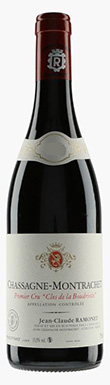
Jean-Claude Ramonet, Chassagne-Montrachet, 1er Cru Boudriotte, Burgundy, France, 2018

Overlook this wine at your peril. This site, downslope from Les Fairendes, has produced a wine of impressive concentration that opens with perfectly defined cherry and plum aromas underscored with notes of mineral, earth, and a hint of spice. The texture is firm, tannic, and tightly wound, recalling the wines of the Côte de Nuits in its elegance, balance, and depth.
2018
BurgundyFrance
Jean-Claude RamonetChassagne-Montrachet
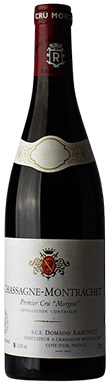
Jean-Claude Ramonet, Chassagne-Montrachet, 1er Cru Morgeot, Burgundy, France, 2018

The red Morgeot is produced from a parcel in Ez Crottes, downslope from Boudriotte. The thin soils here with their high clay content provide a wine of surprising depth and substance, with ripe black cherry fruit, hints of spice, and mineral followed by lovely fruit ripeness on the palate and supple but firm tannins that lead to a lingering finish.
2018
BurgundyFrance
Jean-Claude RamonetChassagne-Montrachet
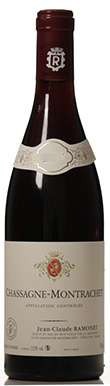
Jean-Claude Ramonet, Chassagne-Montrachet, Burgundy, France, 2018

Blended from grapes grown in Les Masures, Les Benoîtes, and Les Voillenots downslope from the Route de Santenay, this lacks the density and depth of the premier cru red and is a bit firm and angular. Still, there are alluringly pretty red berry fruit aromas and a light, supple freshness that is very attractive.
2018
BurgundyFrance
Jean-Claude RamonetChassagne-Montrachet